Artwork
Sacrifice of Abraham
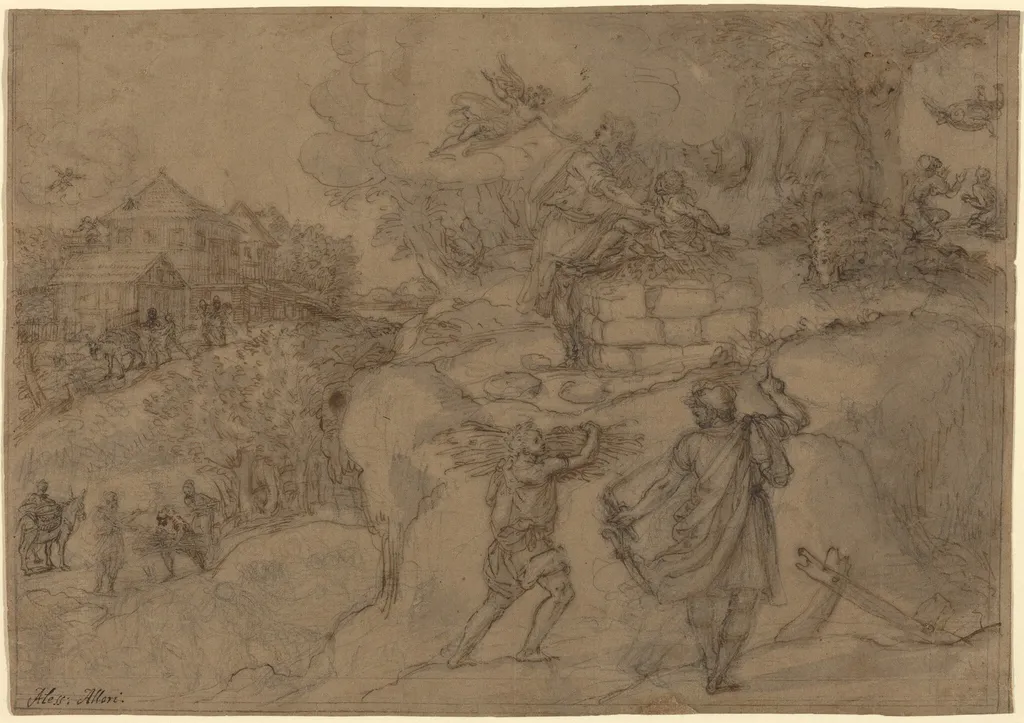
Sacrifice of Abraham is a chalk drawing by the Renaissance artist Alessandro Allori. It dates from 1571 and is held in the collection of the National Gallery of Art.
About this work
Overview
Its textured surface and layered ink reveal a hand engaged in rapid, responsive mark-making, characteristic of Florentine draftsmanship of the period.
Created in 1571, this drawing by Alessandro Allori captures a pivotal moment from the Book of Genesis using pen, brown ink, and gray wash over black chalk on darkened paper. The medium and technique suggest a working study rather than a finished piece, emphasizing spontaneity and compositional exploration. Its textured surface and layered ink reveal a hand engaged in rapid, responsive mark-making, characteristic of Florentine draftsmanship of the period.
Subject & Meaning
The scene illustrates the divine intervention that halts Abraham’s sacrifice of his son Isaac. The moment is rendered with urgency: Abraham raises his knife above Isaac, who lies prone, while an angel descends to stay his hand. Figures and animals around them react with motion and tension, reinforcing the narrative’s emotional weight. The composition prioritizes dramatic climax over serene piety, aligning with Mannerist interests in psychological intensity.
Technique & Style
Allori employs swift, expressive lines and smudged gray washes to convey movement and shadow, avoiding polished finish in favor of kinetic energy. Black chalk underdrawing anchors the forms, while layered ink creates depth and contrast. Cross-hatching and loose strokes suggest fabric, muscle, and terrain without detailed rendering. The darkened paper enhances the luminosity of the ink, heightening the drama of the central figures.
History & Provenance
The drawing originates from Allori’s workshop during his tenure as a leading Florentine artist under the Medici. Likely produced as a preparatory study for a larger work, it reflects the studio practice of refining compositions through rapid sketches. Its survival suggests it was valued for its expressive power, even if not intended as a final product. No definitive early ownership records are known, but it remains within the tradition of Florentine draftsmanship.
Context
Made during the late Mannerist phase in Florence, the work aligns with a cultural preference for complex compositions, emotional tension, and technical virtuosity over naturalism. Allori, trained by Bronzino, inherited a style that favored stylized forms and theatrical gesture. This drawing exemplifies how biblical narratives were reinterpreted through heightened drama and dynamic movement, catering to elite Florentine patrons who prized intellectual and aesthetic sophistication.
Legacy
Though not widely exhibited, the drawing stands as a representative example of 16th-century Florentine figure studies. Its emphasis on motion and emotional immediacy influenced later draftsmen interested in capturing transient moments. It remains a testament to the role of preparatory work in Renaissance art, revealing how major compositions evolved through experimentation rather than idealized planning.
Artist & collection
Artist
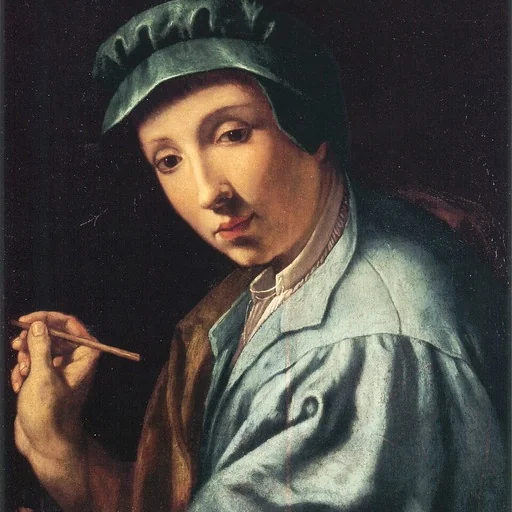
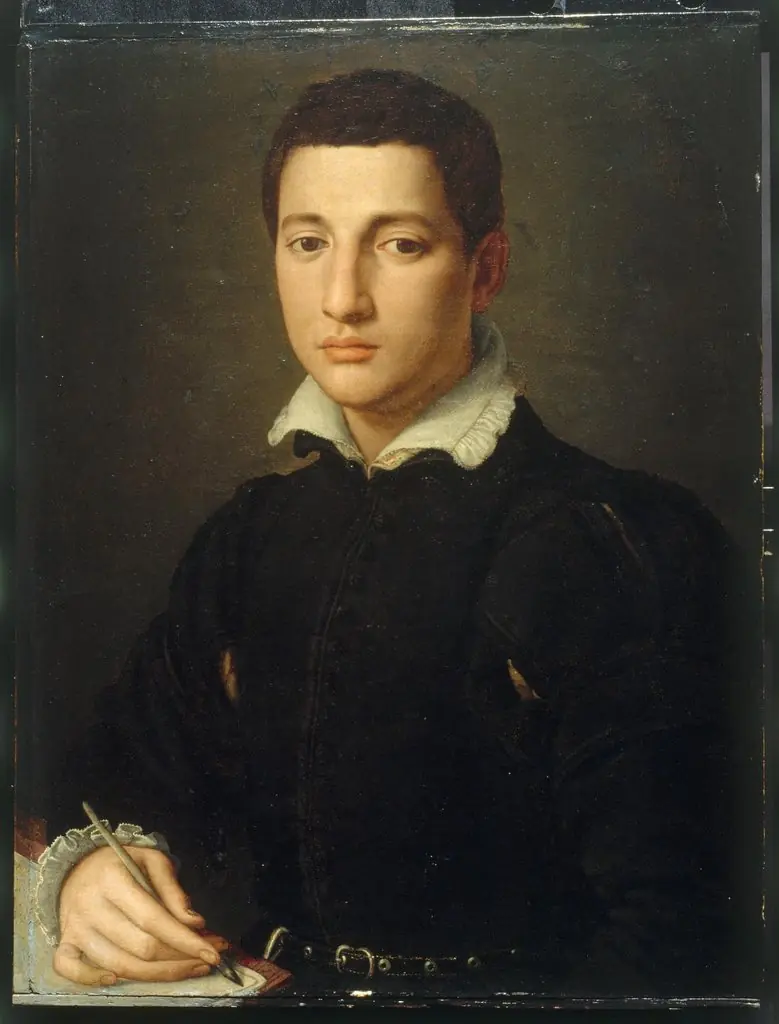
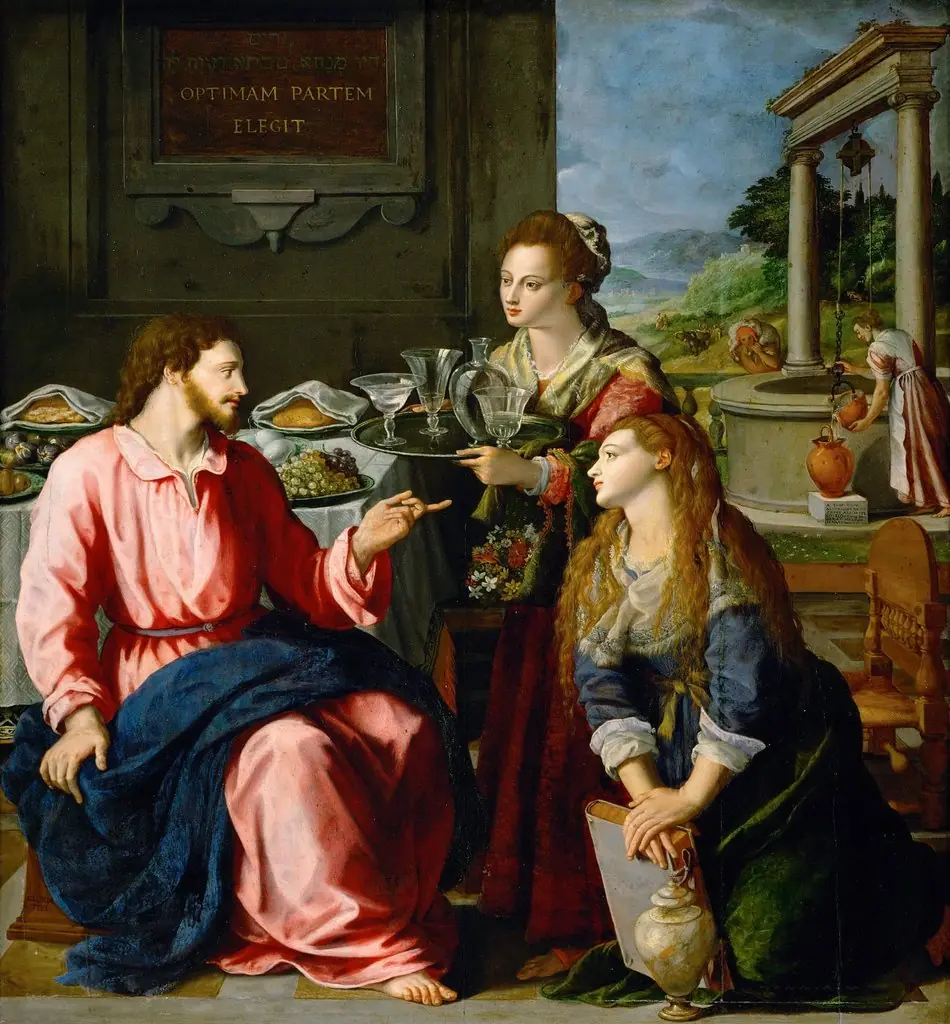
Alessandro di Cristofano di Lorenzo del Bronzino Allori (Florence, 31 May 1535 – 22 September 1607) was an Italian painter of the late Mannerist Florentine school.

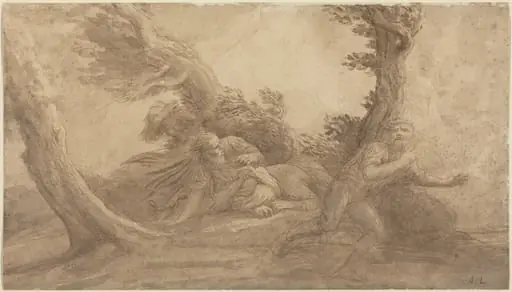 Clap of Thunder
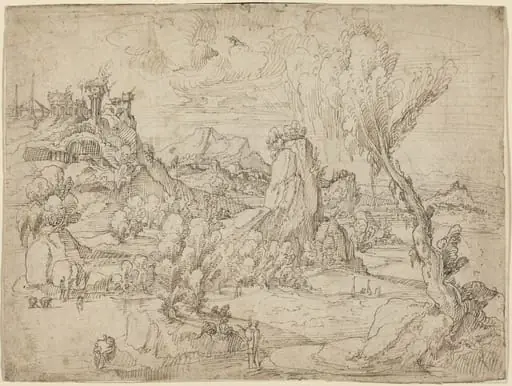 Landscape with the Baptism of Christ
 Landscape with a Man Leading a Horse
 The Transport of the Ark of the Covenant
 The Annunciation to Joachim
 Christ Nailed to the Cross
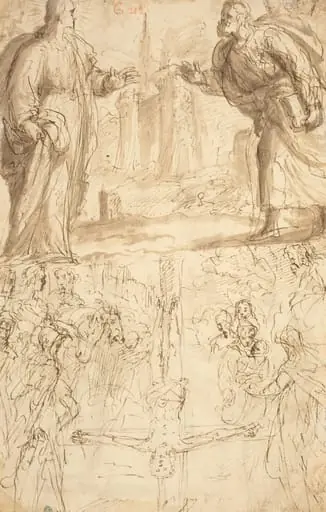 Crucifixion of Saint Peter
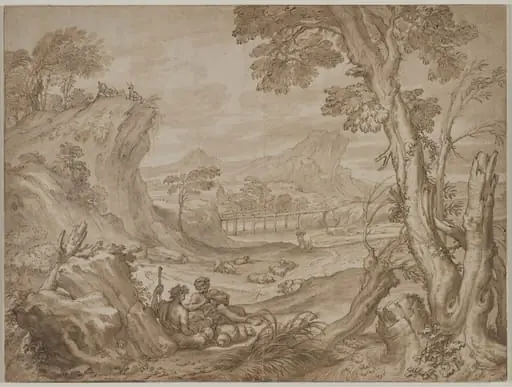 Landscape with Shepherds
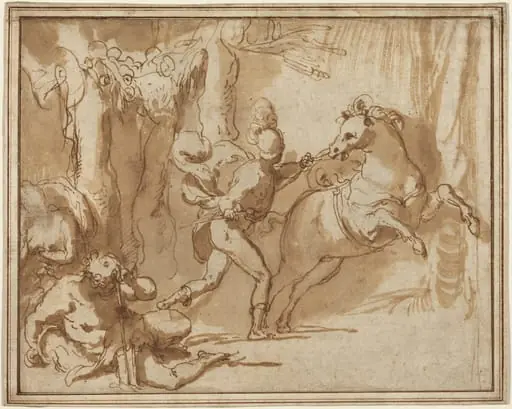 Alexander the Great and Bucephalus
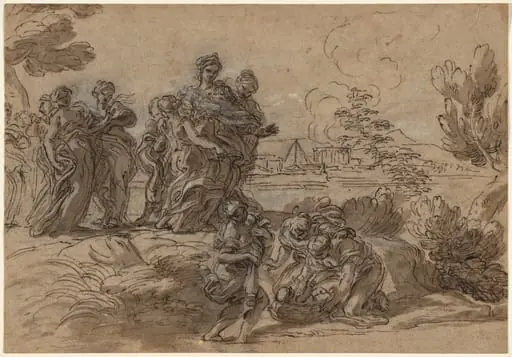 The Finding of Moses
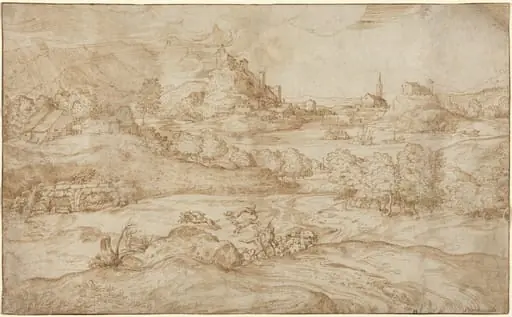 Landscape with Shepherds Driving Away a Wolf
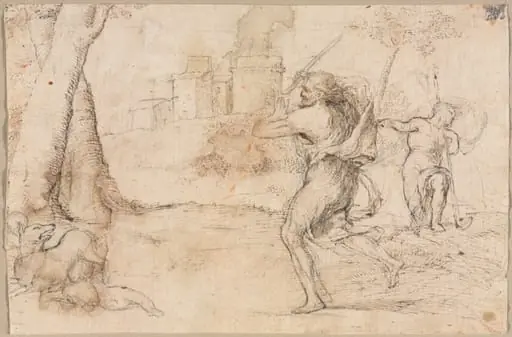 Romulus and Remus Found by Faustulus (recto)