Artwork
The Annunciation to Joachim
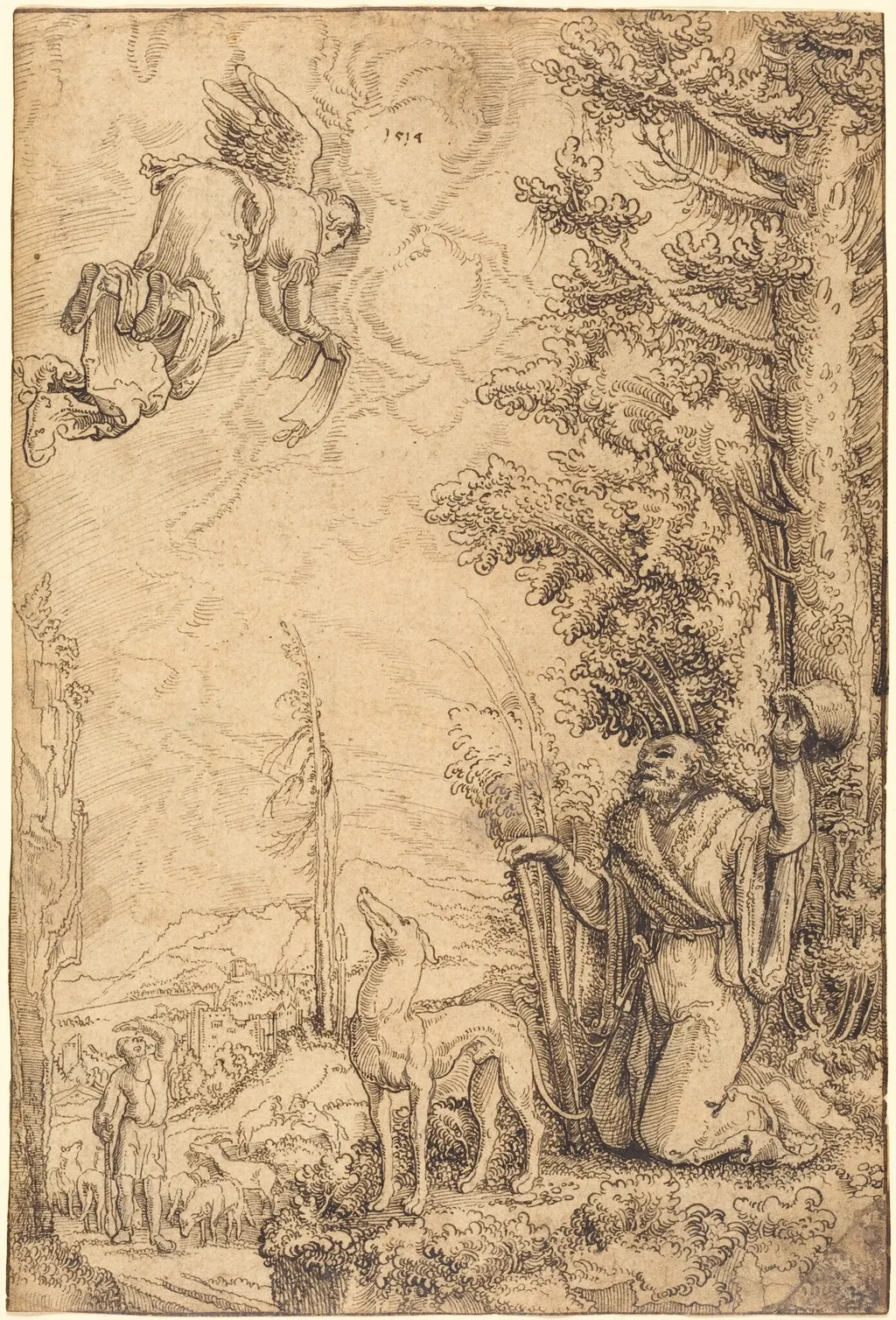
The Annunciation to Joachim is an ink drawing by the Renaissance artist Wolf Huber. It dates from 1514 and is held in the collection of the National Gallery of Art.
About this work
Overview
The work presents a densely populated scene that combines human figures, animals, and architectural elements, all rendered with intricate line work.
Wolf Huber’s 1514 drawing, *The Annunciation to Joachim*, is executed in pen and brown ink on laid paper. The work presents a densely populated scene that combines human figures, animals, and architectural elements, all rendered with intricate line work. It captures a moment from the biblical narrative in which an angel delivers news of a forthcoming birth to Joachim, the father of the Virgin Mary.
Subject & Meaning
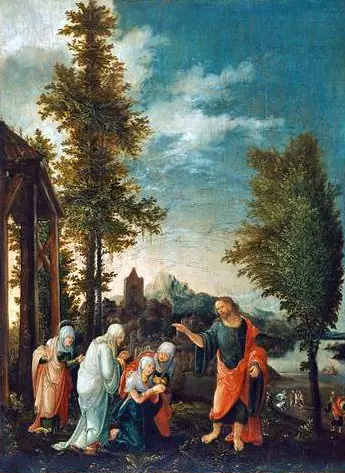
The composition visualises the angelic proclamation to Joachim that his wife Anna will conceive a child, a prelude to the birth of the Virgin. Central to the scene, the angel hovers above a gesturing man, while a kneeling figure looks upward beneath a tree, emphasizing the divine message’s reception across a communal setting.
Technique & Style
Huber employs fine pen lines and brown ink to delineate forms, using hatching and swirling strokes to suggest depth and movement. The dense network of lines creates a sense of spatial layering, a hallmark of early Renaissance experimentation with perspective. The delicate rendering of wings and the crowded foreground reflect the Danube school’s attention to detail and naturalism.
History & Provenance
Created while Huber was active in Passau, the drawing reflects his role as a leading artist of the Danube school in the early sixteenth century. Though specific ownership records are scarce, the work remains associated with Huber’s oeuvre, illustrating his contributions to both religious illustration and the broader artistic developments of his region.
Context
The early 1500s saw German artists integrating Italian Renaissance principles with local traditions. Huber’s drawing exemplifies this synthesis, merging narrative clarity with intricate line work typical of the Danube school. The piece thus offers insight into the transitional visual language that linked Northern European devotional art to emerging Renaissance ideals.
Artist & collection
Artist
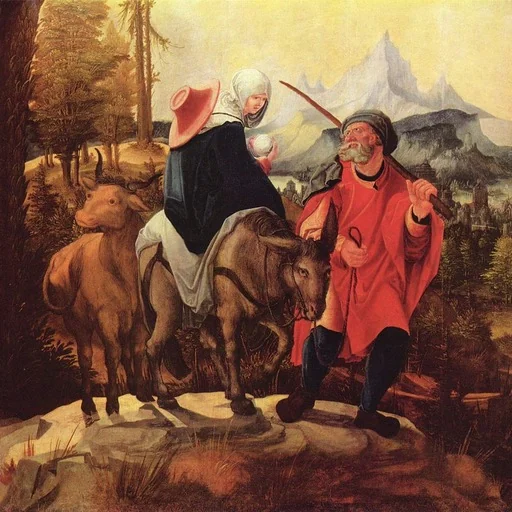
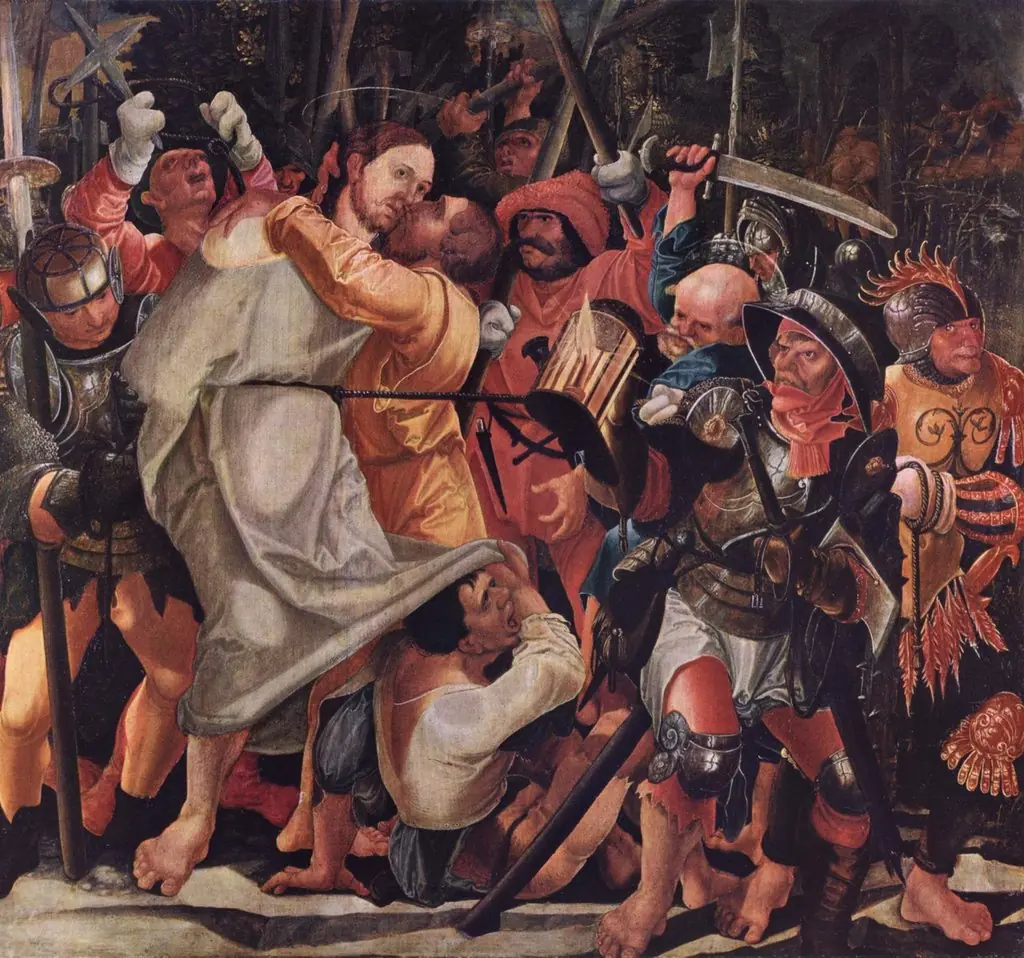
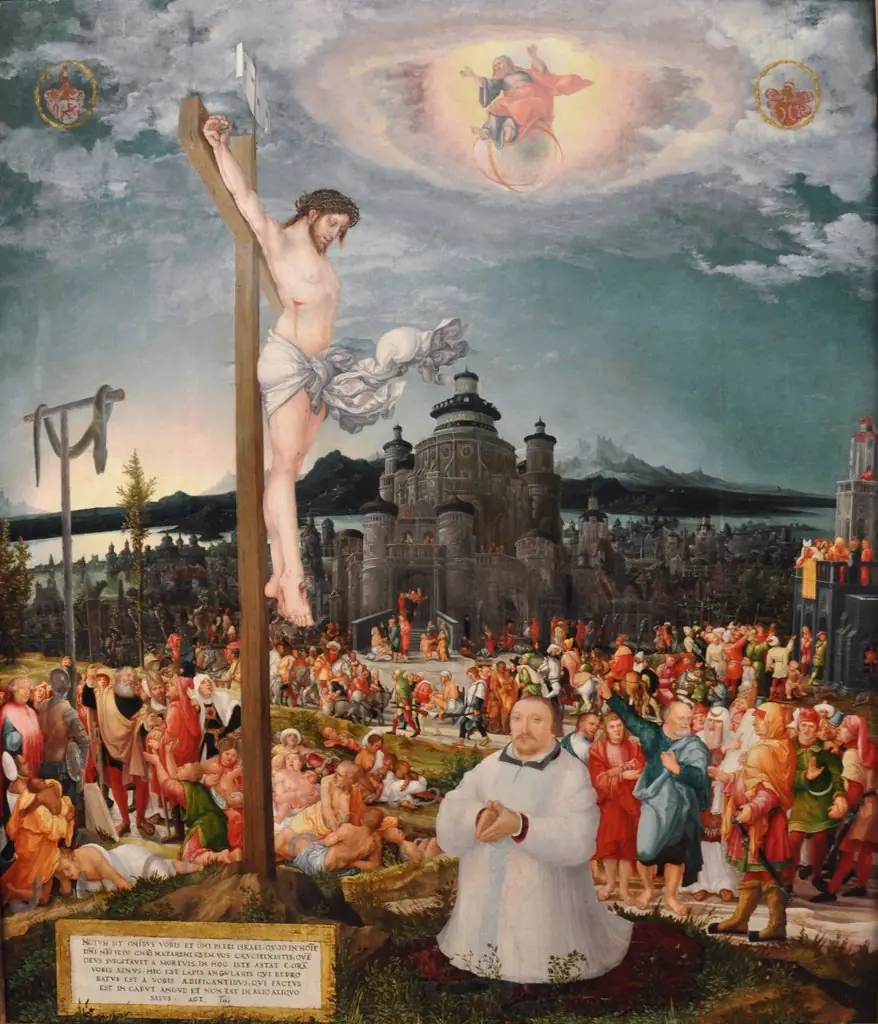
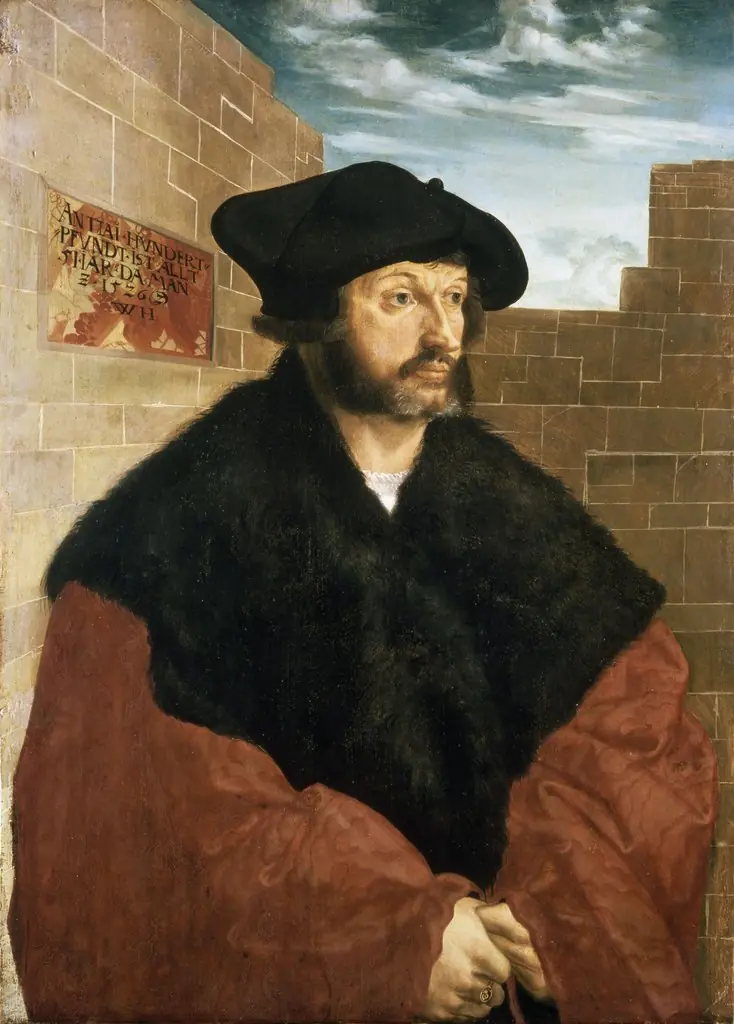
Wolf Huber (c. 1485 – 3 June 1553) was an Austrian- German painter, printmaker, and architect, who worked in Passau, Germany for most of his life as a leading member of the Danube school.

![Allegorical Female Figure in a Landscape [recto], by German 17th Century](https://artifactworldgallery.com/img/german-17th-century--allegorical-female-figure-in-a-landscape-recto--0263f304d6fc0dc9-w320.webp)