Artwork
Deserted Village
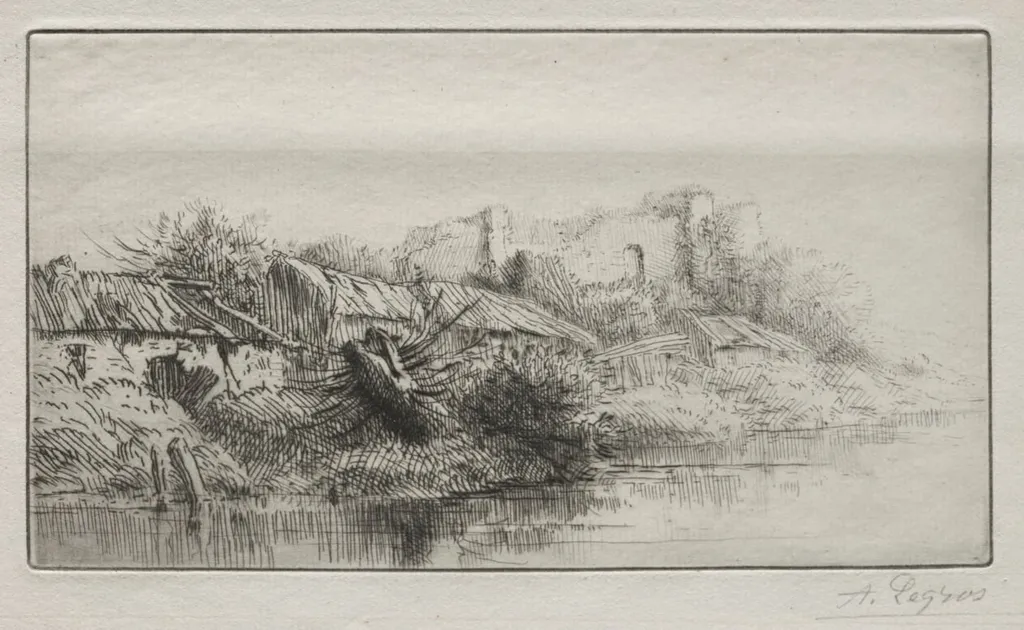
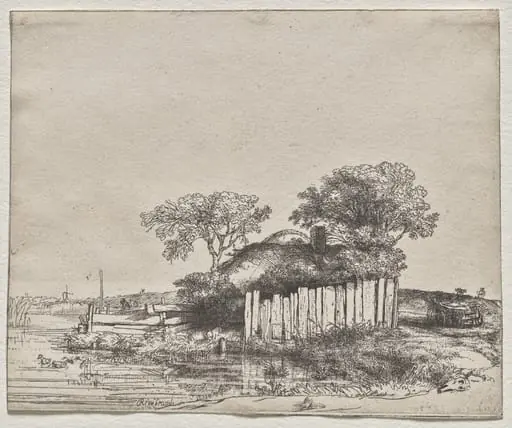
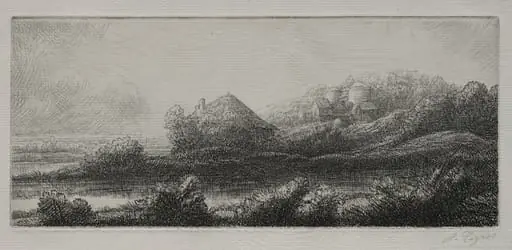
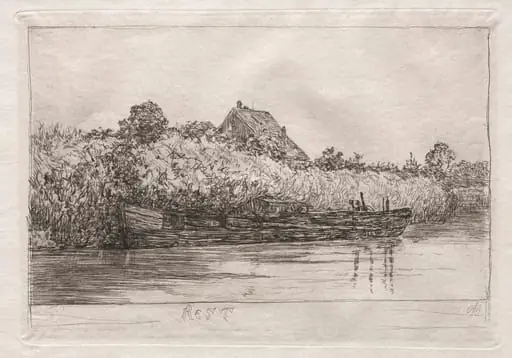
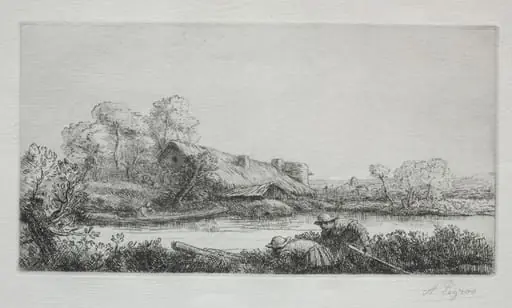
Deserted Village is a print by the Impressionist artist Alphonse Legros. It dates from 1884 and is held in the collection of the Cleveland Museum of Art.
About this work
Overview
The work resides in the collection of The Cleveland Museum of Art, where it is valued for its unadorned portrayal of rural decline.
Created in 1884 by Alphonse Legros, Deserted Village is a black-and-white drawing executed in ink or pencil. It depicts an abandoned rural settlement with modest dwellings and a distant church spire. The composition emphasizes stillness and decay, rendered without color or embellishment. The work resides in the collection of The Cleveland Museum of Art, where it is valued for its unadorned portrayal of rural decline.
Subject & Meaning
The scene portrays a quiet, uninhabited village, suggesting abandonment and the passage of time. The small, weathered buildings and lone steeple evoke a sense of isolation and forgotten community. No human figures appear, heightening the atmosphere of emptiness. The subject reflects broader 19th-century concerns about rural depopulation and the erosion of traditional ways of life.
Technique & Style
Legros employed rapid, angular strokes to build texture and form, avoiding smooth contours or shading. The scratchy lines mimic the roughness of weathered wood and overgrown vegetation, creating a tactile sense of decay. This method aligns with Realist principles, prioritizing direct observation over idealization. The absence of color focuses attention on structure and atmosphere rather than decorative effect.
History & Provenance
The drawing was produced in 1884 during Legros’s time in England, where he taught at Slade School of Fine Art. It entered The Cleveland Museum of Art’s collection in the 20th century, likely through a donation or acquisition of works by European printmakers. Its provenance reflects the museum’s interest in 19th-century graphic art and Realist traditions.
Context
Legros’s work emerged amid a broader European movement that sought to depict ordinary life without romanticism. Rural abandonment was a documented phenomenon in the late 1800s, as industrialization drew populations to cities. Artists like Legros responded by recording the quiet remnants of displaced communities, grounding their work in social observation rather than narrative drama.
Legacy
Deserted Village stands as a quiet example of how printmaking could convey emotional weight through minimal means. Though not widely exhibited, it contributes to understanding Legros’s role in transmitting French Realist aesthetics to British art education. Its restrained approach influenced later generations interested in the expressive potential of line and texture over color or detail.
Artist & collection

Artist
Alphonse Legros (French pronunciation: ; 8 May 1837 – 8 December 1911) was a French, later British, painter, etcher, sculptor, and medallist.