Artwork
The Farm on the River (La Ferme Sur La Rivière: Effet Du Soir)
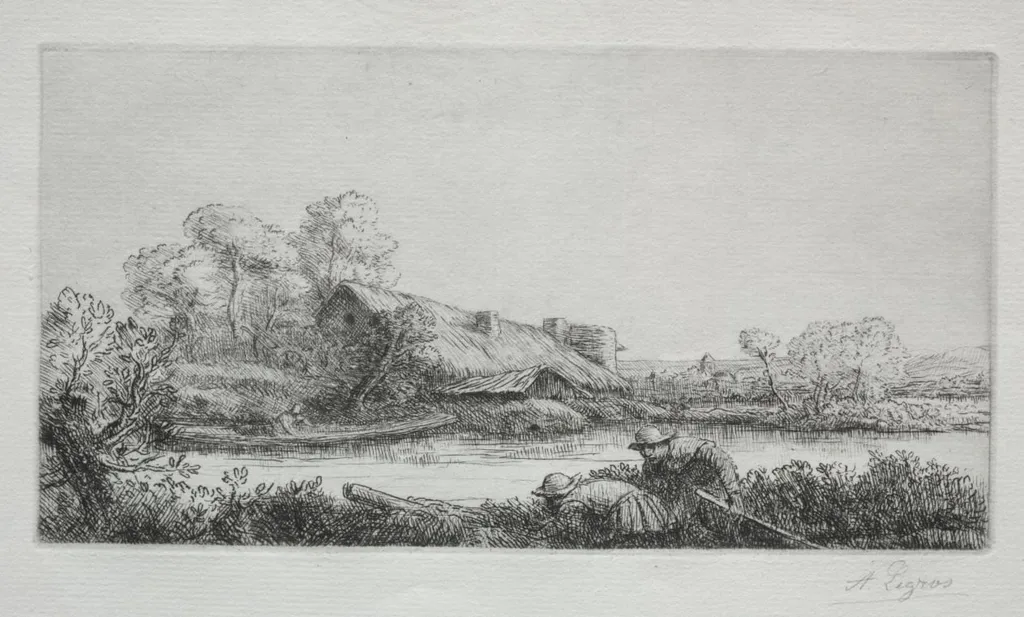
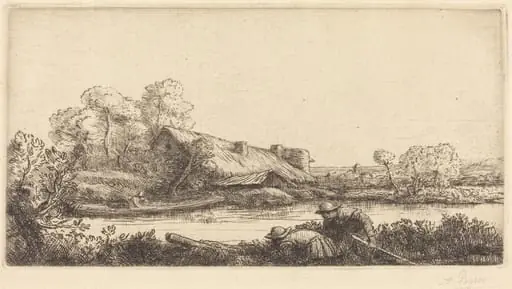
The Farm on the River (La Ferme Sur La Rivière: Effet Du Soir) is a print by the Impressionist artist Alphonse Legros. It dates from 1884 and is held in the collection of the Cleveland Museum of Art.
About this work
Overview
The artist’s focus on atmospheric effect over narrative detail reflects his interest in mood and quiet observation.
Created in 1884 by Alphonse Legros, The Farm on the River (La Ferme Sur La Rivière: Effet Du Soir) is a tonal landscape print that captures the quiet transition from day to night. Rendered in subtle gradations of light and shadow, the work presents a rural scene along a calm river, with a distant farmhouse and dense trees framing the composition. The artist’s focus on atmospheric effect over narrative detail reflects his interest in mood and quiet observation.
Subject & Meaning
The scene depicts a solitary figure seated on the riverbank, gazing toward the water as twilight settles. The farmhouse in the distance, barely illuminated, suggests human presence without intrusion. The stillness of the figure and the fading light convey a contemplative pause, evoking solitude and the passage of time. There is no dramatic action—only the gentle rhythm of nature and the quiet dignity of rural life.
Technique & Style
Legros employed drypoint and etching to achieve fine, nuanced tonal variations. By layering delicate lines and controlled ink pressure, he modeled forms through chiaroscuro rather than sharp outlines. The water and sky merge in soft gradients, while the foreground’s textured earth and foliage add tactile depth. His method prioritizes atmospheric cohesion over detail, aligning with the aesthetic of late 19th-century tonalism.
History & Provenance
The print entered the collection of The Cleveland Museum of Art in the 20th century, following its creation in France. While its early ownership history is not fully documented, its inclusion in the museum’s holdings reflects its recognition as a significant example of Legros’s graphic work. The piece has remained in the museum’s care since acquisition, preserved as part of its European print collection.
Context
Legros, a French artist of Anglo-French heritage, worked during a period when printmaking was being reevaluated as a serious artistic medium. Influenced by the Barbizon School and English etchers, he rejected theatricality in favor of restrained, observational art. This print aligns with broader 19th-century trends that valued mood, naturalism, and the poetic potential of twilight and rural subjects.
Legacy
Though less widely known than his contemporaries, Legros’s prints like this one contributed to the revival of etching as a medium for expressive, non-narrative imagery. His emphasis on tone and atmosphere influenced later generations of printmakers seeking emotional resonance through subtlety rather than spectacle. The work remains a quiet testament to his commitment to understated realism.
Artist & collection

Artist
Alphonse Legros (French pronunciation: ; 8 May 1837 – 8 December 1911) was a French, later British, painter, etcher, sculptor, and medallist.

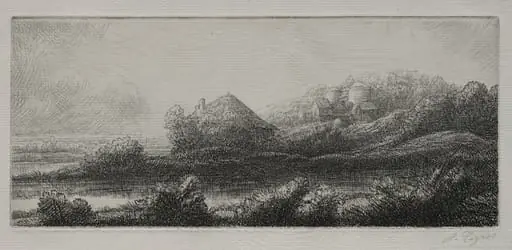 Cabin in the Marsh
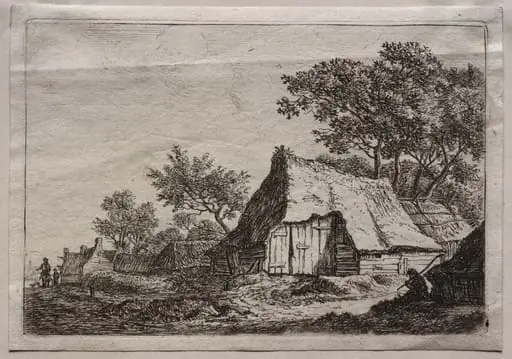 Twelve Landscapes: Plate I, The Small Hamlet
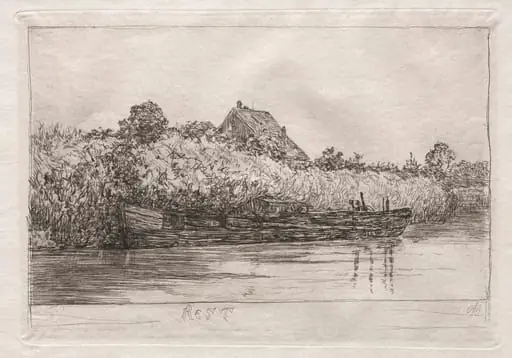 Rest
Rest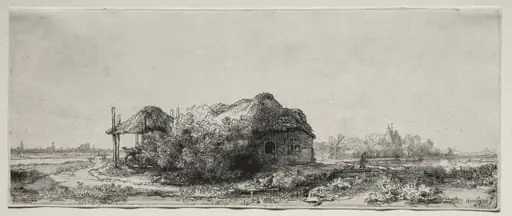 Landscape with a Cottage and Hay Barn: Oblong
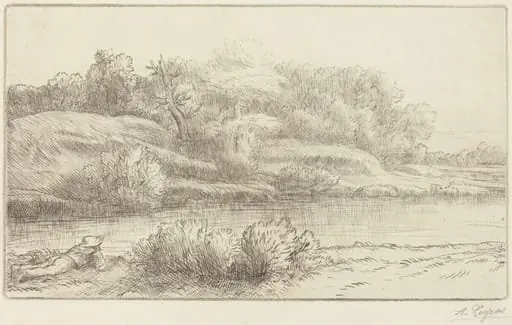 Banks of the Venelle (Bord de la Venelle)
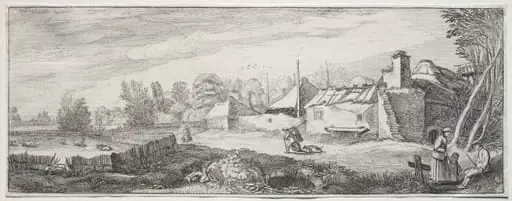 Some Pleasing Landscapes and Ruins of Ancient Monuments: Dilapidated Farm
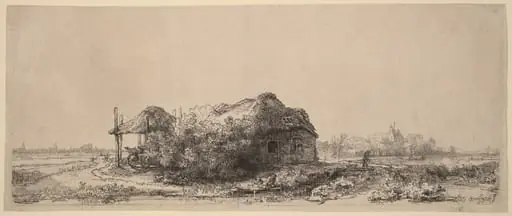 Landscape with a Cottage and Hay Barn: Oblong
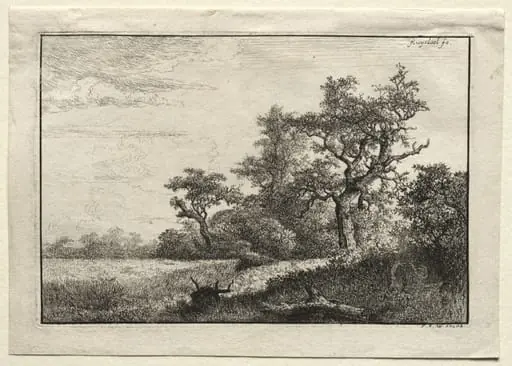 The Wheat Field
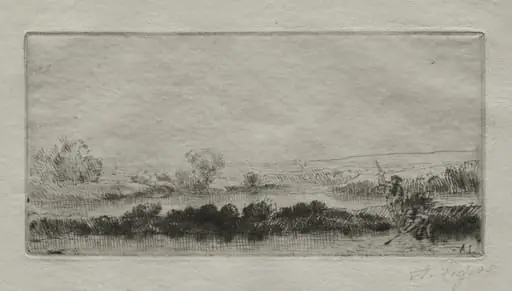 Landscape with Peat-bog: In the Marsh
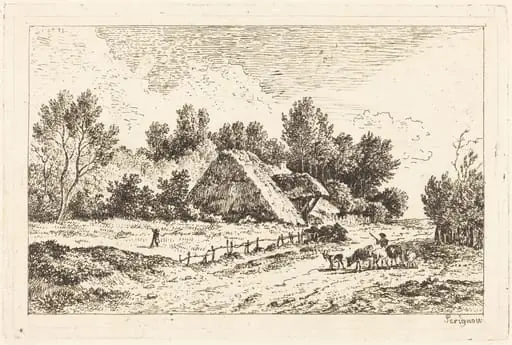 A Low Cottage with a Herdsman Leading His Flock
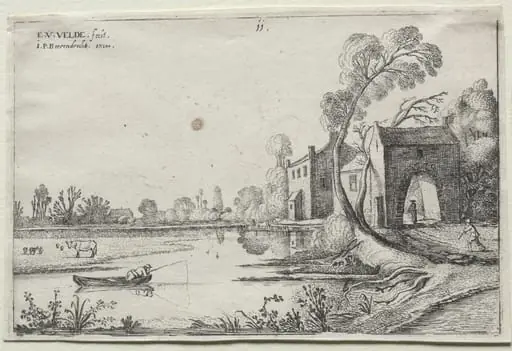 Landscape with a River and a Gatehouse
 Farm along the River seen by Evening Light (La ferme sur la riviere: Effet du soir)