Artwork
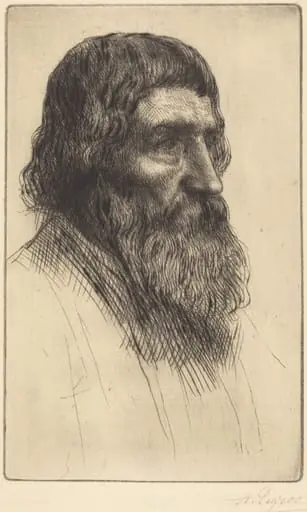
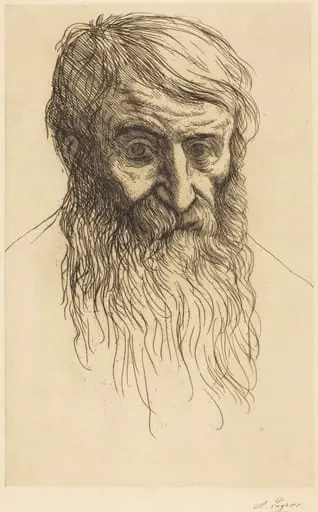
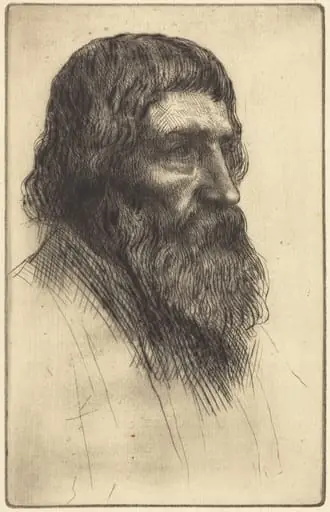
Head of a Man with a Long Beard
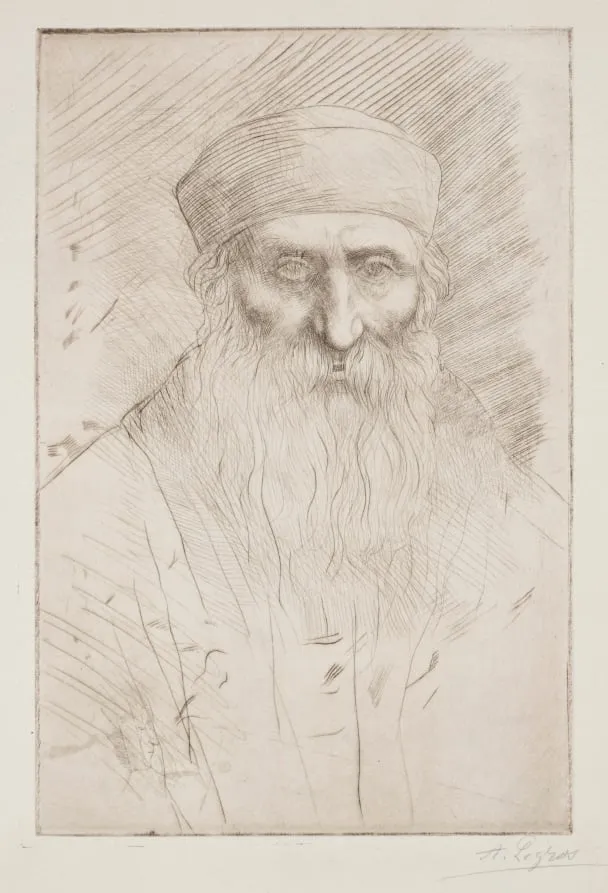
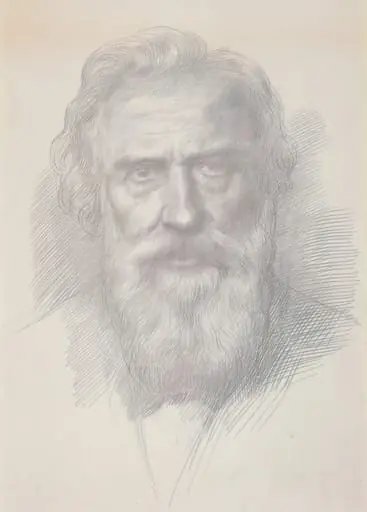
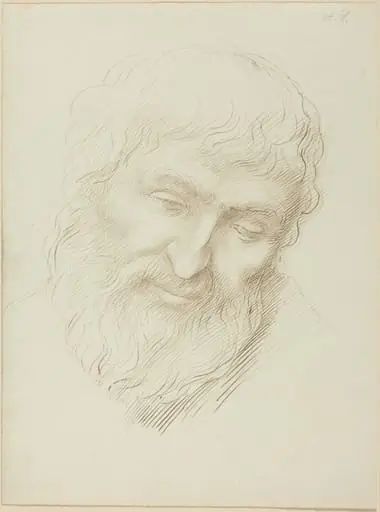
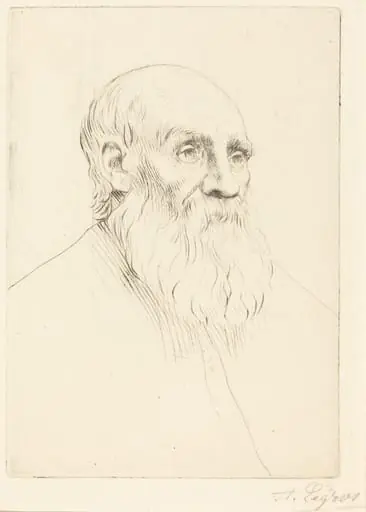
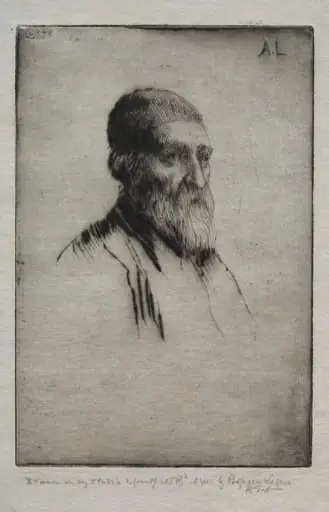
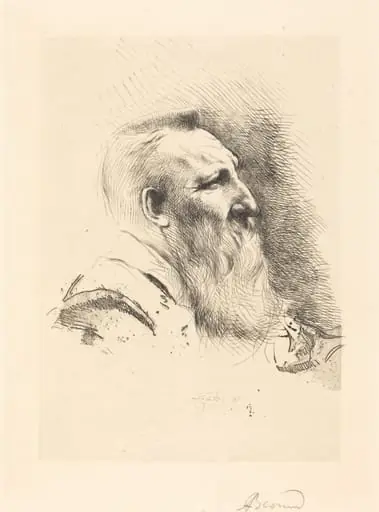
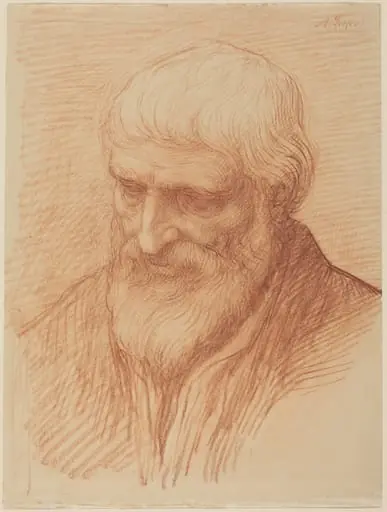
Head of a Man with a Long Beard is a print by the Impressionist artist Alphonse Legros. It dates from 1884 and is held in the collection of the Cleveland Museum of Art.
About this work
Overview
Created in 1884 by Alphonse Legros, this print captures a solitary male figure in profile, rendered with minimal background and intense focus on facial detail.
Created in 1884 by Alphonse Legros, this print captures a solitary male figure in profile, rendered with minimal background and intense focus on facial detail. Executed in a sketch-like manner, the work belongs to a tradition of observational portraiture that values immediacy over finish. It is part of the collection at The Cleveland Museum of Art, where it is studied for its expressive economy and tactile rendering.
Subject & Meaning
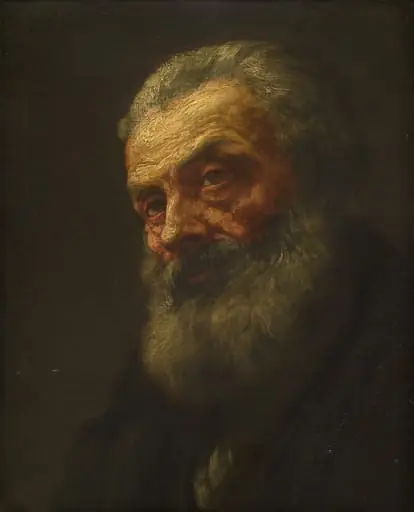
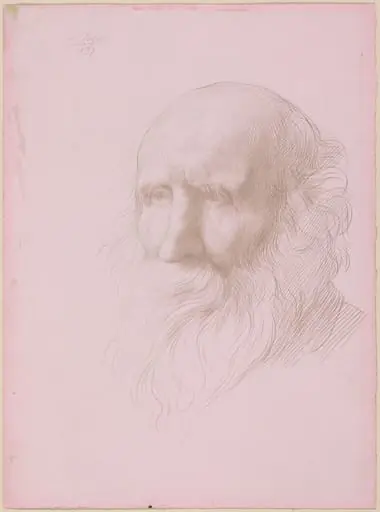
The subject is an elderly man, his face marked by deep creases and a thick, white beard that cascades downward. The low-brimmed cap suggests modesty or labor, while the piercing gaze conveys quiet intensity. There is no narrative context, yet the portrait evokes a sense of lived experience—time etched into skin and hair—inviting contemplation rather than storytelling.
Technique & Style
Legros employed rapid, incised lines to model form, emphasizing texture over smoothness. The beard and hair are rendered with dense, directional strokes that suggest volume and movement, while the skin is defined by subtle, interrupted contours. The background is left nearly blank, heightening the figure’s presence. This approach prioritizes tactile immediacy, aligning with 19th-century drawing practices that valued spontaneity.
History & Provenance
The print entered the Cleveland Museum of Art’s collection through documented acquisition, though its earlier ownership remains unrecorded in public sources. As a work from Legros’s later period, it reflects his sustained interest in portraiture and the human condition. Its preservation in a major institution underscores its role as an example of academic draftsmanship adapted to intimate expression.
Context
Made during a time when artists were reevaluating the value of sketch-like forms, this print resonates with movements that rejected idealized finishes in favor of authenticity. Legros, trained in France and active in England, bridged continental and British artistic circles. His focus on unadorned physiognomy aligns with contemporaneous interest in character over ornament, particularly in printmaking circles.
Legacy
Though not widely reproduced, the work exemplifies Legros’s contribution to the revival of direct drawing in print media. Its emphasis on texture and psychological presence influenced later generations of artists seeking to convey humanity through minimal means. It remains a reference point in studies of 19th-century graphic art that privileged observation over theatricality.
Artist & collection

Artist
Alphonse Legros (French pronunciation: ; 8 May 1837 – 8 December 1911) was a French, later British, painter, etcher, sculptor, and medallist.