Artwork
Study of a Philosopher
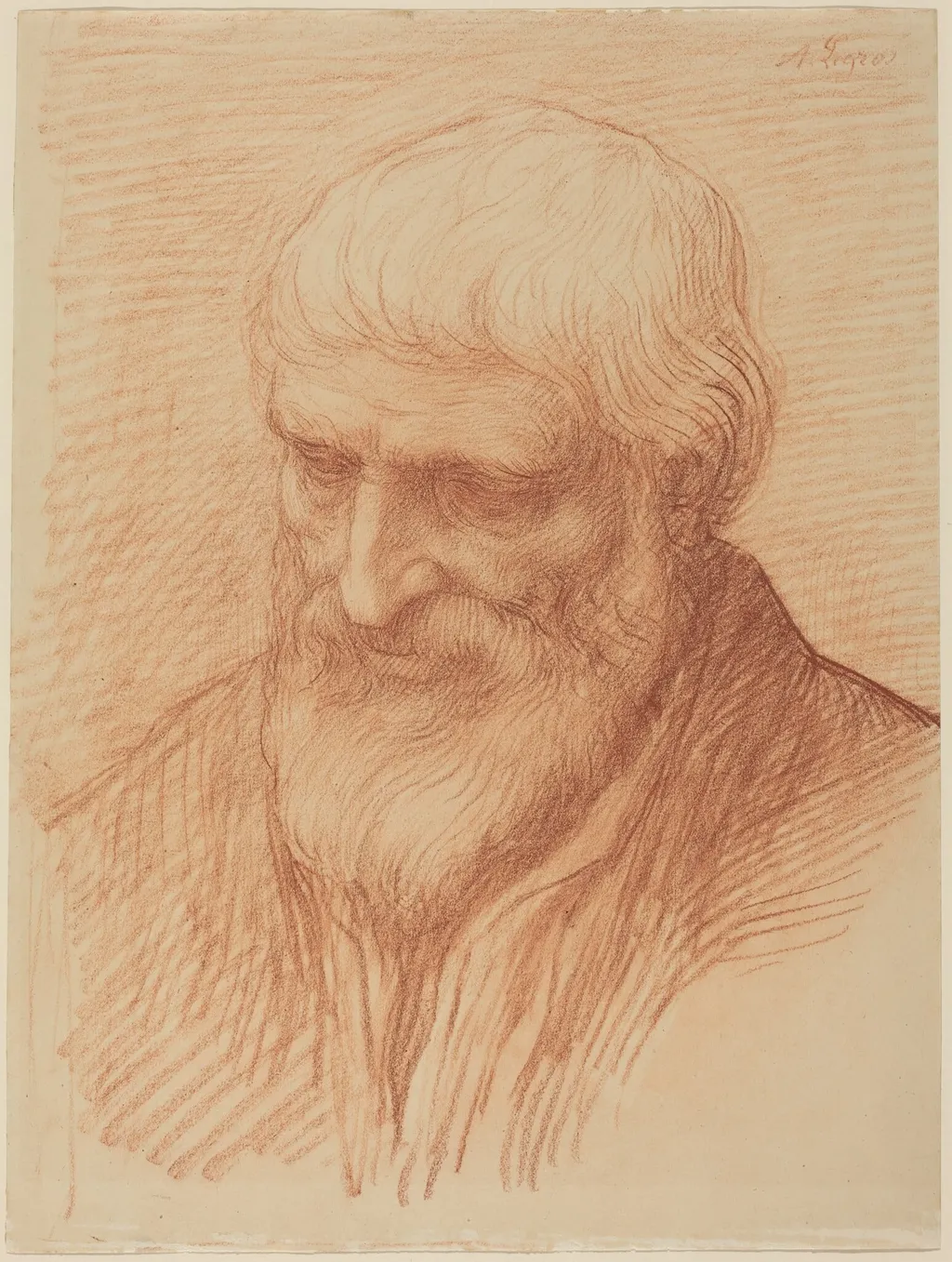
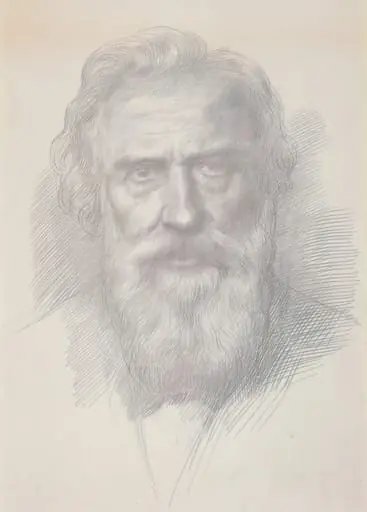
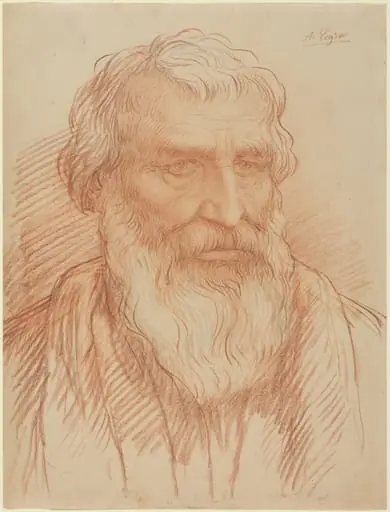
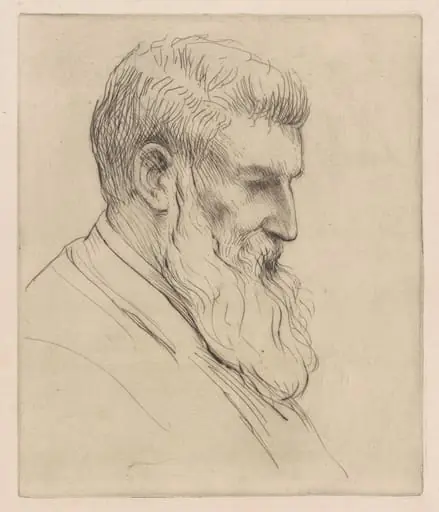
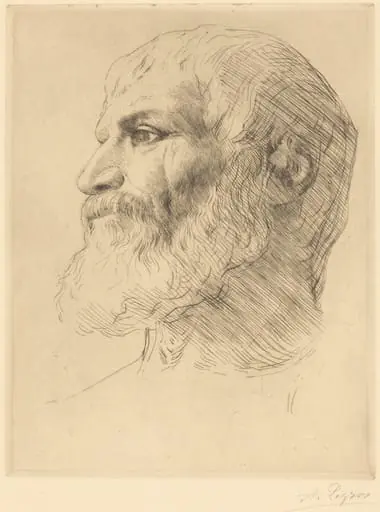
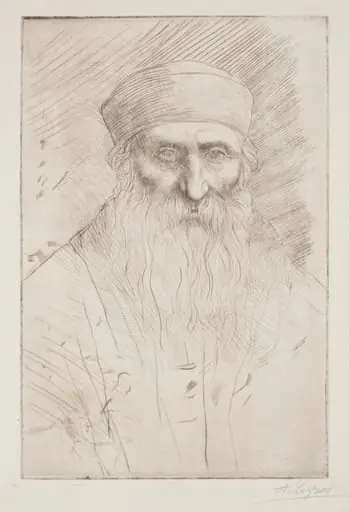
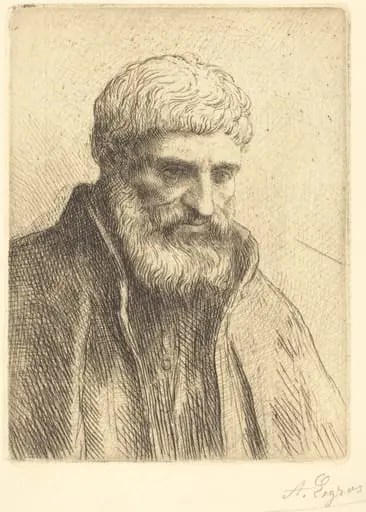
Study of a Philosopher is a chalk drawing by the Romanticist artist Alphonse Legros. It dates from 1874 and is held in the collection of the National Gallery of Art.
About this work
Overview
The work is a focused study, not a finished piece, emphasizing observation over finish and revealing his interest in human presence and intellectual stillness.
Created in 1874, this red chalk drawing by Alphonse Legros reflects his transition from France to Britain, where he became a central figure in the revival of etching. Though trained in multiple media, Legros often turned to drawing for its immediacy. The work is a focused study, not a finished piece, emphasizing observation over finish and revealing his interest in human presence and intellectual stillness.
Subject & Meaning
The figure is a solitary male, seated in quiet reflection, his posture suggesting deep thought. No specific philosopher is identified; the subject is generalized, evoking the archetype of contemplation rather than a historical person. The absence of context or symbolic objects directs attention to the inner life of the individual, aligning with 19th-century interests in psychological depth and the dignity of intellectual labor.
Technique & Style
Legros employed red chalk with deliberate, fluid strokes, building form through tonal gradations rather than outline. The texture of the paper interacts with the medium, enhancing the figure’s solidity. His handling balances precision with spontaneity—shadows are softened, contours are suggested, and the face emerges from subtle modeling, reflecting his training in academic draftsmanship while resisting rigid formalism.
History & Provenance
The drawing was made during Legros’s early years in London, after his 1863 relocation. It likely served as preparatory material for larger works or as an independent study. While its early ownership is undocumented, it entered public collections in the 20th century, where it has been recognized as representative of his graphic work and his influence on British drawing practices.
Context
In the 1870s, British art institutions were reevaluating the role of drawing as a serious art form, moving beyond mere preparation. Legros, as a professor at the Slade School, championed direct observation and expressive line. This study aligns with broader European trends favoring introspective portraiture and the artist’s hand as a conduit for intellectual and emotional truth.
Legacy
Legros’s drawings, including this one, helped redefine the status of chalk studies in Britain, elevating them from sketches to autonomous works. His emphasis on psychological presence influenced generations of students and artists. Though less known today than his etchings, this drawing remains a quiet testament to his commitment to the expressive potential of simple materials and focused observation.
Own this work as a print
Artist & collection

Artist
Alphonse Legros (French pronunciation: ; 8 May 1837 – 8 December 1911) was a French, later British, painter, etcher, sculptor, and medallist.