Artwork
Landscape (Paysage)
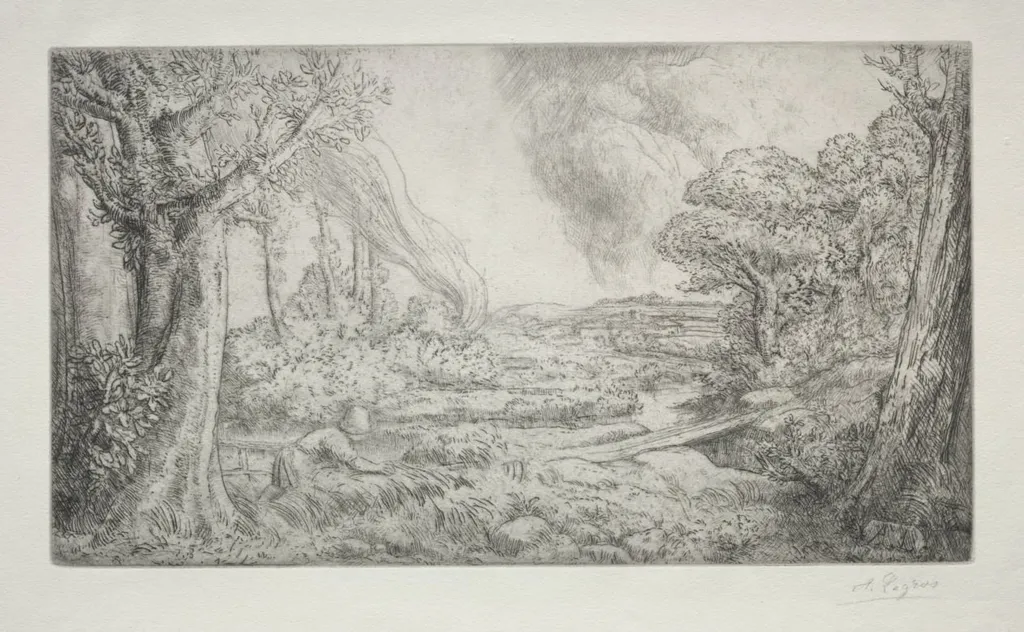
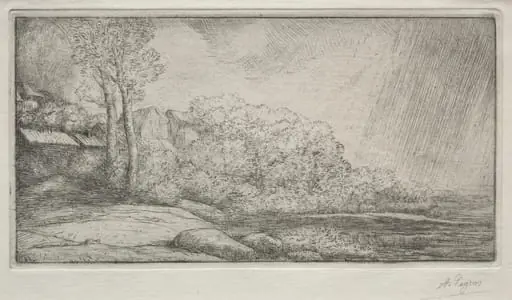
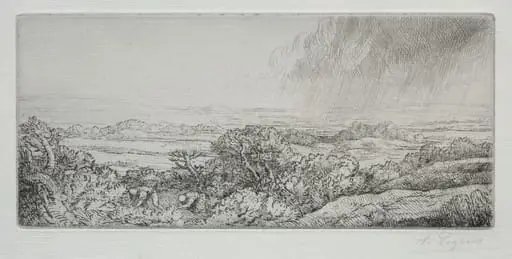
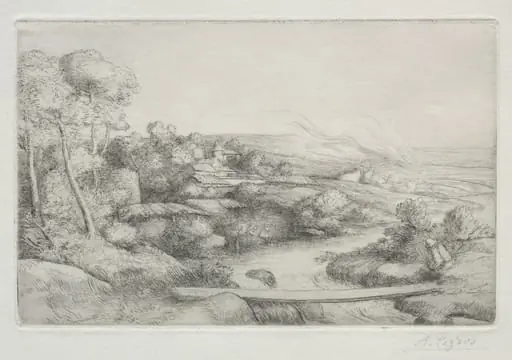
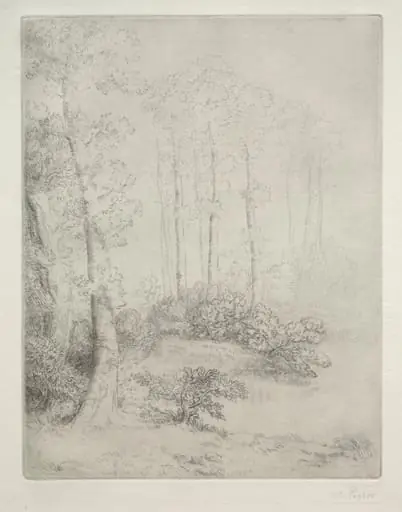
Landscape (Paysage) is a print by the Impressionist artist Alphonse Legros. It dates from 1884 and is held in the collection of the Cleveland Museum of Art.
About this work
Overview
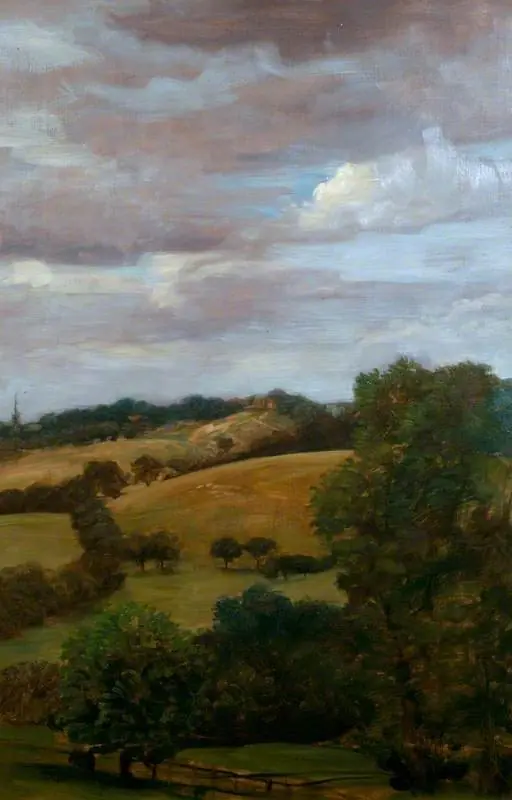
The composition centers on a solitary figure seated in the foreground, oriented away from the viewer, surrounded by dense vegetation and a hazy sky.
Landscape (Paysage), created by Alphonse Legros in 1884, is a printed work depicting a quiet rural scene. It resides in the collection of The Cleveland Museum of Art. The composition centers on a solitary figure seated in the foreground, oriented away from the viewer, surrounded by dense vegetation and a hazy sky. The piece is rendered with careful attention to natural forms, emphasizing atmosphere over dramatic narrative.
Subject & Meaning
The lone figure, cloaked in a hat and seated on the earth, suggests contemplation or rest, inviting quiet reflection rather than storytelling. The absence of facial detail and the figure’s turned back diminish personal identity, focusing attention instead on the relationship between human presence and the natural environment. The scene evokes solitude within the landscape, a recurring theme in 19th-century European printmaking.
Technique & Style
Legros employed detailed tonal modeling to render foliage and terrain with a sense of tactile realism. The texture of leaves, grass, and earth is built through precise line work and subtle gradations of shadow, reflecting his training in academic draftsmanship. While the composition avoids the loose brushwork of Impressionism, it shares an interest in observed nature, grounded in careful study rather than fleeting light effects.
History & Provenance
Created in 1884, the print entered The Cleveland Museum of Art’s collection through documented acquisition, though its earlier ownership history remains unrecorded in public sources. Legros, a French artist active in both France and England, produced numerous prints during this period, often exploring rural themes. This work reflects his engagement with printmaking as a medium for intimate, observational art.
Context
In the 1880s, Legros was part of a generation of artists who valued technical precision and direct observation, even as Impressionism gained prominence. His work diverged from the movement’s emphasis on color and light, instead favoring structure and detail. This print aligns with broader European trends in landscape printmaking that prioritized quiet, unidealized nature over romanticized scenery.
Legacy
Legros’s Landscape (Paysage) exemplifies a quieter strand of 19th-century printmaking that valued craftsmanship and subtle expression over spectacle. Though less widely known than his contemporaries in Impressionism, his work contributed to the continued relevance of detailed naturalism in print media. The piece remains a reference for studies in academic landscape traditions during a period of stylistic transition.
Artist & collection

Artist
Alphonse Legros (French pronunciation: ; 8 May 1837 – 8 December 1911) was a French, later British, painter, etcher, sculptor, and medallist.