Artwork
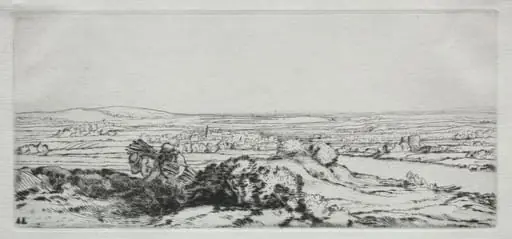
Village of Wimille, near Boulogne
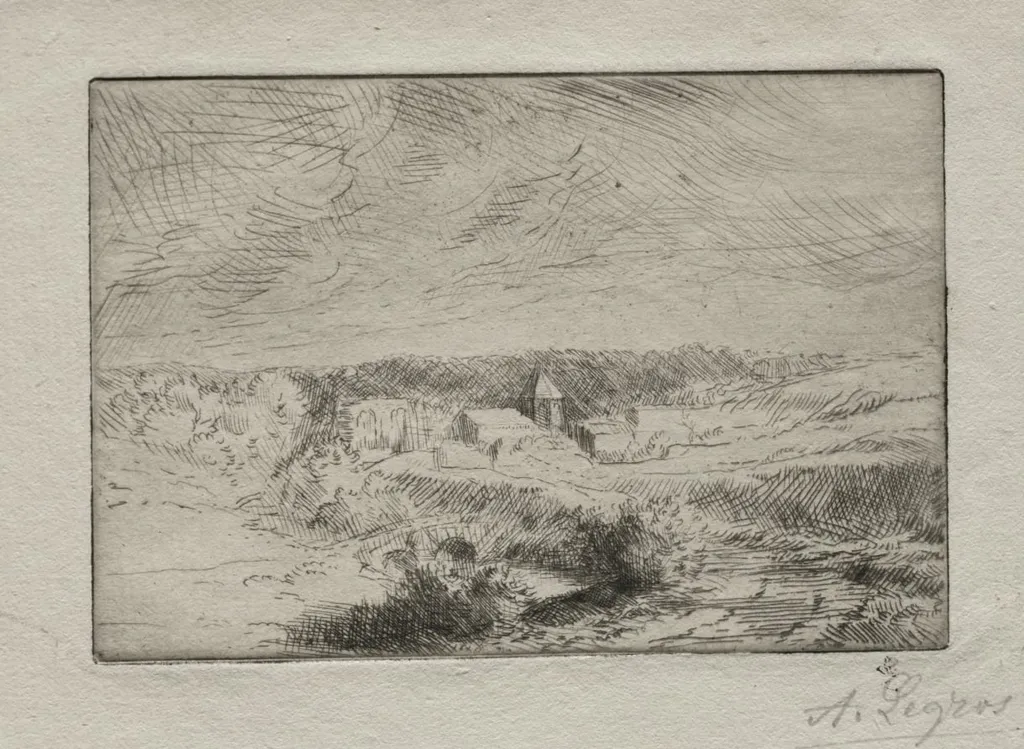
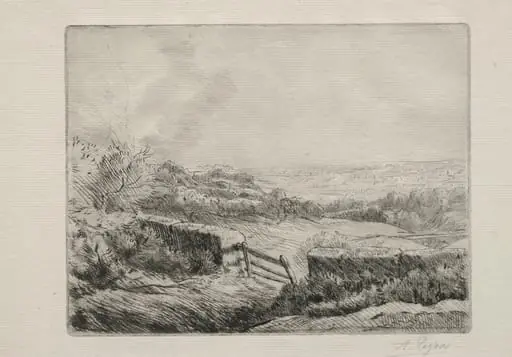
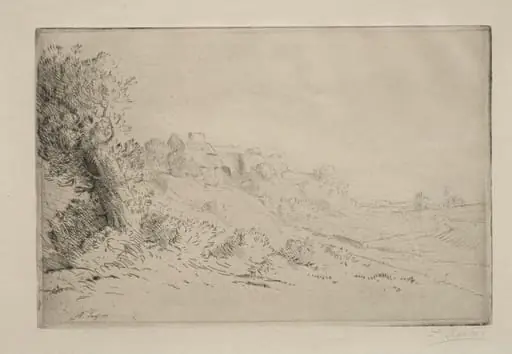
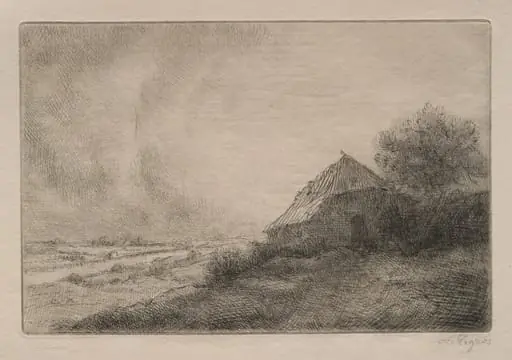
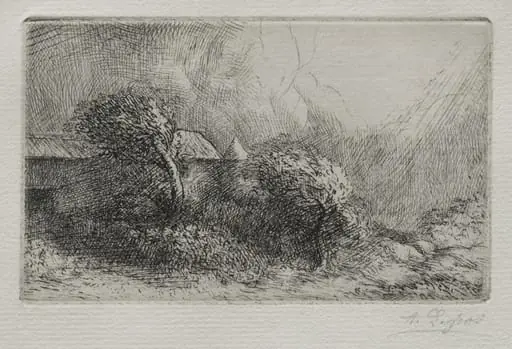
Village of Wimille, near Boulogne is a print by the Impressionist artist Alphonse Legros. It dates from 1884 and is held in the collection of the Cleveland Museum of Art.
About this work
Overview
Created in 1884 by Alphonse Legros, this ink drawing depicts the rural hamlet of Wimille near Boulogne. Executed with swift, expressive marks, the work belongs to a tradition of observational sketching rather than polished finish. It is held in the collection of The Cleveland Museum of Art, where it reflects the artist’s interest in capturing the quiet rhythms of everyday landscapes.
Subject & Meaning
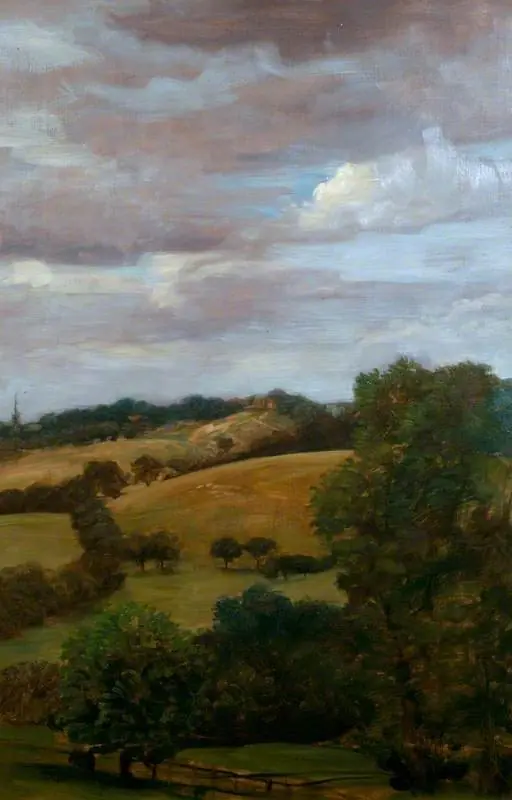
The scene centers on a modest village nestled in a shallow valley, with a modest church tower rising as the only vertical emphasis.
The scene centers on a modest village nestled in a shallow valley, with a modest church tower rising as the only vertical emphasis. No figures are present, and the absence of human activity underscores a sense of stillness. The composition avoids narrative or symbolism, focusing instead on the quiet presence of rural architecture and terrain, aligning with a Realist preference for unembellished observation.
Technique & Style
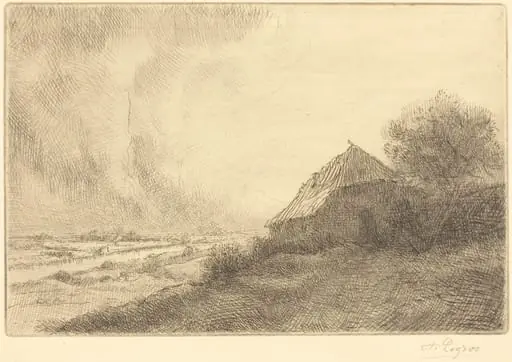
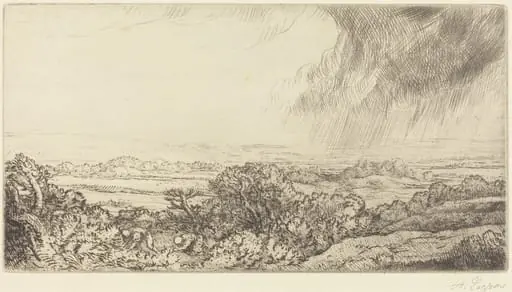
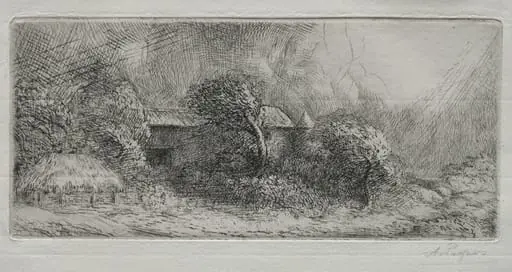
Legros employed contrasting mark-making: loose, scratchy strokes suggest wind-tossed trees and atmospheric sky, while tighter cross-hatching defines the solid forms of buildings and hills. The uneven, hurried lines imply direct observation, possibly en plein air. The lack of refinement and the soft, blurred edges prioritize mood and immediacy over precision, characteristic of preparatory or spontaneous drawing practices of the period.
History & Provenance
The drawing was made in 1884 during Legros’s time in northern France, where he frequently sketched rural scenes. It entered the Cleveland Museum of Art’s collection through established acquisition channels, likely as part of a broader interest in 19th-century European graphic works. Its provenance remains unremarkable, consistent with the modest status of drawings as working studies rather than finished exhibitions.
Context
In the late 19th century, artists across Europe turned to direct observation of ordinary life as a counter to academic idealism. Legros’s sketch aligns with Realist tendencies, sharing affinities with the work of Millet or Daubigny. Such drawings were often made outdoors, serving as records of light, structure, and atmosphere—tools for understanding nature rather than public displays of skill.
Legacy
Though not widely exhibited, this drawing exemplifies Legros’s commitment to truthful representation through direct handling. It contributes to the broader recognition of drawing as a legitimate artistic language, not merely a preliminary step. Its presence in a major museum underscores the value placed on unadorned, observational work within the evolution of modern graphic art.
Artist & collection

Artist
Alphonse Legros (French pronunciation: ; 8 May 1837 – 8 December 1911) was a French, later British, painter, etcher, sculptor, and medallist.