Artwork
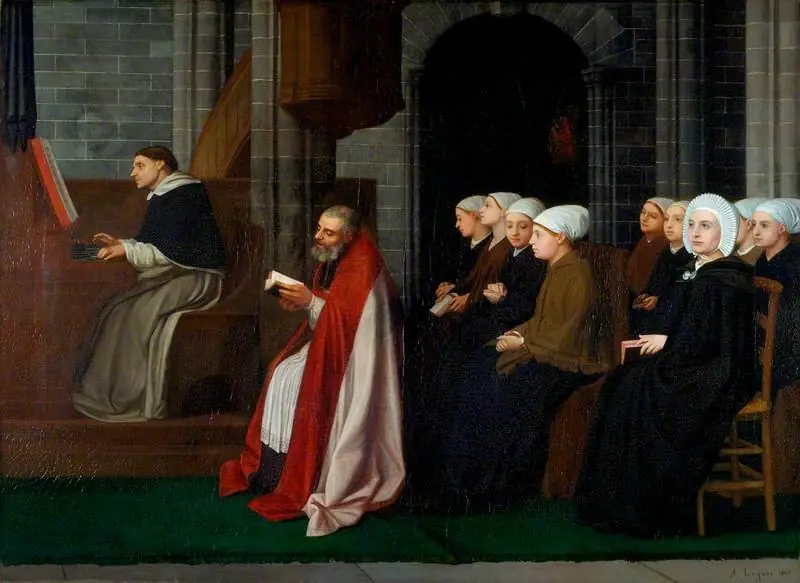
Interior with an Organist and a Procession
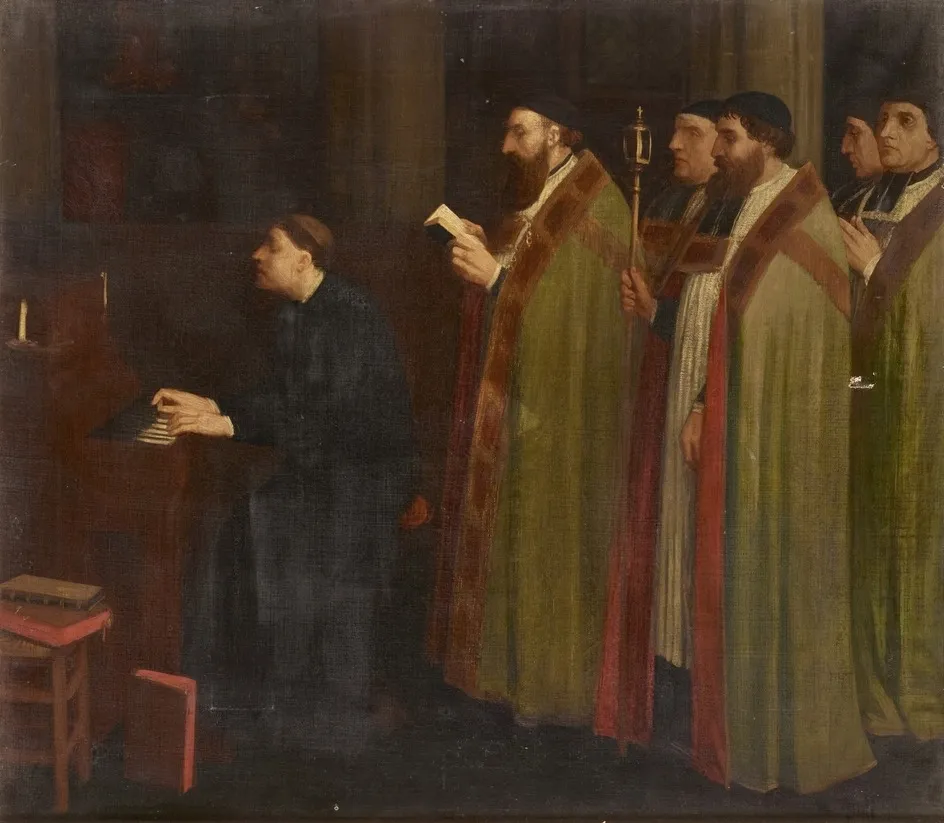
Interior with an Organist and a Procession is an unspecified painting by the Realist artist Alphonse Legros. It dates from 1865 and is held in the collection of the Ashmolean Museum.
About this work
Overview
The painting resides in the Ashmolean Museum, where it is recognized for its restrained emotional tone and careful handling of light.
Painted in 1865 by Alphonse Legros, this work depicts an interior space filled with solemn figures engaged in a ritual. The scene centers on a man playing an organ, surrounded by a line of robed individuals facing forward. The composition is tightly controlled, with minimal detail in the background, emphasizing the quiet gravity of the moment. The painting resides in the Ashmolean Museum, where it is recognized for its restrained emotional tone and careful handling of light.
Subject & Meaning
The figures appear to be clergy or choir members participating in a liturgical procession. Their synchronized posture and uniform robes suggest ritual order, while the organist’s focused gesture implies musical leadership within a sacred context. The absence of overt religious symbols shifts emphasis to the atmosphere of reverence, inviting contemplation rather than narrative interpretation. The stillness and alignment of the group convey a sense of collective devotion.
Technique & Style
Legros employs chiaroscuro to model forms and create spatial depth, with strong contrasts between the dark, indistinct background and the softly lit figures. The robes are rendered with subtle gradations of tone rather than detailed patterning, enhancing their volumetric presence. Brushwork is controlled and muted, avoiding theatricality. The limited palette—dominated by deep browns, blacks, and muted reds—reinforces the painting’s somber, introspective character.
History & Provenance
Created during Legros’s early career in France, the painting reflects his interest in religious and domestic interiors, influenced by Dutch and Flemish traditions. It entered the Ashmolean Museum’s collection in the late 19th century, likely through a donation or acquisition by a British collector familiar with French academic art. Its preservation in a public institution has ensured continued scholarly attention, though it remains less widely exhibited than his other works.
Context
In mid-19th-century France, religious subjects were increasingly treated with psychological realism rather than idealized grandeur. Legros, trained in the École des Beaux-Arts, aligned with this trend, favoring quiet, intimate scenes over dramatic narratives. This painting reflects a broader movement toward naturalism in religious art, where spiritual weight is conveyed through atmosphere and gesture rather than iconography.
Legacy
Though not among Legros’s most famous works, this painting exemplifies his commitment to understated emotion and formal discipline. It influenced later artists interested in the interplay of light and ritual, particularly those exploring the quiet dignity of everyday sacred moments. Its presence in the Ashmolean underscores its role as a quiet but significant example of French academic realism in the Victorian era.
Artist & collection

Artist
Alphonse Legros (French pronunciation: ; 8 May 1837 – 8 December 1911) was a French, later British, painter, etcher, sculptor, and medallist.

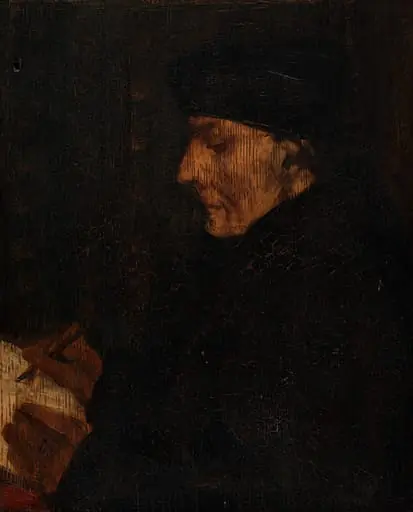
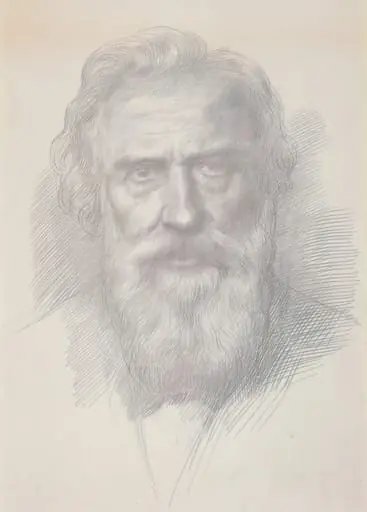
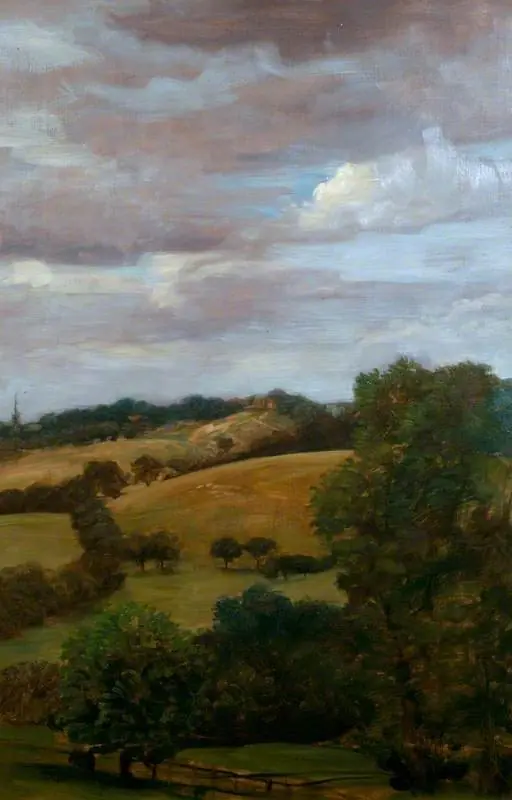
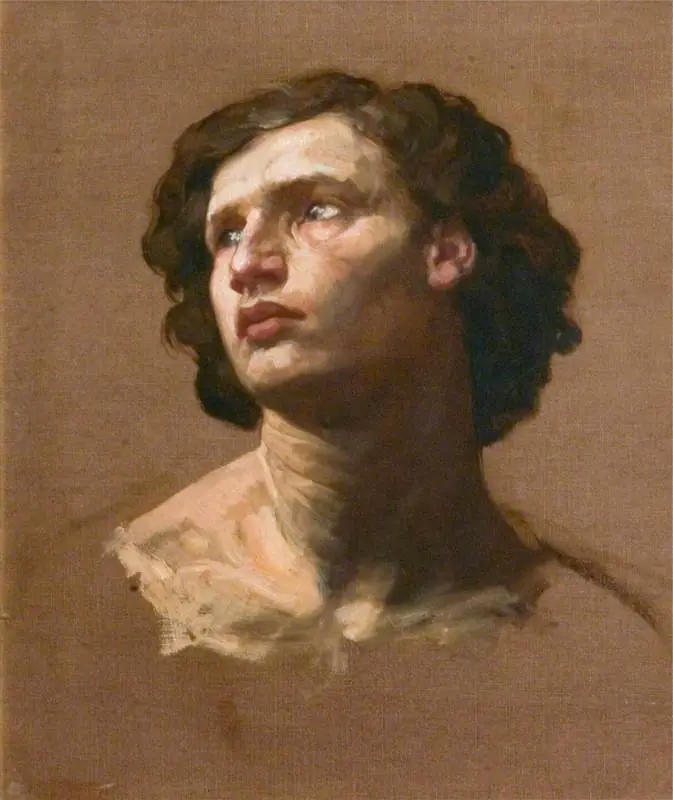
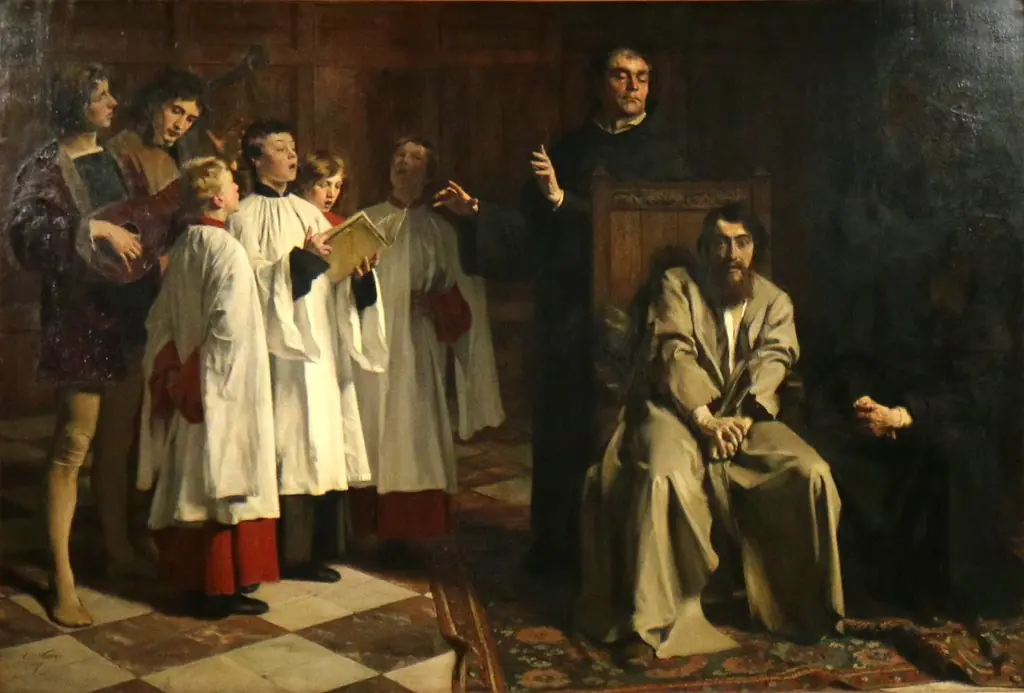 The painter Hugo van der Goes in the Rouge-Cloître Abbey
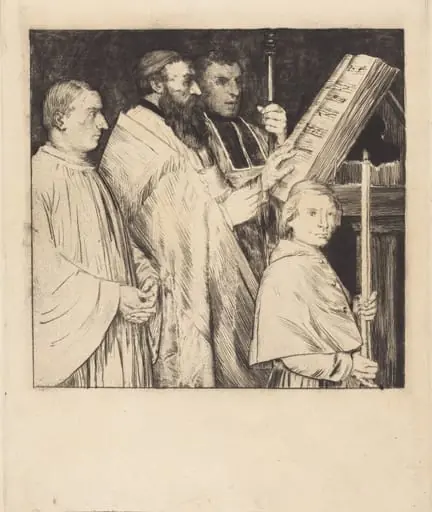 Choristers, 1st plate (Le lutrin)
 A May Service for Young Women
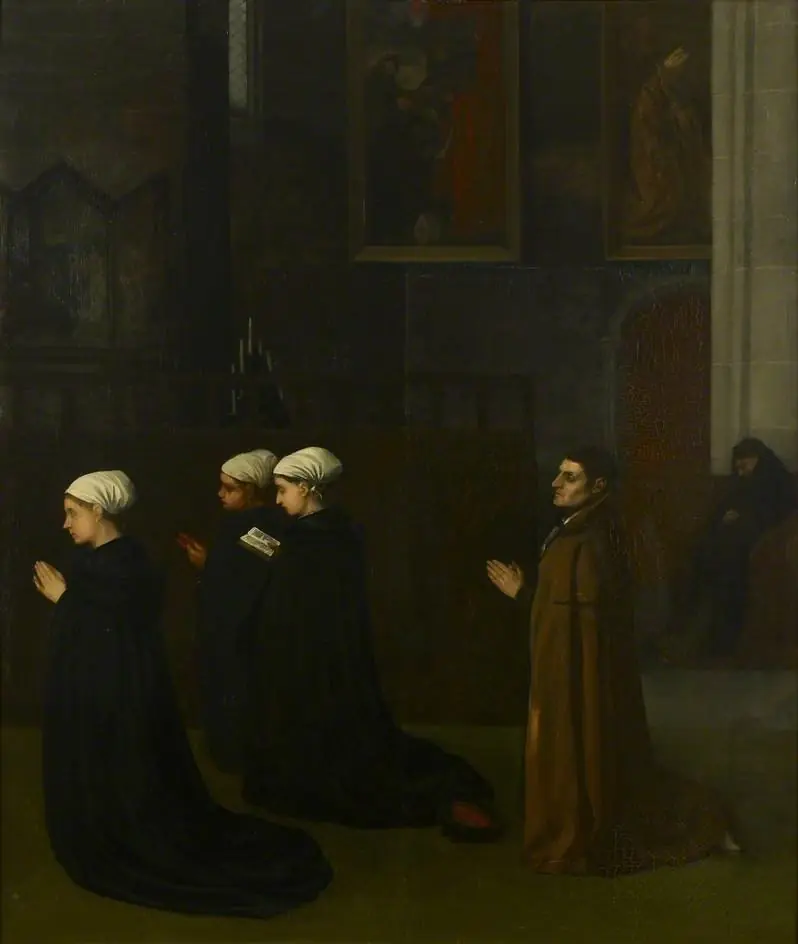 Interior of a Church with kneeling Figures
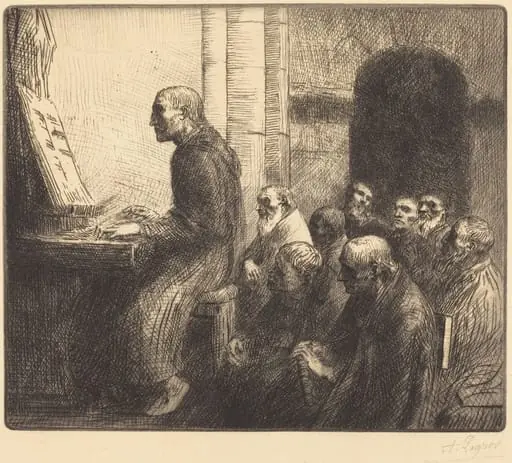 Monk Playing the Organ in Church (Moine jouant de l'orgue a l'eglise)
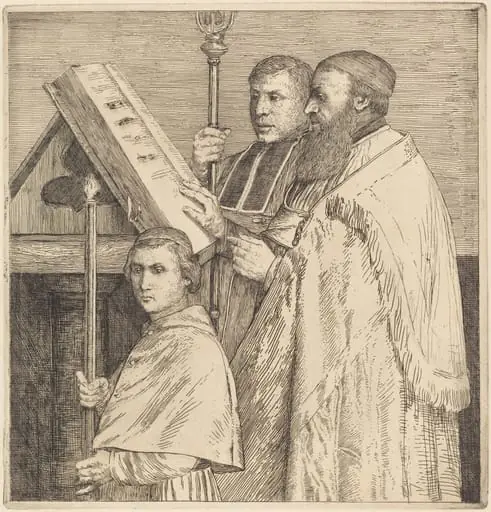 Choristers, 2nd plate (Le lutrin)
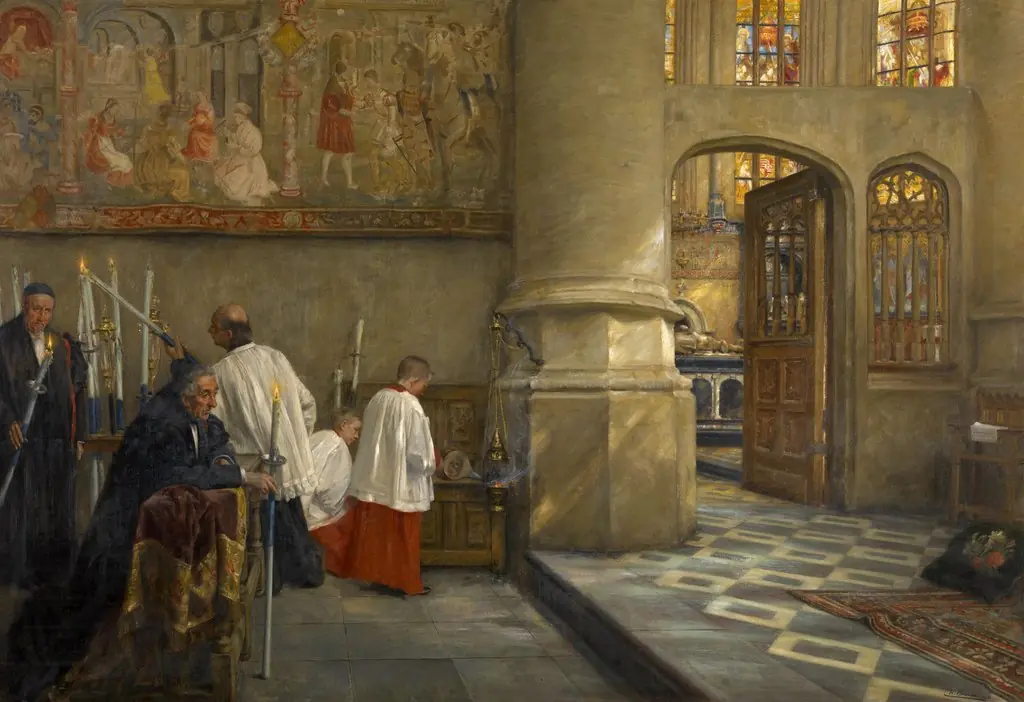 Before Blessing at the Church of Hoogstraten
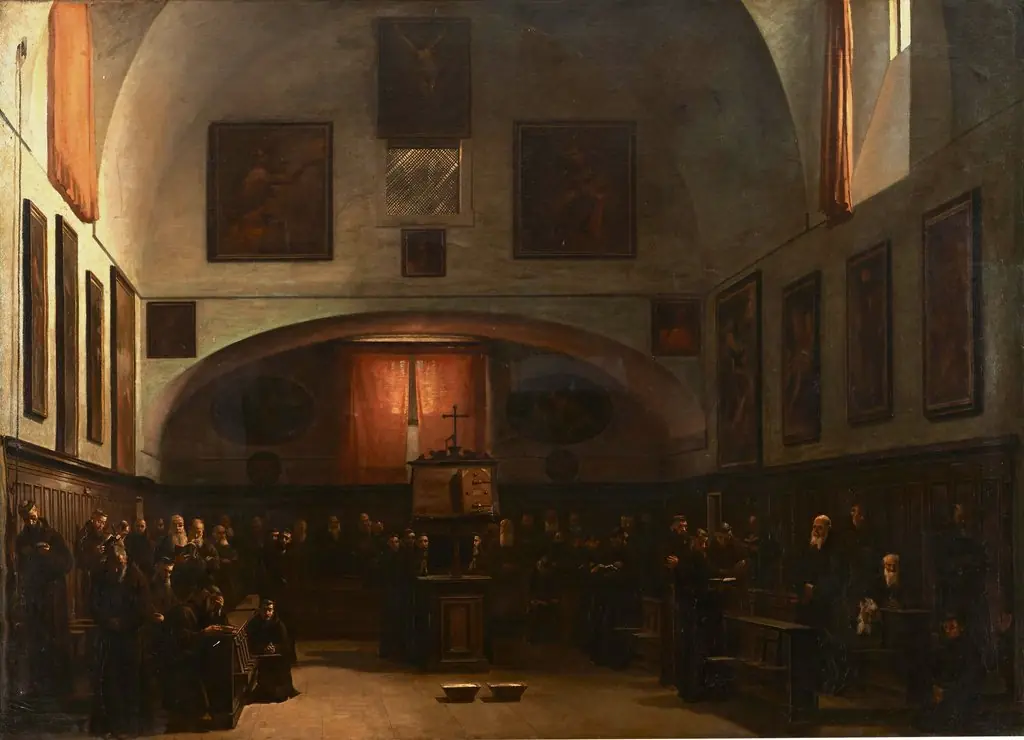 Capuchinos en el coro
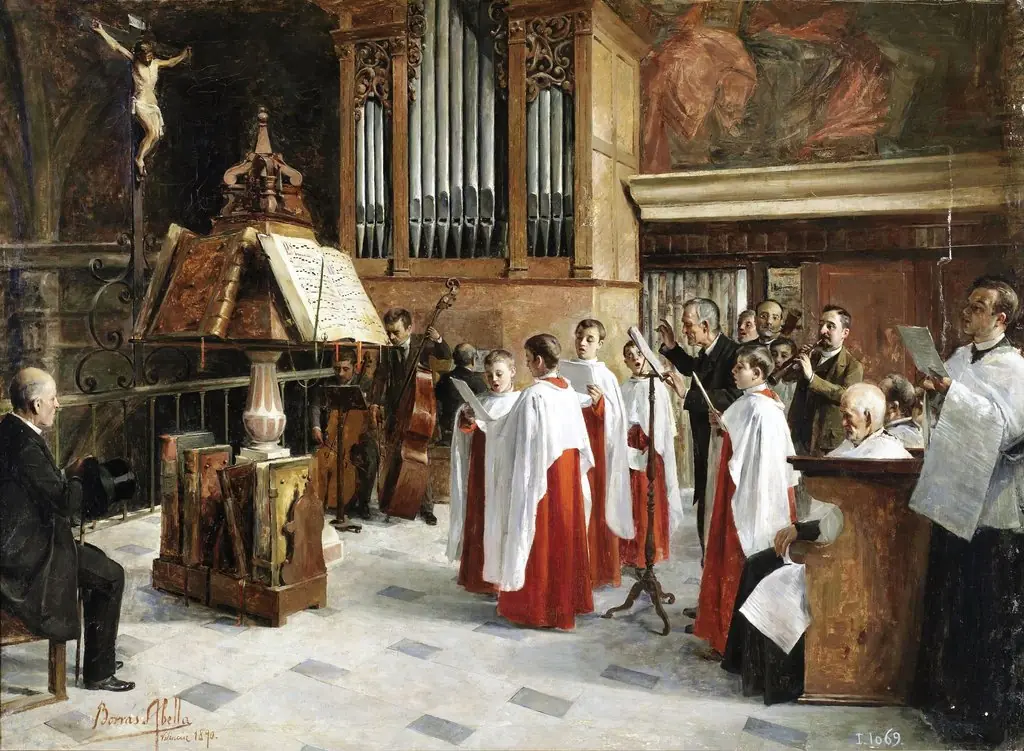 En el coro
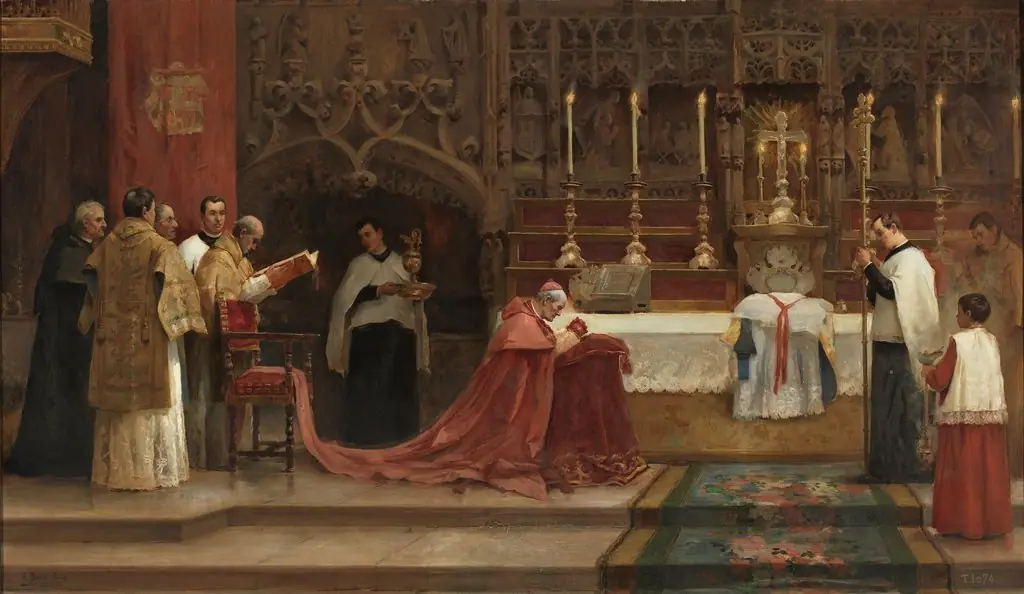 La misa de pontifical
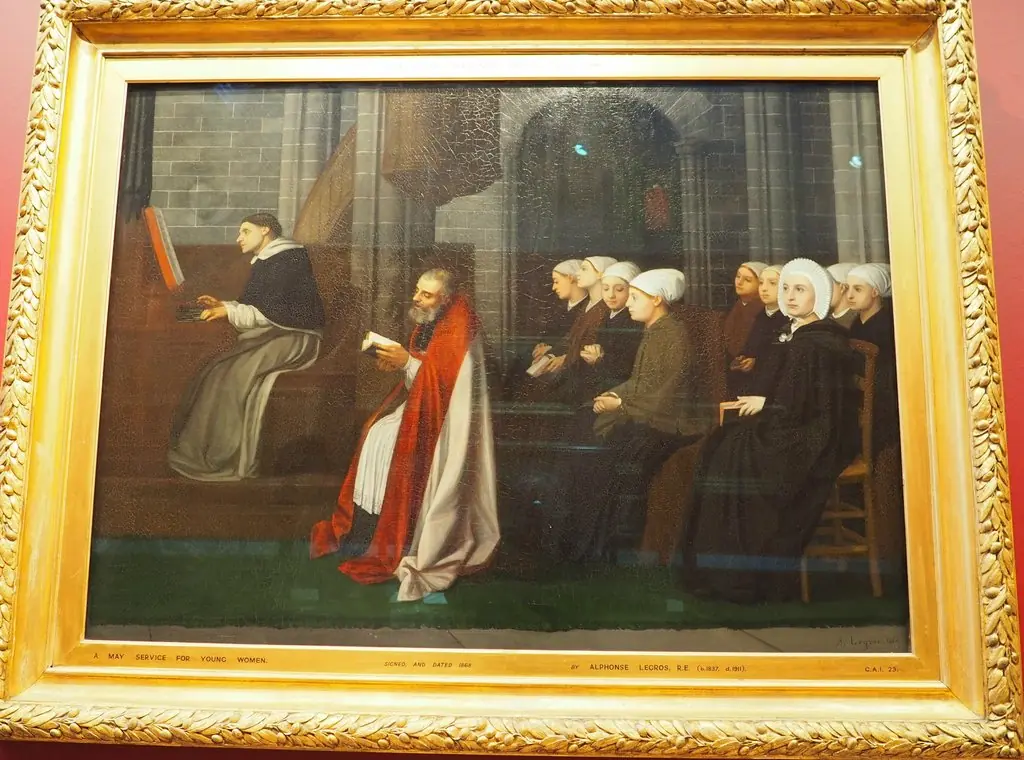 A May Service for Young Women
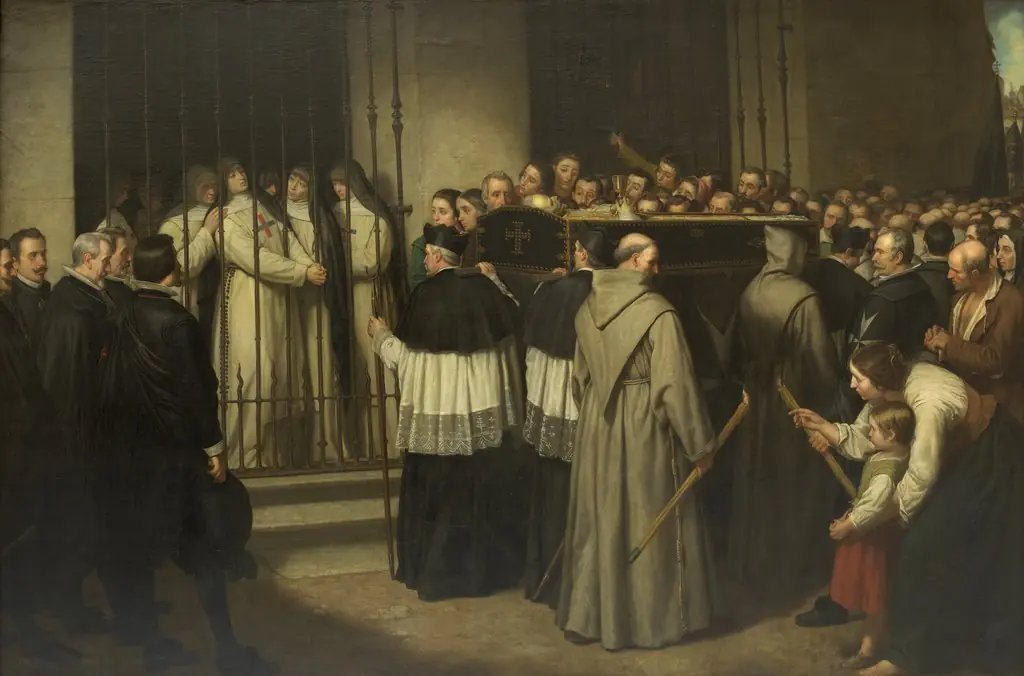 Sor Marcela de San Félix monja de las Trinitarias Descalzas de Madrid viendo pasar el entierro de Lope de Vega su padre