Artwork
Documents Decoratifs: Plate 38
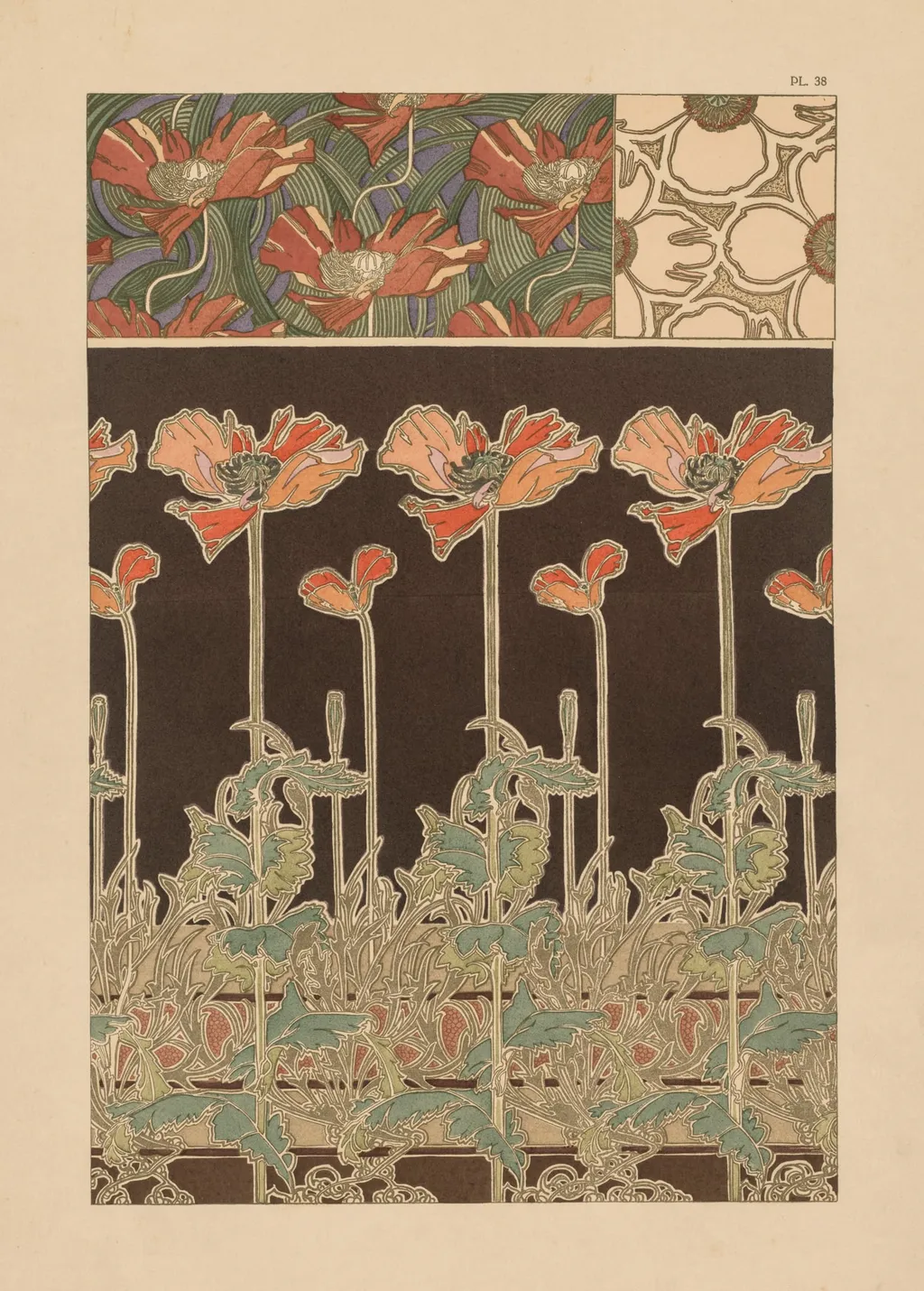
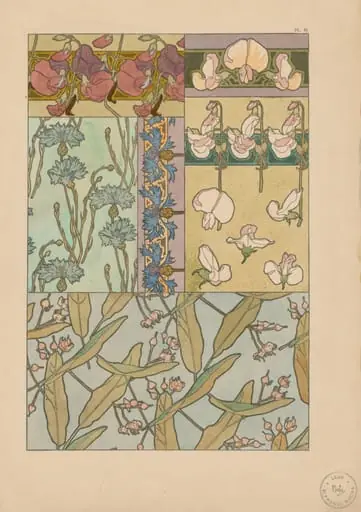
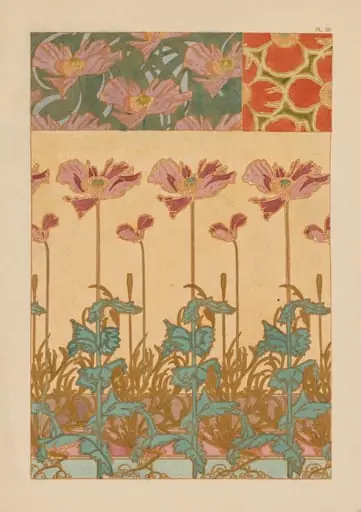
Documents Decoratifs: Plate 38 is a print by the Art Nouveau artist Alphonse Mucha. It dates from 1902 and is held in the collection of the Cleveland Museum of Art.
About this work
It's an example of art from the late 19th and early 20th centuries.
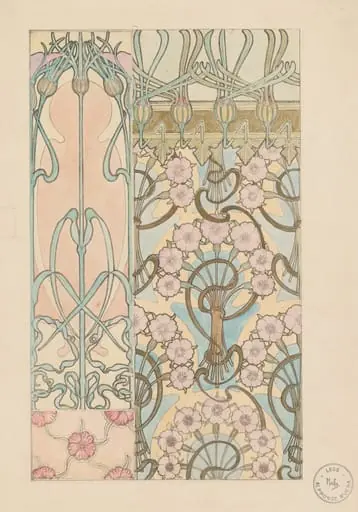
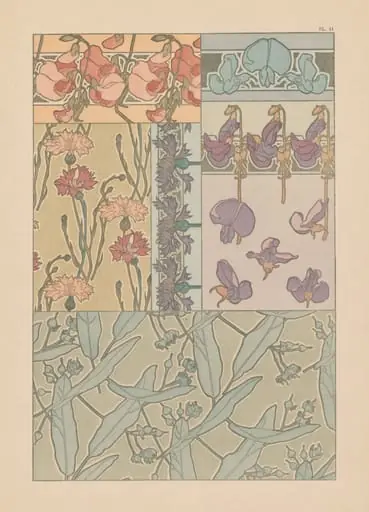
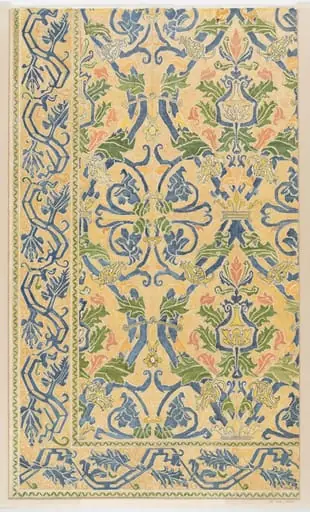
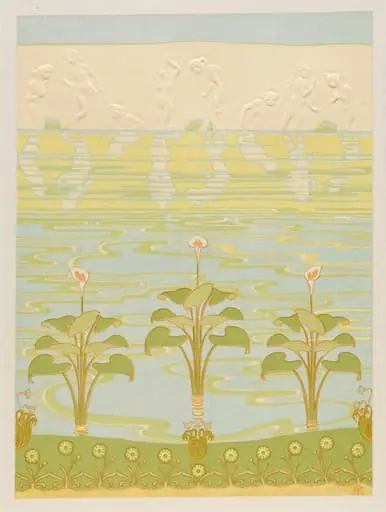
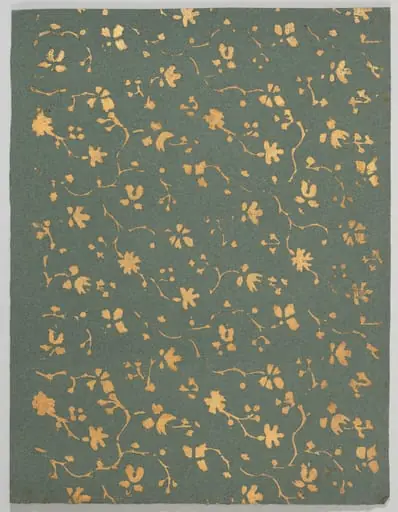
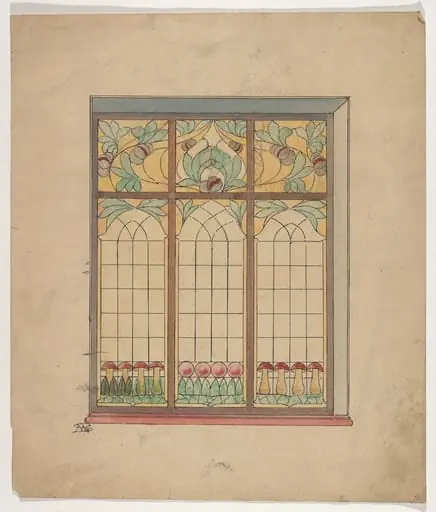
This painting shows a decorative design with flowers and leaves.
It's an example of art from the late 19th and early 20th centuries.
The details in the design are intricate, with many small patterns.
The painting has a lot of small details that make it interesting.
It was made during a time when decorative art was very popular.
You can learn more about this style by looking at the work of artist: Alphonse Mucha (Czech, 1860–1939)
Overview
Plate 38 from Documents Decoratifs is a printed design by Alphonse Mucha, produced in 1902 as part of a series exploring ornamental forms. It resides in the collection of The Cleveland Museum of Art. Unlike standalone paintings, this work functions as a template for applied arts, reflecting Mucha’s interest in integrating fine art with decorative practice during the height of the Art Nouveau movement.
Subject & Meaning
The plate features an intricate arrangement of botanical elements—flowing vines, stylized flowers, and delicate leaves—arranged in a symmetrical yet organic composition. Rather than depicting narrative or portraiture, it emphasizes rhythm and harmony derived from nature. The design serves as a visual vocabulary for interior decoration, suggesting beauty through repetition and fluid line rather than symbolic content.
Technique & Style
Mucha employed line engraving and fine etching to achieve precise, continuous contours characteristic of Art Nouveau. The print’s surface is densely detailed, with minute textures and gradations created through controlled ink pressure and fine cross-hatching. The absence of color emphasizes form and structure, aligning with the series’ purpose as a reference for craftsmen and designers working in textiles, wallpaper, and metalwork.
History & Provenance
Created as part of Mucha’s four-volume Documents Decoratifs, the plate was published in Paris in 1902 to document his decorative motifs for architects and artisans. The series was widely distributed among design schools and studios across Europe. The Cleveland Museum of Art acquired the print as part of its broader collection of early 20th-century graphic design, preserving its role as an educational artifact.
Context
In the early 1900s, European design circles sought to elevate craft to the level of fine art, rejecting industrial mass production. Mucha’s work responded to this by codifying organic, hand-drawn forms into reproducible patterns. His designs influenced interior decoration, jewelry, and architecture, bridging the gap between artistic expression and functional object-making during a period of intense aesthetic reform.
Legacy
Plate 38 remains a reference point in the study of Art Nouveau graphic design. Its emphasis on natural forms and meticulous line work informed later generations of designers in both commercial and fine art contexts. Though no longer in active production, the plate continues to be studied for its synthesis of aesthetics and utility, embodying a moment when decoration was considered a serious intellectual pursuit.
Own this work as a print
Artist & collection

Artist
Alfons Maria Mucha, known internationally as Alphonse Mucha, was a Czech painter, illustrator, and graphic artist.