Artwork
Ilsee, Princesse de Tripoli
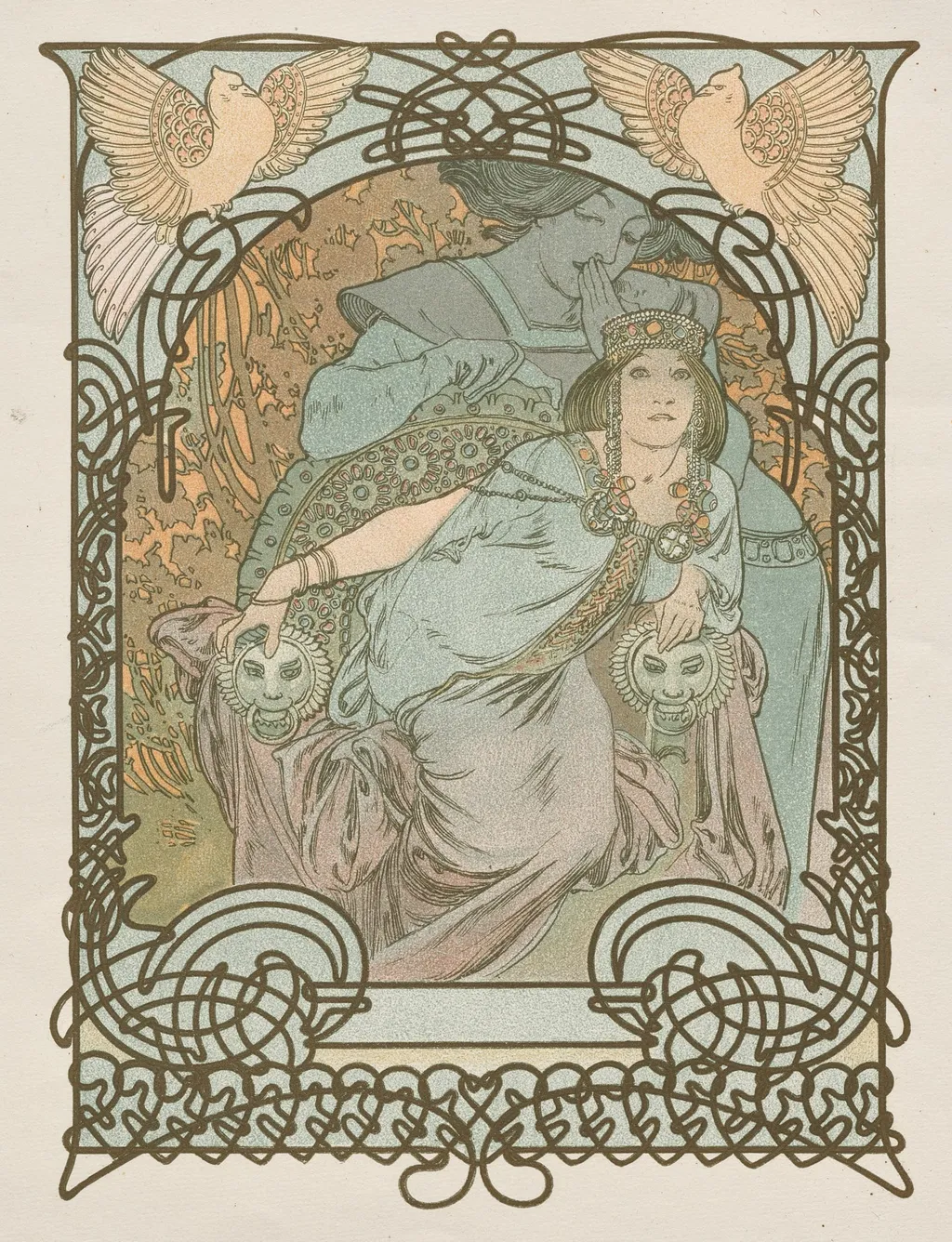
Ilsee, Princesse de Tripoli is a print by the Art Nouveau artist Alphonse Mucha. It dates from 1897 and is held in the collection of the Cleveland Museum of Art.
About this work
Overview
Created in 1897 by Alphonse Mucha, Ilsee, Princesse de Tripoli is a color lithograph that exemplifies the decorative aesthetic of the Art Nouveau movement.
Created in 1897 by Alphonse Mucha, Ilsee, Princesse de Tripoli is a color lithograph that exemplifies the decorative aesthetic of the Art Nouveau movement. It was produced as part of Mucha’s series of theatrical posters and decorative panels, blending portraiture with ornamental design. The work is currently held in the collection of The Cleveland Museum of Art, where it is recognized for its refined line work and symbolic richness.
Subject & Meaning
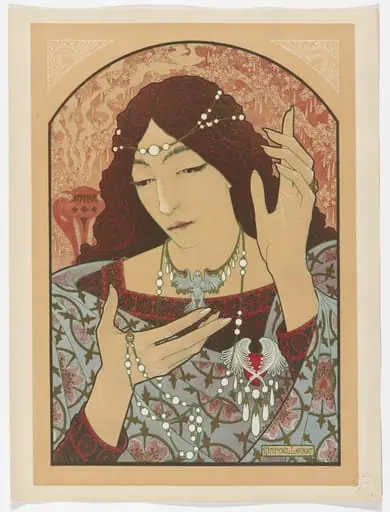
The figure depicted is a stylized representation of a royal woman, identified by her crown and elaborate attire, evoking the exoticized ideal of an Eastern princess. Mucha does not portray a specific historical figure but constructs an allegorical persona, drawing on 19th-century Orientalist fantasies. Her serene expression and poised posture suggest dignity and otherworldly grace, reinforcing the mystical tone of the composition.
Technique & Style
Mucha employed color lithography to achieve soft gradients and intricate linework, characteristic of his mature style. The figure is framed by flowing arabesques, floral motifs, and geometric borders that echo Byzantine and Islamic decorative traditions. The use of flat planes, muted tones, and rhythmic contours reflects Art Nouveau’s emphasis on harmony between form and ornament, rejecting naturalism in favor of symbolic elegance.
History & Provenance
The print was produced during Mucha’s time in Paris, when he was gaining recognition for his posters for Sarah Bernhardt. Though originally created as a decorative panel, it entered The Cleveland Museum of Art’s collection in the 20th century through acquisition or donation. Its preservation reflects early 20th-century interest in European graphic arts and the growing appreciation for Mucha’s contribution to print culture.
Context
In the late 19th century, European artists frequently drew inspiration from non-Western cultures, often through romanticized or stereotypical lenses. Mucha’s work emerged amid a broader fascination with Orientalism in design and theater. His prints, including this one, catered to a middle-class audience seeking refined, exotic imagery for domestic interiors, aligning with the era’s decorative arts trends.
Legacy
Ilsee, Princesse de Tripoli remains a representative example of Mucha’s ability to merge portraiture with ornamental design. While not as widely known as his theatrical posters, it influenced later generations of illustrators and designers drawn to his synthesis of elegance and symbolism. The work continues to be studied for its role in shaping the visual language of Art Nouveau and its engagement with cultural fantasy.
Own this work as a print
Artist & collection

Artist
Alfons Maria Mucha, known internationally as Alphonse Mucha, was a Czech painter, illustrator, and graphic artist.