Artwork
Endpaper
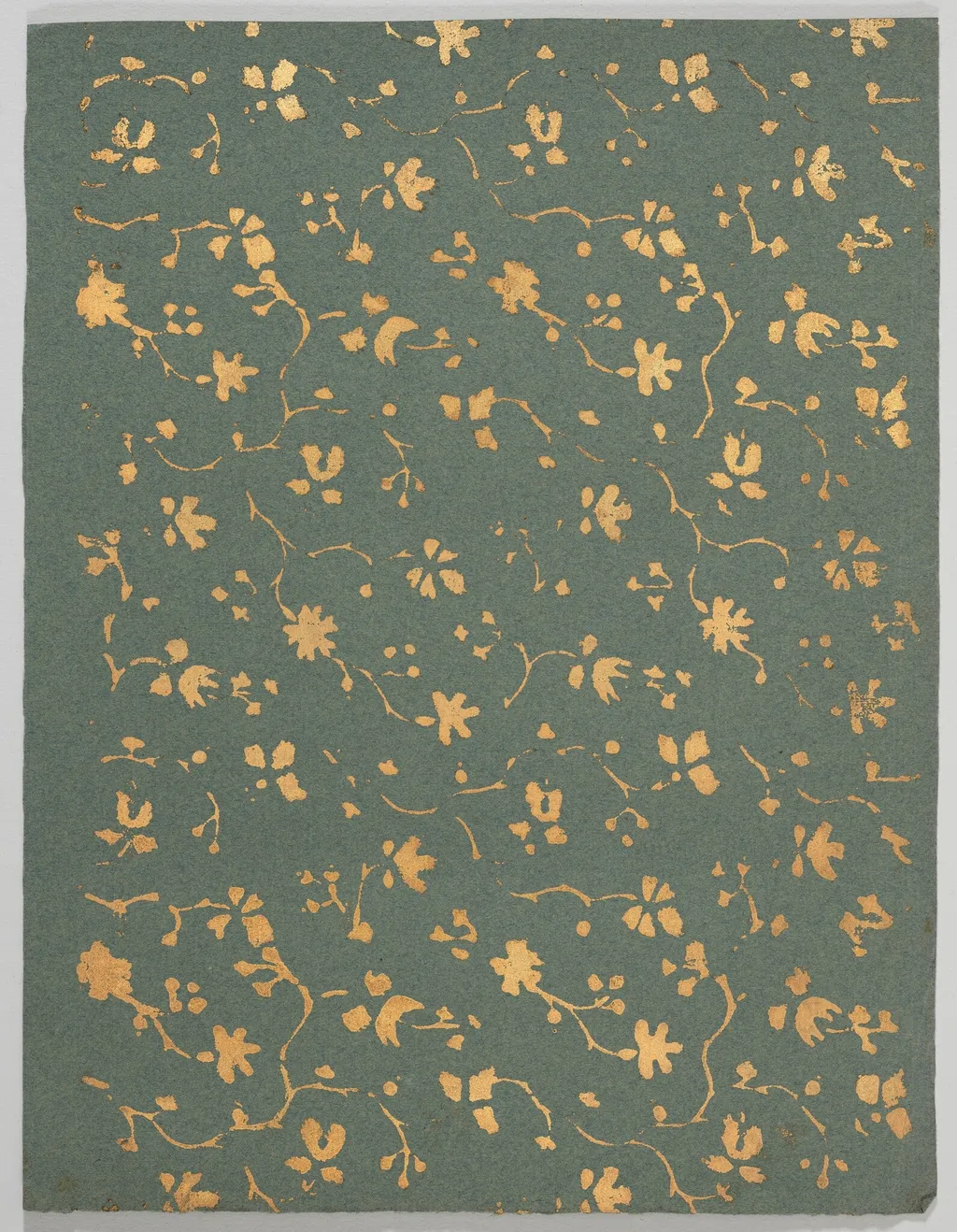
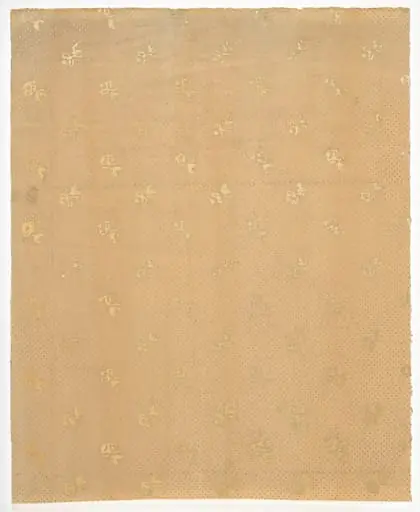
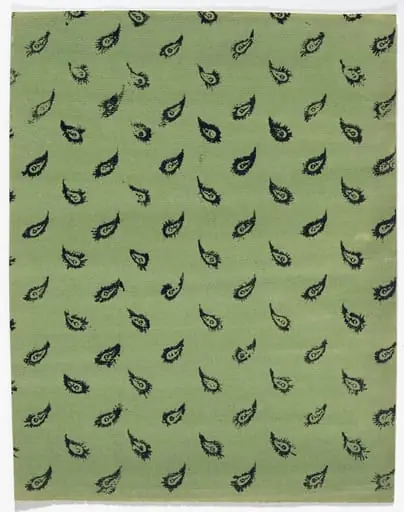
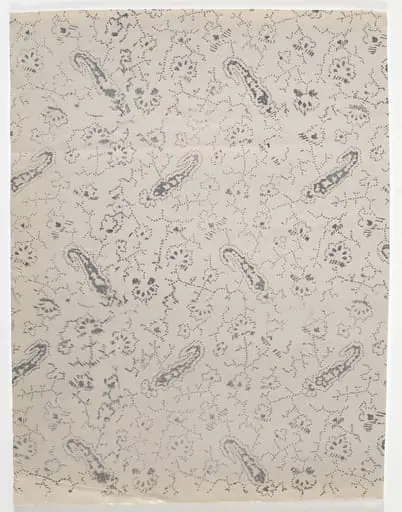
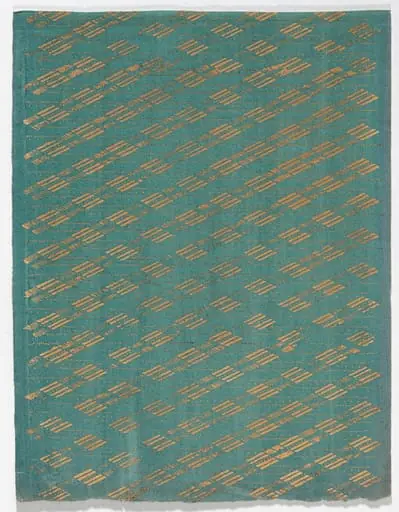
Endpaper is an ink print by the Romanticist artist German 19th Century. It dates from 1850 and is held in the collection of the National Gallery of Art.
About this work
Overview
The uniform repetition indicates mechanical reproduction, common in bookbinding embellishments of the period.
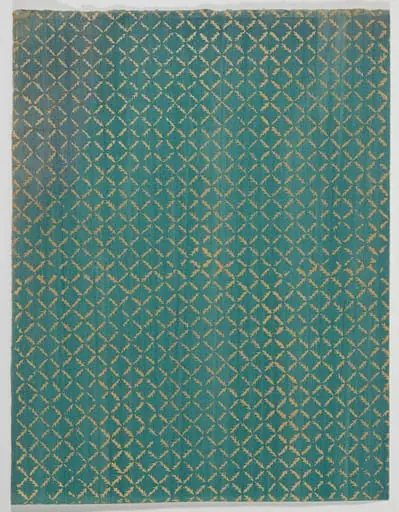
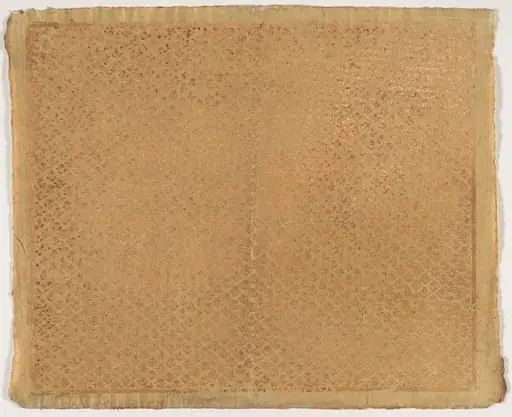
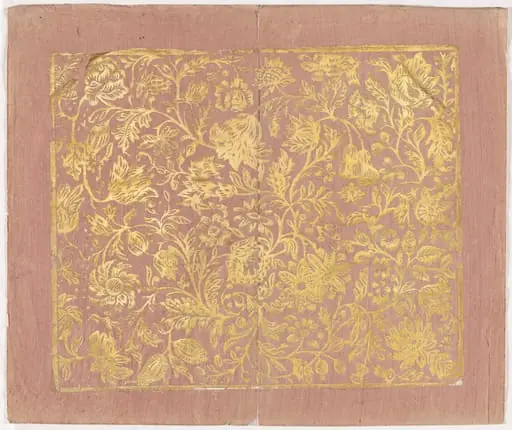
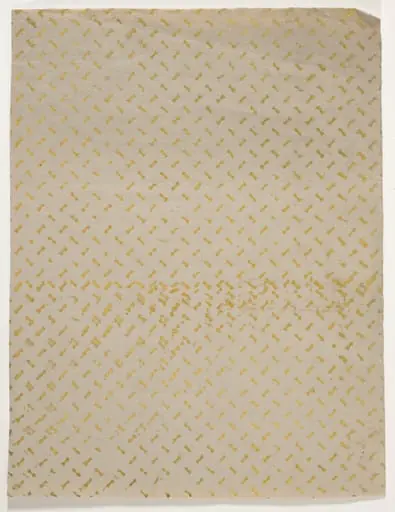
This endpaper features a repeating pattern of stylized floral motifs printed in gold on a blue-gray ground. The design suggests a decorative function, likely intended for use within a bound volume. The technique appears to be a woodcut, where raised surfaces on a carved block transferred pigment to paper. The uniform repetition indicates mechanical reproduction, common in bookbinding embellishments of the period.
Subject & Meaning
The motif consists of simplified floral elements—five-petaled blooms, closed buds, and slender leaves—rendered without naturalistic detail. These forms evoke botanical abundance without referencing specific species. Their repetition may symbolize growth, continuity, or ornamental harmony, serving more as visual rhythm than narrative content. The choice of gold implies value or sacredness, aligning with traditions of illuminated manuscripts.
Technique & Style
Gold pigment was applied using a woodcut method, where carved blocks created raised areas that received ink or metallic powder. The design’s simplicity and regularity suggest a single block was used to stamp the pattern across the sheet. The contrast between the metallic gold and the dark paper enhances legibility and texture. The absence of shading or fine detail reflects a preference for bold, repeatable forms suited to mass production.
History & Provenance
Though the exact origin is unconfirmed, such endpapers were common in European bookbinding from the late medieval period through the 18th century. Gold-on-dark-paper designs like this were often used in liturgical texts, luxury editions, or institutional bindings. The material and method point to a workshop setting, where printers and bookbinders collaborated to produce ornamental interiors for codices.
Context
This piece belongs to a broader tradition of decorative book arts, where printed patterns replaced hand-illuminated details to reduce cost and increase efficiency. While earlier manuscripts used gold leaf applied by hand, this woodcut version democratized the aesthetic, making it accessible for mid-tier publications. Its presence in a book’s endpapers signals an effort to elevate the object’s appearance without full illumination.
Legacy
The design reflects a transitional phase in print culture, where mechanical reproduction began to supplant artisanal techniques in book decoration. Similar patterns influenced later wallpaper and textile designs, extending the reach of printed ornament beyond the page. Though modest in scale, such endpapers preserved the visual language of luxury in everyday books, bridging medieval craftsmanship and early modern industry.
Own this work as a print
Artist & collection

Artist
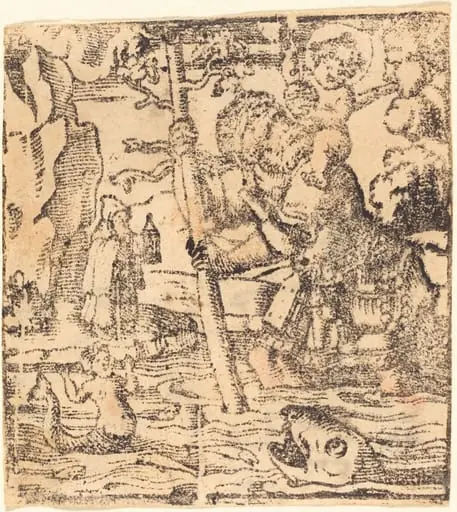
This artist left only tiny, perfect fragments—endpapers and saints, no bigger than a postcard.