Artwork
Abraham's Sacrifice
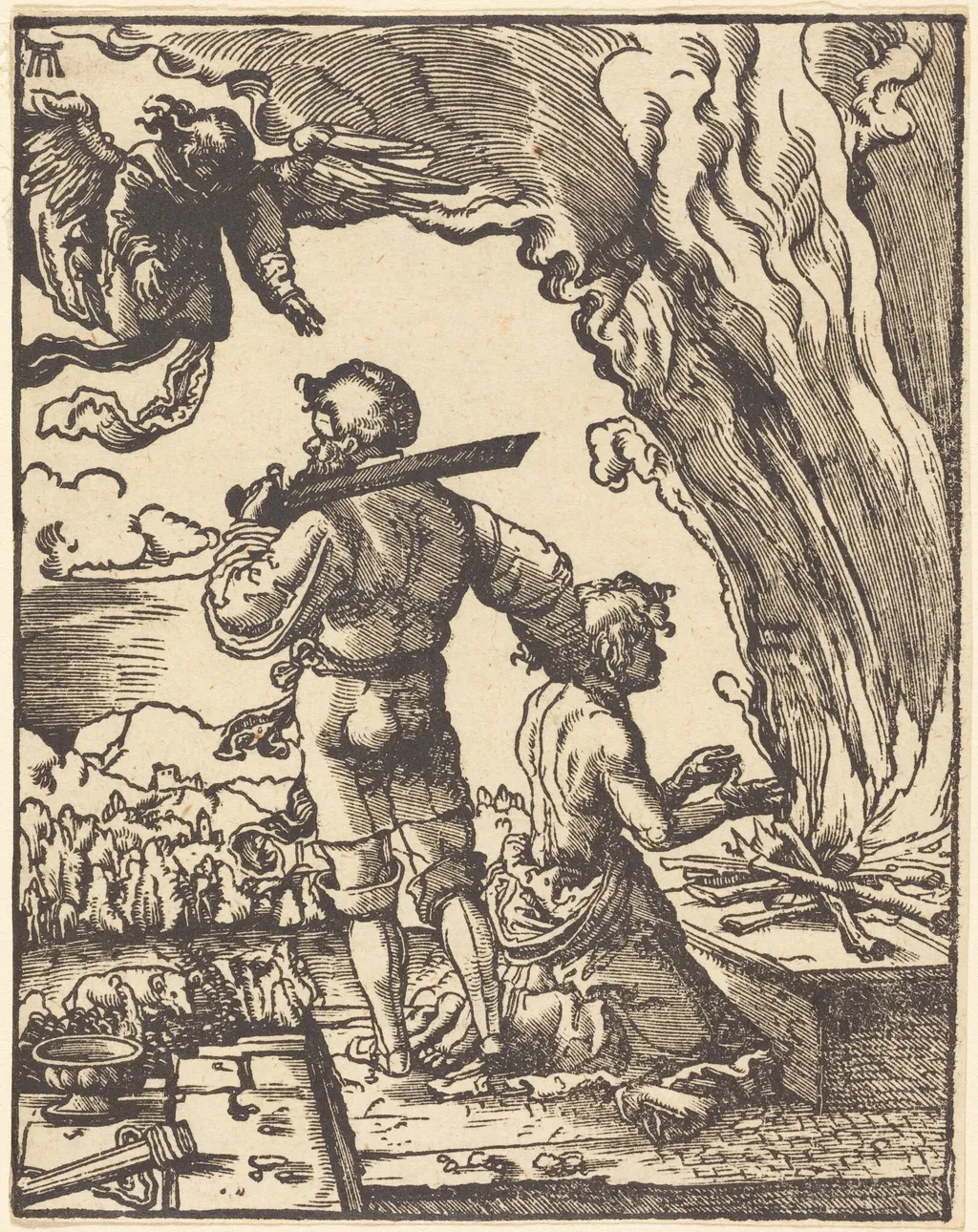
Abraham's Sacrifice is an ink print by the Renaissance artist Albrecht Altdorfer. It dates from 1520 and is held in the collection of the National Gallery of Art.
About this work
Overview
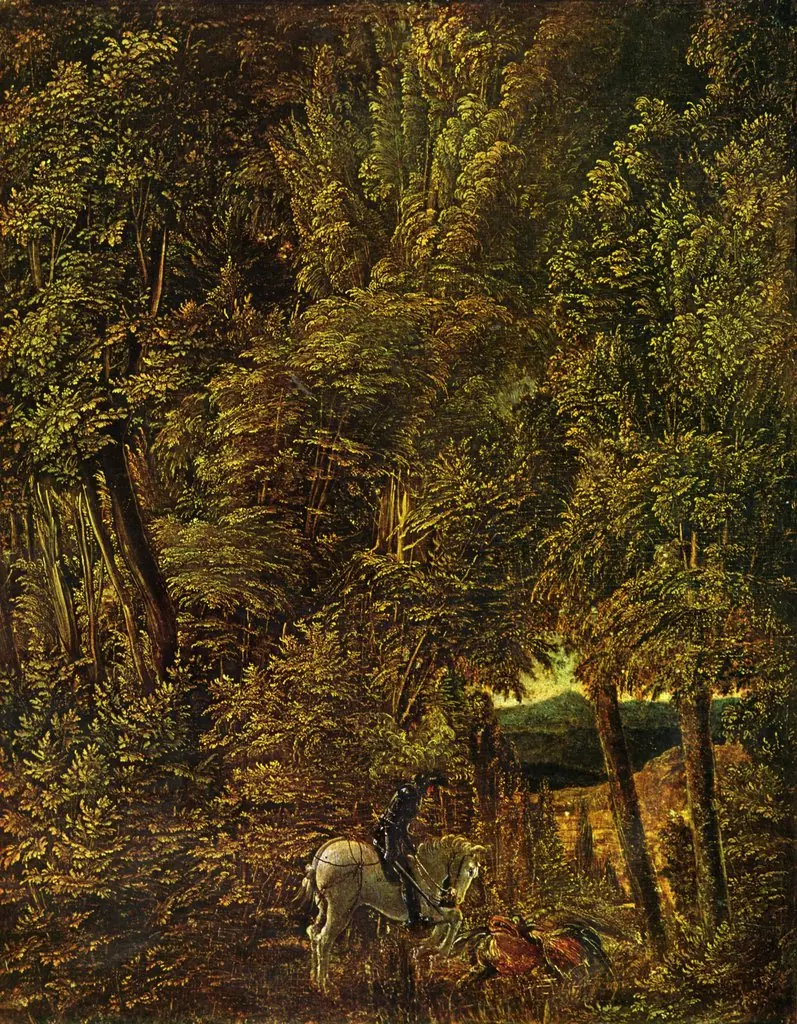
The print’s detailed linework and atmospheric depth distinguish it from contemporaneous religious imagery, emphasizing landscape as more than mere backdrop.
Created in 1520 by Albrecht Altdorfer, this woodcut depicts the biblical moment when Abraham is halted from sacrificing his son Isaac. Executed in Regensburg, the work reflects Altdorfer’s role in the Danube School, known for integrating narrative with immersive natural settings. The print’s detailed linework and atmospheric depth distinguish it from contemporaneous religious imagery, emphasizing landscape as more than mere backdrop.
Subject & Meaning
The scene captures the divine intervention in Genesis 22: an angel descends to stop Abraham, who holds a knife behind his back, while a ram awaits sacrifice on the ground. The tension lies in the suspended moment—Abraham’s hesitation, the angel’s urgency, and the stillness of the landscape. The composition underscores divine authority and moral obedience, rendered without overt sentimentality, allowing the natural world to amplify the spiritual gravity.
Technique & Style
Altdorfer employed bold, incised lines and controlled shading to model form and depth within the woodcut medium. The rocky terrain, dense foliage, and drifting clouds are rendered with meticulous detail, demonstrating his command of tonal gradation. Unlike many Northern Renaissance prints focused on figure-centric narratives, this work balances human drama with an expansive, almost autonomous landscape, hinting at its emerging independence as a subject.
History & Provenance
Produced during Altdorfer’s mature period in Regensburg, the woodcut was likely part of a series or private commission, common among artists of the Danube School. While its early ownership is undocumented, surviving impressions suggest it circulated among collectors familiar with biblical themes and emerging landscape aesthetics. Its survival in multiple institutional collections attests to its enduring recognition within early 16th-century print culture.
Context
In early 16th-century Germany, religious imagery remained central, yet artists like Altdorfer began infusing it with heightened naturalism and emotional atmosphere. The Danube School diverged from Nuremberg’s precisionist style, favoring moody, immersive environments. Altdorfer’s integration of landscape as a psychological and spiritual force aligned with broader shifts in humanist thought, where nature reflected divine order beyond textual illustration.
Legacy
Altdorfer’s treatment of landscape in this print influenced later generations of Northern artists who saw nature as a carrier of meaning, not just setting. While not widely reproduced, the woodcut exemplifies a transitional moment in printmaking—where environmental detail gained narrative weight. His approach prefigured the independent landscape tradition that would flourish in the 17th century, particularly in Dutch and German art.
Artist & collection
Artist
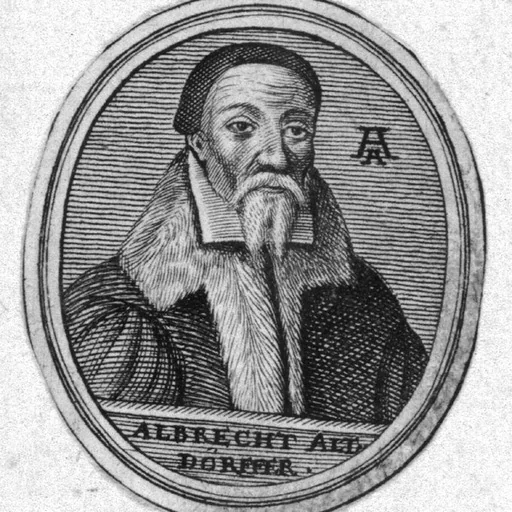
Albrecht Altdorfer (c. 1480 – 12 February 1538) was a German painter, engraver and architect of the Renaissance working in Regensburg. Along with Lucas Cranach the Elder and Wolf Huber he is regarded to be the main…