Artwork
Saint Christopher
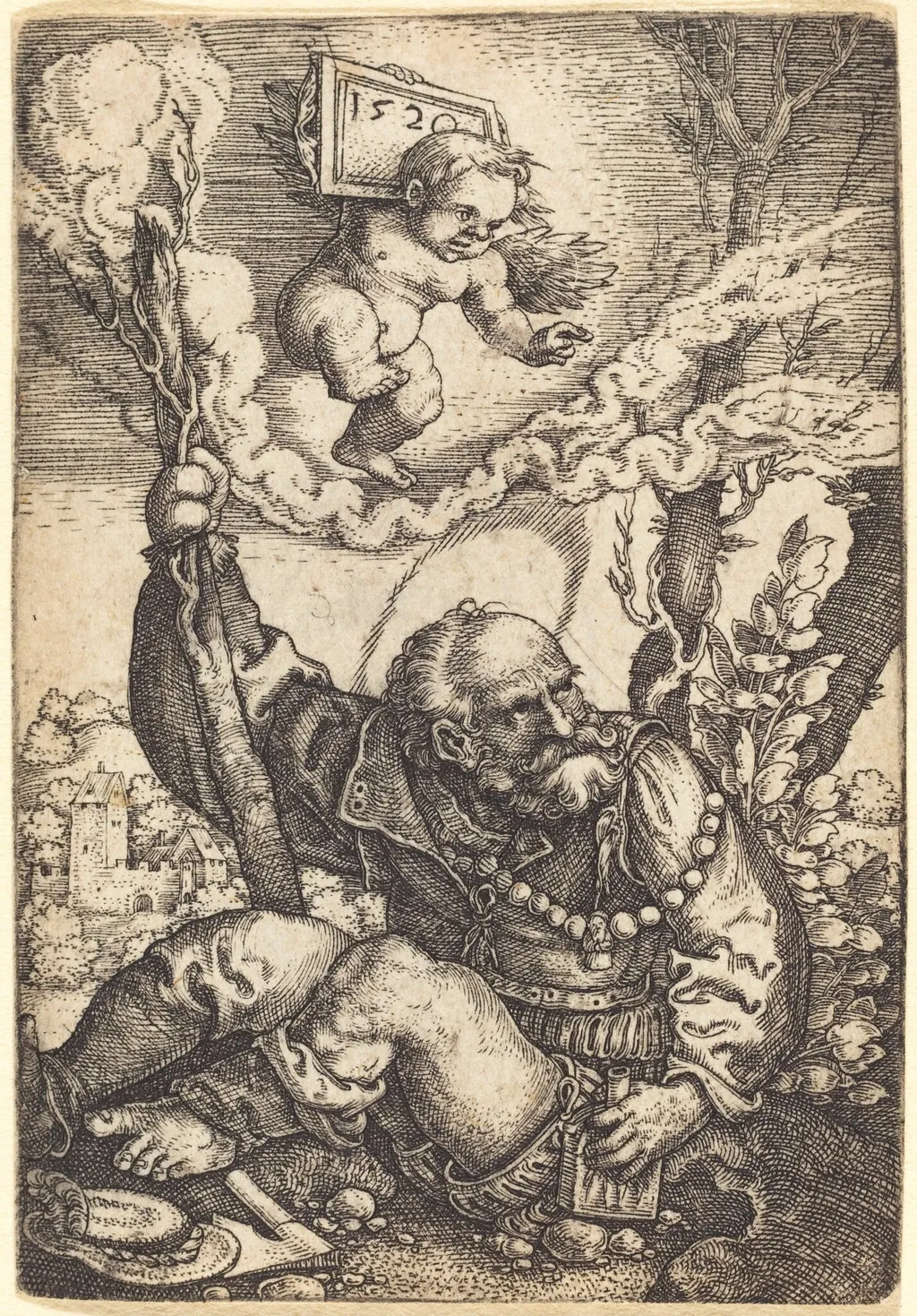
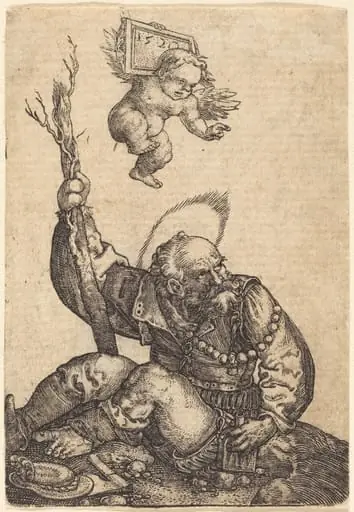
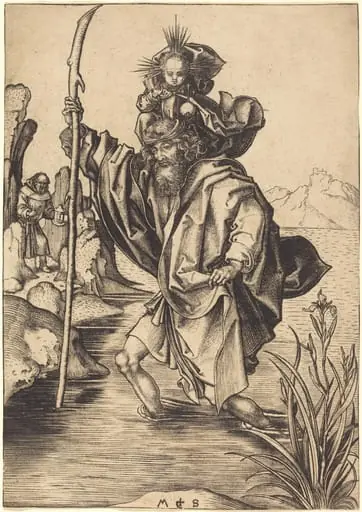
Saint Christopher is an ink print by the Renaissance artist Barthel Beham. It dates from 1520 and is held in the collection of the National Gallery of Art.
About this work
This black-and-white print shows a giant carrying a small child on his shoulder.
This black-and-white print shows a giant carrying a small child on his shoulder. The giant’s head is tilted back, eyes wide, as if surprised. Trees and a tiny village sit in the background, with a cloudy sky above.
The child is actually a baby Jesus—this is a story about faith and protection. The numbers "1520" in the top corner mark when it was made.
Next, check out how this was done using engraving.
Overview
Created in 1520 by Barthel Beham, this engraving depicts Saint Christopher, a Christian martyr traditionally shown bearing the Christ Child across a river. Rendered in monochrome on laid paper, the print exemplifies the precision and narrative clarity favored in early 16th-century German printmaking. The date is inscribed in the upper corner, anchoring the work in its historical moment.
Subject & Meaning
The figure of Saint Christopher, towering and burdened, carries the infant Jesus on his shoulder, a visual representation of the legend in which he serves Christ in human form. His wide-eyed expression suggests awe at the divine weight he bears. The miniature village and distant trees frame the scene, reinforcing the journey’s scale and the saint’s role as protector of travelers, embodying faith made tangible.
Technique & Style
The image is executed in fine-line engraving, with delicate cross-hatching defining texture and depth. Beham’s controlled incisions create contrast between the massive, solid form of the saint and the delicate rendering of foliage and clouds. The composition is tightly focused, using scale and posture to emphasize the spiritual significance of the moment over environmental detail.
History & Provenance
Produced during the early Reformation, the print circulated among devout audiences in southern Germany. As a religious image in a portable medium, it served both devotional and educational purposes. While specific early ownership records are sparse, its survival in multiple institutional collections suggests widespread distribution and enduring interest in the saint’s legend.
Context
In the decades before the Protestant Reformation, images of Saint Christopher were common in Catholic Europe, often placed near doorways for protection. Beham’s version reflects the continued popularity of such iconography even as religious upheaval began to challenge traditional imagery. The engraving’s detail and emotional tone align with the Northern Renaissance’s interest in humanized sacred narratives.
Legacy
The print remains a representative example of Beham’s contribution to the Nuremberg printmaking tradition. Though later religious reforms diminished the saint’s prominence, this work preserves a moment when devotional imagery was deeply woven into daily life. Its technical finesse and narrative focus continue to inform studies of early print culture and religious visuality.
Artist & collection

 Portrait of Marie of Baden
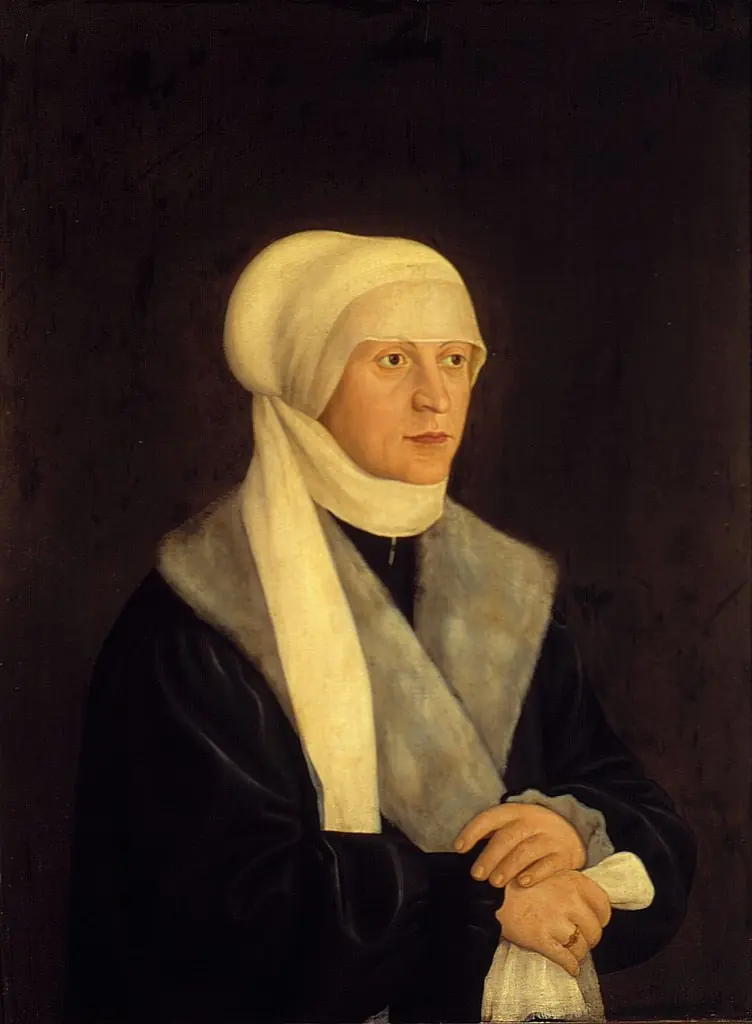 Portrait of Sabina of Bavaria
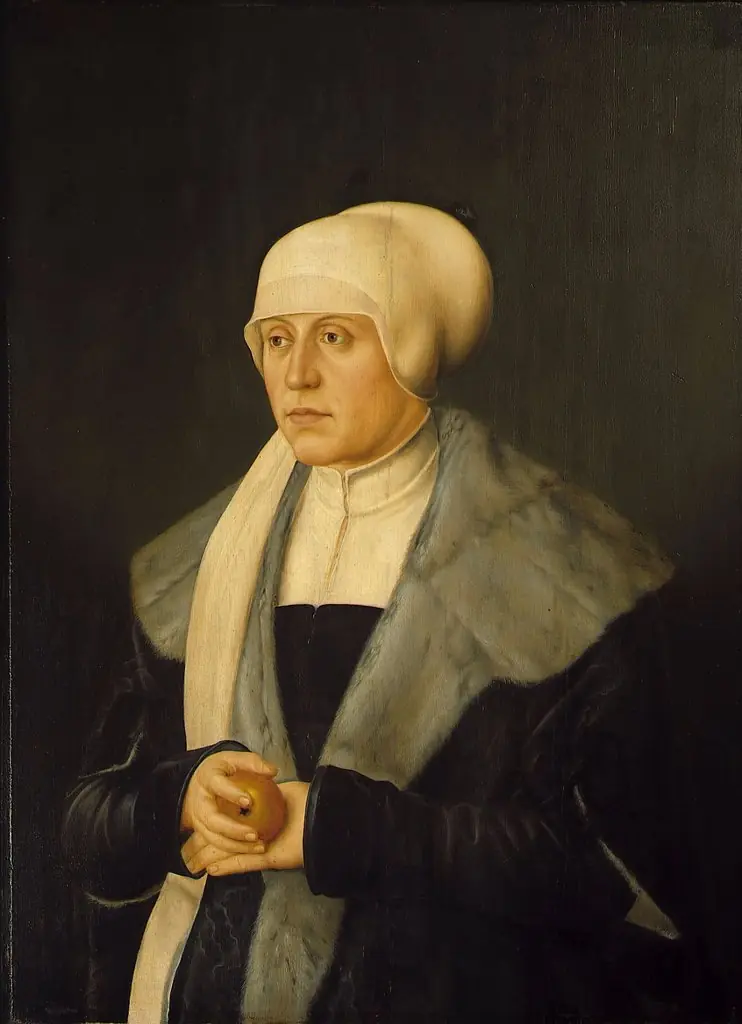 Kunigunde of Austria, wife of Duke Albrecht IV of Bavaria
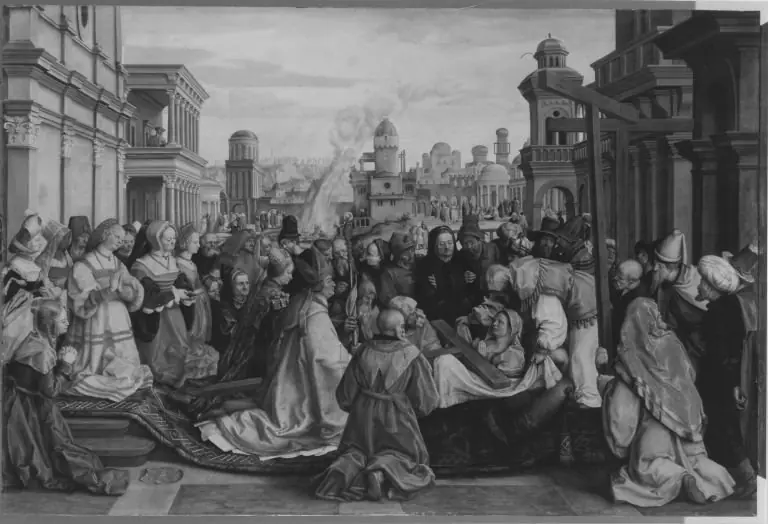 Historienzyklus: Kreuzauffindung der hl. Helena
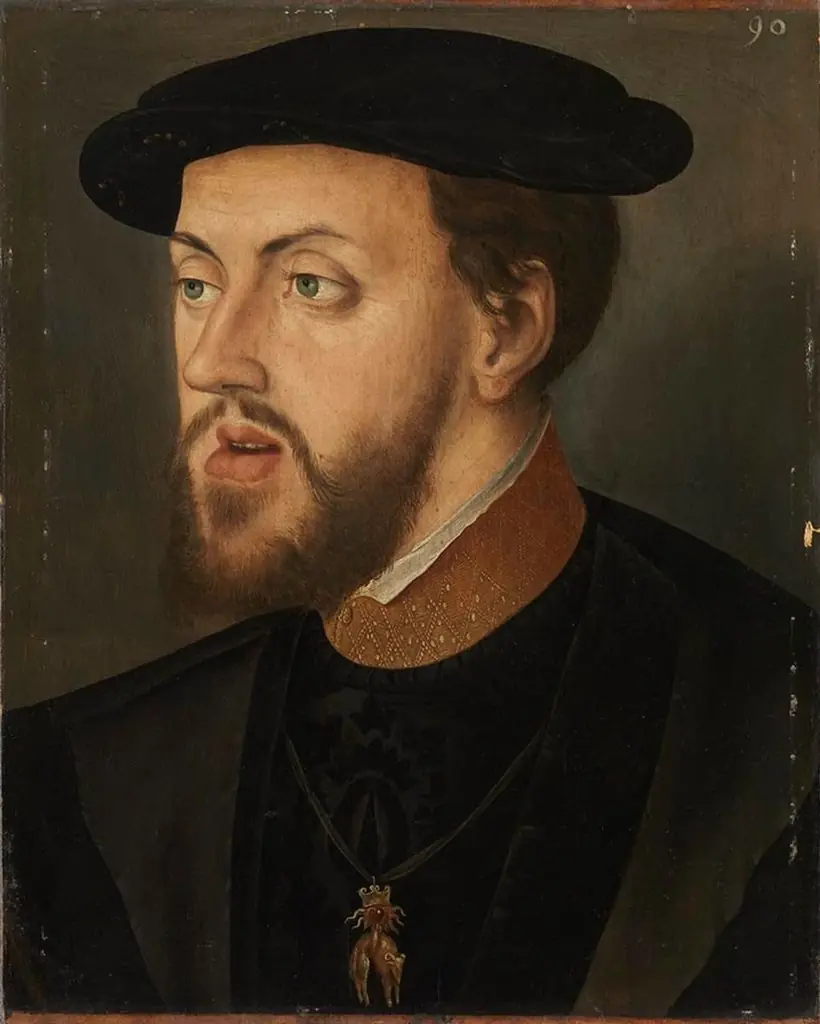 Emperor Charles V
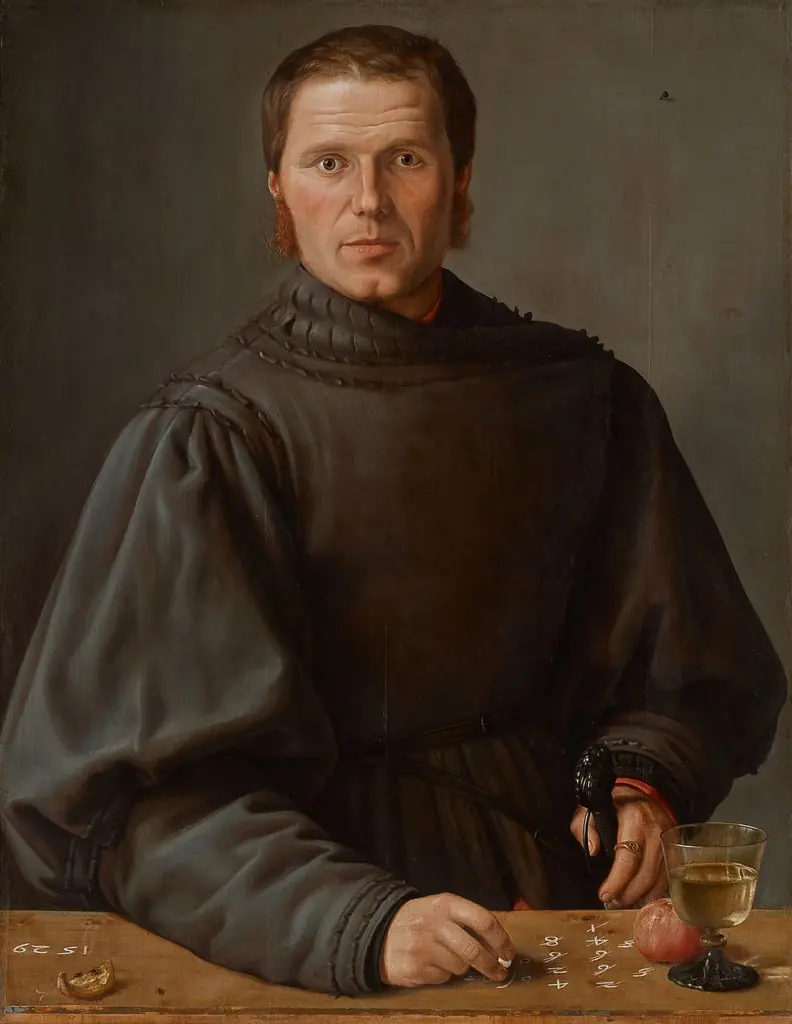 Portrait of a Man
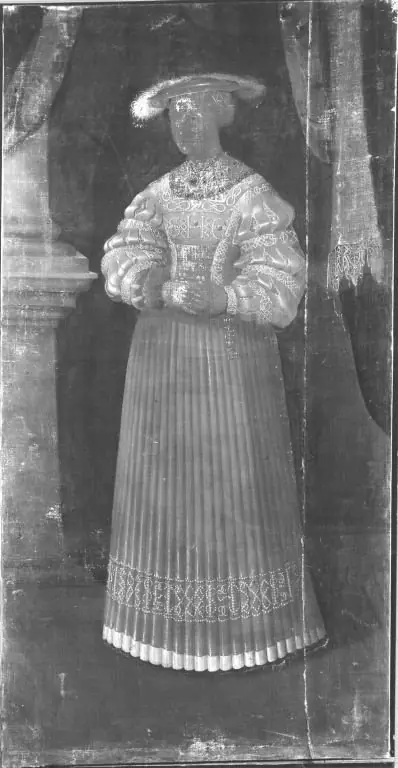 Susanna von Brandenburg, Gemahlin Ottheinrichs (Seitenverkehrte Kopie nach Inv.-Nr. 2450) (Kopie nach)
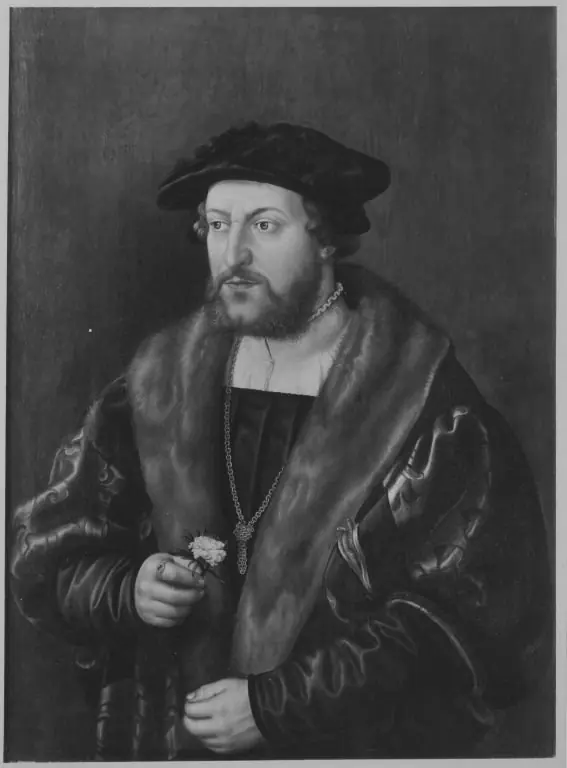 Portrait of Herzog Johann III, Paltzgraf bei Rhein (1488-1538)