Artwork
The Descent from the Cross
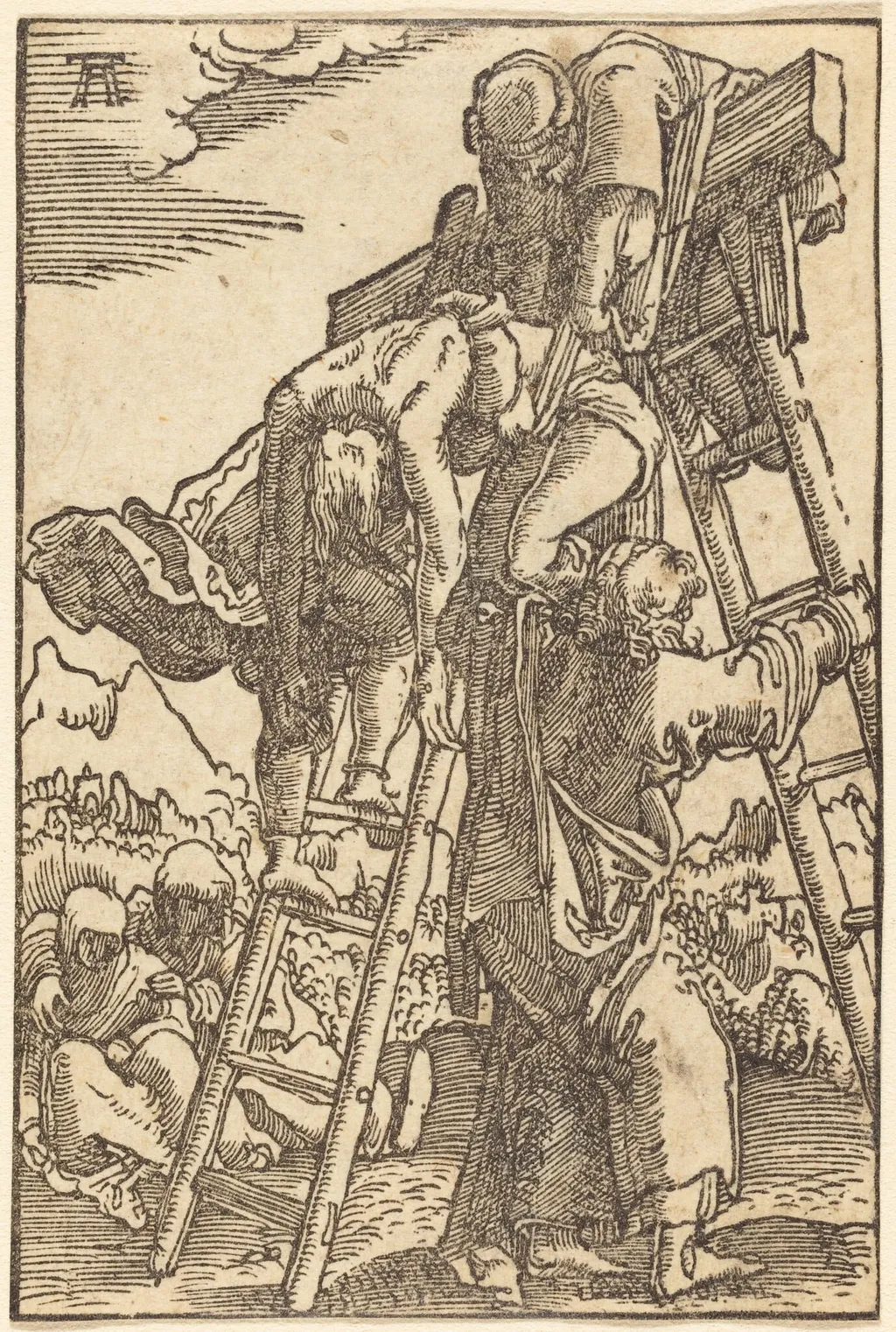
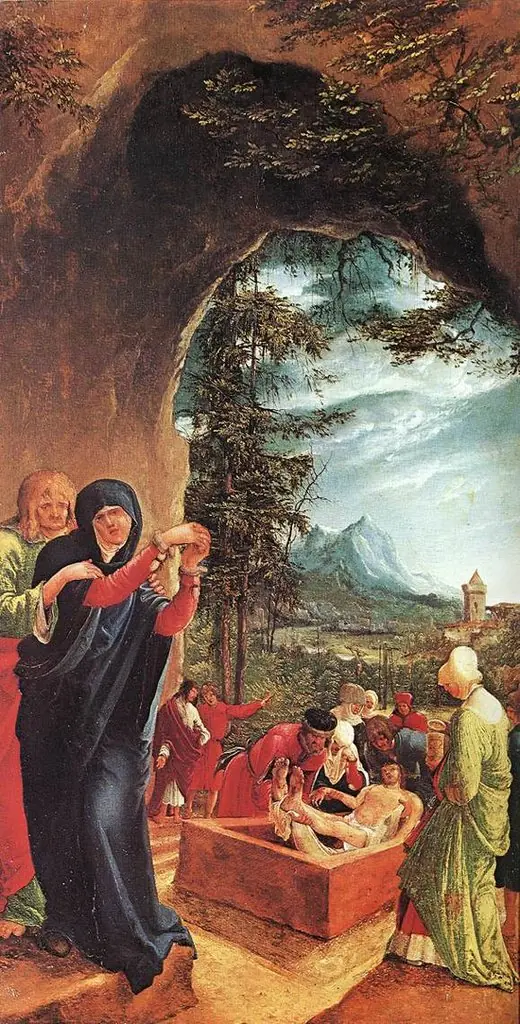
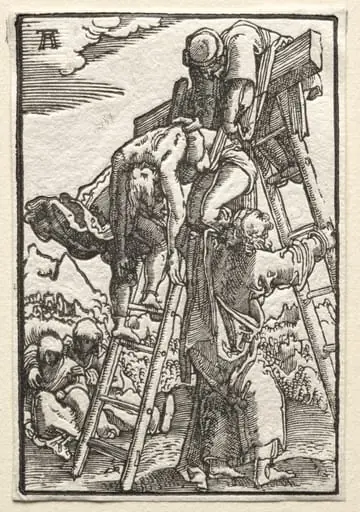
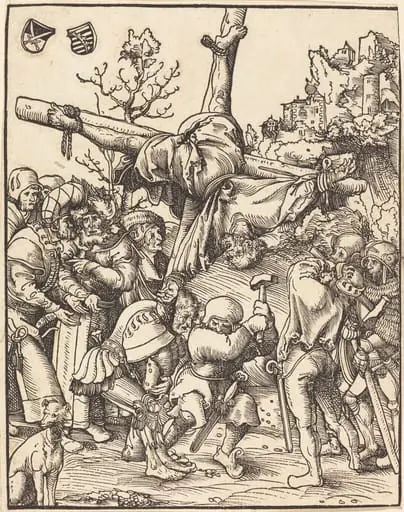
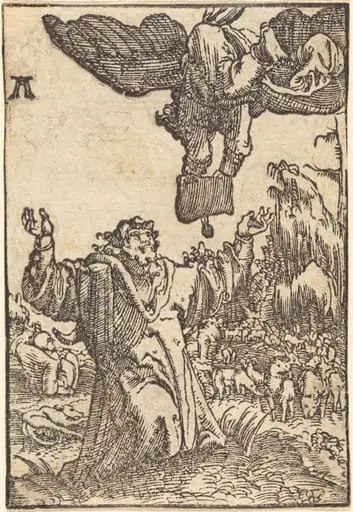
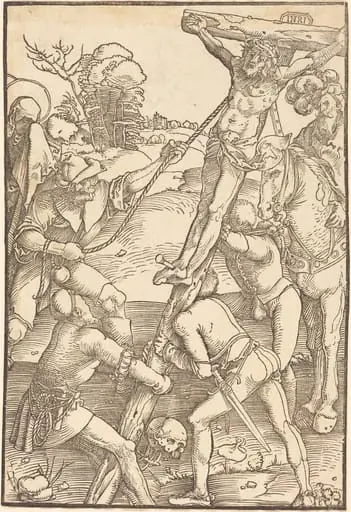
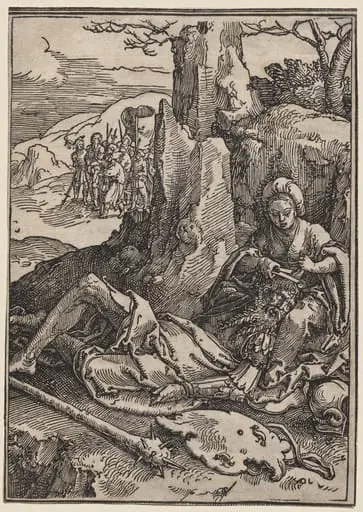
The Descent from the Cross is an ink print by the Renaissance artist Albrecht Altdorfer. It dates from 1513 and is held in the collection of the National Gallery of Art.
About this work
Overview
The print’s stark contrasts and dynamic composition distinguish it from more serene contemporaneous treatments of the same subject.
Created around 1513 by Albrecht Altdorfer, this woodcut on laid paper depicts the moment Christ’s body is removed from the cross. Executed in Regensburg, it reflects Altdorfer’s role in the Danube School, where religious narratives were rendered with intense emotional and environmental detail. The print’s stark contrasts and dynamic composition distinguish it from more serene contemporaneous treatments of the same subject.
Subject & Meaning
The scene captures the physical and emotional labor of lowering Christ’s body, emphasizing human effort over divine serenity. Figures strain under the weight of the draped form, their gestures conveying urgency and grief. The absence of celestial light or angelic presence shifts focus to mortal action, underscoring the human dimension of the sacred event without overt symbolism.
Technique & Style
Altdorfer employed sharp, angular lines to convey tension in the figures and terrain. The woodcut’s high-contrast black-and-white palette heightens the drama, with jagged clouds and rocky ground forming a turbulent backdrop. The single letter 'A' in the corner remains unexplained, possibly a signature, initials, or cryptic mark—its purpose unresolved but deliberately placed.
History & Provenance
Produced during Altdorfer’s mature period in Regensburg, the print aligns with his broader output of small-scale engravings and woodcuts. While specific early ownership records are sparse, the work is documented in major collections by the 19th century, reflecting its recognition among print collectors interested in Northern Renaissance graphic arts.
Context
Altdorfer worked alongside the Nuremberg Little Masters, yet his style diverged through dramatic landscapes and emotional intensity. Unlike the polished precision of many contemporaries, his woodcuts embraced roughness and movement, reflecting regional tastes and a growing interest in nature as an expressive force within religious narratives.
Legacy
This print exemplifies Altdorfer’s influence in elevating landscape as more than background—it becomes an active element in the emotional narrative. His approach to woodcut technique, emphasizing texture and motion over clarity, paved the way for later expressive printmaking traditions in Northern Europe, particularly in the treatment of psychological depth.
Artist & collection
Artist
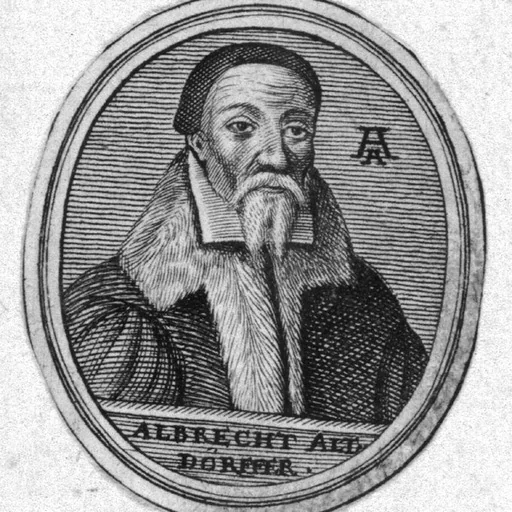
Albrecht Altdorfer (c. 1480 – 12 February 1538) was a German painter, engraver and architect of the Renaissance working in Regensburg. Along with Lucas Cranach the Elder and Wolf Huber he is regarded to be the main…