Artwork
The Last Supper
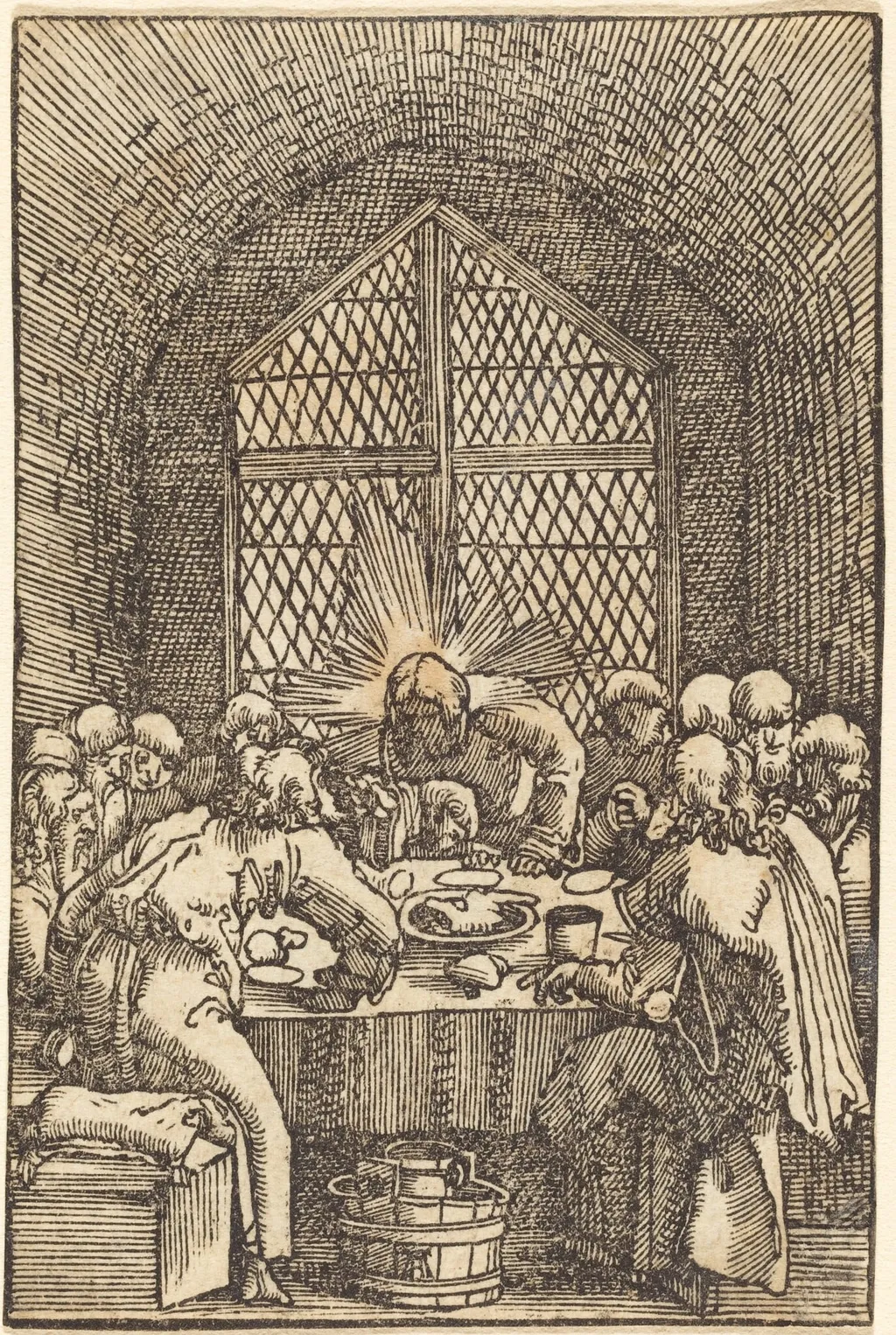
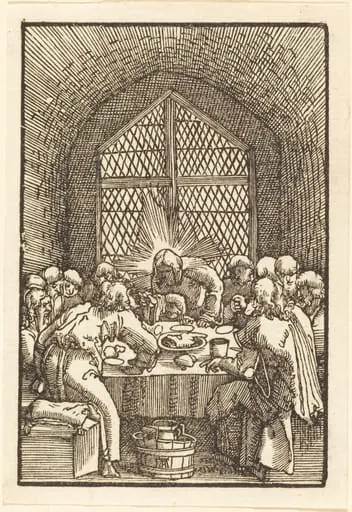
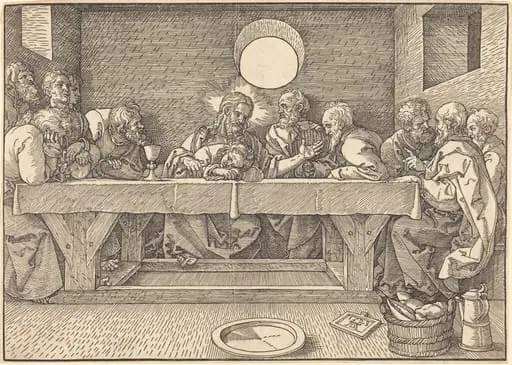
The Last Supper is an ink print by the Renaissance artist Albrecht Altdorfer. It dates from 1513 and is held in the collection of the National Gallery of Art.
About this work
Overview
This print exemplifies his early experimentation with light, texture, and spatial depth in a medium that allowed wider dissemination of religious imagery.
Created around 1513 by Albrecht Altdorfer, this woodcut on laid paper depicts the Last Supper, a biblical scene rendered with the precision characteristic of early 16th-century German printmaking. Altdorfer, based in Regensburg, was a key figure in the Danube School, known for integrating naturalistic landscapes with sacred subjects. This print exemplifies his early experimentation with light, texture, and spatial depth in a medium that allowed wider dissemination of religious imagery.
Subject & Meaning
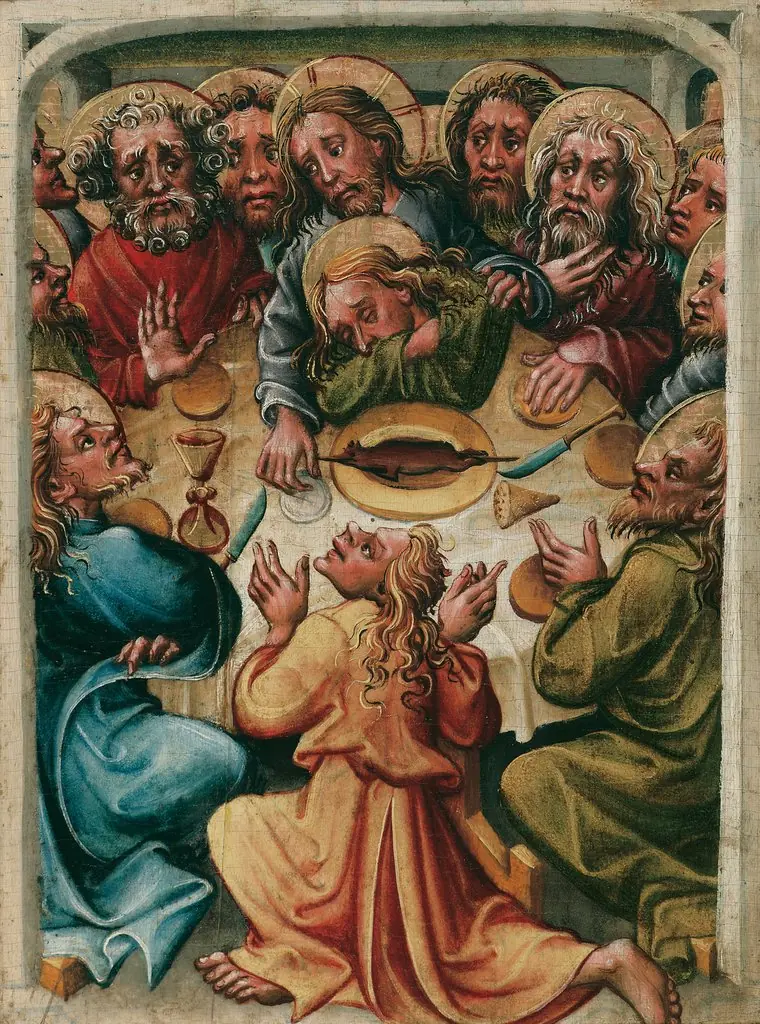
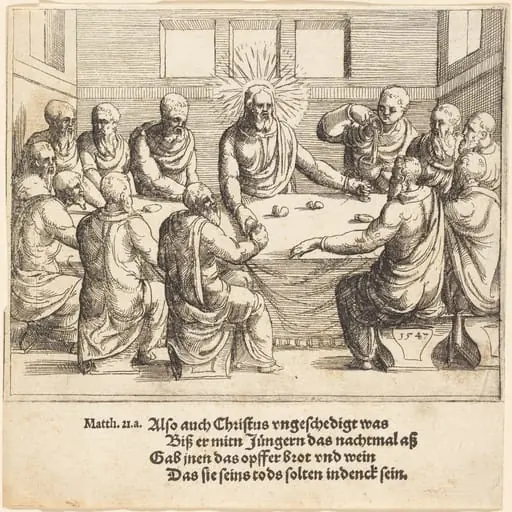
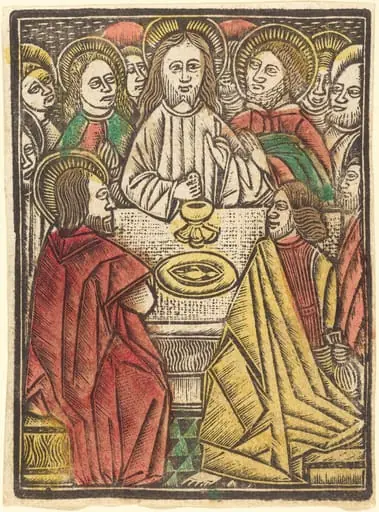
The scene captures Christ and his disciples gathered at a table, engaged in the moment before his betrayal. The figures are arranged with quiet solemnity, their gestures subdued, emphasizing introspection over drama. The inclusion of everyday objects—bowls, a jug, a basket—grounds the sacred event in tangible reality. The light streaming through a diamond-patterned window suggests divine presence without overt symbolism, inviting contemplation rather than awe.
Technique & Style
Executed as a woodcut, the image relies on incised lines to define form, shadow, and texture. Altdorfer uses fine, controlled strokes to render the tablecloth’s folds, the window’s geometric frame, and the figures’ draped garments. The high-contrast light, falling from above, enhances spatial clarity and gives the scene a quiet luminosity. The figures’ simplified proportions and large heads reflect a stylized approach common in Northern prints of the period.
History & Provenance
The print was produced during Altdorfer’s formative years in Regensburg, a center of artistic innovation in southern Germany. It circulated among collectors and clergy, reflecting the growing demand for devotional prints. While no specific early ownership records survive, its technical quality and thematic focus align with other works from his early printmaking phase, placing it within the broader context of German Reformation-era religious imagery.
Context
In the early 1500s, woodcuts were a primary medium for disseminating religious narratives, especially as literacy rose and the Reformation reshaped devotional practices. Altdorfer’s work diverged from traditional iconography by emphasizing atmospheric landscape and naturalistic detail, even in small-scale prints. His approach influenced contemporaries and helped shift focus from purely symbolic representation toward immersive, emotionally resonant environments.
Legacy
This woodcut illustrates Altdorfer’s role in expanding the expressive potential of printmaking beyond mere illustration. His integration of landscape and light anticipated later developments in Northern European art. Though less celebrated than his paintings, his prints contributed to the evolution of the woodcut as a medium capable of conveying both narrative depth and aesthetic refinement, influencing generations of printmakers.
Artist & collection
Artist
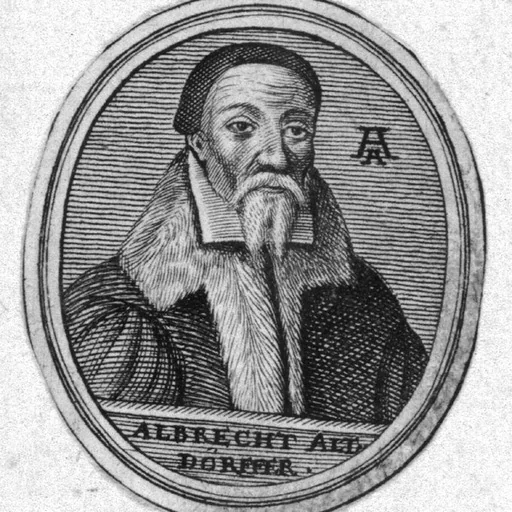
Albrecht Altdorfer (c. 1480 – 12 February 1538) was a German painter, engraver and architect of the Renaissance working in Regensburg. Along with Lucas Cranach the Elder and Wolf Huber he is regarded to be the main…