Artwork
The Last Supper
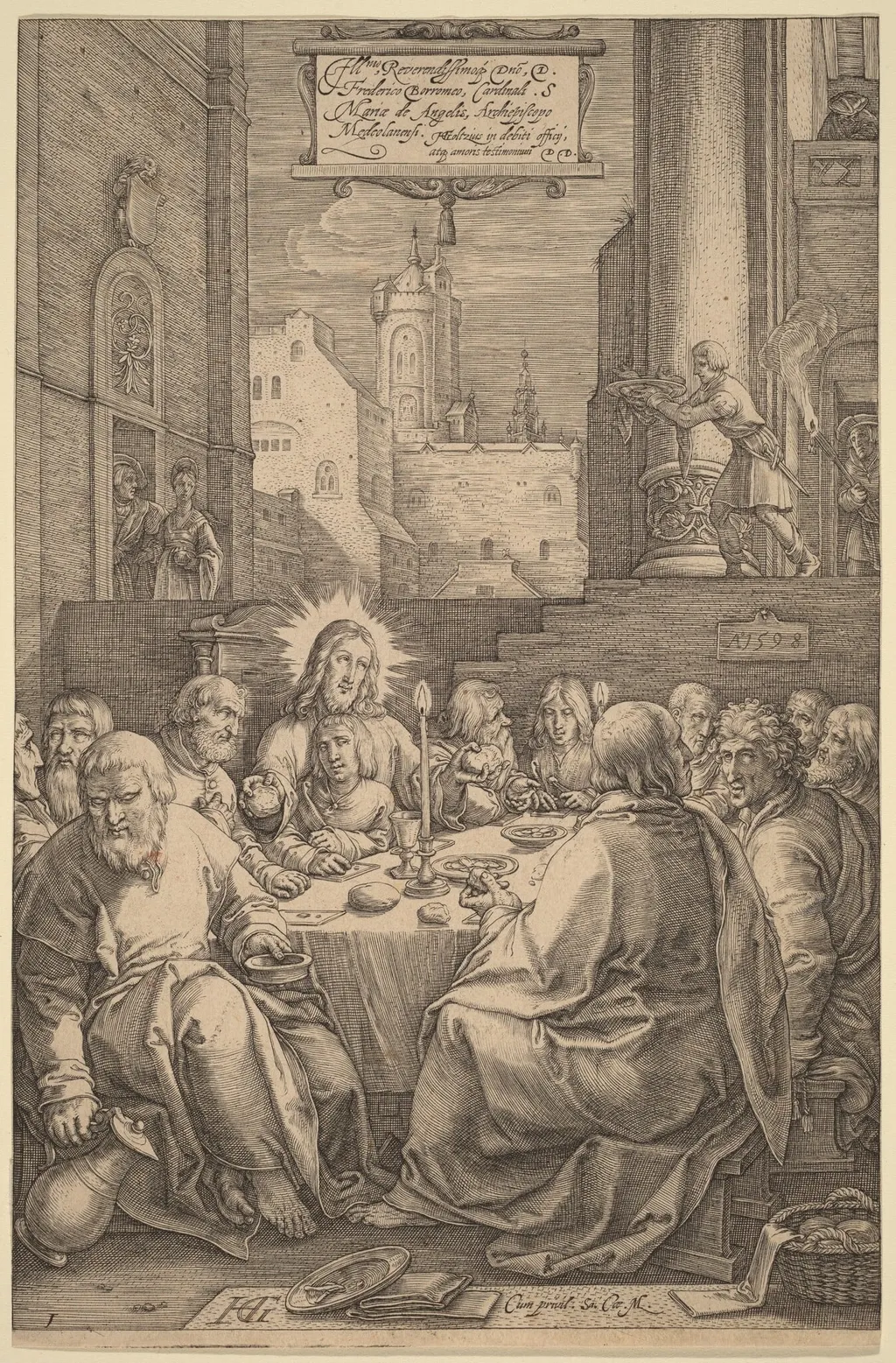
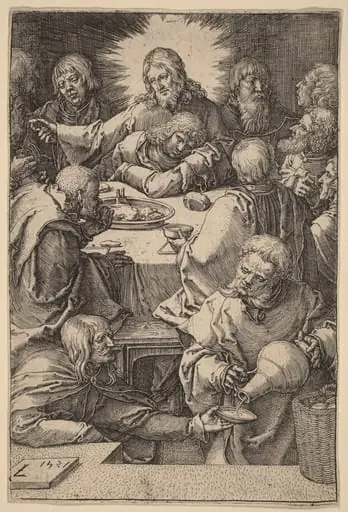
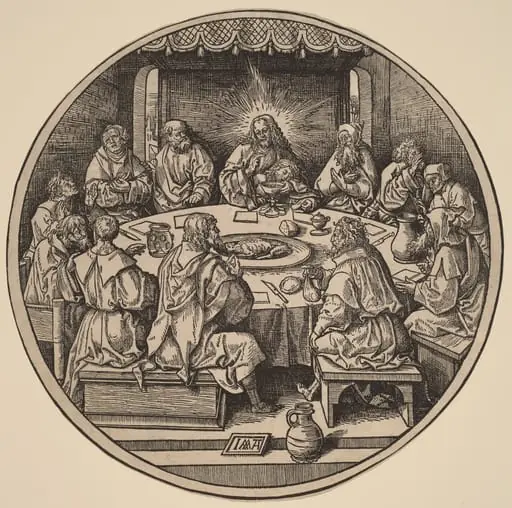
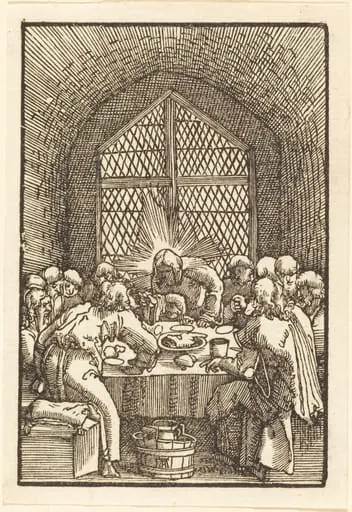
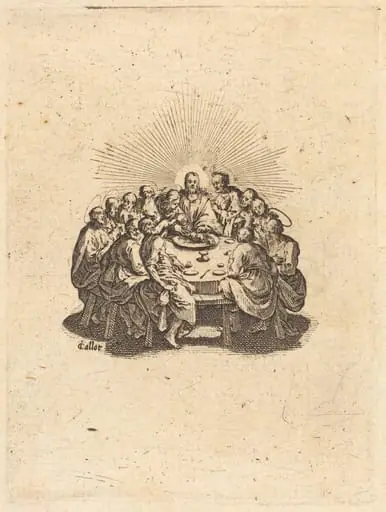
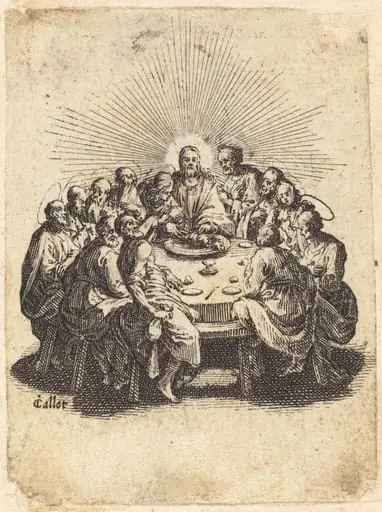
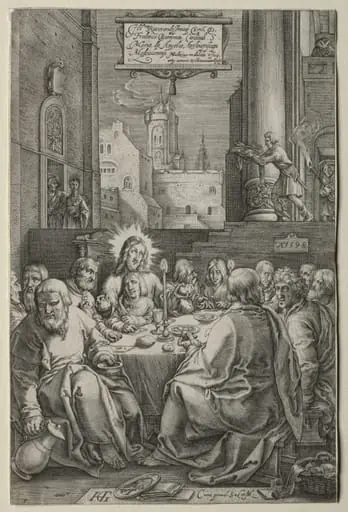
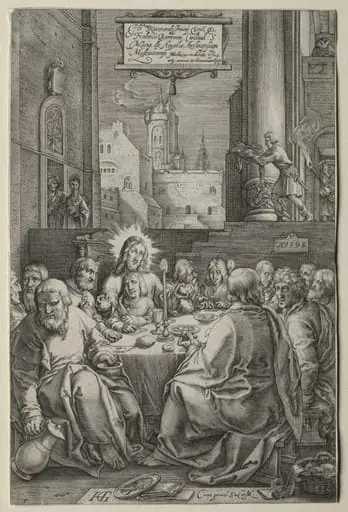
The Last Supper is an ink print by the Renaissance artist Hendrik Goltzius. It dates from 1598 and is held in the collection of the National Gallery of Art.
About this work
Overview
The Last Supper is a 1598 engraving by Hendrick Goltzius, a prominent Dutch printmaker and draftsman of the early Baroque/Northern Mannerism period. The work captures a pivotal religious moment in meticulous detail.
Subject & Meaning
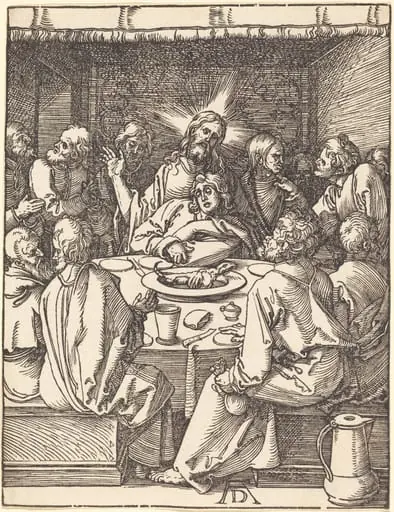
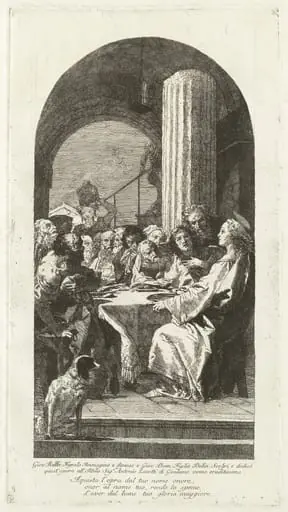
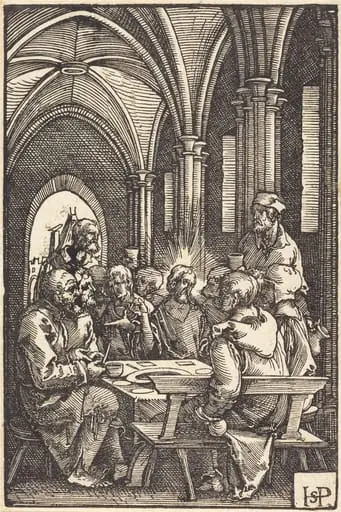
The engraving depicts Jesus Christ’s final meal with his apostles before the crucifixion. Christ, centrally placed with a halo, expresses surprise, while the apostles react with varied emotions—curiosity, worry, and confusion—conveying the scene’s dramatic tension.
Technique & Style
Goltzius employed fine lines to achieve nuanced shadows and textures, lending depth to the composition. The interior’s simplicity—a plain table set with bread, cups, and a book—contrasts with the detailed, active exterior view of a city, complete with a church tower and statue.
History & Provenance
Created in 1598, The Last Supper exemplifies Goltzius’s technical mastery and complex compositional style, characteristic of his leading role in Dutch engraving during this period. Specific provenance details are not provided.
Context
As an early Baroque/Northern Mannerism work, The Last Supper reflects the period’s emphasis on emotional intensity and intricate detail. The visible cityscape outside the window adds a layer of contextual depth, situating the religious scene within a recognizable, possibly Dutch, urban setting.
Artist & collection
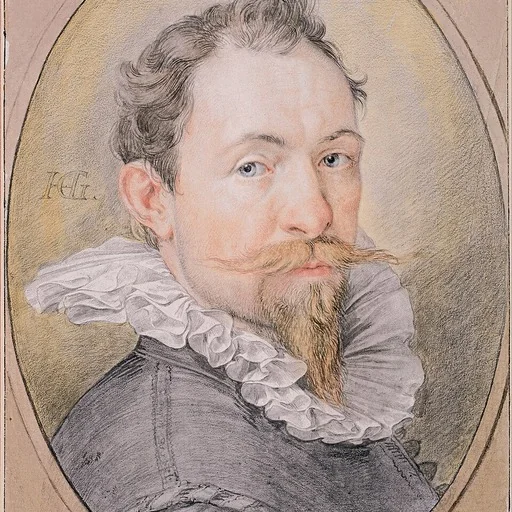
Artist
Hendrick Goltzius (German: , Dutch: ; né Goltz; January or February 1558 – 1 January 1617) was a German-born Dutch printmaker, draftsman, and painter.