Artwork
The Transfiguration
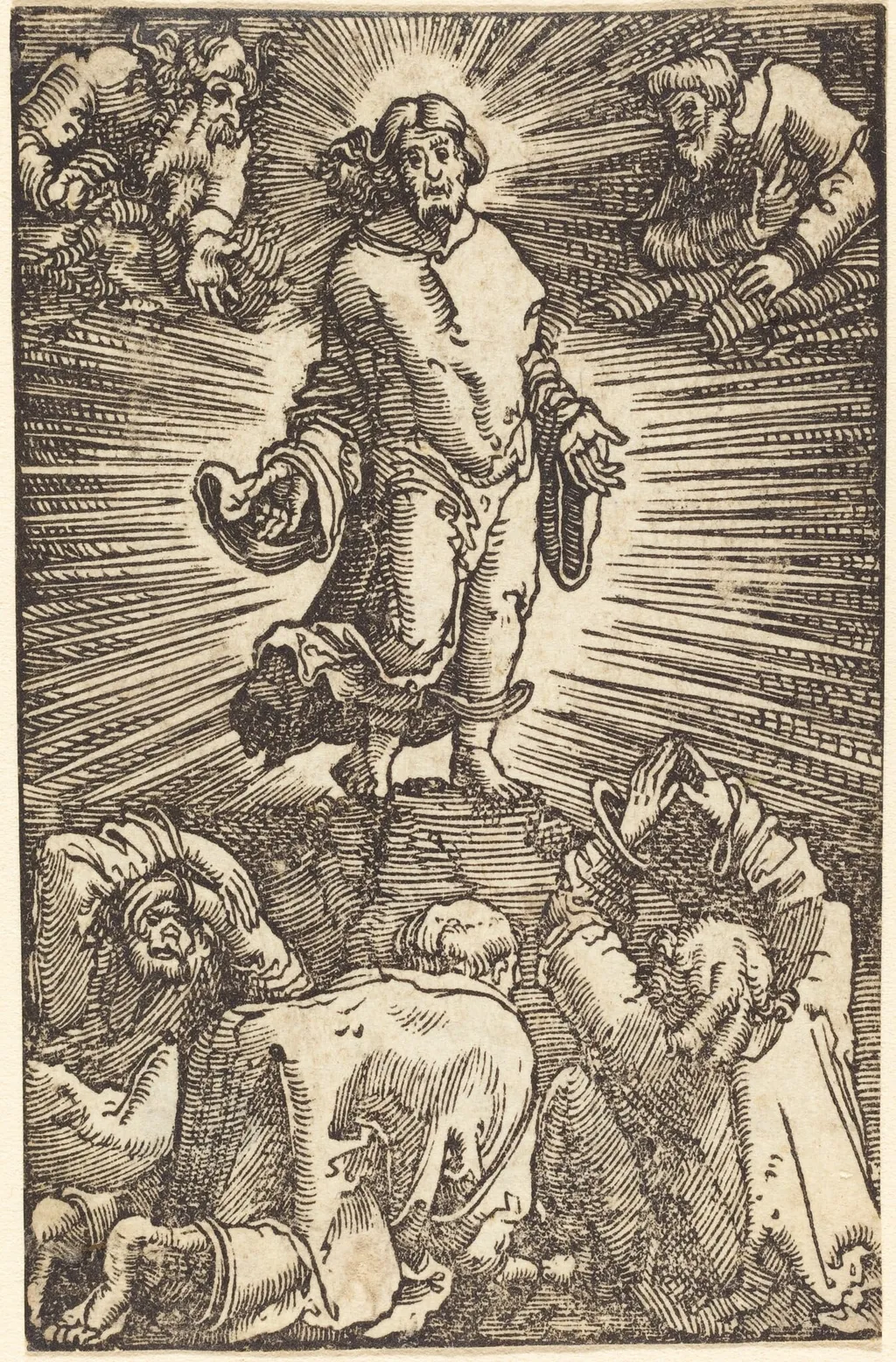
The Transfiguration is an ink print by the Renaissance artist Albrecht Altdorfer. It dates from 1513 and is held in the collection of the National Gallery of Art.
About this work
Overview
Altdorfer, based in Regensburg, was a central figure in the Danube School, known for integrating natural environments with sacred narratives.
Created around 1513 by Albrecht Altdorfer, *The Transfiguration* is a woodcut printed on laid paper, representing one of the earliest examples of landscape-infused religious imagery in German printmaking. Altdorfer, based in Regensburg, was a central figure in the Danube School, known for integrating natural environments with sacred narratives. This work exemplifies his technical precision and innovative use of line to convey spiritual intensity.
Subject & Meaning
The scene depicts Christ at the moment of transfiguration, standing atop a rocky outcrop, enveloped in radiant lines that suggest divine light. His gesture, holding a cloth, alludes to the moment of revelation described in the Gospels. Surrounding figures, likely Peter, James, and John, are minimized, emphasizing Christ’s luminous presence. The composition transforms a biblical event into a contemplative vision of transcendence, rooted in nature rather than architectural setting.
Technique & Style
Altdorfer employed fine, controlled lines characteristic of woodcut printing to render intricate textures in fabric, rock, and atmospheric space. The radiating halos and delicate hatching create a sense of movement and energy around the central figure, while subtle tonal contrasts enhance depth. His approach reflects the influence of the Nuremberg Little Masters, yet expands their precision into expansive, emotionally charged landscapes uncommon in prints of the period.
History & Provenance
The print entered the collection of the National Gallery of Art in Washington, D.C., where it remains part of its permanent holdings. While specific early ownership records are sparse, its survival in good condition suggests it was valued by collectors early on. As a relatively rare early 16th-century German woodcut with complex detail, it has been studied for its role in the evolution of printmaking as an independent art form.
Context
In the early 1500s, German artists began shifting religious imagery from traditional altarpiece formats toward intimate, landscape-centered compositions. Altdorfer’s work responded to this trend, merging devotional themes with a growing interest in nature as a spiritual medium. His prints circulated among educated patrons and clergy, contributing to a new visual language that prioritized mood and environment over doctrinal clarity.
Legacy
Altdorfer’s *Transfiguration* helped redefine the potential of woodcut as a vehicle for emotional and atmospheric expression. It influenced later printmakers who sought to convey inner experience through landscape and light. Though not widely reproduced in his lifetime, its technical ambition and compositional daring secured its place as a pivotal work in the history of Northern Renaissance printmaking.
Artist & collection
Artist
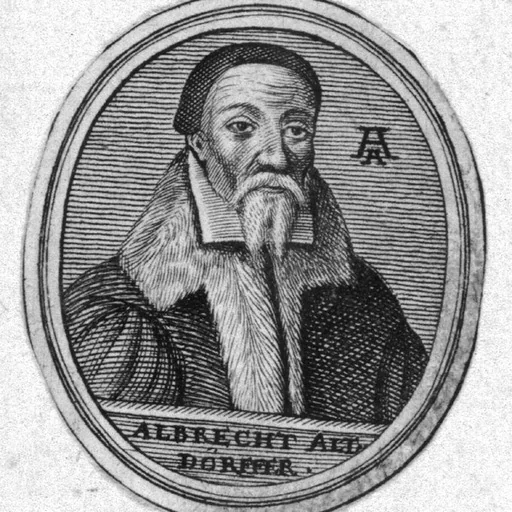
Albrecht Altdorfer (c. 1480 – 12 February 1538) was a German painter, engraver and architect of the Renaissance working in Regensburg. Along with Lucas Cranach the Elder and Wolf Huber he is regarded to be the main…

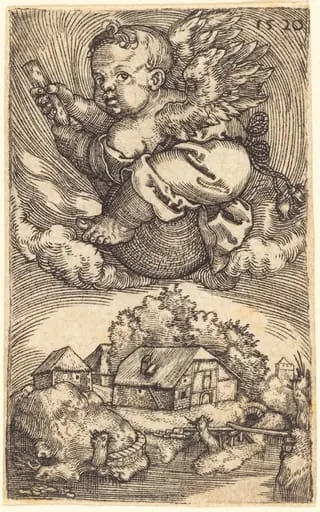 Genius on a Globe Floating in the Air
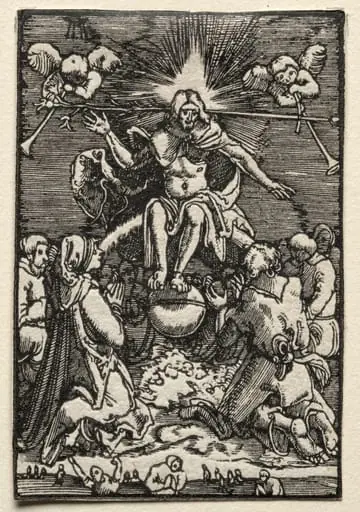 The Fall and Redemption of Man: The Last Judgment
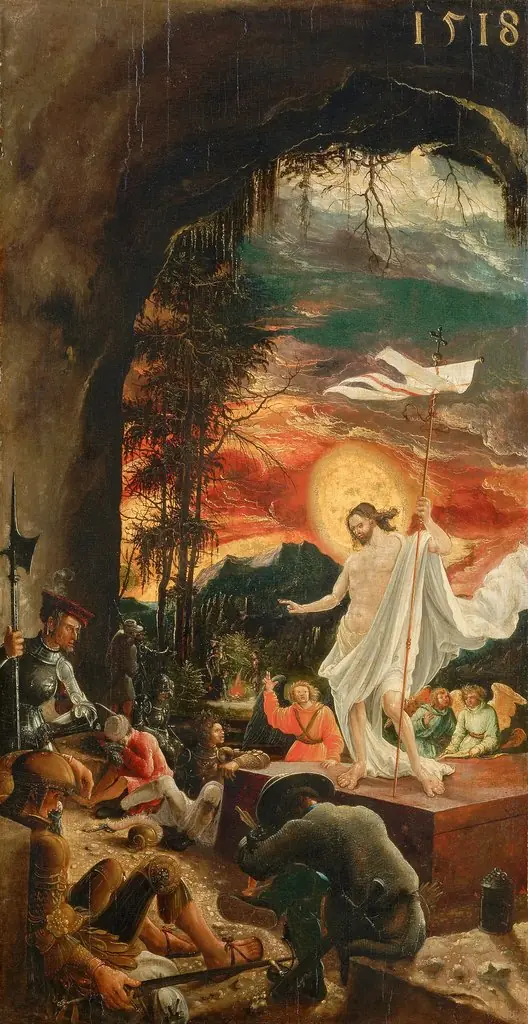
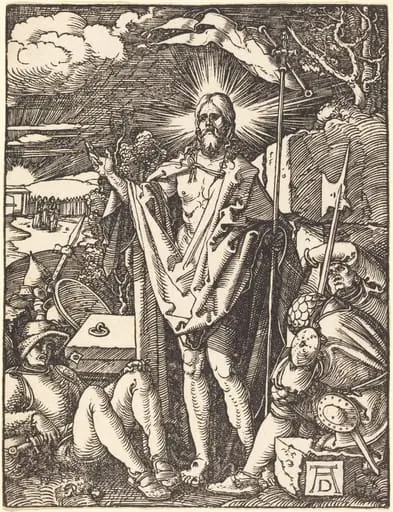 The Resurrection
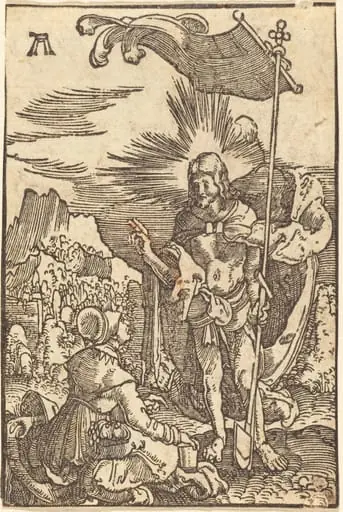 Noli me Tangere
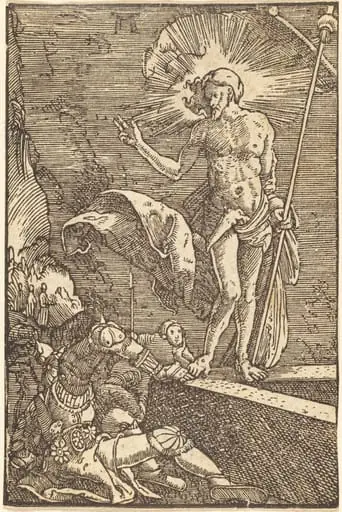 The Resurrection
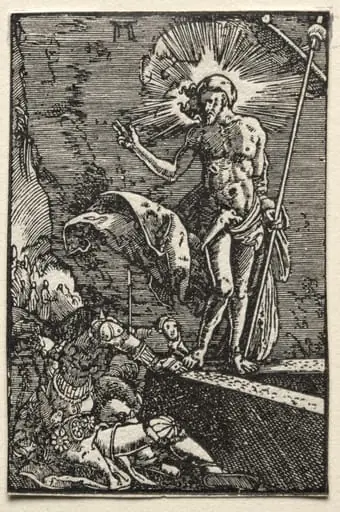 The Fall and Redemption of Man: The Resurrection
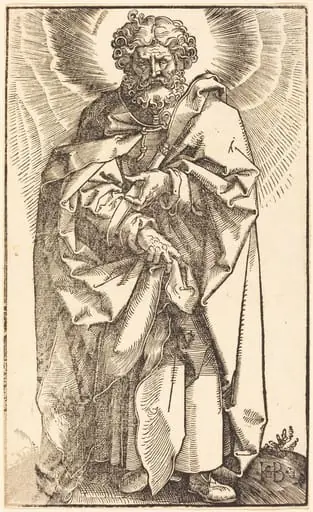 Saint Bartholomew
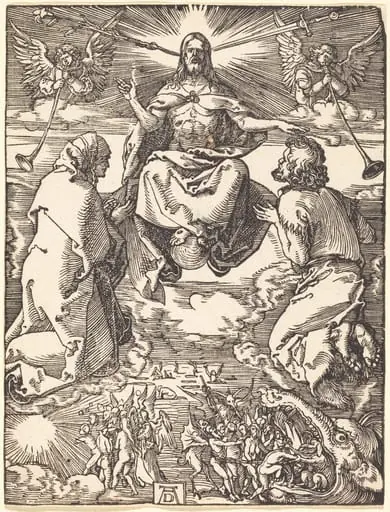 The Last Judgment
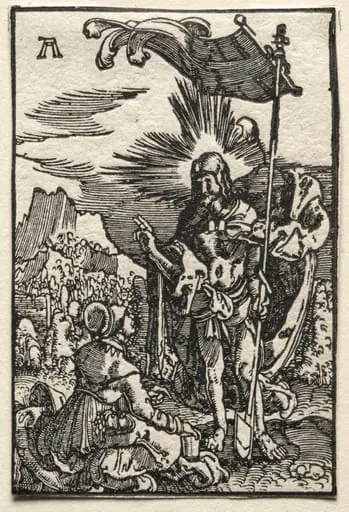 The Fall and Redemption of Man: Christ Appearing to St. Mary Magdalen
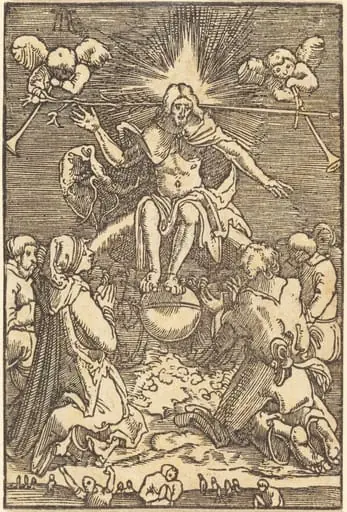 The Last Judgment