Artwork
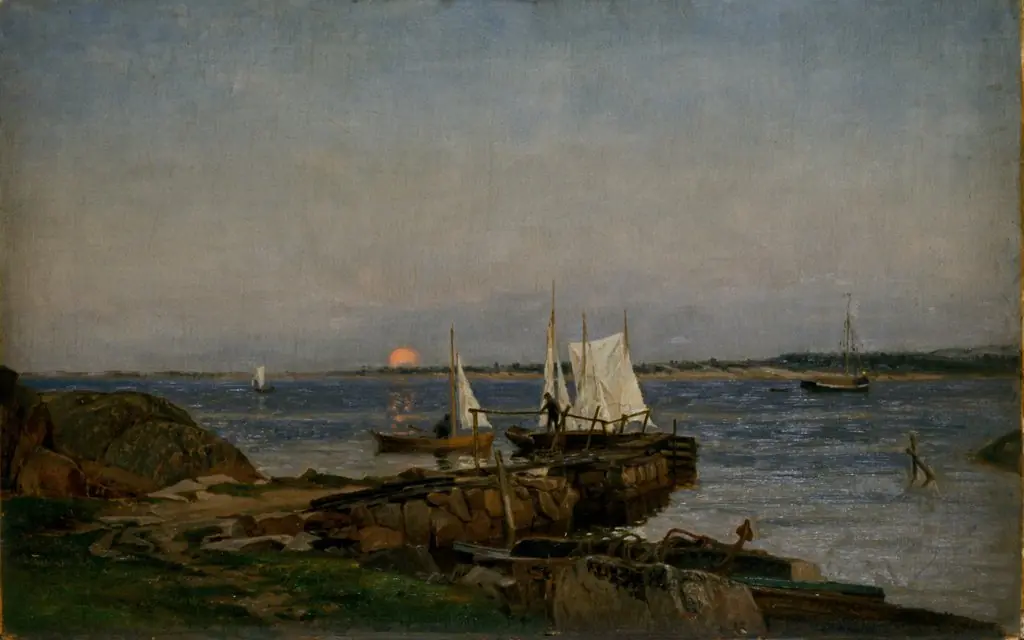
Måneskinn, Kinn
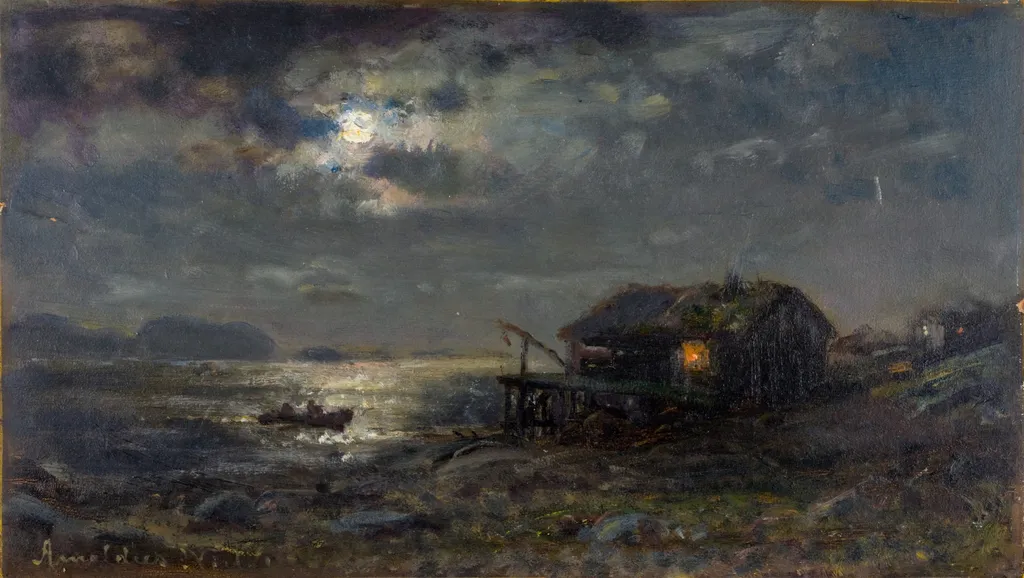
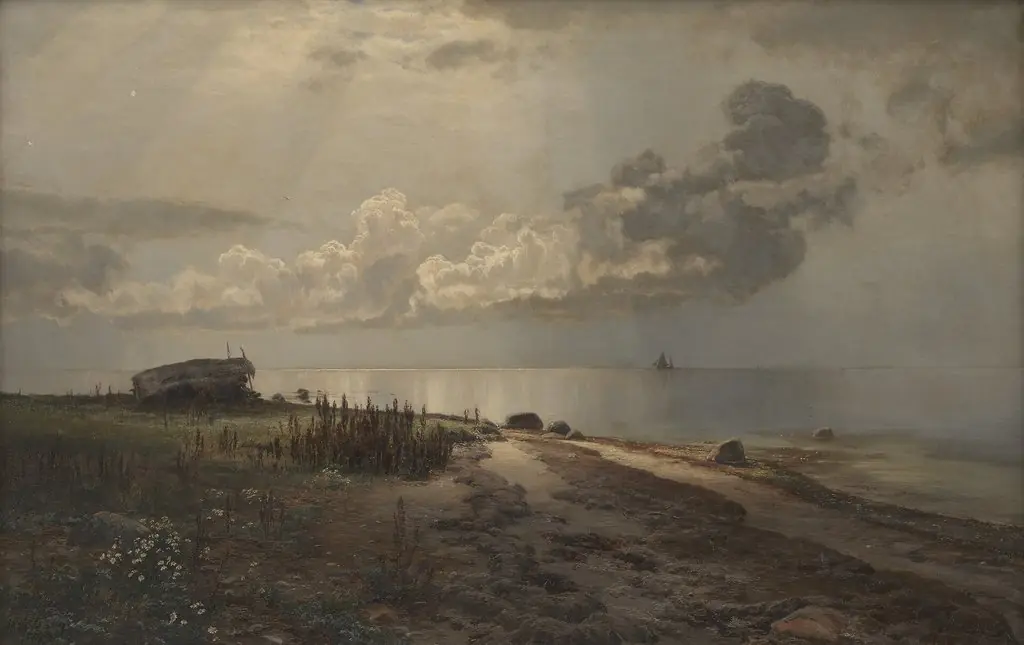
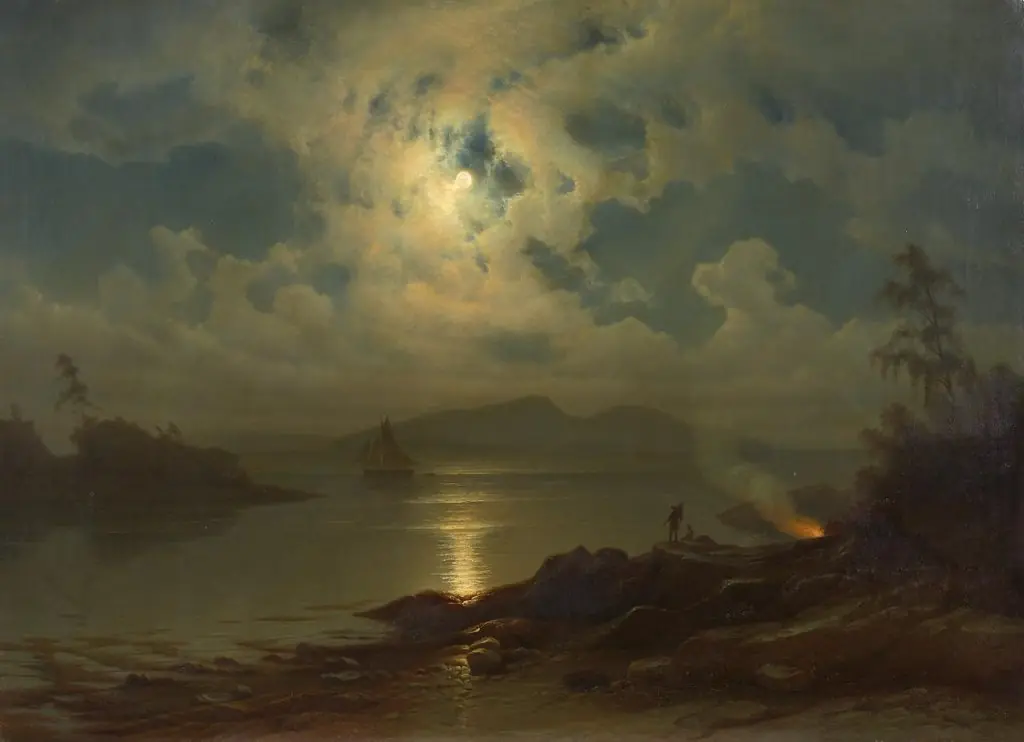
Måneskinn, Kinn is an oil painting by Amaldus Nielsen. It dates from 1860 and is held in the collection of the Munch Museum.
About this work
Overview
The work is part of the Munch Museum’s collection and exemplifies Nielsen’s early engagement with natural light and rural Norwegian life.
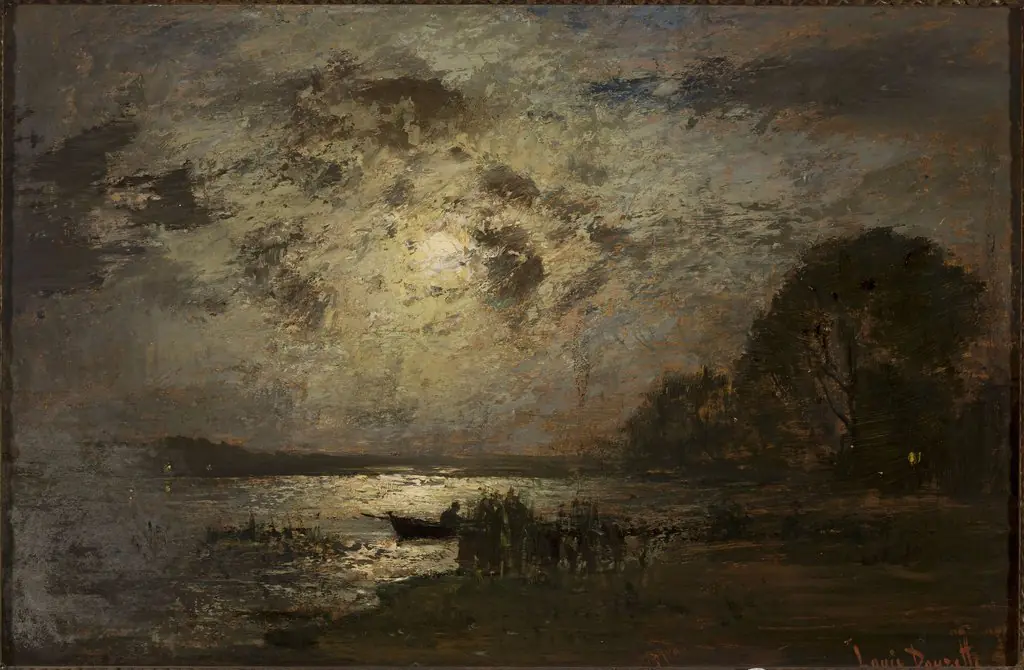
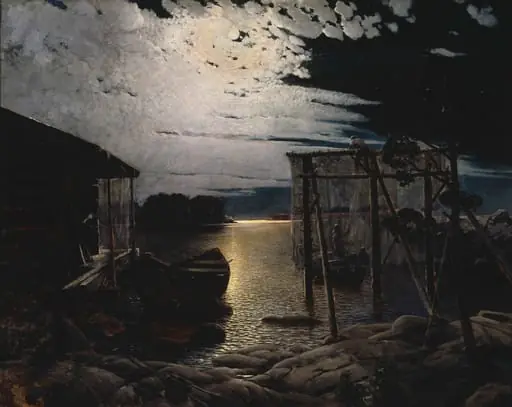
Måneskinn, Kinn is an 1860 oil painting by Norwegian artist Amaldus Nielsen. It portrays a quiet coastal scene at night, featuring a single thatched-roof house near the shoreline and a distant boat. The work is part of the Munch Museum’s collection and exemplifies Nielsen’s early engagement with natural light and rural Norwegian life. Its composition balances stillness with subtle movement, drawing attention to the interplay between land, sea, and sky under moonlight.
Subject & Meaning
The painting centers on a solitary dwelling by the sea, suggesting themes of isolation and quiet resilience. The presence of a small boat implies human activity beyond the frame, yet the scene remains undisturbed, emphasizing solitude. Moonlight functions not merely as illumination but as a calming force, transforming the ordinary into something meditative. The absence of figures heightens the sense of introspection, inviting contemplation rather than narrative.
Technique & Style
Nielsen employs bold, expressive brushwork to render textures of water, roof, and sky, avoiding fine detail in favor of atmospheric effect. Chiaroscuro is used deliberately to define form and depth, with the moon’s glow creating soft transitions between light and shadow. The paint is applied with visible energy, particularly in the rippling water and clouded sky, lending motion to an otherwise still scene. This approach reflects a transition from academic precision toward more emotive landscape representation.
History & Provenance
Painted in 1860, Måneskinn, Kinn emerged during Nielsen’s formative years as an artist, before his later association with the Norwegian romantic nationalist movement. It remained in private hands until acquired by the Munch Museum, where it now resides as part of its historical Norwegian art holdings. Its preservation reflects early recognition of Nielsen’s contribution to Norway’s landscape tradition, though it was not widely exhibited during his lifetime.
Context
Created during a period when Norwegian artists were turning to native landscapes for identity, the painting aligns with a broader cultural shift away from imported European styles. While not overtly political, its focus on a humble coastal home resonates with emerging national sentiments. Nielsen’s choice of nocturnal light distinguishes it from daylight scenes favored by contemporaries, offering a quieter, more personal vision of the Norwegian coast.
Legacy
Though less known than later Norwegian painters, Måneskinn, Kinn illustrates Nielsen’s role in developing a distinctly Norwegian visual language. Its emphasis on mood over grandeur influenced subsequent generations interested in emotional landscapes. The painting remains a quiet reference point in discussions of 19th-century Nordic art, valued for its restraint and sensitivity to natural light rather than its scale or drama.
Artist & collection