Artwork
Under trærne, Hoven ved Mandal
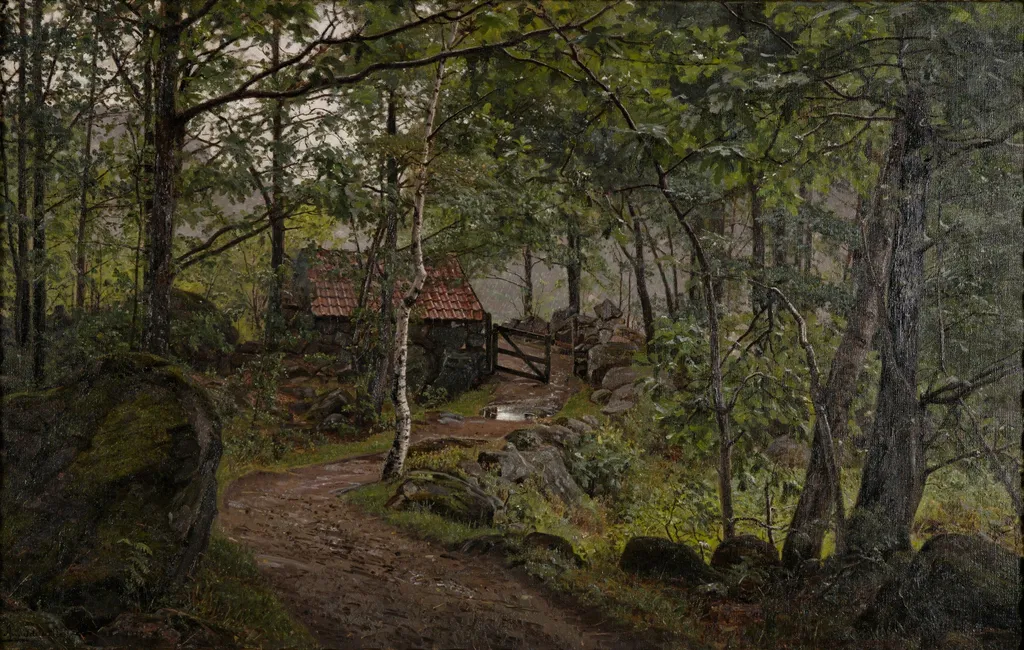
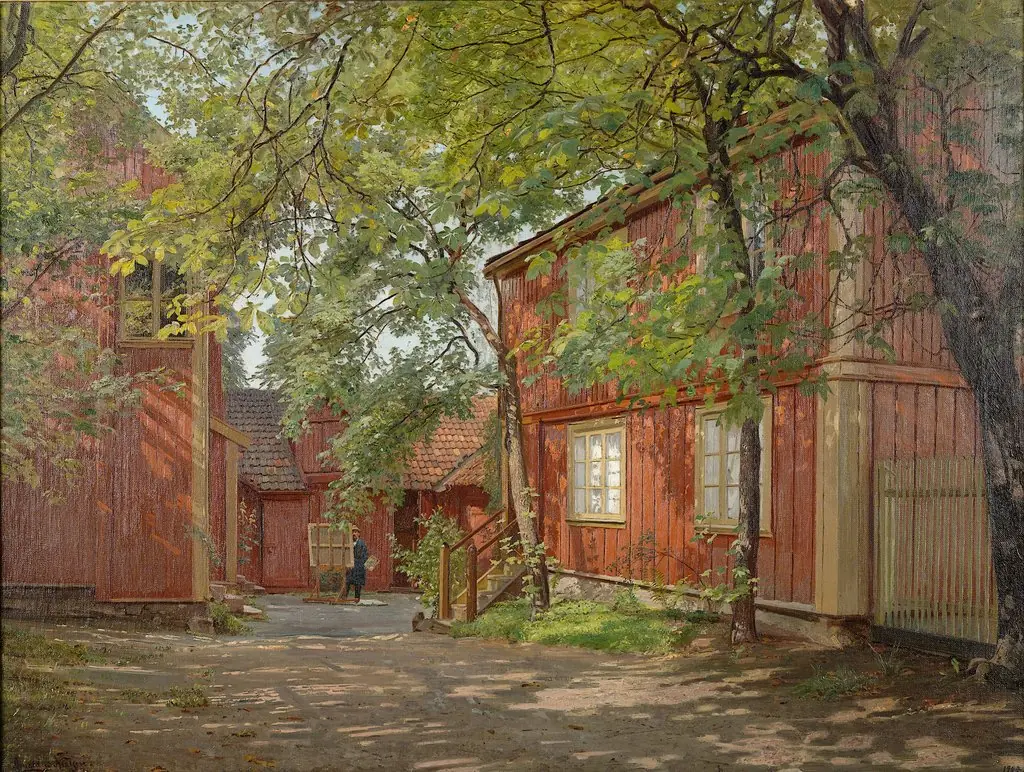
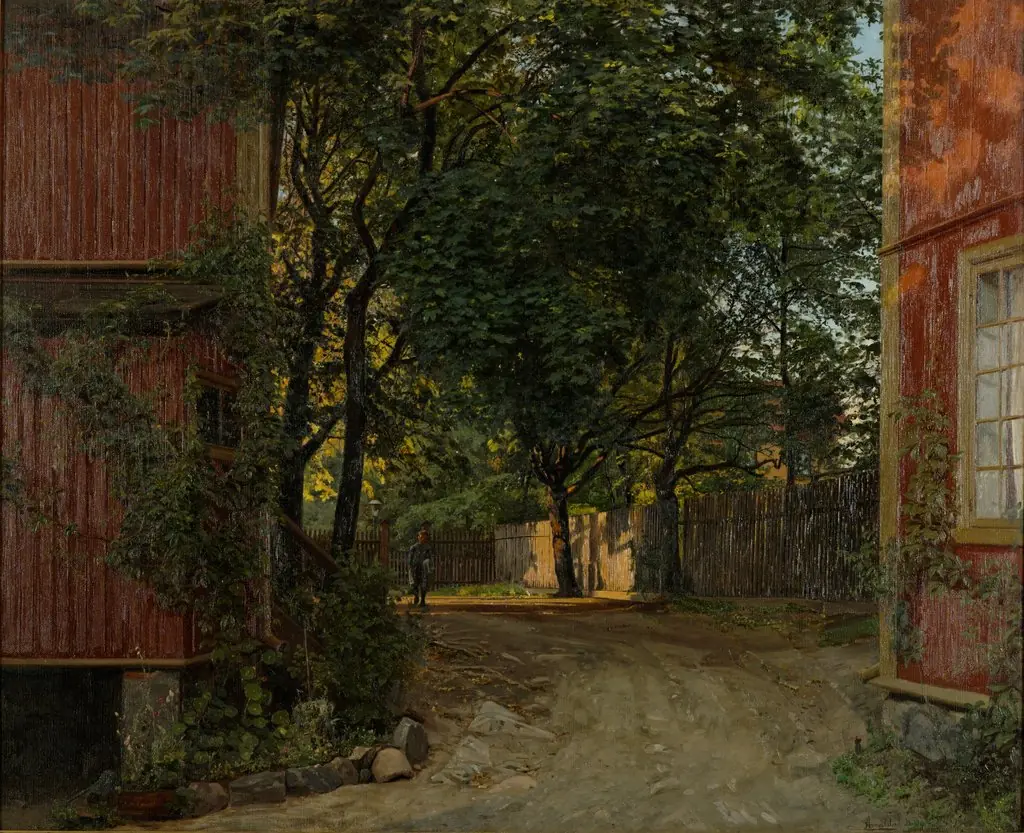
Under trærne, Hoven ved Mandal is an unspecified painting by the Post-Impressionist artist Amaldus Nielsen. It dates from 1908 and is held in the collection of the Munch Museum.
About this work
Overview
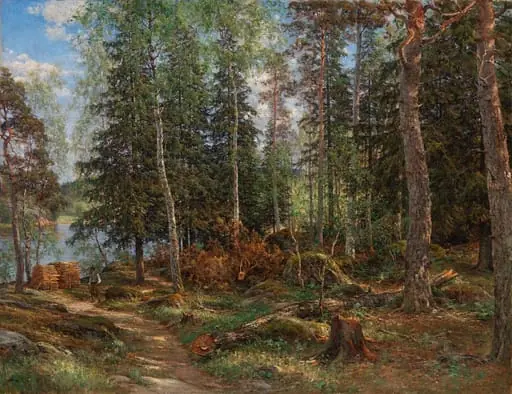
Painted in 1908 by Amaldus Nielsen, Under trærne, Hoven ved Mandal is a quiet landscape depicting a rural path winding through a wooded area in southern Norway.
Painted in 1908 by Amaldus Nielsen, Under trærne, Hoven ved Mandal is a quiet landscape depicting a rural path winding through a wooded area in southern Norway. The work is part of the collection at the Munch Museum in Oslo, where it is preserved as an example of early 20th-century Norwegian naturalism. Its subdued palette and intimate scale reflect a focus on everyday rural scenes rather than dramatic vistas.
Subject & Meaning
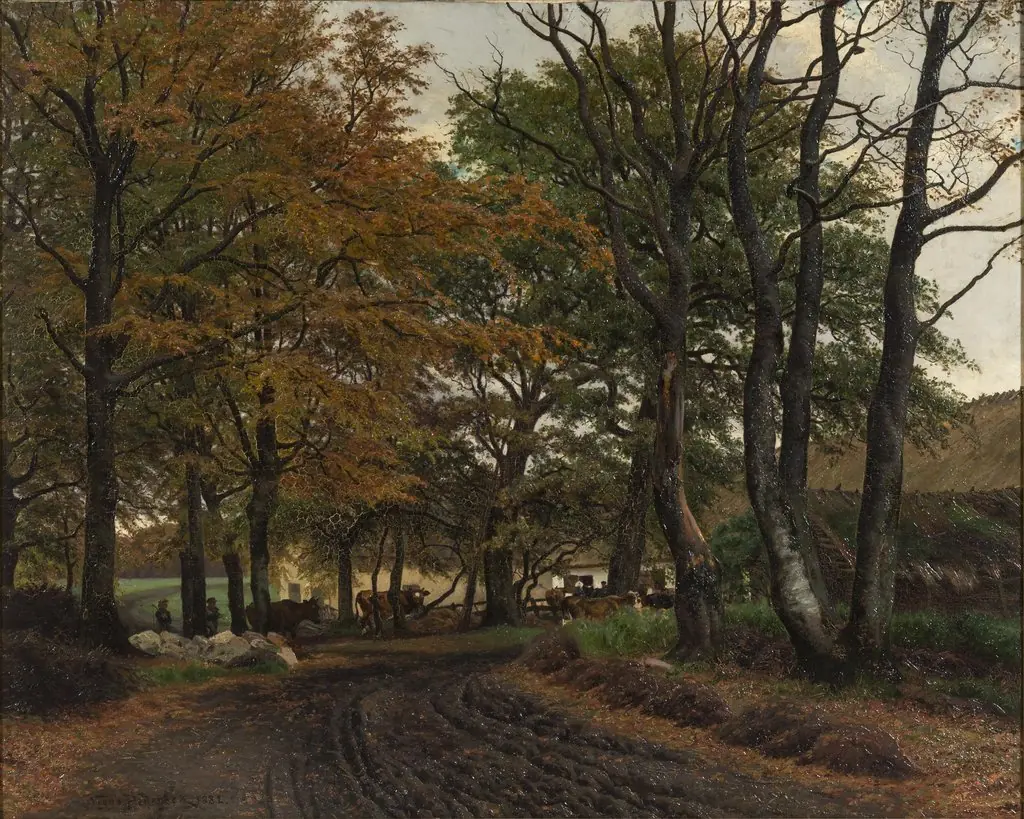
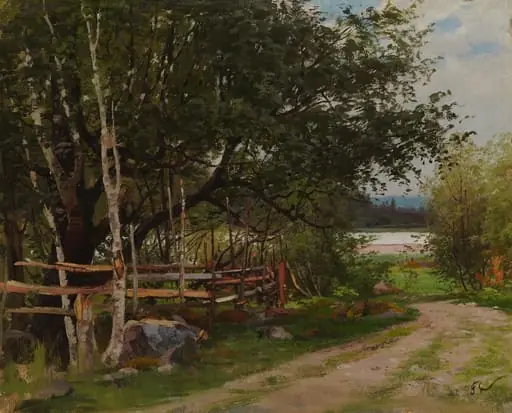
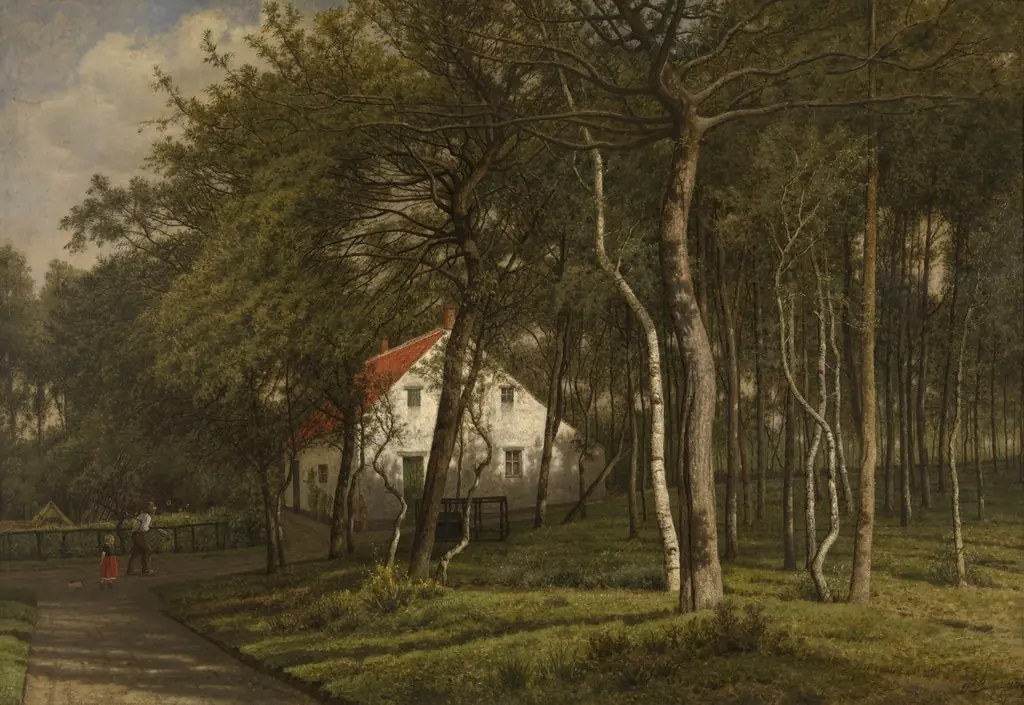
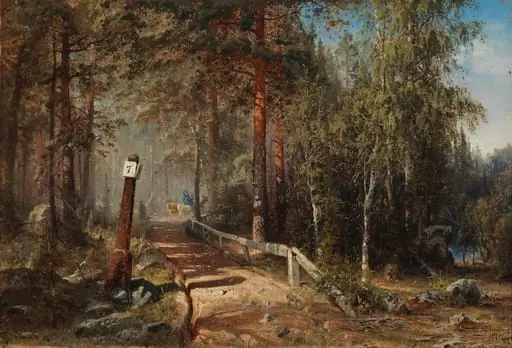
The painting presents a solitary dirt path leading to a modest wooden house enclosed by a low fence, nestled among trees. There is no human presence, suggesting a moment of stillness or retreat. The house, with its red roof, stands as a quiet symbol of domestic life amid nature. The scene evokes contemplation rather than narrative, emphasizing harmony between human habitation and the surrounding woodland.
Technique & Style
Nielsen employs layered brushwork to render varying shades of green across foliage and grass, creating a sense of depth and atmospheric texture. The path is rendered with loose, earth-toned strokes, while the wooden structures are defined with subtle, textured strokes that suggest weathered grain. The composition is deliberately uncluttered, with no sharp focal point, encouraging the viewer’s gaze to wander slowly through the scene.
History & Provenance
The painting was completed in 1908 and entered the collection of the Munch Museum, where it has remained since. While little is documented about its early ownership, its inclusion in the museum’s holdings suggests it was recognized early as representative of Nielsen’s regional focus. It has not been widely exhibited outside Norway, preserving its status as a quiet, locally resonant work.
Context
Created during a period when Norwegian artists were turning toward domestic landscapes and rural life, the painting aligns with a broader movement away from grand Romantic vistas toward intimate, observed scenes. Nielsen, influenced by Danish and Norwegian naturalism, sought to capture the subtle rhythms of the countryside, reflecting a national interest in identity rooted in place and season.
Legacy
Under trærne, Hoven ved Mandal remains a representative example of Nielsen’s commitment to understated realism. Though not widely known beyond Norwegian art circles, it contributes to the understanding of early modern Norwegian painting’s quiet, observational approach. Its preservation in the Munch Museum ensures its continued presence as a record of early 20th-century rural life in southern Norway.
Own this work as a print
Artist & collection