Artwork
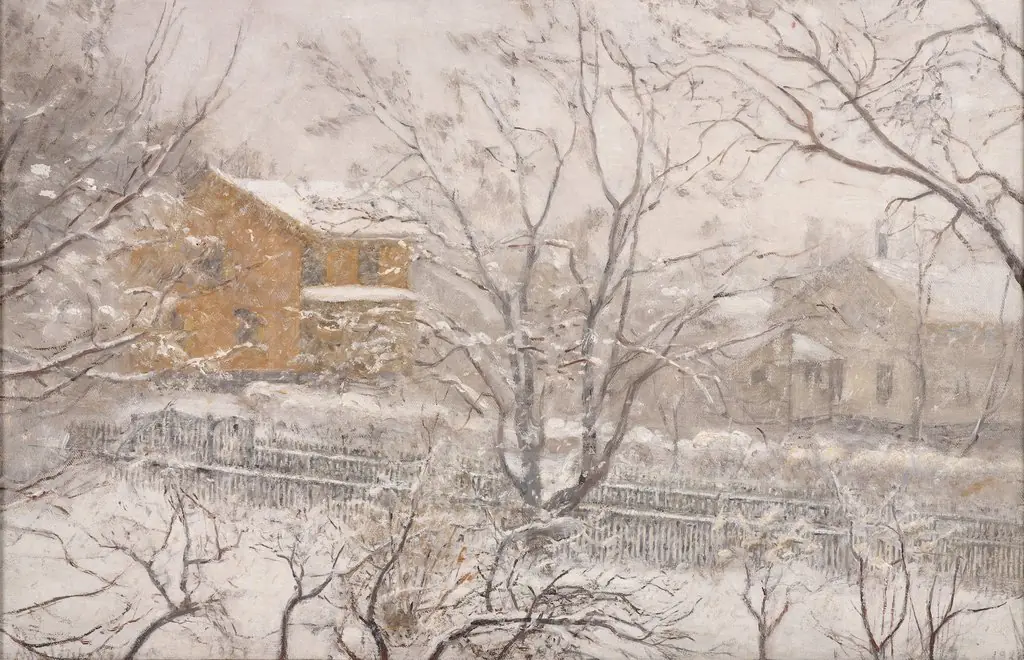
Aftenavisen kommer, Majorstuveien 8
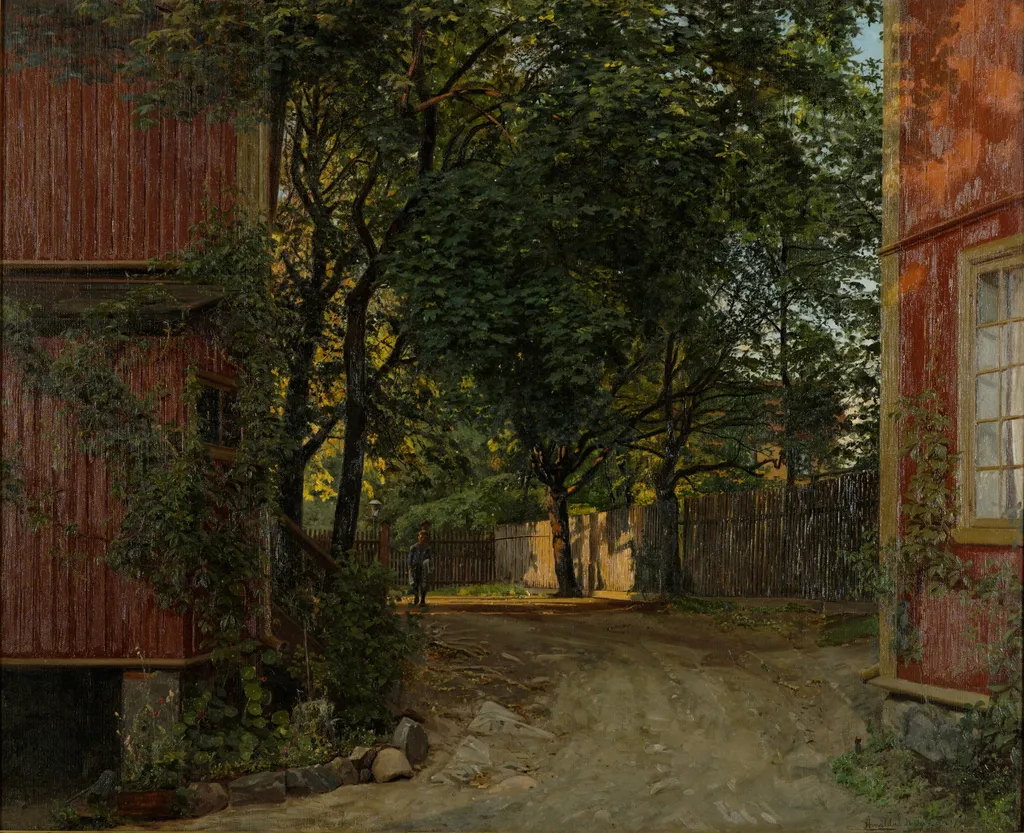
Aftenavisen kommer, Majorstuveien 8 is an unspecified painting by the Post-Impressionist artist Amaldus Nielsen. It dates from 1900 and is held in the collection of the Munch Museum.
About this work
Overview
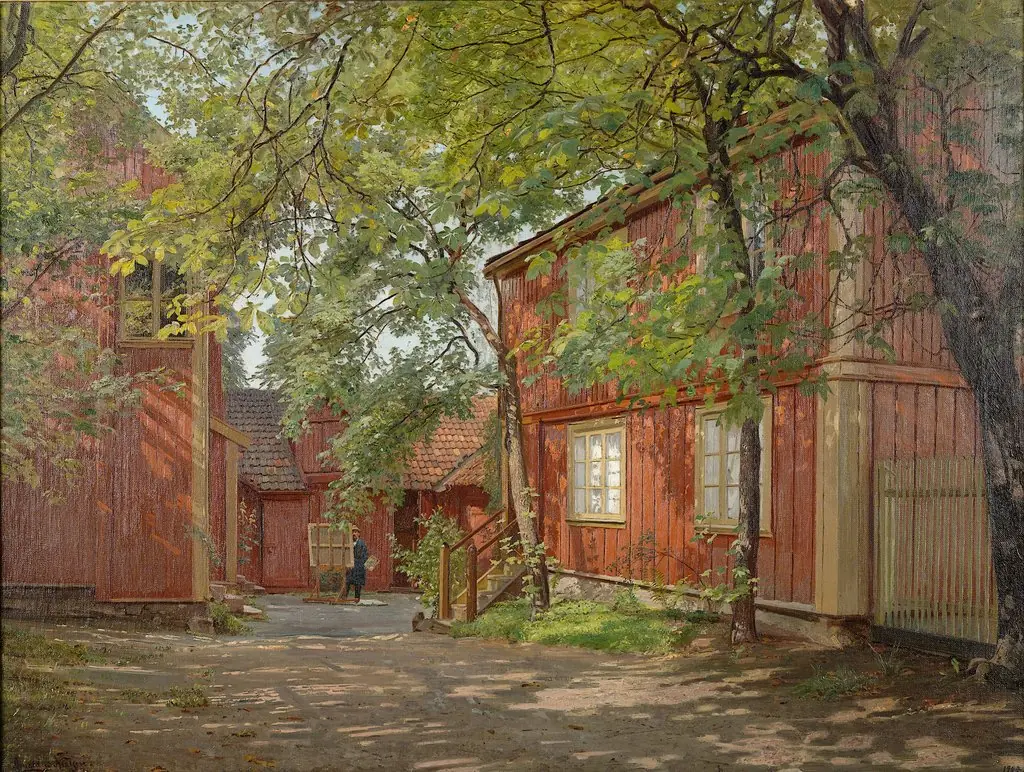
Painted in 1900 by Amaldus Nielsen, this work captures a quiet residential scene at Majorstuveien 8 in Oslo, then known as Bernerløkken. The painting is part of the Munch Museum’s collection and reflects Nielsen’s interest in everyday Norwegian landscapes during the late 19th and early 20th centuries. Its calm composition and subtle lighting distinguish it from more dramatic contemporary works.
Subject & Meaning
The scene centers on a red-painted house nestled among dense foliage, with a narrow dirt path leading toward it. A solitary figure stands on the road, neither interacting with the house nor drawing attention to themselves. This quiet human presence suggests domestic life without narrative, emphasizing solitude and the rhythm of ordinary existence rather than event or drama.
Technique & Style
Nielsen employs soft, blended brushwork to render foliage and light, avoiding sharp outlines. Warm ochres and muted reds dominate the palette, enhancing the sense of evening calm. Dappled shadows from the trees are suggested through layered tones rather than defined lines, creating a gentle play of light that feels naturalistic and unforced, characteristic of his observational approach.
History & Provenance
The painting was completed in 1900 and remained in private hands until acquired by the Munch Museum. Its subject, Majorstuveien 8, was a real residence in Oslo’s Majorstua district, an area undergoing gradual urbanization at the time. The work’s preservation reflects its value as a record of domestic architecture and neighborhood character before modern development altered the landscape.
Context
Nielsen worked during a period when Norwegian artists increasingly turned to local scenes rather than grand historical or mythological themes.
Nielsen worked during a period when Norwegian artists increasingly turned to local scenes rather than grand historical or mythological themes. This painting aligns with a broader trend of intimate, non-idealized depictions of home and surroundings. Unlike urban industrial subjects favored by some contemporaries, Nielsen focused on quiet residential corners, capturing a fading rural sensibility within a growing city.
Legacy
Though not widely exhibited outside Norway, the painting contributes to the understanding of Nielsen’s role in documenting everyday Norwegian life. It stands as a modest but deliberate record of a specific place and moment, valued for its sincerity and restraint. Its presence in the Munch Museum ensures continued access for study and reflection on early 20th-century domestic aesthetics.
Own this work as a print
Artist & collection

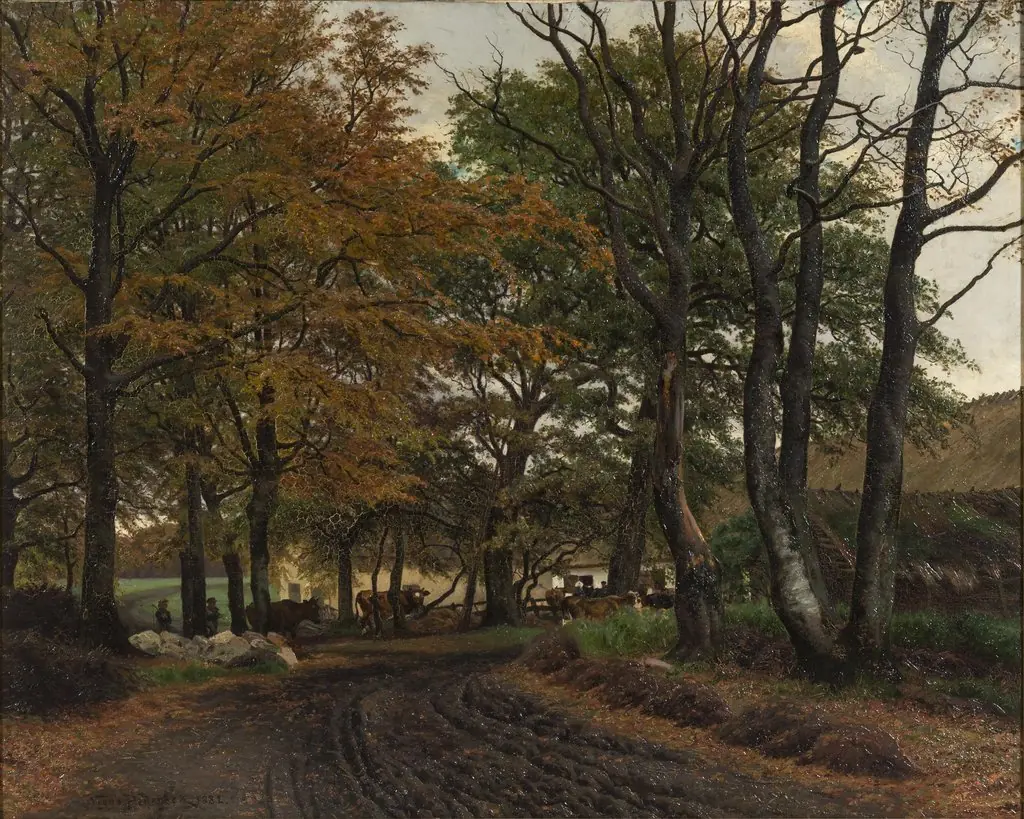 En opkørt vej under gamle træer
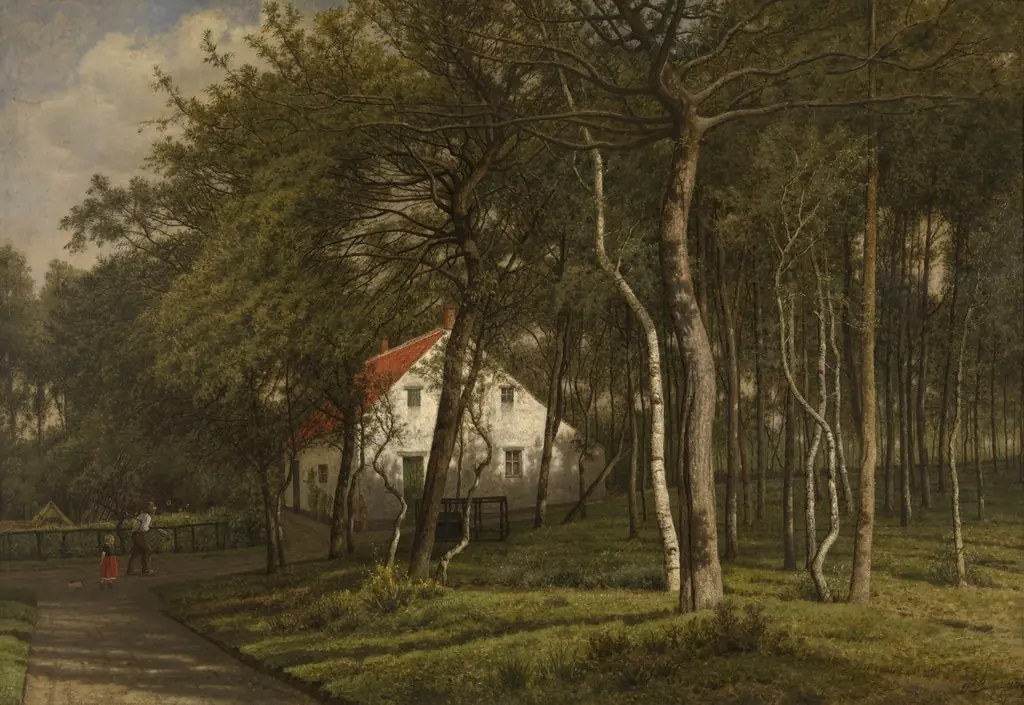 A Forester Cottage in Putte
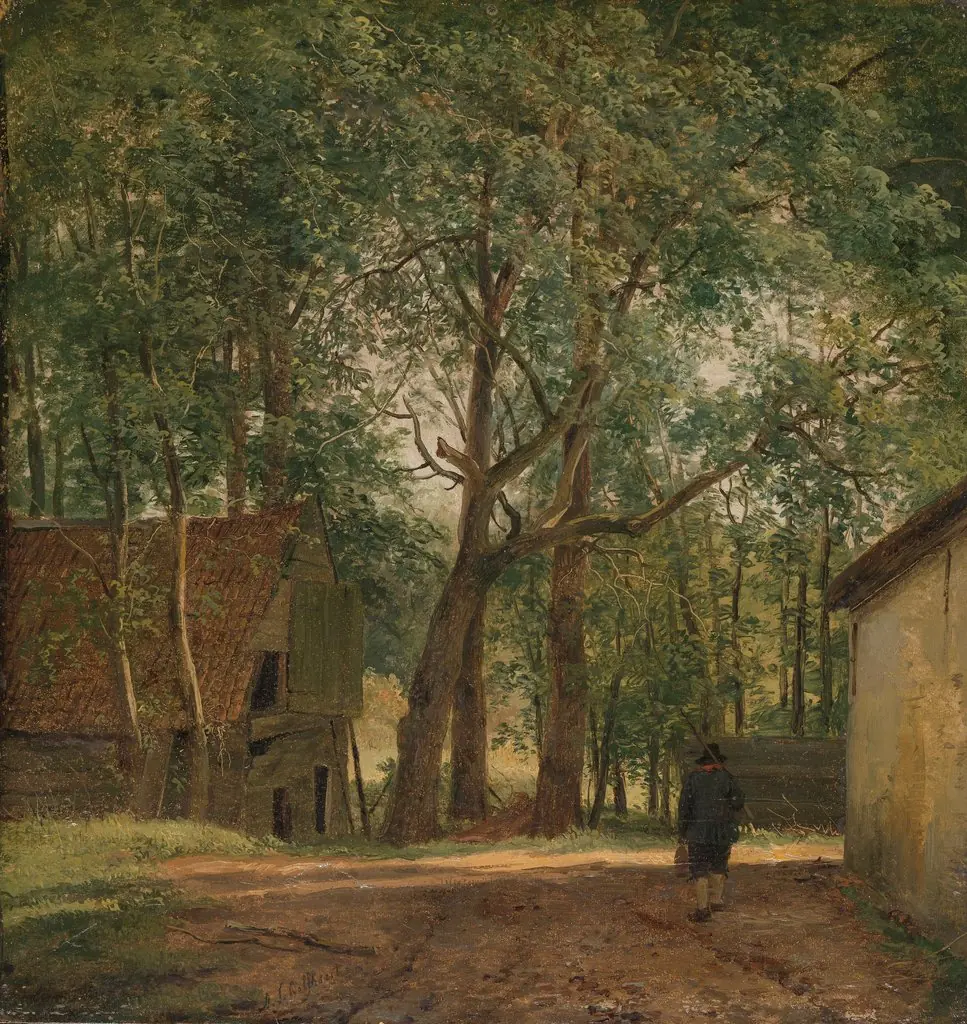 Farmyard
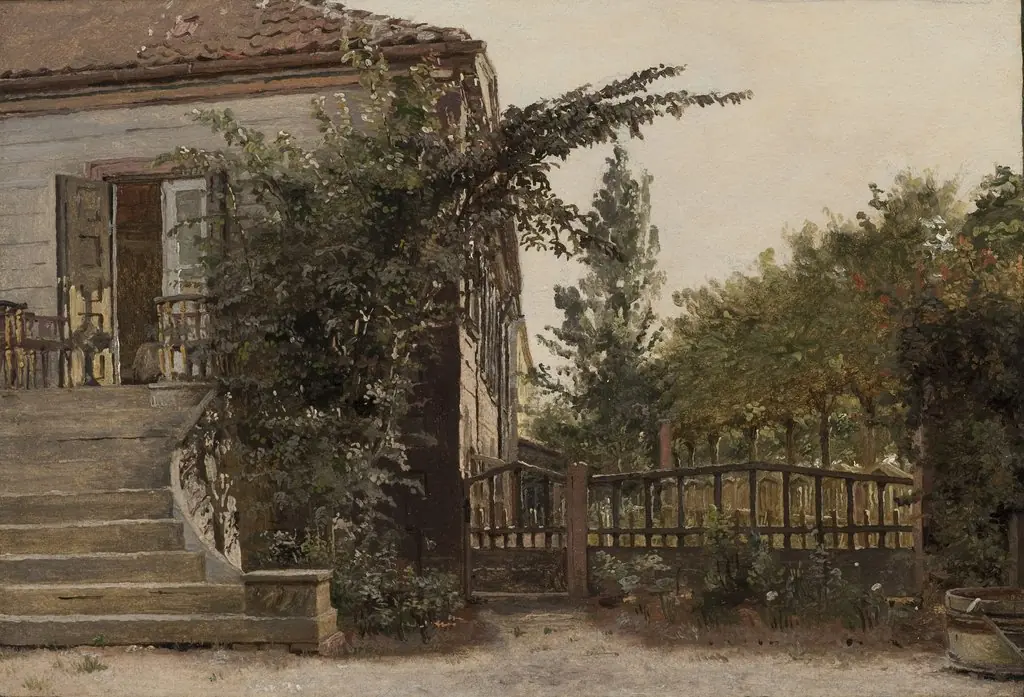 The Garden Steps Leading to the Artist's Studio on Blegdammen
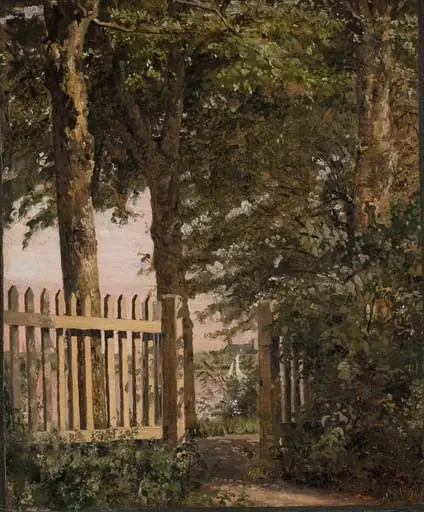 The Garden Gate of the Artist's Home at Blegdammen
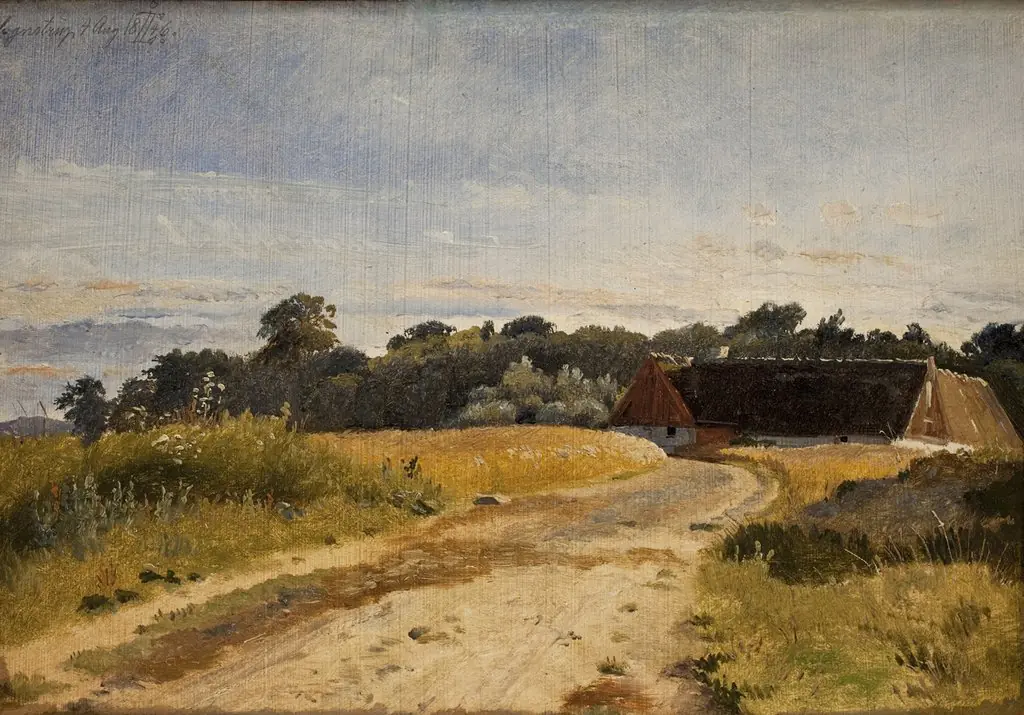 A Croft at Lodskov near Vognserup Manor. Study
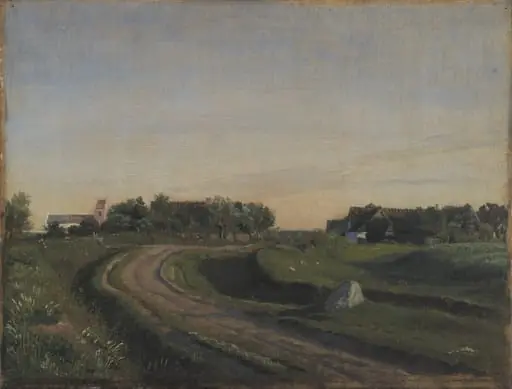 Vejby with the Church seen from the North. Evening Light. Zealand
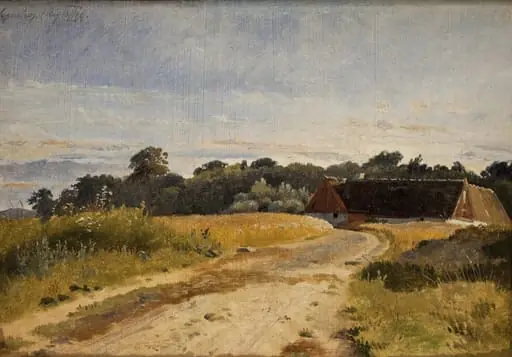 A Croft at Lodskov near Vognserup Manor. Study
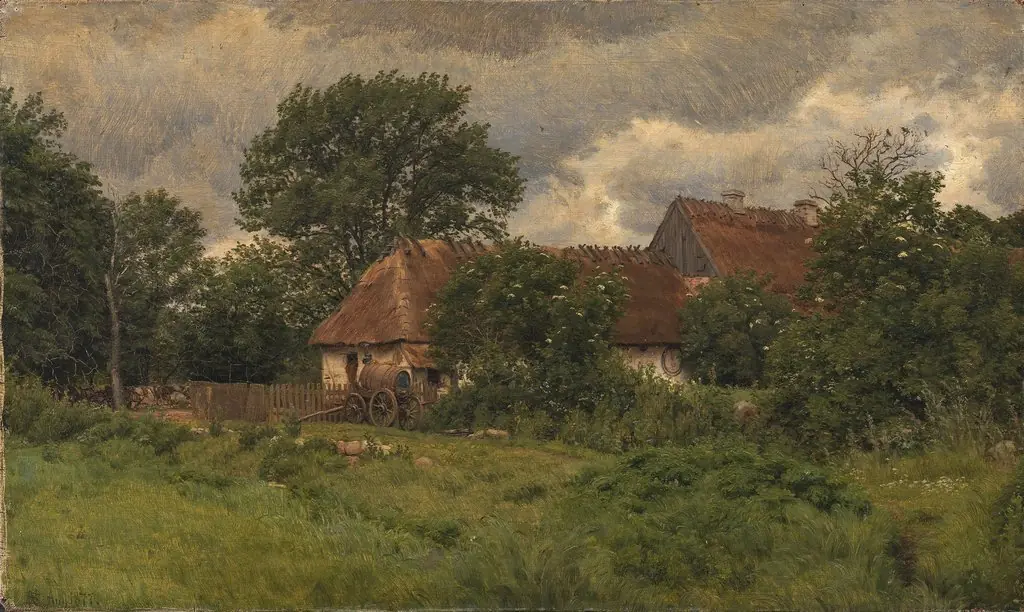 Gamle udbygninger ved en herregård