Artwork
Privire din atelierul cel mic al pictorului
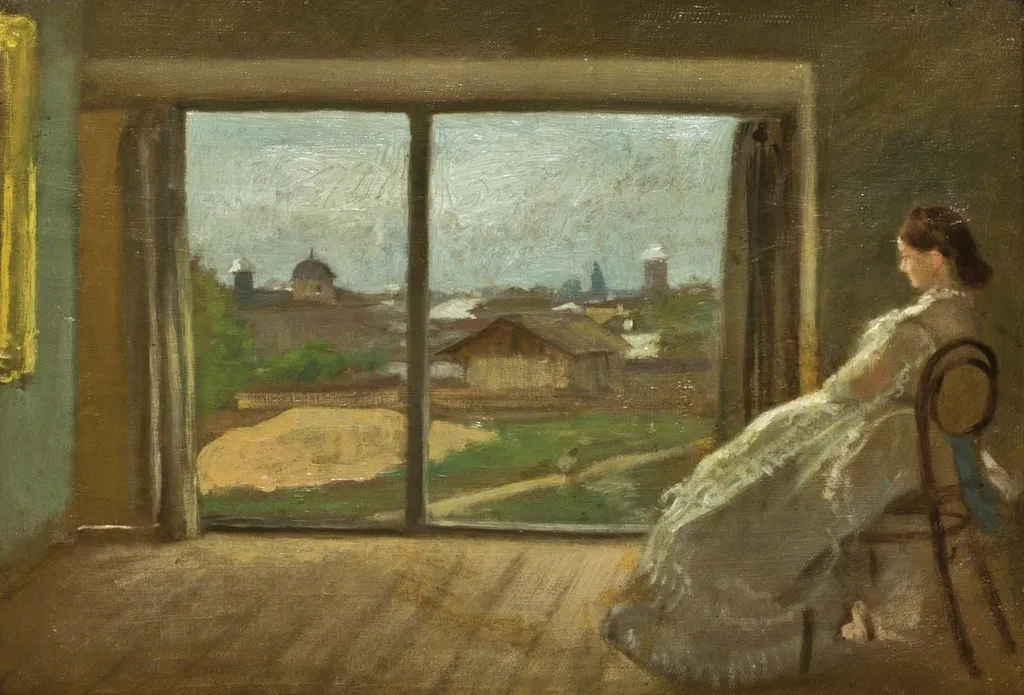
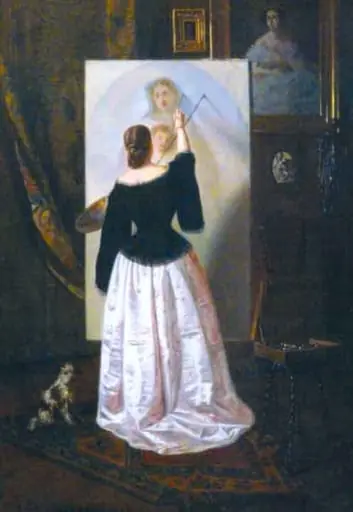
Privire din atelierul cel mic al pictorului is a print by Theodor Aman. It dates from 1850 and is held in the collection of the Bucharest Municipality Museum.
About this work
Overview
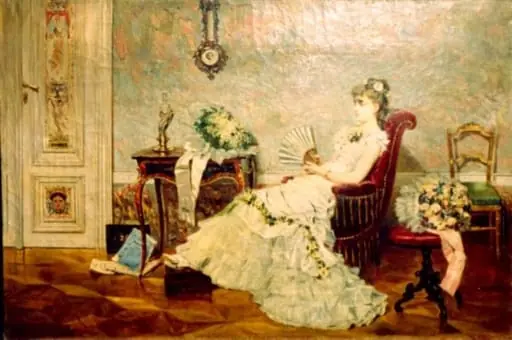
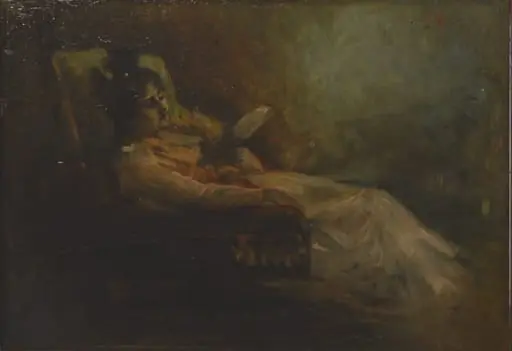
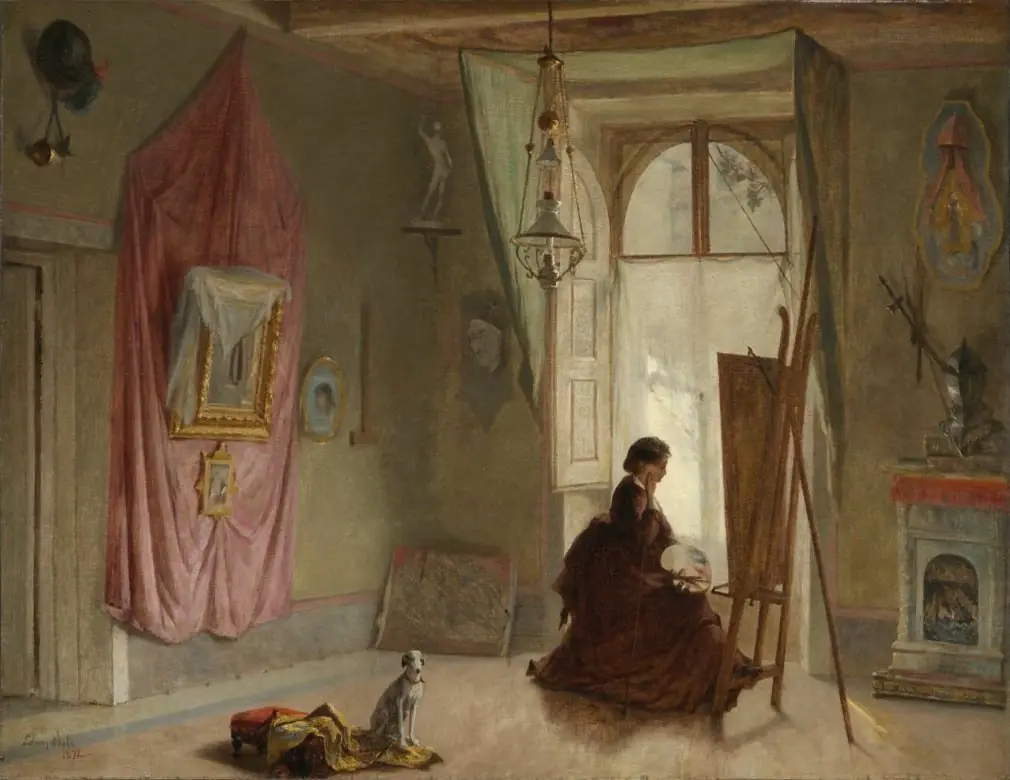
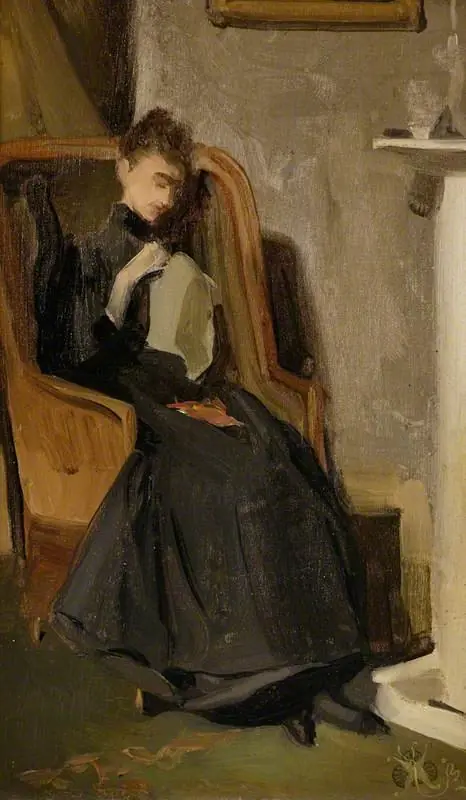
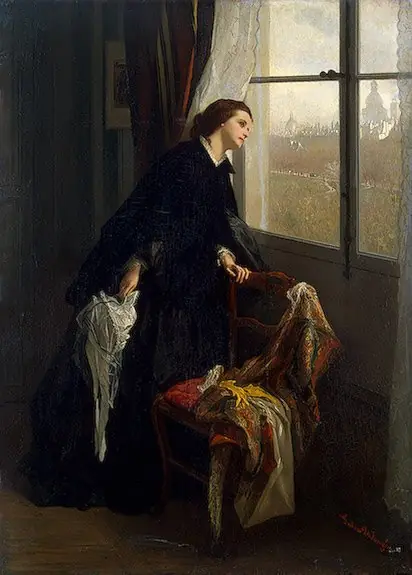
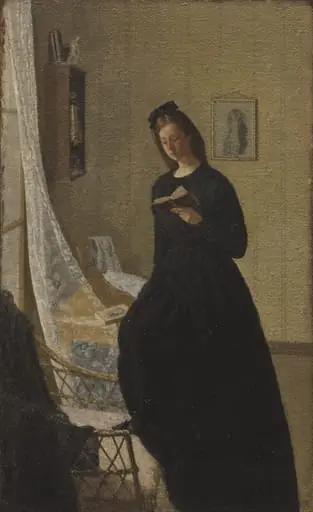
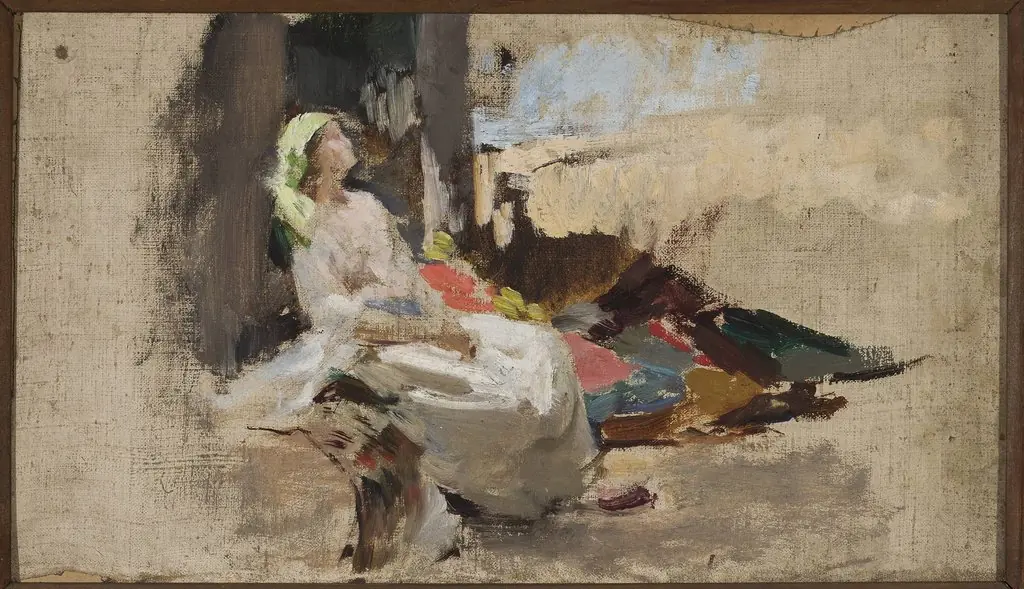
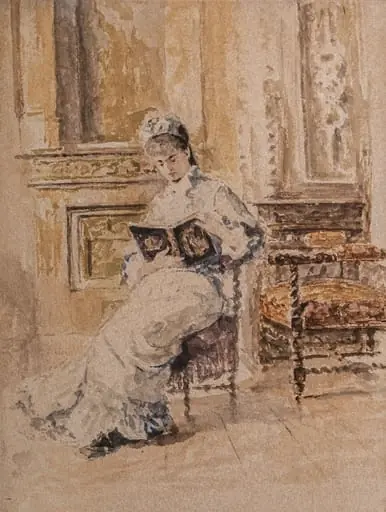
Painted around 1850 by Theodor Aman, this interior scene captures the quiet atmosphere of a modest artist’s studio in Bucharest.
Painted around 1850 by Theodor Aman, this interior scene captures the quiet atmosphere of a modest artist’s studio in Bucharest. The composition focuses on a solitary woman seated near a window, her back turned to the viewer. The muted palette of browns and grays, combined with soft natural light, conveys a sense of stillness and introspection. The work reflects Aman’s interest in everyday domestic spaces, rendered with subtle realism rather than dramatic narrative.
Subject & Meaning
The seated woman, dressed in a simple white gown with her hair gathered neatly, appears absorbed in quiet contemplation. Her position, facing the window and the blurred city beyond, suggests a moment of pause between inner thought and the external world. The absence of identifiable activity or interaction lends the scene a meditative quality, possibly symbolizing the solitude inherent in artistic creation or the private rhythms of domestic life in mid-19th-century Romania.
Technique & Style
Aman employs a restrained tonal range, relying on subtle shifts in gray and brown to model form and suggest depth. The light entering through the open window casts a gentle glow, defining the contours of the chair and fabric without harsh contrasts. Brushwork is soft and blended, avoiding sharp detail in the distant cityscape, which remains indistinct. This approach prioritizes mood over precision, aligning with emerging realist tendencies in Romanian art of the period.
History & Provenance
The painting entered the collection of the Museum of Ethnography in Bucharest, where it remains today. Though not widely exhibited, its inclusion in an ethnographic institution reflects early efforts to document Romanian domestic culture alongside material artifacts. The work’s date—circa 1850—places it among Aman’s earliest known interiors, created during his formative years as an artist and educator in the capital.
Context
In mid-19th-century Romania, artists like Aman began turning from grand historical themes toward intimate, observable realities. This shift coincided with broader cultural movements seeking to define national identity through everyday life. The studio setting, a space of both labor and privacy, became a symbolic site for this new artistic focus. Aman’s depiction of his own environment contributes to a growing visual record of Romanian urban domesticity.
Legacy
While not among Aman’s most celebrated works, this painting exemplifies his early commitment to quiet observation and atmospheric rendering. It influenced later Romanian realists who sought to portray ordinary interiors with dignity and nuance. Its preservation in an ethnographic context underscores its value as a cultural document, offering insight into the material and emotional landscape of a Romanian artist’s life in the decades before national independence.
Artist & collection
Artist
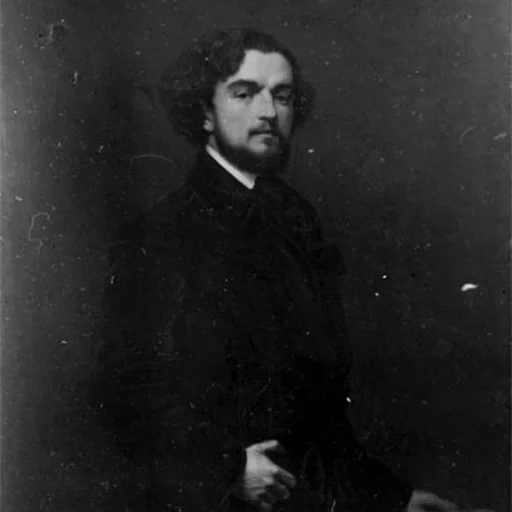
Theodor Aman (20 March 1831 – 19 August 1891) was a Romanian painter, engraver and art professor. He mostly produced genre and history scenes.