Artwork
Iarnă
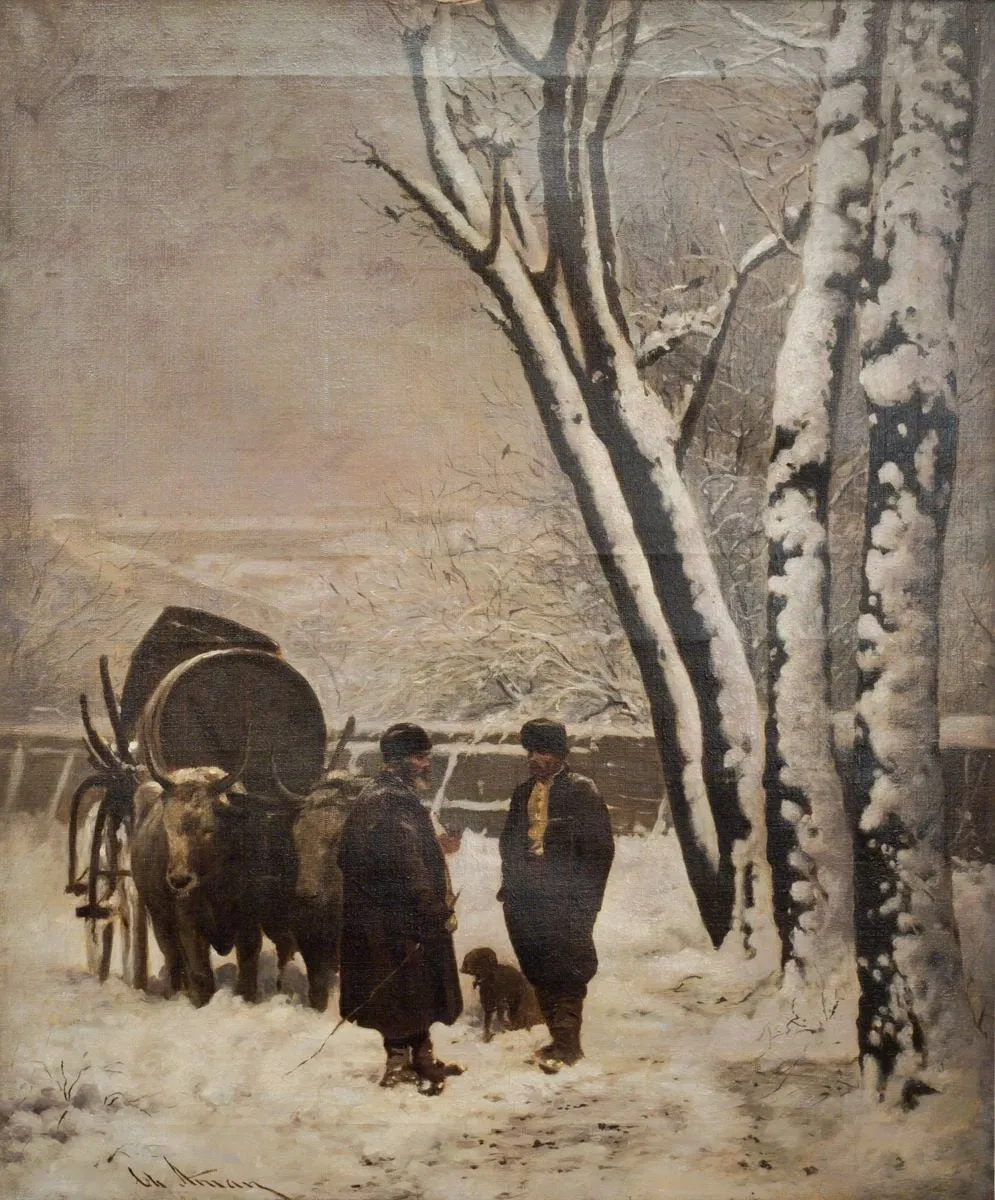
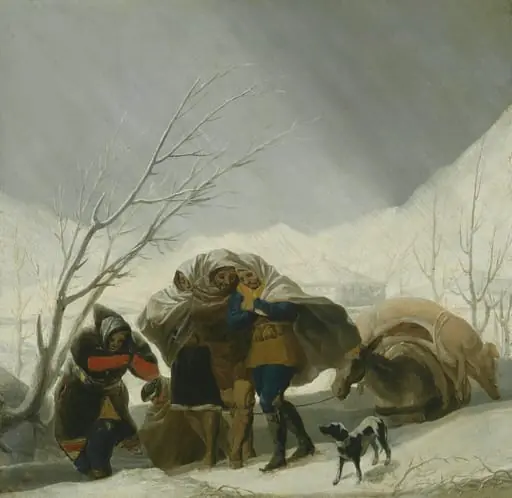
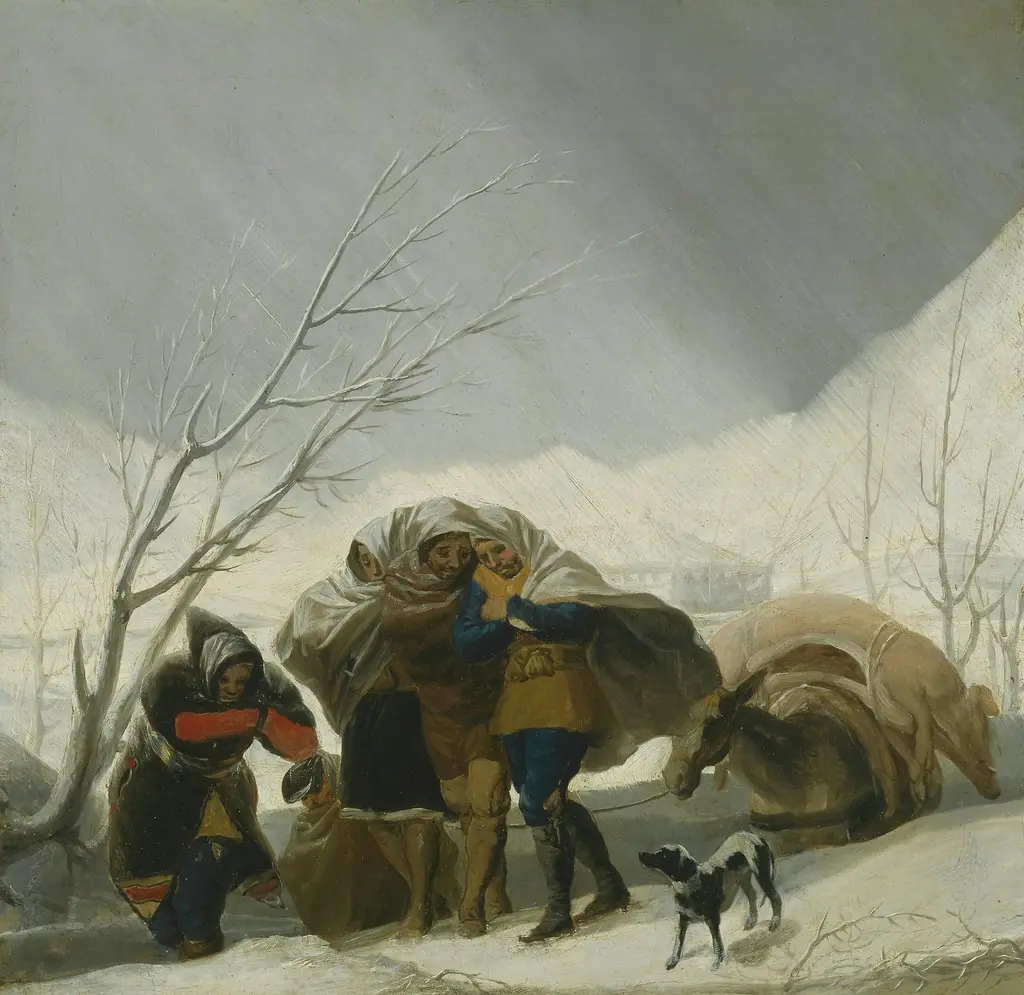
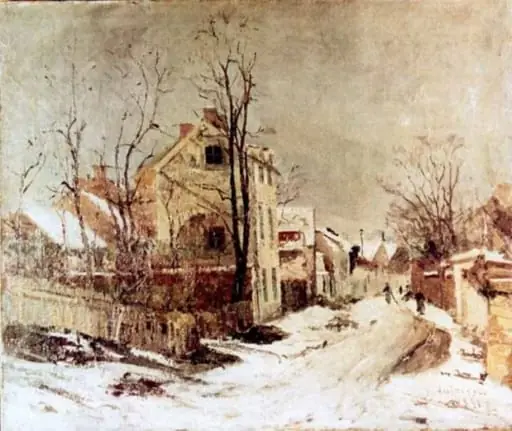
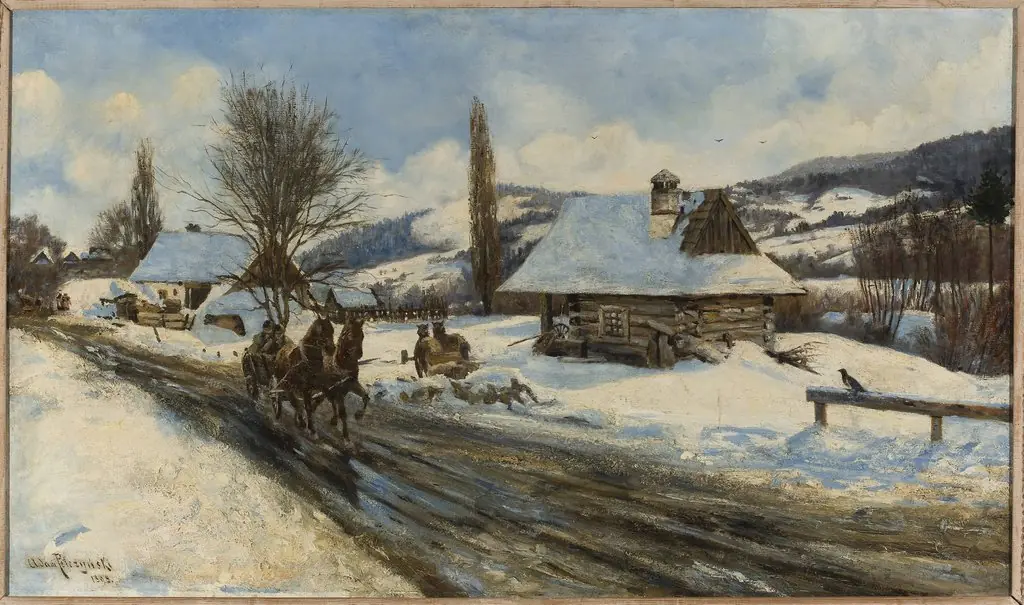
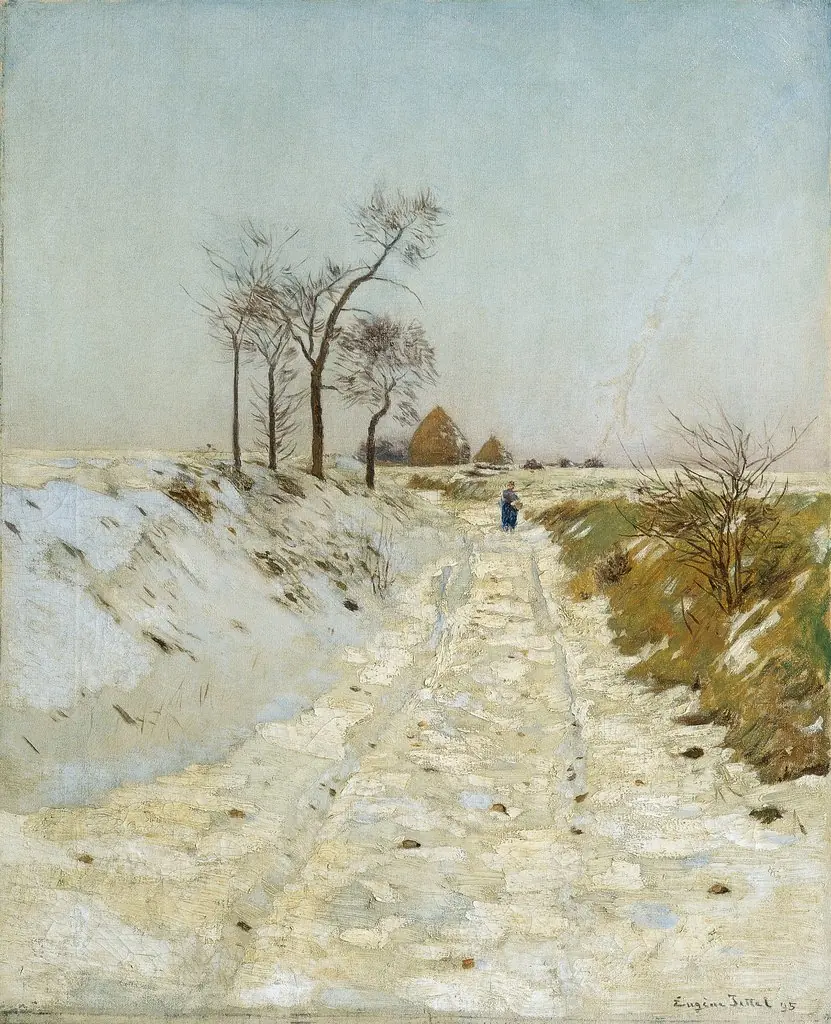
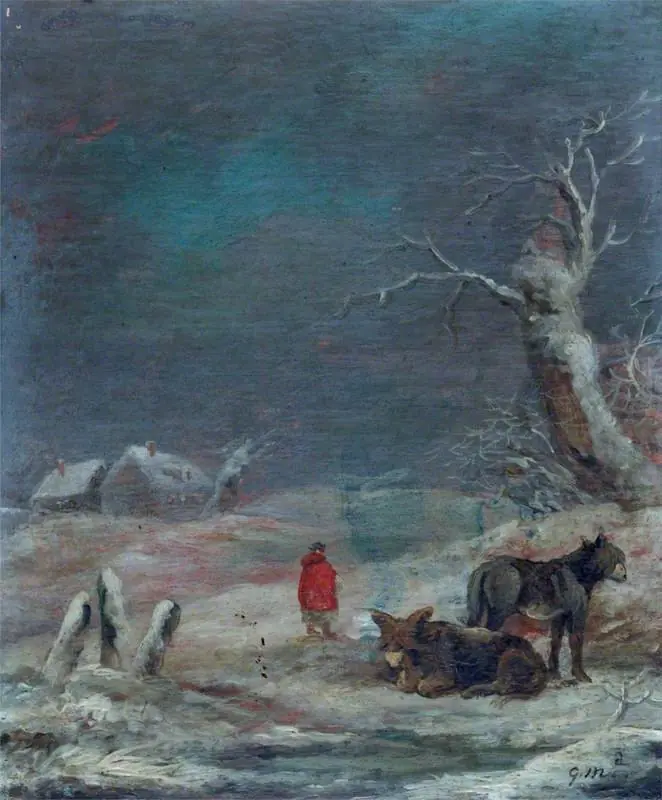
Iarnă is a print by the Academic Art artist Theodor Aman. It dates from 1871 and is held in the collection of the Bucharest Municipality Museum.
About this work
Overview
Aman, known for genre and historical subjects, captured a quiet moment of endurance against the season’s harshness.
Painted around 1871 by Theodor Aman, *Iarnă* is a winter landscape depicting rural labor in 19th-century Romania. Aman, known for genre and historical subjects, captured a quiet moment of endurance against the season’s harshness. The work resides in the Museum of Ethnography, reflecting its focus on everyday life rather than grand narratives. Its subdued palette and restrained composition emphasize the weight of routine in rural communities.
Subject & Meaning
Two figures trudge through deep snow, guiding two oxen pulling a cart bearing a large, dark barrel. Their posture suggests exhaustion, yet their movement is deliberate, conveying resilience. The barrel, though unmarked, implies essential goods—perhaps food, fuel, or drink—necessary for survival. The scene avoids drama, instead honoring the quiet persistence of winter labor, where each step is a necessity, not a spectacle.
Technique & Style
Aman employed a muted, earth-toned palette to reflect the frozen landscape, with subtle variations in white and gray to suggest snow depth and texture. Brushwork is controlled, avoiding flourish; details like hoof prints and coat folds are rendered with precision. The composition is low and horizontal, drawing the eye along the path of the cart, reinforcing the forward motion and isolation of the figures against the vast, silent terrain.
History & Provenance
Created during Aman’s mature period, *Iarnă* was likely painted after his time studying in Europe and during his tenure as an art professor in Bucharest. It entered the Museum of Ethnography’s collection in the late 19th or early 20th century, aligning with the institution’s mission to document Romanian folk life. Its preservation there underscores its value as a record of material culture rather than as a purely aesthetic object.
Context
In 1870s Romania, rural life remained largely unchanged by industrialization. Winter brought isolation and physical hardship, especially for those transporting goods over snowbound roads. Aman’s depiction aligns with broader European realist trends but is grounded in local conditions—observed, not idealized. The painting reflects a society where survival depended on labor, animals, and endurance, not technology or wealth.
Legacy
Though not widely exhibited outside Romania, *Iarnă* remains a touchstone in discussions of national realism. It influenced later artists seeking to portray rural life without romanticism. Its presence in the Museum of Ethnography anchors it as a document of social history, valued for its unembellished observation of seasonal labor and the quiet dignity of ordinary people in a harsh environment.
Artist & collection
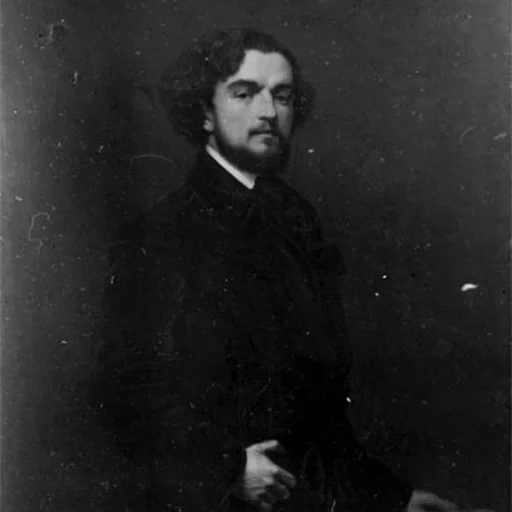
Artist
Theodor Aman (20 March 1831 – 19 August 1891) was a Romanian painter, engraver and art professor. He mostly produced genre and history scenes.