Artwork
Untitled
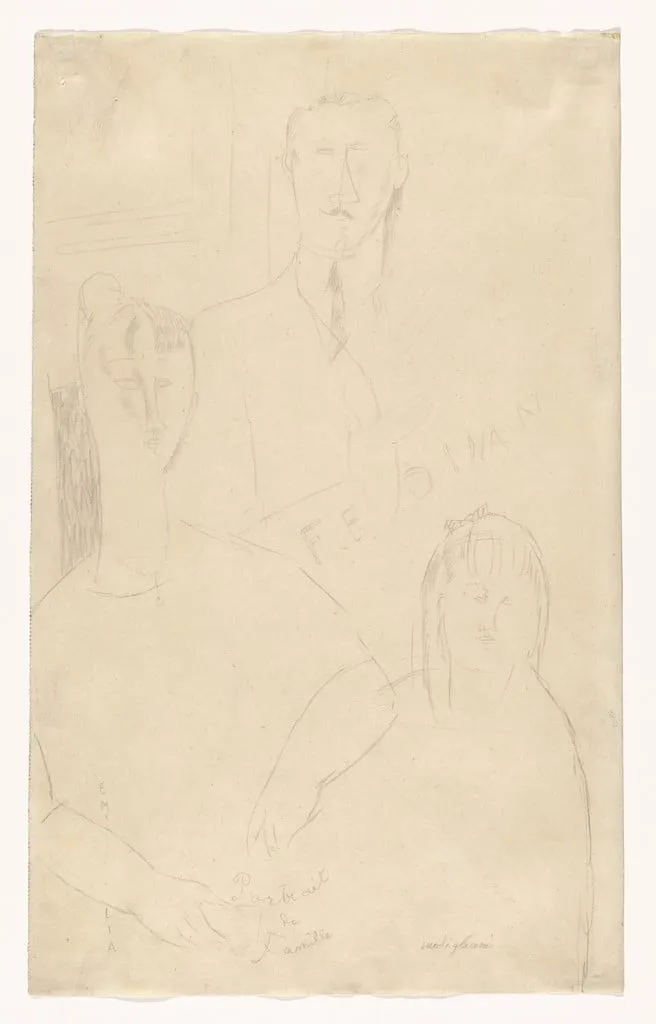
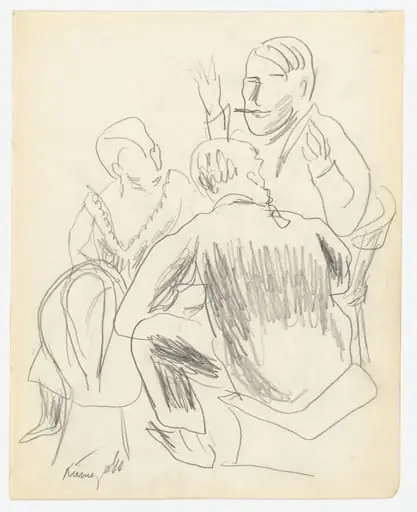
Untitled is a graphite drawing by Amedeo Modigliani. It dates from 1916 and is held in the collection of the Museum of Modern Art.
About this work
The artist scribbled notes in the corners, like *"Perbœuf"* and *"1916"*, hinting at a quick study rather than a finished work.
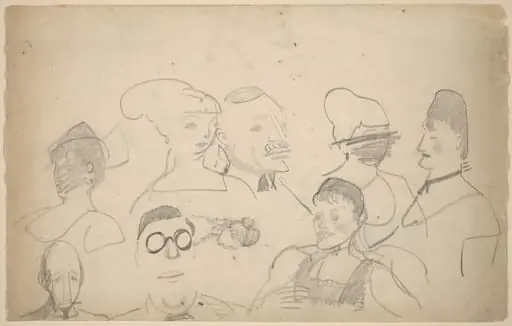
This sketch shows three figures drawn in quick, loose lines on light paper. The man in the center wears a suit and tie, while the two women beside him have simple, rounded heads. Their faces and bodies are barely outlined—just enough to recognize them.
The artist scribbled notes in the corners, like *"Perbœuf"* and *"1916"*, hinting at a quick study rather than a finished work. The pencil strokes are light and uneven, almost like a doodle.
Next, check out cross-hatching to see how artists build form with lines.
Overview
This 1916 pencil drawing by Amedeo Modigliani is a fleeting figure study, executed on lightweight paper with minimal detail. Its informal quality suggests a spontaneous sketch, likely made during a moment of observation rather than as a polished composition. The artist’s hand moves with speed and economy, capturing the essence of three figures without finishing their forms. Notes in the margins, including the date and a name, reinforce its function as a working record.
Subject & Meaning
The drawing depicts three individuals: a man in formal attire flanked by two women, their identities unconfirmed. The figures are rendered without individualizing features, suggesting they may be anonymous figures from Modigliani’s Parisian environment. Their grouping implies a social setting, perhaps a café or studio, but the lack of context or narrative detail leaves their relationship ambiguous. The work prioritizes presence over story.
Technique & Style
Modigliani employs loose, uneven pencil strokes that avoid shading or cross-hatching, relying instead on contour and suggestion. Forms are simplified into elongated silhouettes, echoing his broader stylistic tendencies, though here they are more tentative. The lines are light and fragmented, as if the artist was responding to fleeting impressions. The absence of detail and the sketchy quality reflect a focus on immediate perception rather than refinement.
History & Provenance
Created during Modigliani’s time in Paris, this drawing belongs to a prolific phase when he produced numerous figure studies, often on inexpensive paper. It was likely kept among his personal sketches, not intended for public display. Its survival reflects its value as a document of his working process. The marginalia, including the date and 'Perbœuf,' may indicate a private reference, possibly to a person or place known to the artist.
Context
In 1916, Modigliani was immersed in the avant-garde milieu of Montparnasse, engaging with artists like Picasso and Brâncuși while developing a personal idiom distinct from Cubism or abstraction. His figure studies from this period drew on Renaissance training and African sculpture, yet here the influence is subdued. The drawing’s immediacy contrasts with the monumental sculptures he was also producing, revealing a quieter, more private mode of observation.
Legacy
This drawing exemplifies Modigliani’s commitment to capturing human presence through reduction rather than detail. Though not a finished work, it reveals the discipline behind his mature portraits—the economy of line, the focus on posture and silhouette. Such sketches, once overlooked, are now recognized as vital to understanding his artistic process and the quiet intensity of his vision.
Artist & collection
Artist
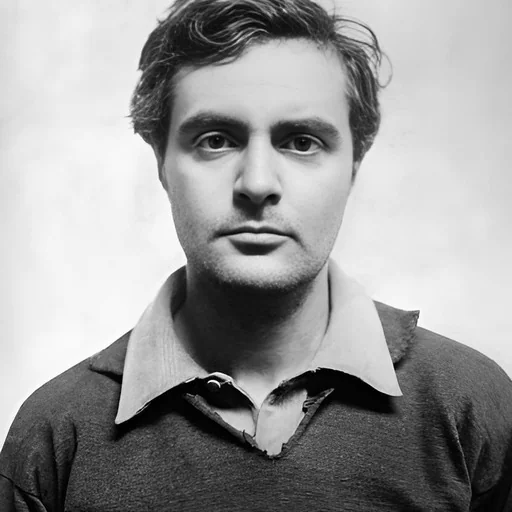
Amedeo Clemente Modigliani (US: ; Italian: ; 12 July 1884 – 24 January 1920) was an Italian painter and sculptor of the École de Paris who worked mainly in France.

![Sketches of Three Female Heads [recto], by George Bellows](https://artifactworldgallery.com/img/george-bellows--sketches-of-three-female-heads-recto--1b41a88511338b5e-w320.webp)