Artwork
Woman and Young Girl
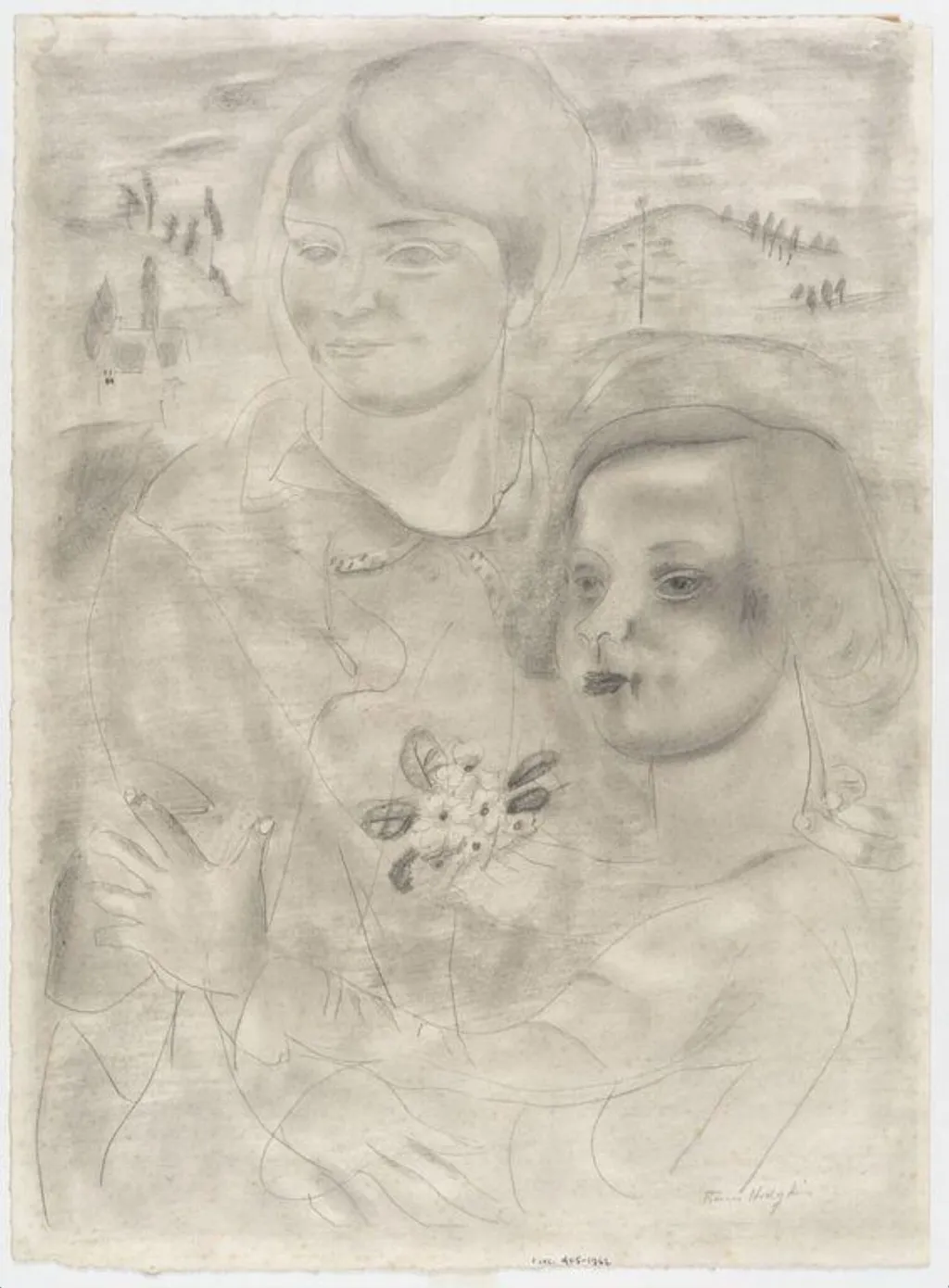
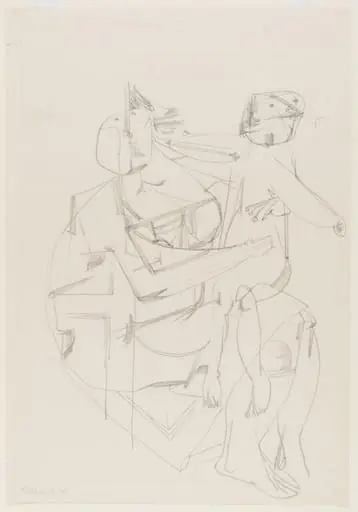
Woman and Young Girl is a drawing by Frances Hodgkins. It dates from 1931 and is held in the collection of the Victoria and Albert Museum.
About this work
Overview
As a New Zealand-born artist based in England, Hodgkins was deeply engaged with modernist tendencies in European art.
Created around 1931, this pencil drawing by Frances Hodgkins captures two figures in a quiet, intimate moment. As a New Zealand-born artist based in England, Hodgkins was deeply engaged with modernist tendencies in European art. The work reflects her mature style—reducing form to essential lines and planes—while retaining emotional resonance. Its delicate, unfinished quality suggests a moment of observation rather than a polished composition.
Subject & Meaning
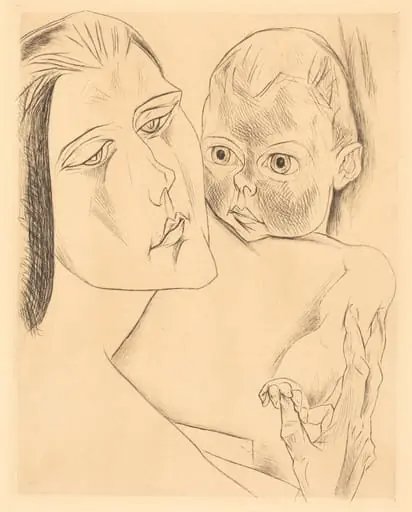
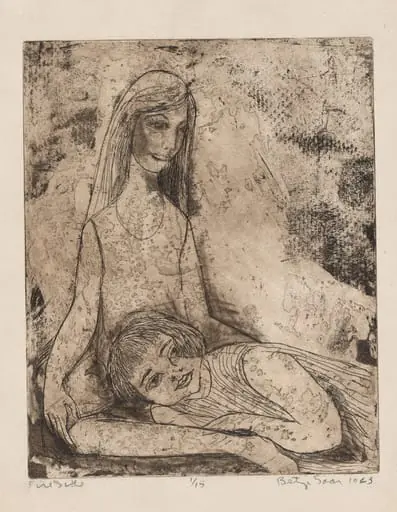
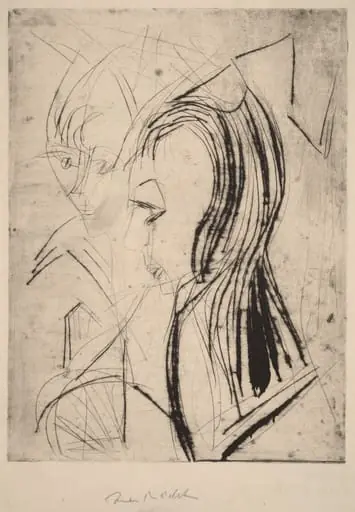
The drawing portrays an adult woman and a young girl, their faces softly rendered and closely positioned. The relationship between them is implied through proximity and gesture, not narrative detail. The child’s face, simplified like a mask, contrasts with the adult’s more nuanced shading, suggesting generational difference. The absence of clear context invites contemplation rather than storytelling, emphasizing emotional presence over literal depiction.
Technique & Style
Hodgkins employs loose, flowing pencil lines to suggest form without definition. Shading around the eyes and mouth of the adult figure adds subtle depth, while the child’s face remains flat and minimal. The background is hinted at with faint, wavy contours of trees and a house, barely emerging from the paper. Large areas of untouched white space create a sense of air and stillness, reinforcing the drawing’s meditative tone.
History & Provenance
The drawing originates from Hodgkins’s time in England, during a period when she was fully immersed in modernist experimentation. It was likely made in her studio or while traveling, as part of her ongoing study of human form and spatial relationships. No specific ownership history is widely documented, but it aligns with her broader body of intimate, small-scale works from the early 1930s.
Context
In the early 1930s, Hodgkins was influenced by European modernism, particularly the work of artists exploring abstraction and simplified form. While her peers often emphasized bold color, she turned to drawing as a means of refining composition and emotional nuance. This piece reflects a broader trend among modernists to value the sketch as a site of authentic expression, not merely preparation for larger works.
Legacy
This drawing exemplifies Hodgkins’s contribution to modernist drawing in Britain—prioritizing sensitivity over spectacle. Her use of negative space and restrained line influenced later generations of artists interested in quiet, psychological portraiture. Though less known than her paintings, works like this underscore her role in expanding the expressive potential of pencil on paper within modernist practice.
Artist & collection
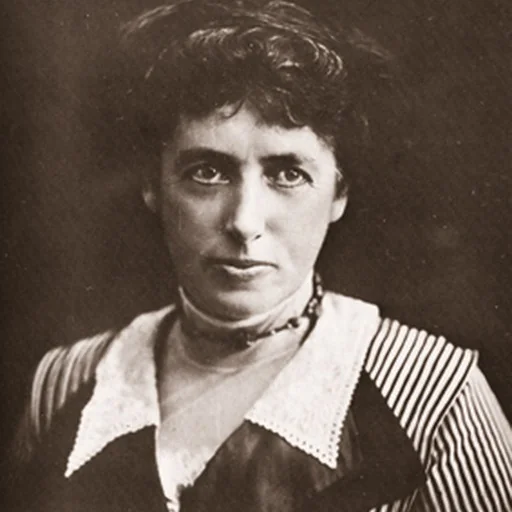
Artist
Frances Mary Hodgkins (28 April 1869 – 13 May 1947) was a New Zealand painter chiefly of landscape, and for a short period was a designer of textiles.