Artwork
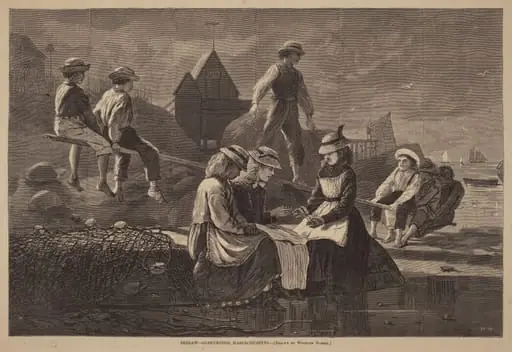
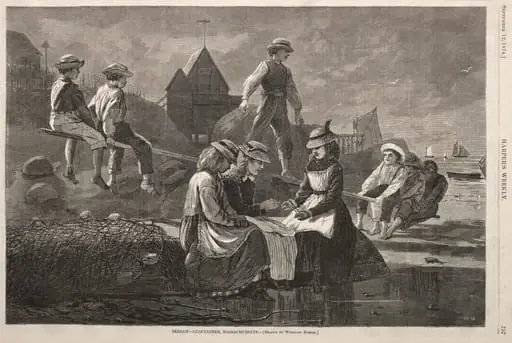
Ship-Building, Gloucester Harbor
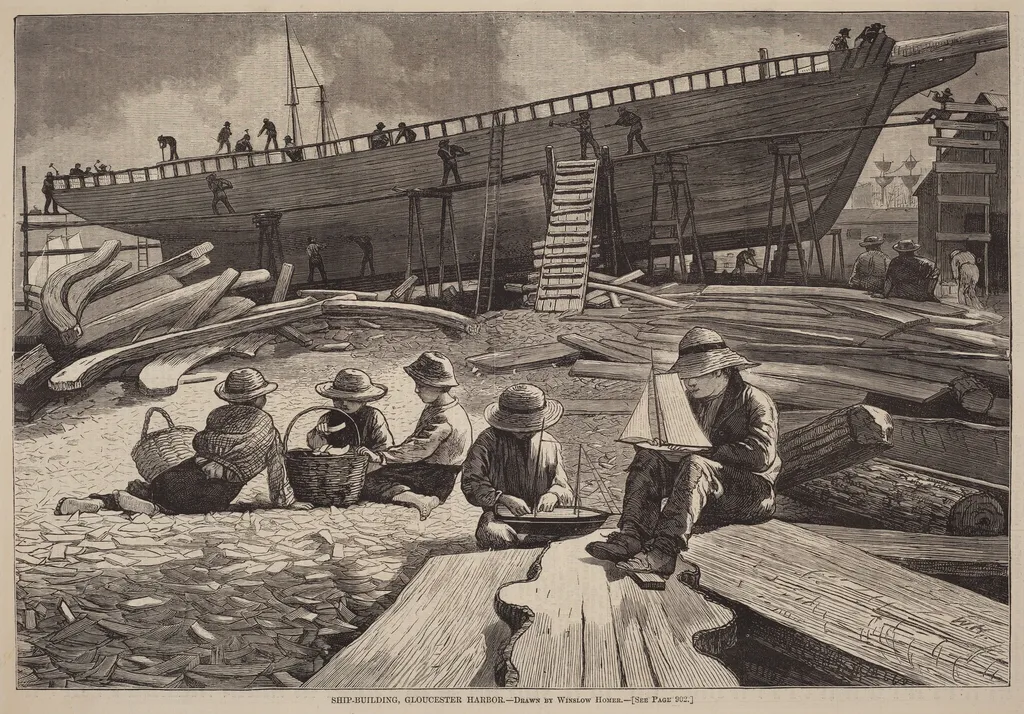
Ship-Building, Gloucester Harbor is an ink print by the Impressionist artist American 19th Century. It dates from 1873 and is held in the collection of the National Gallery of Art.
About this work
Overview
Rendered on newsprint, the print was likely produced for mass circulation, reflecting the era’s demand for illustrated journalism.
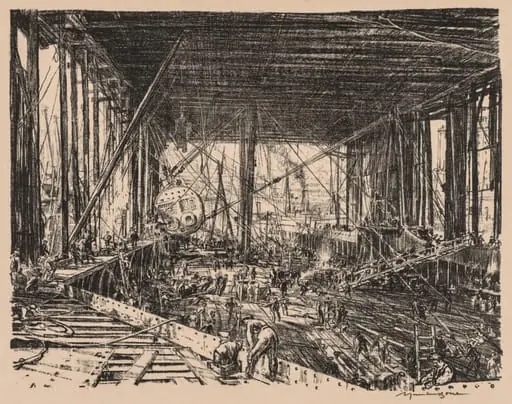
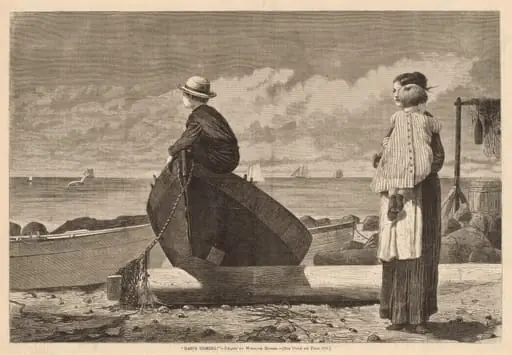
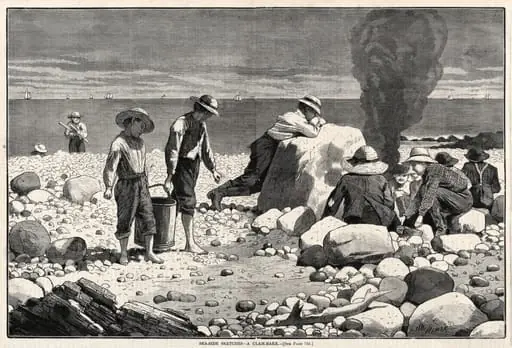
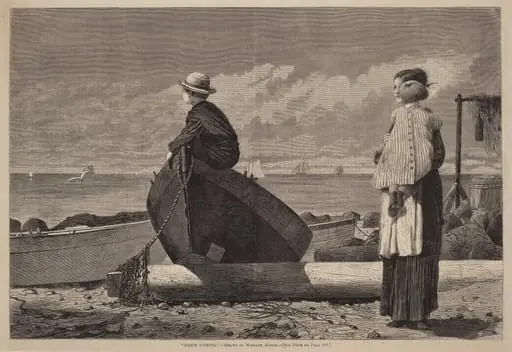
This black-and-white wood engraving depicts the active shipyard at Gloucester Harbor, capturing the labor-intensive process of vessel construction in the 19th century. Rendered on newsprint, the print was likely produced for mass circulation, reflecting the era’s demand for illustrated journalism. The scene is densely populated with workers engaged in various tasks, emphasizing the scale and rhythm of maritime industry.
Subject & Meaning
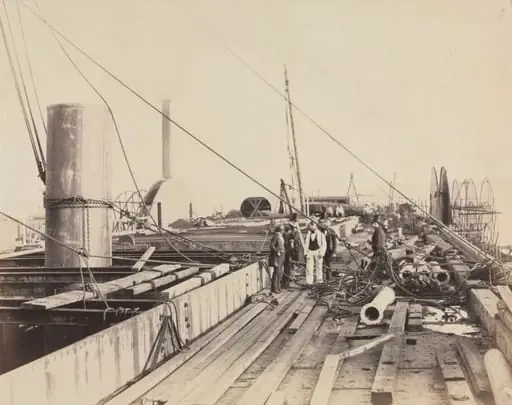
The image portrays the collaborative effort of shipbuilding, with artisans shaping timber on scaffolds and the half-finished hull rising above them. A small boat model nearby suggests the precision and planning involved in construction. The clutter of tools and sawdust underscores the physicality of the work, presenting shipbuilding not as romanticized labor but as a grounded, methodical craft essential to coastal economies.
Technique & Style
The artist employed cross-hatching—layered intersecting lines—to model form and suggest depth in the absence of tone. This technique, standard in wood engraving, allowed fine detail despite the medium’s limitations. The sharp contrast between ink and paper, combined with precise line work, enabled the reproduction of complex textures: wood grain, fabric, and metal tools—all suited to the demands of newspaper printing.
History & Provenance
Created as a printed illustration for a periodical, this work originated in the mid- to late-1800s, when wood engravings were the primary means of visual news reporting. Its publication on newsprint indicates it was intended for broad, transient audiences rather than private collectors. The specific publication and artist remain undocumented, but its style aligns with regional illustrators documenting New England industry.
Context
Gloucester Harbor was one of America’s most active fishing and shipbuilding centers during the 19th century. This image reflects a time when wooden vessels dominated maritime trade and fishing fleets. The scene captures a moment before industrialization transformed shipyards with steam power and iron frames, preserving a traditional craft that was gradually fading by the century’s end.
Legacy
As a representative of journalistic wood engraving, this work contributes to the visual record of American labor and industrial practice. Though ephemeral in material, such prints helped shape public understanding of skilled trades. Today, they serve as historical documents, offering insight into pre-industrial craftsmanship and the daily rhythms of coastal communities.
Artist & collection

Artist
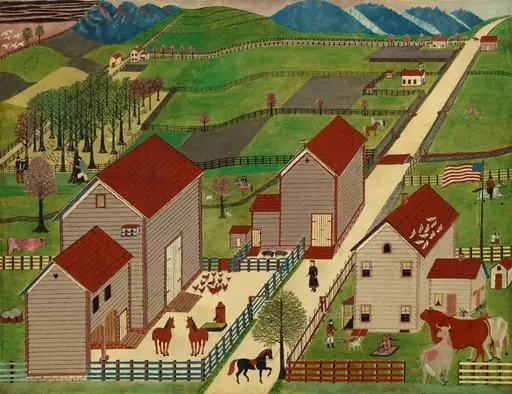
This artist painted everyday American life in the 1800s. Look at *Farmhouse in Mahantango Valley*—a quiet, sunlit scene of rural Pennsylvania. *Boy and Girl* shows two children standing close, their faces turned toward…