Artwork
On the Clyde, 1917-1918: The Floor of the Train Ferry
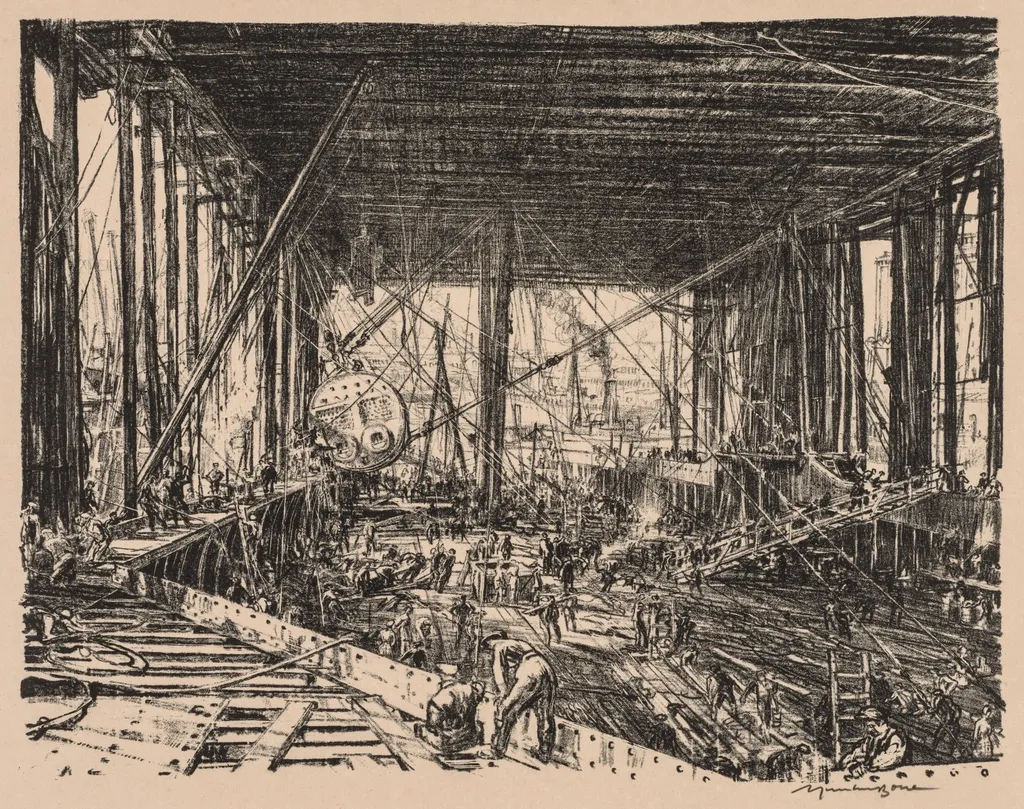
On the Clyde, 1917-1918: The Floor of the Train Ferry is a print by Muirhead Bone. It dates from 1918 and is held in the collection of the Cleveland Museum of Art.
About this work
Overview
The piece reflects his commitment to recording the mechanics of modern labor under conditions of national urgency.
Created in 1918, *On the Clyde, 1917–1918: The Floor of the Train Ferry* is an etching by Scottish artist Muirhead Bone, capturing the industrial activity along the River Clyde during World War I. Bone, recognized for his precise draftsmanship and focus on engineering subjects, produced this work as part of his official role documenting wartime infrastructure. The piece reflects his commitment to recording the mechanics of modern labor under conditions of national urgency.
Subject & Meaning
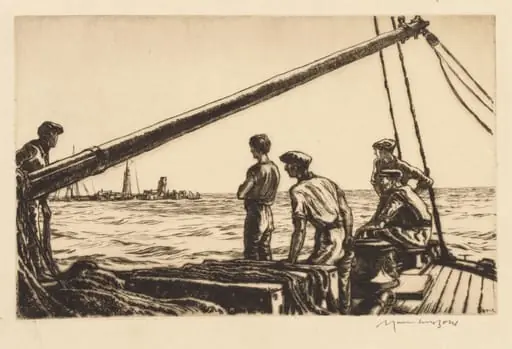
The print depicts the interior of a train ferry—a vessel designed to carry railcars across water—during its assembly or repair in a Clyde shipyard. Amid tangled ropes, heavy beams, and mechanical components, workers are seen moving through the cluttered space. The scene conveys the scale and disorder of wartime production, emphasizing the human presence within vast, impersonal machinery rather than celebrating technological triumph.
Technique & Style
Bone employed a drypoint etching technique, using sharp, incised lines to build texture and depth. The surface is densely worked with scratchy, urgent strokes that mimic the immediacy of a sketchbook drawing. Rather than polished finish, the work embraces a raw, observational quality, where the weight of metal and the tangle of rigging are rendered through energetic, almost improvisational mark-making.
History & Provenance
The work was produced during Bone’s tenure as a British war artist, commissioned to record industrial efforts supporting the war. It entered the collection of the Cleveland Museum of Art in the 20th century, where it remains as part of a broader group of his wartime prints. Its preservation reflects institutional interest in documenting the material culture of early 20th-century industry and conflict.
Context
The River Clyde was a critical hub for British shipbuilding and military logistics during World War I. Train ferries enabled the rapid movement of artillery and supplies between rail networks and front-line ports. Bone’s focus on the ferry’s interior—rather than its exterior or the surrounding city—highlights the hidden, labor-intensive processes that sustained the war effort, shifting attention from battlefields to industrial backbones.
Legacy
Bone’s approach influenced later documentary artists by prioritizing authenticity over heroism. His detailed, unembellished renderings of machinery and labor set a precedent for recording industrial life with observational rigor. While not widely exhibited today, his wartime prints remain valuable records of how modern war depended on the quiet, relentless work of factories and docks.
Own this work as a print
Artist & collection
Artist
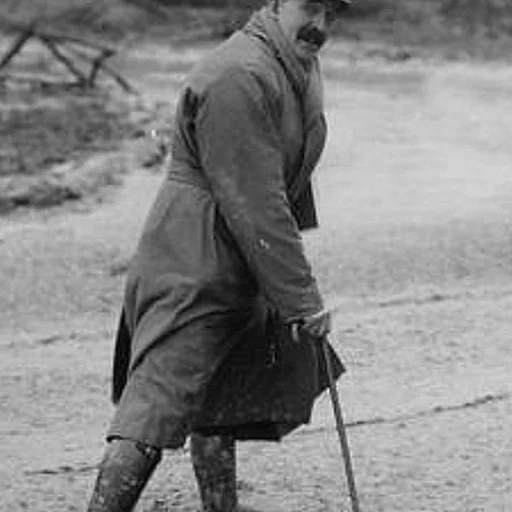
Sir Muirhead Bone (23 March 1876 – 21 October 1953) was a Scottish etcher and watercolourist who became known for his depiction of industrial and architectural subjects and his work as a war artist in both the First and Second World Wars.

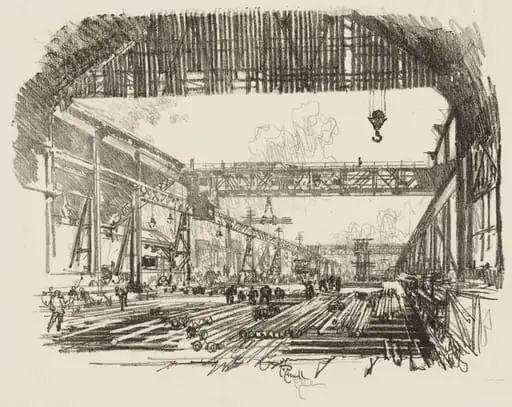 English War Work: Steel Bars for Shells
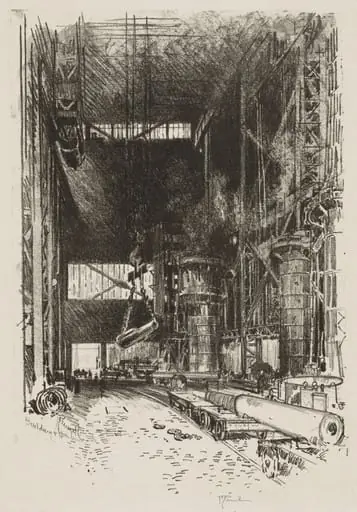 English War Work: The New Gun Pit
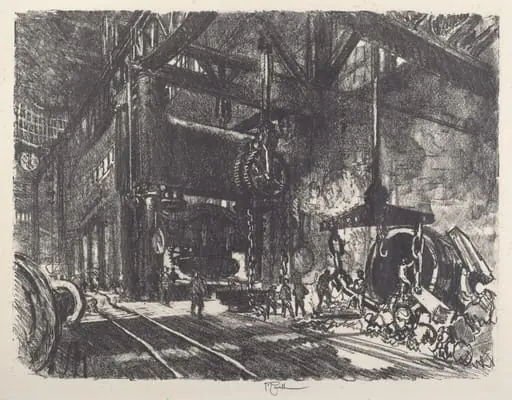 In the Land of Brobdingnag, the Armour Plate Bending Press
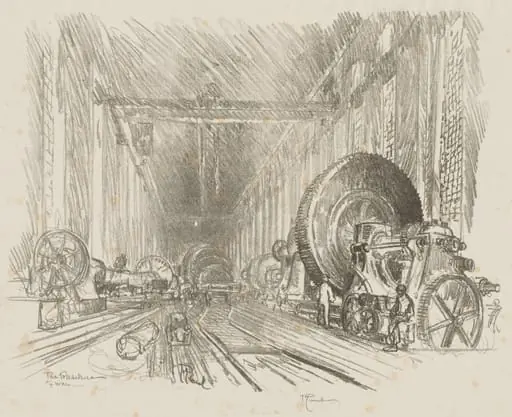 English War Work: The Basilica of War
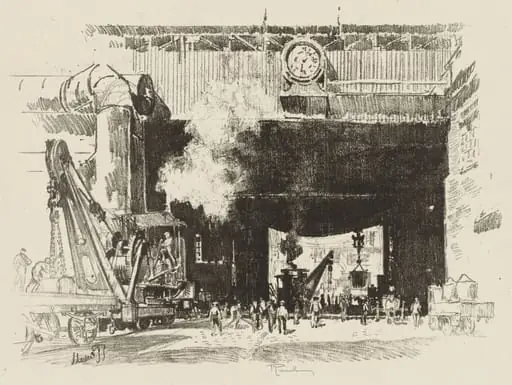 English War Work: The Big Gate of the Big Shop
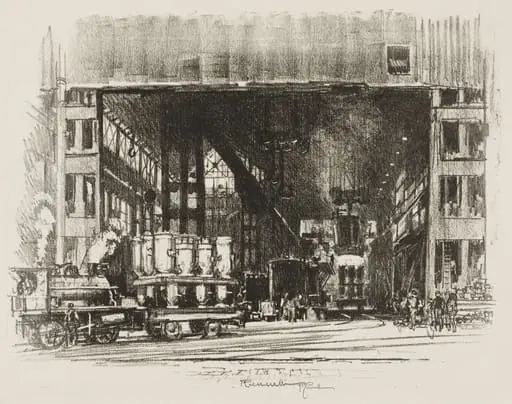 English War Work: The Urns, Casting Big Shells
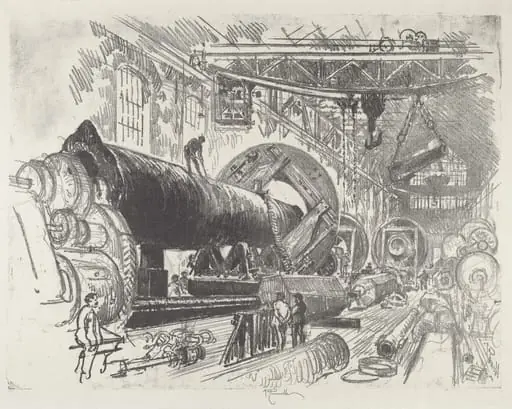 Cutting and Turning a Big Gun
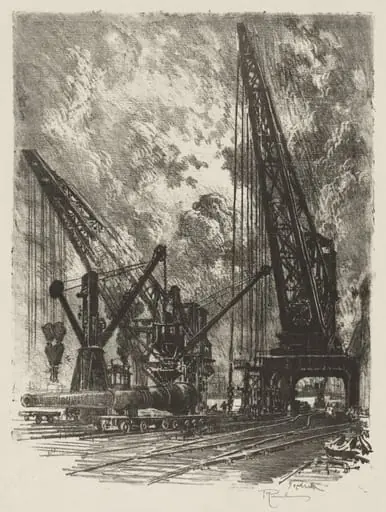 English War Work: Taking the Big Gun Away
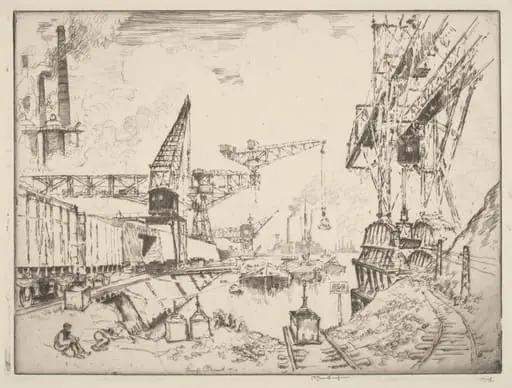 Cranes at Duisburg
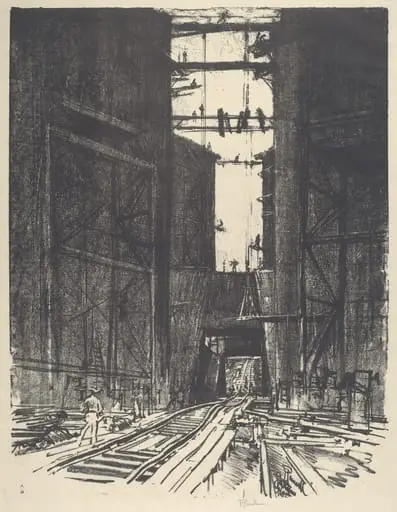 At the Bottom of Gatun Lock