Artwork
Beadle
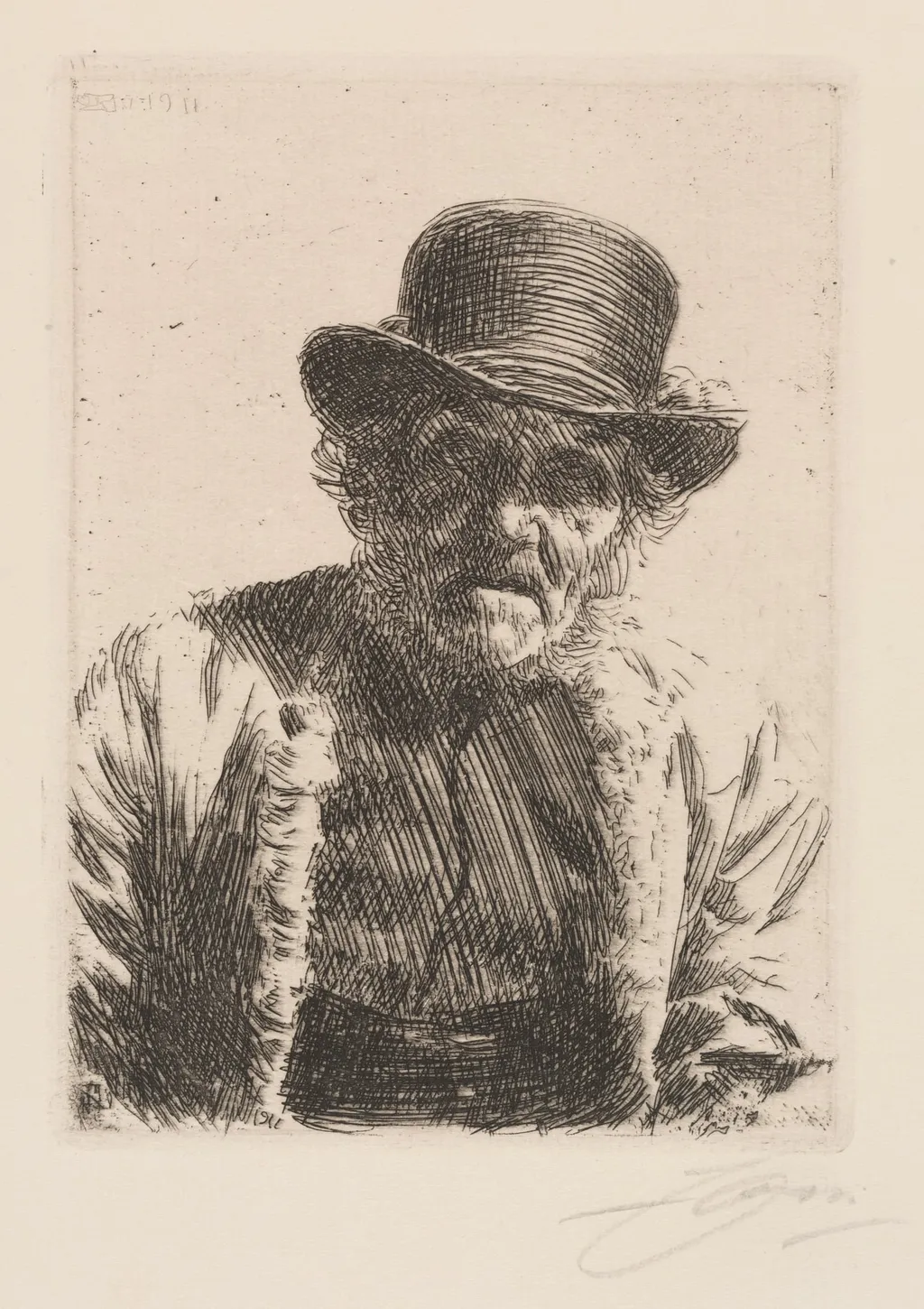
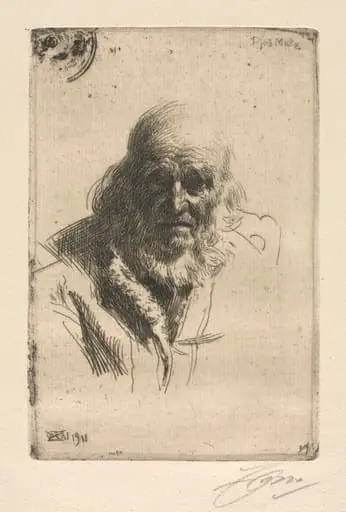
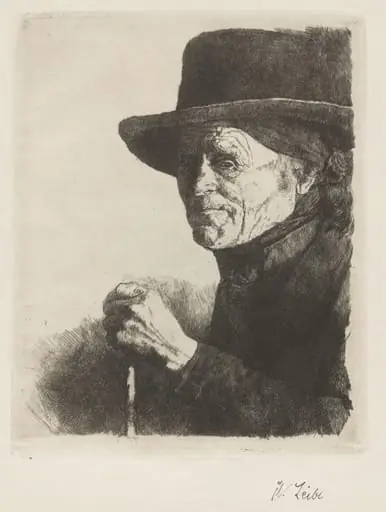
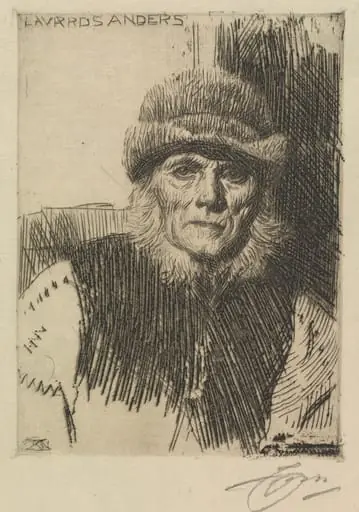
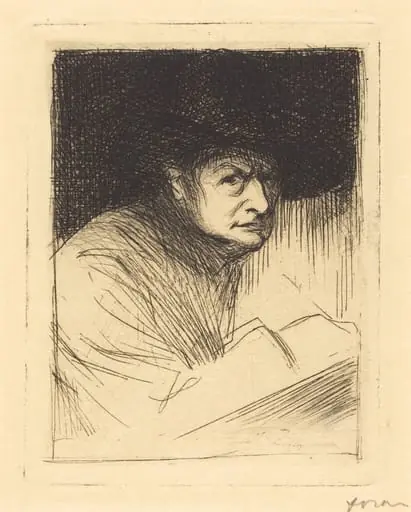
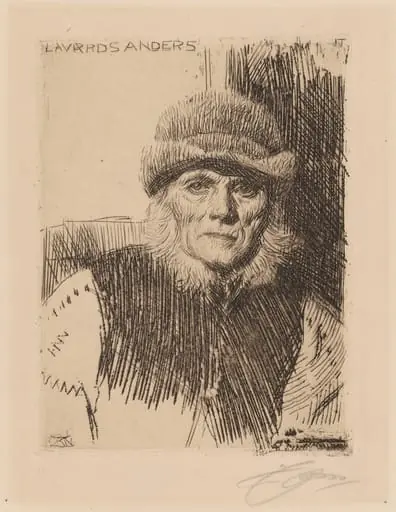
Beadle is a print by Anders Zorn. It dates from 1911 and is held in the collection of the Cleveland Museum of Art.
About this work
Overview
Executed in a rapid, expressive manner, the work reflects Zorn’s interest in capturing transient effects of light and form.
Created in 1911 by Swedish artist Anders Zorn, this print captures a solitary figure in a moment of quiet stillness. Executed in a rapid, expressive manner, the work reflects Zorn’s interest in capturing transient effects of light and form. It resides in The Cleveland Museum of Art, where it is valued for its immediacy and technical economy. The medium and approach suggest a study or sketch, prioritizing atmosphere over finish.
Subject & Meaning
The figure is a man seated sideways, dressed in a dark coat and large top hat, suggesting a rural or provincial setting. His posture is relaxed yet formal, and the cane in hand implies a sense of dignity or routine. The half-lit face, cast in shadow, invites contemplation without revealing emotion. The surrounding reeds and dark background isolate him, emphasizing solitude rather than narrative.
Technique & Style
Zorn employed loose, energetic strokes to model form through contrast rather than detail. The hat’s texture emerges from quick, scratchy lines that suggest volume and fuzziness without definition. Light falls sharply across the face and shoulder, creating strong chiaroscuro effects. The background is left largely unworked, allowing the figure to emerge from darkness through tonal shifts rather than outline.
History & Provenance
The print was made in 1911 during Zorn’s mature period, when he increasingly explored printmaking alongside his painting. It entered The Cleveland Museum of Art’s collection through established acquisition channels, likely as part of a broader interest in European graphic arts. Its provenance remains unremarkable, consistent with many works by Zorn held in public institutions.
Context
Zorn worked during a time when artists across Europe were redefining realism through immediacy and expressive mark-making. This print aligns with trends in Scandinavian and French graphic art that favored spontaneity over polish. His use of light and shadow echoes Rembrandt’s influence, yet the sketch-like quality reflects contemporary interest in capturing the fleeting moment, akin to early modernist sensibilities.
Legacy
Though not among Zorn’s most widely exhibited works, this print exemplifies his mastery of tonal control in printmaking. It contributes to understanding his transition from detailed portraiture to more evocative, minimal compositions. Scholars note its role in demonstrating how economy of line could convey psychological presence, influencing later generations of graphic artists seeking emotional depth without detail.
Artist & collection

Artist
Anders Leonard Zorn was born in February 1860 in Mora, Dalarna, the illegitimate son of a Bavarian brewer and a Swedish farmer's daughter; his mother died shortly after his birth, and his grandparents raised him.