Artwork
Marchand d'Habits
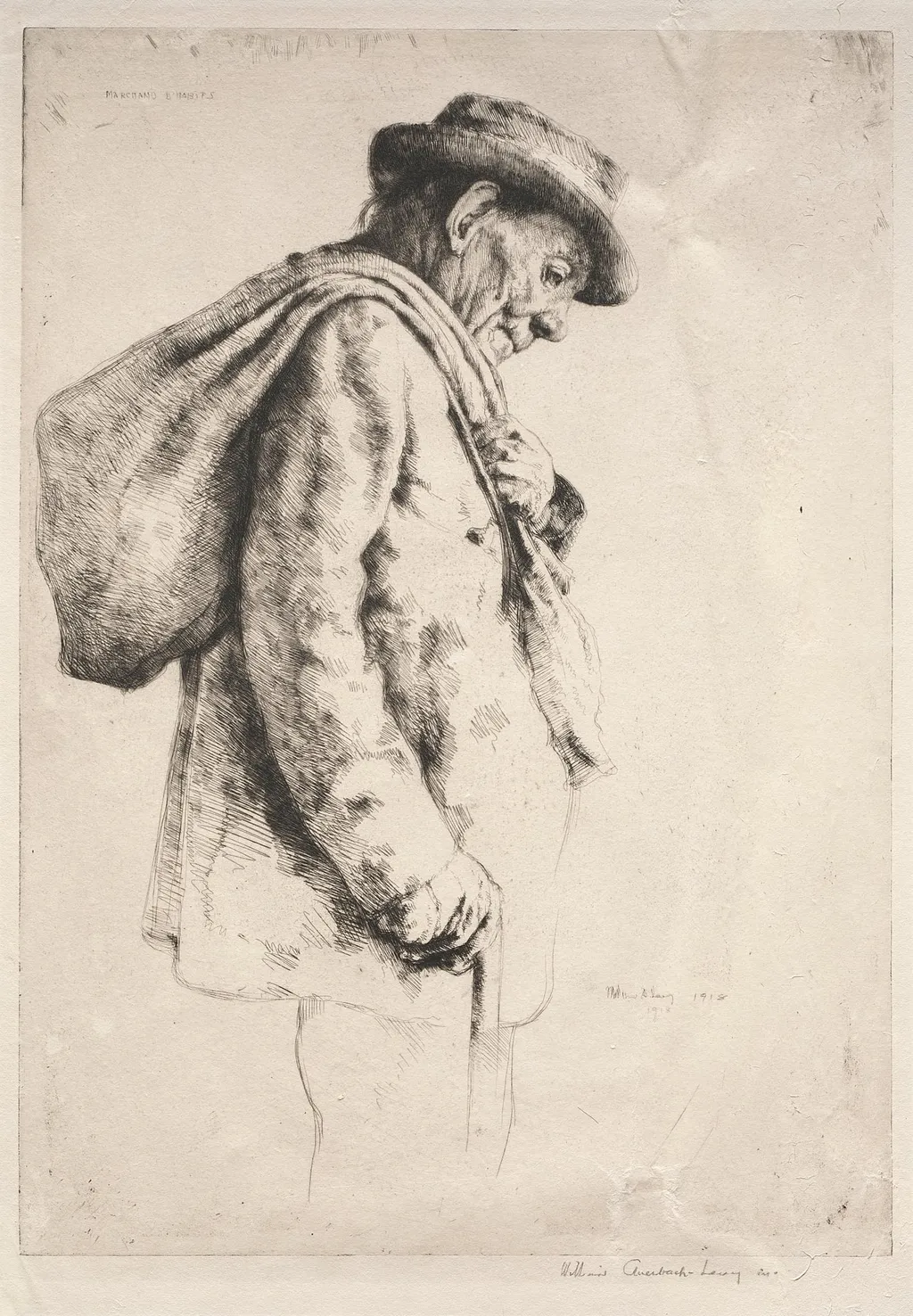
Marchand d'Habits is a print by William Auerbach-Levy. It dates from 1918 and is held in the collection of the Cleveland Museum of Art.
About this work
Overview
Created in 1918 by William Auerbach-Levy, a Belarusian-born American artist, *Marchand d'Habits* is a print capturing the quiet dignity of urban labor.
Created in 1918 by William Auerbach-Levy, a Belarusian-born American artist, *Marchand d'Habits* is a print capturing the quiet dignity of urban labor. Auerbach-Levy, known for his etchings and caricatures, focused on everyday figures in early 20th-century America. This work reflects his interest in social observation, rendered with precision and emotional restraint. It is part of the permanent collection at The Cleveland Museum of Art.
Subject & Meaning
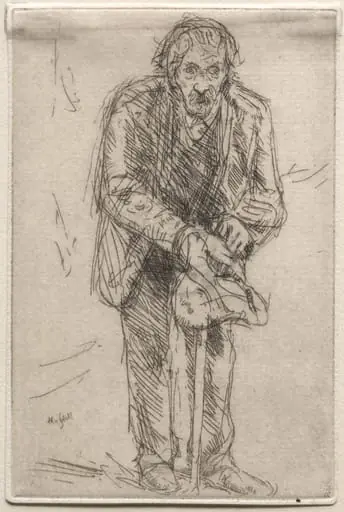
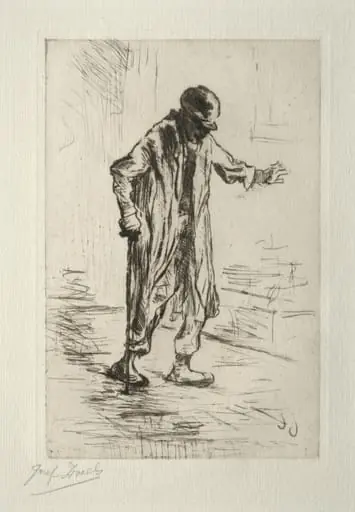
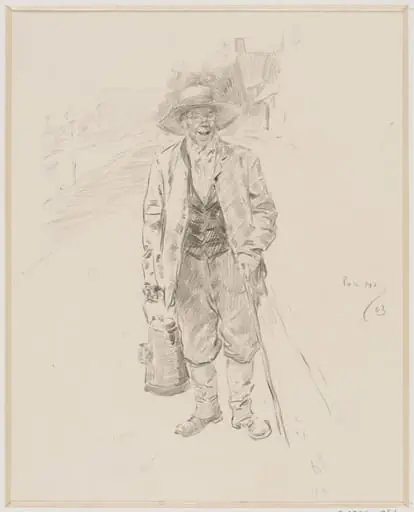
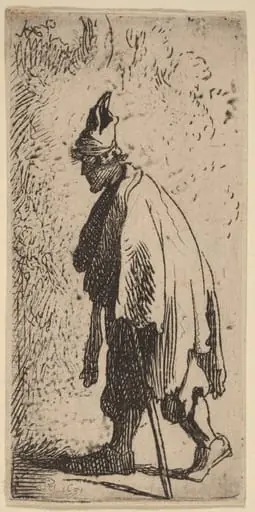
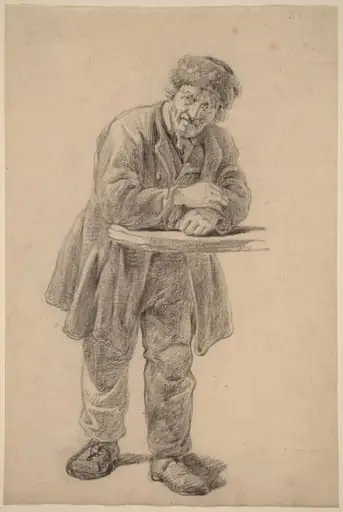
The figure is an elderly street vendor, possibly a secondhand clothing seller, depicted mid-movement as he glances backward over his shoulder. His posture and weathered features suggest a life of hardship and endurance. The title, French for 'haberdasher,' hints at the transnational character of urban trade in immigrant communities. The image conveys solitude and resilience rather than sentimentality, grounding the subject in the realities of working-class life.
Technique & Style
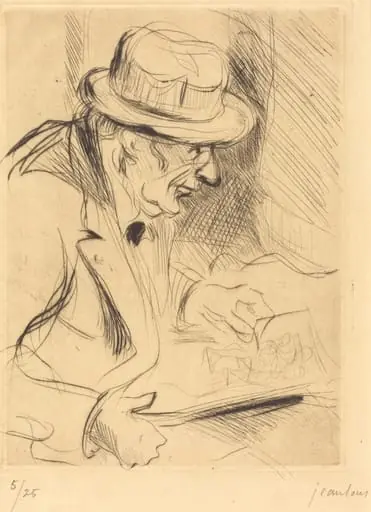
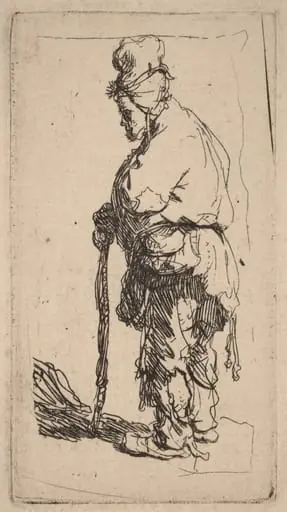
Auerbach-Levy employed bold, incised lines and strong contrasts of light and shadow to model the figure’s form. The texture of the man’s coat and hat is rendered through layered hatching, emphasizing fabric wear and age. Chiaroscuro enhances the three-dimensionality of the face and shoulders, while the background remains sparse, focusing attention on the figure’s presence. The technique reflects printmaking traditions rooted in European realism, adapted to American subject matter.
History & Provenance
The print was produced in 1918 during Auerbach-Levy’s active period in New York, where he documented immigrant and working-class life. It entered The Cleveland Museum of Art’s collection through documented acquisition, likely as part of a broader effort to include socially conscious American prints. No significant exhibition history or private ownership records are widely noted, but its inclusion in a major institution affirms its archival importance.
Context
In the aftermath of World War I, American artists increasingly turned to urban scenes as reflections of social change. Immigrant communities, particularly in cities like New York, provided rich subject matter for those documenting labor and marginalization. Auerbach-Levy’s work aligns with contemporaries who used printmaking to portray ordinary people with dignity, countering idealized narratives of the era.
Legacy
Though not widely exhibited today, *Marchand d'Habits* remains a representative example of early 20th-century American printmaking focused on social realism. Auerbach-Levy’s commitment to capturing the quiet lives of laborers influenced later generations of artists interested in documentary aesthetics. The work endures as a quiet testament to the visibility of the overlooked in American visual culture.
Artist & collection
Artist
William Auerbach-Levy (February 14, 1889 – June 29, 1964) was a Belarusian-born American artist of Jewish origin known for his paintings, etchings and caricatures.