Artwork
John Hay
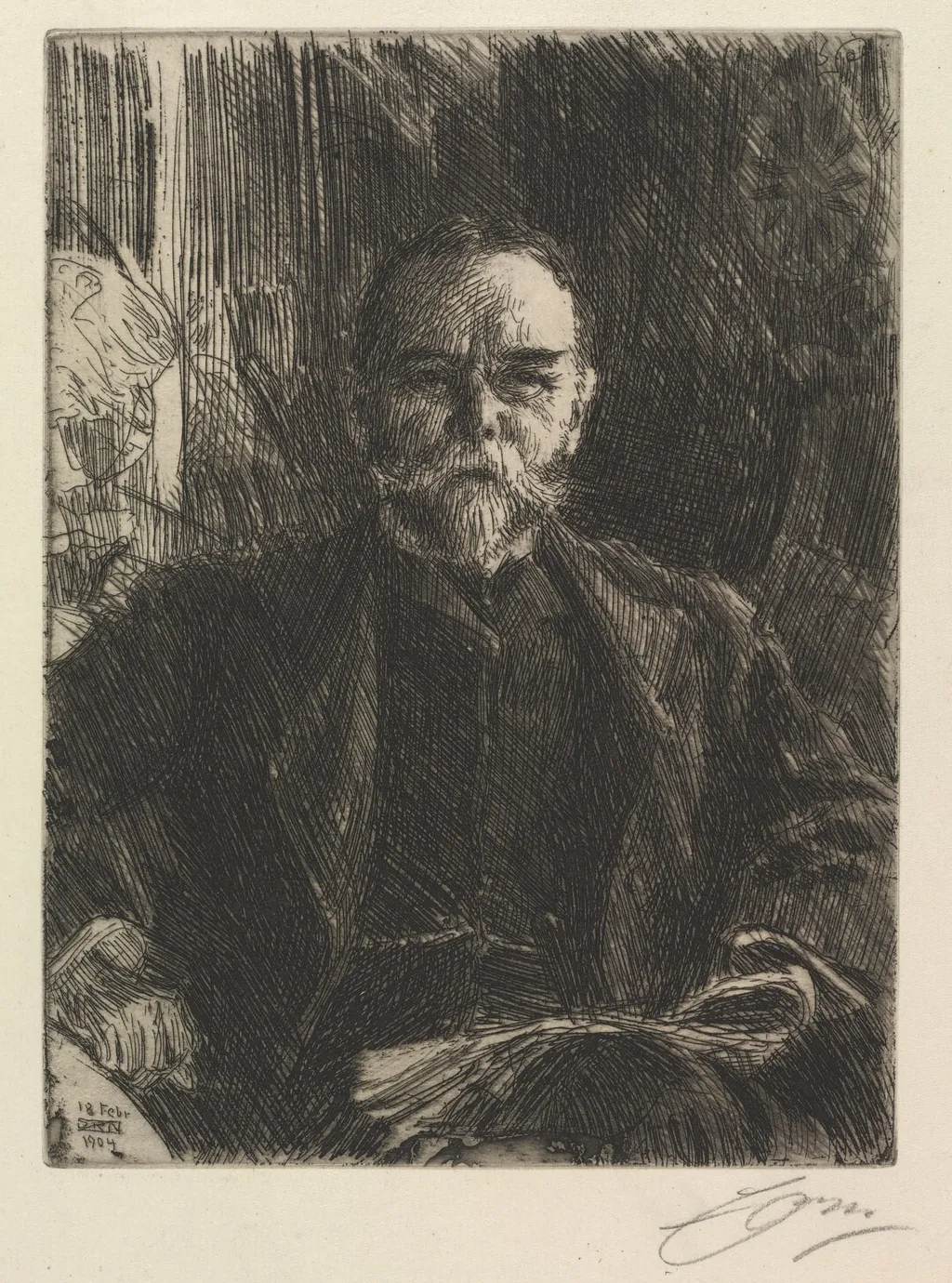
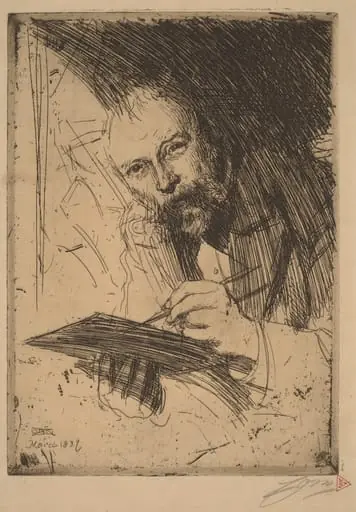
John Hay is a print by Anders Zorn. It dates from 1904 and is held in the collection of the Cleveland Museum of Art.
About this work
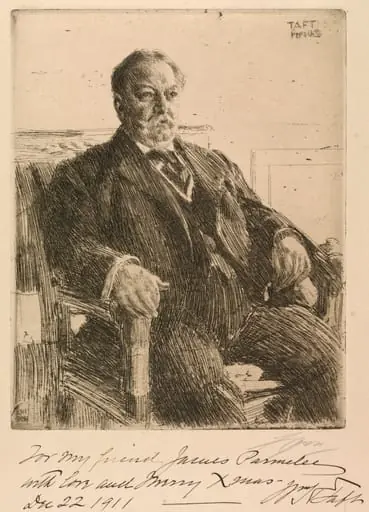
The artist used quick, textured strokes to show light and shadow, making the face stand out against the dark background.
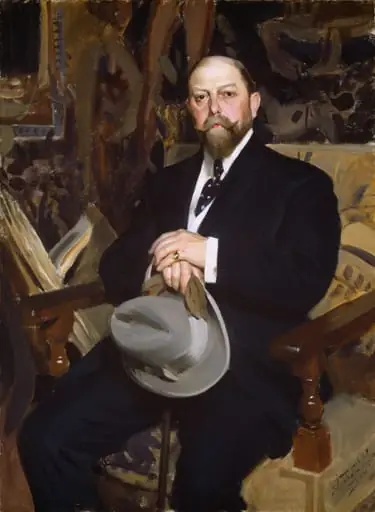
This is a black-and-white portrait of an older man with a beard and deep-set eyes. He’s wearing a high-collared coat, sitting with one hand resting on his knee. The background is rough, made of heavy, swirling lines that look like brushstrokes or etched marks.
The artist used quick, textured strokes to show light and shadow, making the face stand out against the dark background. The lines feel urgent, almost like they were drawn fast.
Next, look up Anders Zorn (Swedish, 1860–1920) to see more of his work.
Overview
Created in 1904 by Swedish artist Anders Zorn, this black-and-white print depicts John Hay, a former U.S. Secretary of State. The work is part of the collection at The Cleveland Museum of Art. Executed with energetic linework, the portrait captures Hay in a moment of quiet presence, emphasizing texture and contrast over fine detail. Zorn’s approach reflects his mastery of printmaking and his interest in psychological depth through minimal means.
Subject & Meaning
John Hay, a prominent American diplomat and statesman, is portrayed with a solemn, introspective gaze. His beard and high-collared coat suggest formality and age, aligning with his public role. The composition avoids embellishment, focusing instead on the weight of experience in his features. Zorn’s choice to render him without context or symbolism invites contemplation of character rather than status, aligning with a broader trend of psychological portraiture in the early 20th century.
Technique & Style
Zorn employed drypoint and etching to create a dense, tactile surface. Rapid, swirling lines define the background, contrasting with the more controlled strokes of the face and hands. The interplay of light and shadow emerges not through gradation but through the density and direction of inked lines. This method conveys immediacy and emotional intensity, characteristic of Zorn’s graphic work, where spontaneity and precision coexist.
History & Provenance
The print was made during Zorn’s time in the United States, where he was commissioned to portray influential figures. John Hay sat for the artist in 1904, likely in Washington, D.C. The work entered The Cleveland Museum of Art’s collection in the mid-20th century, acquired as part of a broader effort to expand its holdings of international graphic art. Its provenance reflects Zorn’s international reputation and the museum’s interest in transatlantic artistic exchange.
Context
Zorn’s portrait of Hay emerged during a period when European artists increasingly engaged with American political and cultural figures. The work aligns with a broader movement in portraiture that favored expressive line over idealized form. Zorn’s technique, rooted in Scandinavian realism and influenced by Impressionist light studies, offered a fresh alternative to traditional academic portraiture, resonating with modern sensibilities on both sides of the Atlantic.
Legacy
This print remains a key example of Zorn’s graphic work, illustrating his ability to convey presence through economy of line. It influenced later portraitists interested in psychological realism and the expressive potential of print media. While not widely reproduced, it is frequently cited in studies of early 20th-century portraiture and continues to be studied for its technical innovation and emotional restraint.
Own this work as a print
Artist & collection

Artist
Anders Leonard Zorn was born in February 1860 in Mora, Dalarna, the illegitimate son of a Bavarian brewer and a Swedish farmer's daughter; his mother died shortly after his birth, and his grandparents raised him.