Artwork
Der Dichter (The Poet)
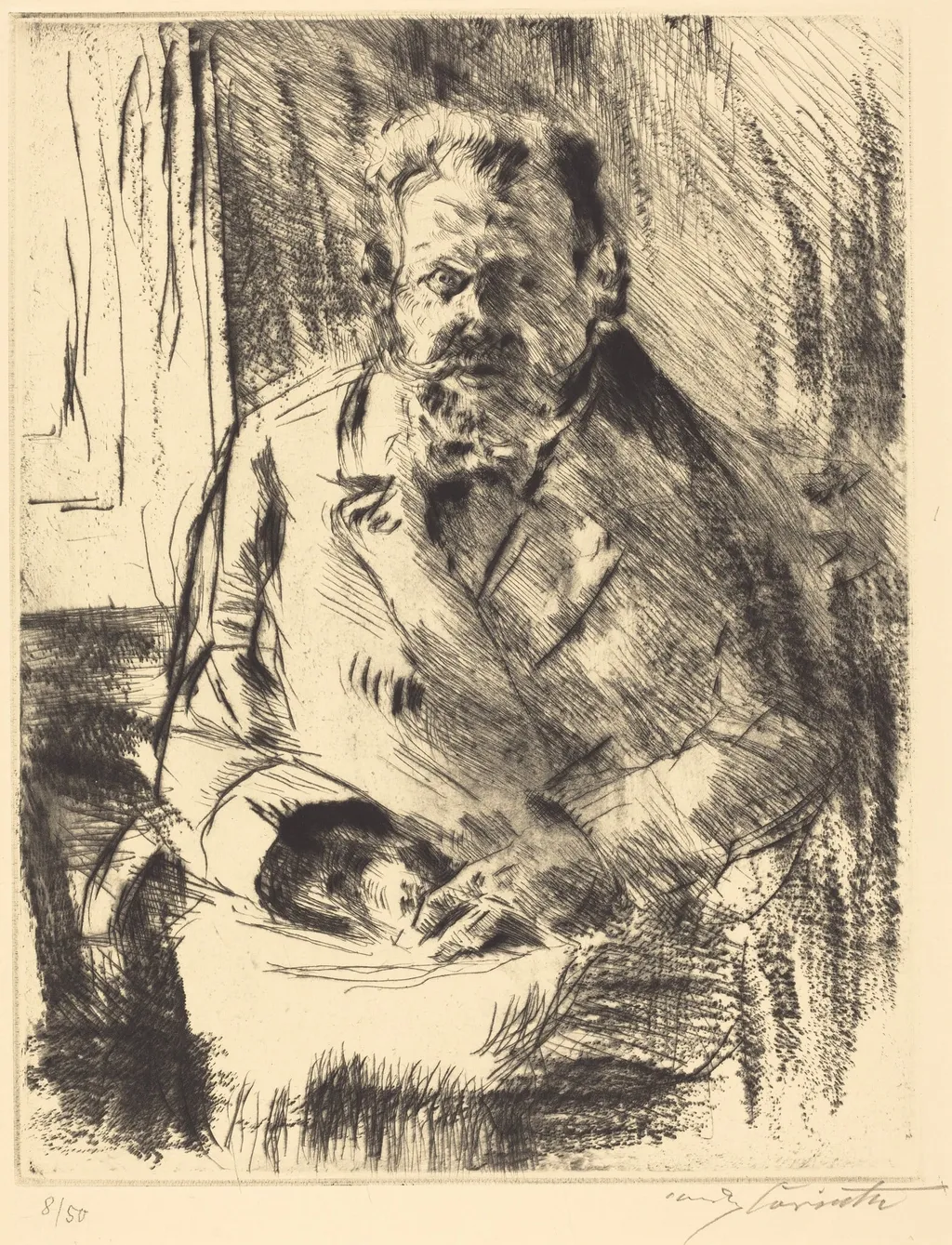
Der Dichter (The Poet) is an ink print by Lovis Corinth. It dates from 1920 and is held in the collection of the National Gallery of Art.
About this work
Overview
Its raw, gestural lines reflect a shift in his artistic approach following a stroke in 1911, which altered both his physical control and visual language.
Created in 1920, *Der Dichter* is a black-and-white print by Lovis Corinth, executed in drypoint and roulette on J. W. Zanders wove paper. The work belongs to a phase of Corinth’s career marked by intense emotional expression and a departure from earlier naturalism. Its raw, gestural lines reflect a shift in his artistic approach following a stroke in 1911, which altered both his physical control and visual language.
Subject & Meaning
The figure is a solitary man, seated and introspective, his posture suggesting contemplation or exhaustion. His disheveled hair and hands resting near his chest imply an inner state rather than a literal portrait. Though not definitively identified, the title frames him as a poet — a symbol of creative solitude. The absence of context amplifies his psychological presence, turning the image into a meditation on artistic temperament.
Technique & Style
Corinth employed drypoint to scratch directly into a metal plate, creating dense, velvety lines that hold ink deeply. Roulette, a toothed tool, added textured halftones to the background, enhancing depth without detail. The paper’s weave interacts with the ink, giving the surface a tactile, almost sculptural quality. The rough, urgent strokes convey immediacy, rejecting polish in favor of emotional resonance.
History & Provenance
The print emerged during Corinth’s mature period, after his involvement with the Berlin Secession and following his 1911 stroke. It reflects his increasing focus on printmaking as a medium for personal expression. While specific early ownership records are sparse, the work is documented in major collections of German Expressionist prints, affirming its place in early 20th-century print culture.
Context
In postwar Germany, artists like Corinth turned inward, responding to societal upheaval through introspective imagery. The figure of the poet resonated as a metaphor for the artist’s role amid fragmentation. Corinth’s synthesis of Impressionist observation and Expressionist intensity aligned him with contemporaries exploring psychological depth, even as he maintained a distinct, tactile approach to line and texture.
Legacy
Though less widely known than his paintings, *Der Dichter* exemplifies Corinth’s contribution to modern printmaking. Its unidealized portrayal of the creative mind influenced later artists seeking authenticity over refinement. The work remains a key example of how technical experimentation — particularly in drypoint — could serve emotional and psychological expression in early 20th-century German art.
Own this work as a print
Artist & collection

Artist
Lovis Corinth was a German artist and writer whose mature work as a painter and printmaker realized a synthesis of impressionism and expressionism.

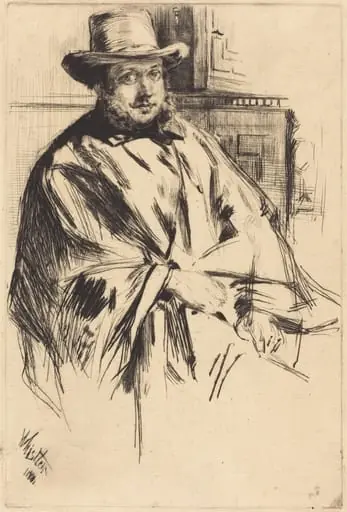 Mr. Davis (Mr. Mann)
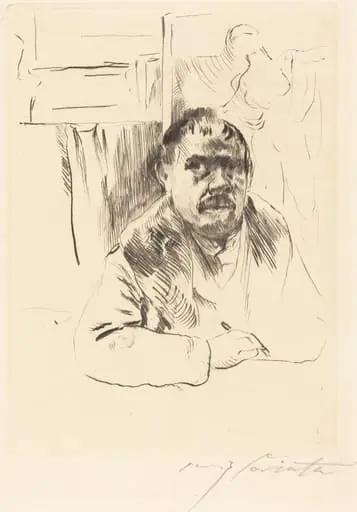 Selbstbildnis im Pelz (Self-Portrait in a Fur Coat)
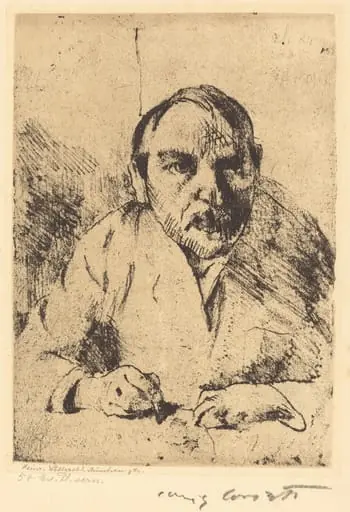 Selbstbildnis (Self-Portrait)
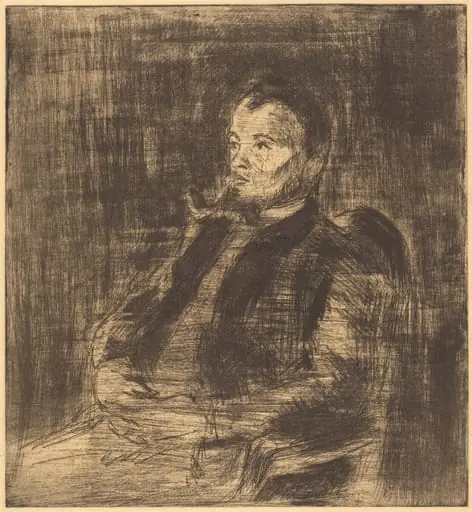 Paul Signac (Portrait de Paul Signac)
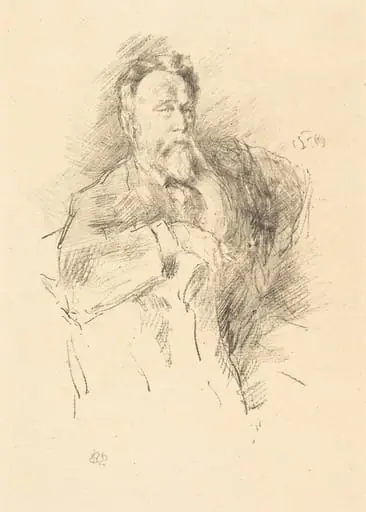 Sketch of William E. Henley
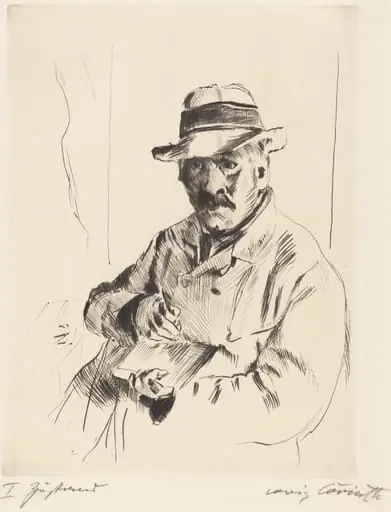 Selbstbildnis im Strohhut (Self-Portrait in a Straw Hat)
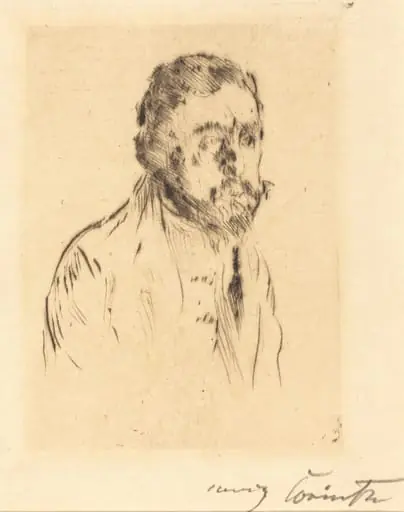 Bildnisstudie H. St. (Portrait Study of H. St.)
 The Fine Printmaker Adolphe Albert (Le bon graveur - Adolphe Albert)
 C. L. Drouet, Sculptor
 Drouet
 Anatole France
 C. L. Drouet, Sculptor