Artwork
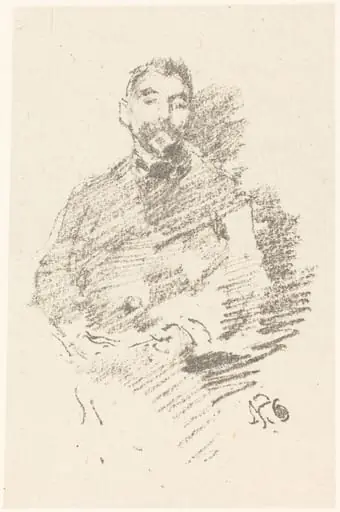
Sketch of William E. Henley
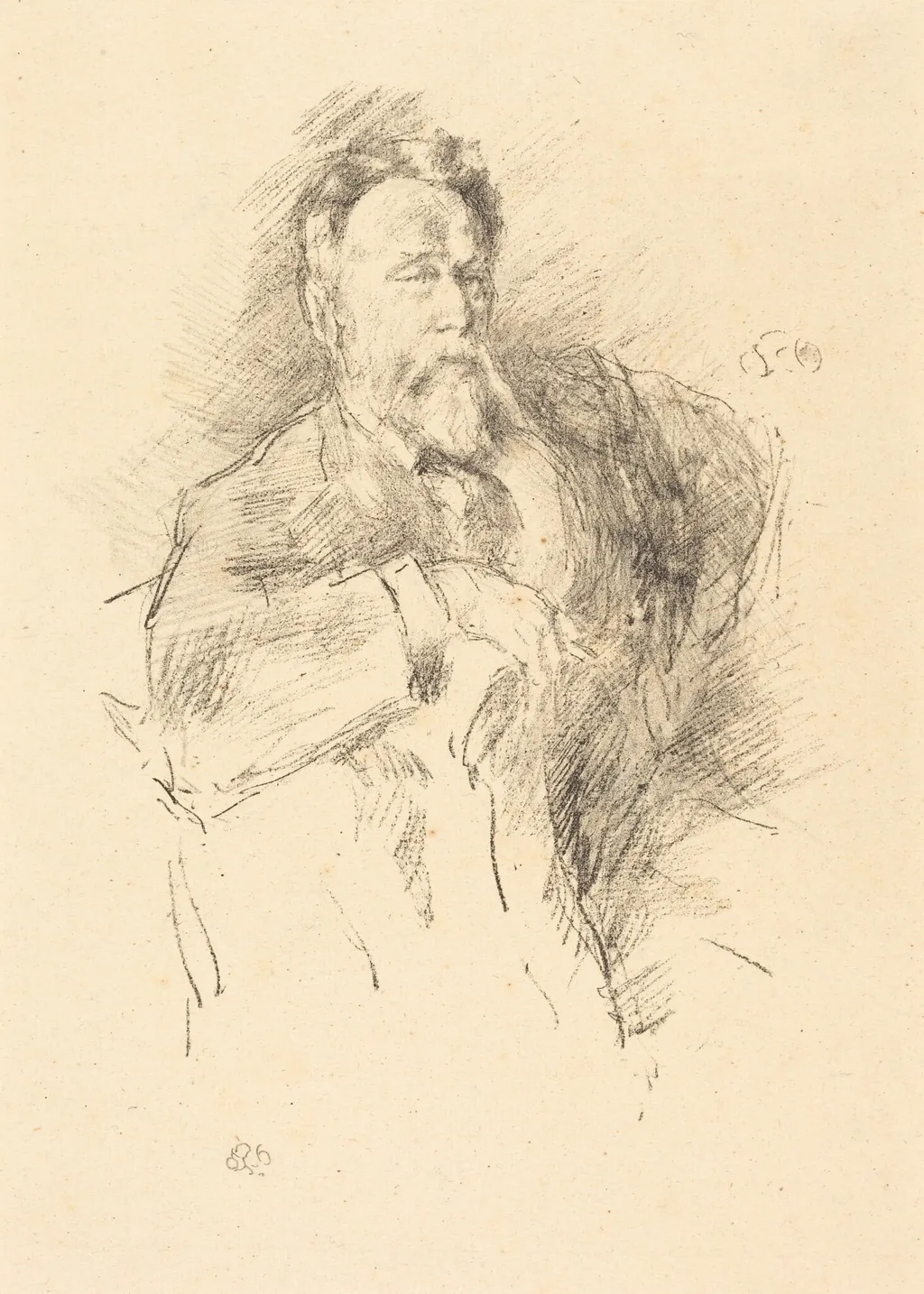
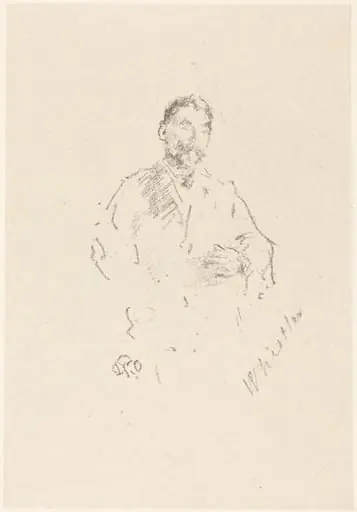
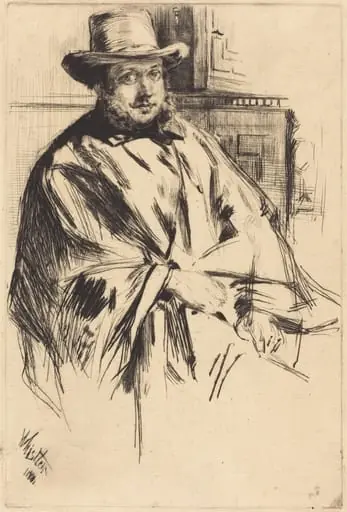
Sketch of William E. Henley is an ink print by the Impressionist artist James McNeill Whistler. It dates from 1896 and is held in the collection of the National Gallery of Art.
About this work
His clothes are drawn in loose, quick lines, and the whole image looks like it was made fast—almost like a quick note.
This sketch shows a man with a thick beard and wavy hair, sitting with his hands resting on his chest. His clothes are drawn in loose, quick lines, and the whole image looks like it was made fast—almost like a quick note. The background is plain, letting the face and hands stand out.
The artist used a technique called lithography, where the drawing is made on a smooth stone before being printed. This sketch was done in 1896 by Whistler, who often worked fast to capture a person’s look.
Next, check out lithography to see how this printing method works.
Overview
James McNeill Whistler’s 1896 lithograph presents a portrait of poet William E. Henley rendered in stark black on laid paper. The image captures Henley seated, his hands placed on his chest, his thick beard and wavy hair defined by swift, gestural lines. The composition is uncluttered, allowing the sitter’s face and posture to dominate the visual field.
Subject & Meaning
The work records a moment of quiet contemplation, emphasizing Henley’s physical presence rather than narrative detail. By focusing on the sitter’s expression and the relaxed positioning of his hands, Whistler conveys a sense of personal intimacy, aligning with the poet’s own reputation for resilience and introspection.
Technique & Style
Executed through lithography, Whistler drew directly onto a smooth stone surface, allowing the ink to adhere only where the artist’s marks were made. The resulting print is characterized by loose, rapid strokes that suggest immediacy, a hallmark of Whistler’s approach to portraiture in which the essence of the subject is captured rather than meticulous realism.
History & Provenance
Created in the final year of Whistler’s life, the lithograph reflects his mature period of printmaking. It entered private collections shortly after its production and has since been documented in several catalogues of Whistler’s graphic work, confirming its authenticity and tracing its passage through European and American collectors.
Context
Whistler, an American expatriate active in Britain, championed the aesthetic doctrine of “art for art’s sake,” rejecting overt sentimentality. This portrait aligns with his broader practice of using minimalistic composition and restrained palette to foreground form and line, situating the piece within the late‑19th‑century shift toward abstraction and the artist’s own signature butterfly monogram.
Artist & collection
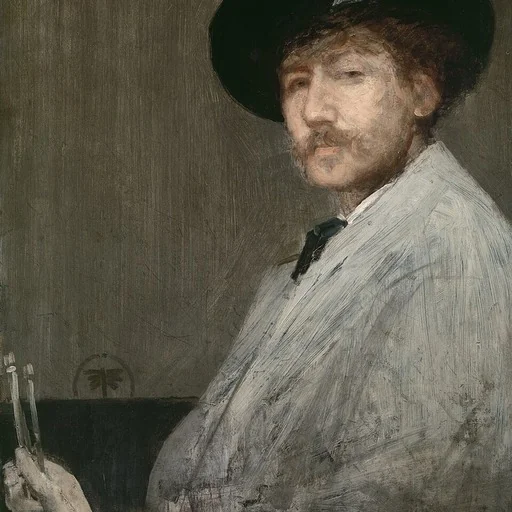
Artist
James Abbott McNeill Whistler was an American painter in oils and watercolor, and printmaker, active during the American Gilded Age and based primarily in the United Kingdom.

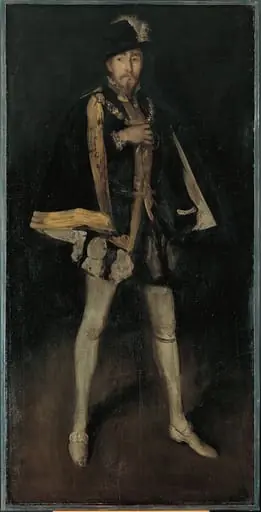 Arrangement in Black, No. 3: Sir Henry Irving as Philip II of Spain
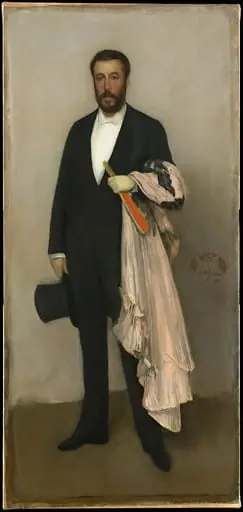 Arrangement in Flesh Colour and Black: Portrait of Theodore Duret
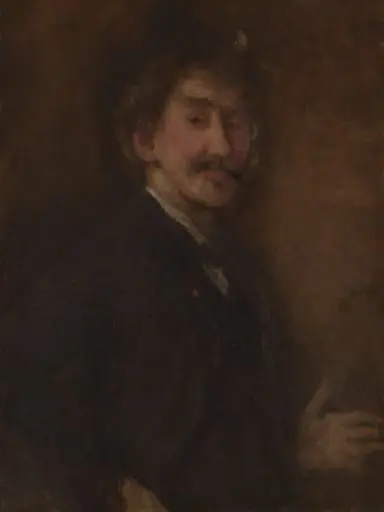 Gold and Brown: Self-Portrait
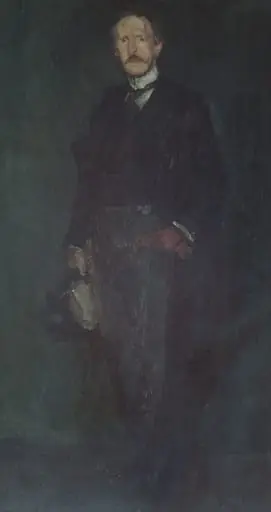 Edward Guthrie Kennedy
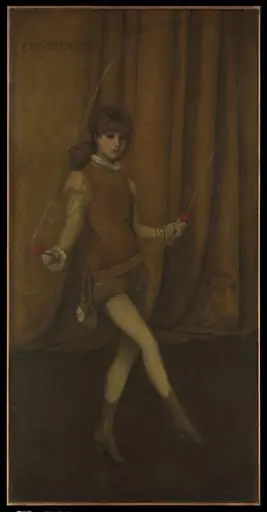 Harmony in Yellow and Gold: The Gold Girl—Connie Gilchrist
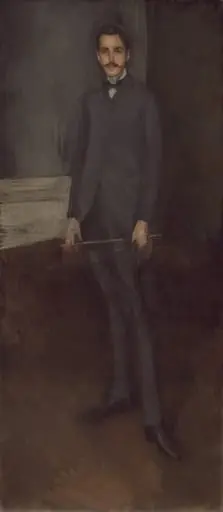 George W. Vanderbilt
 Symphony in White, No. 1: The White Girl
 Henry Irving as Philip II of Spain