Artwork
Town Hall, Buckingham
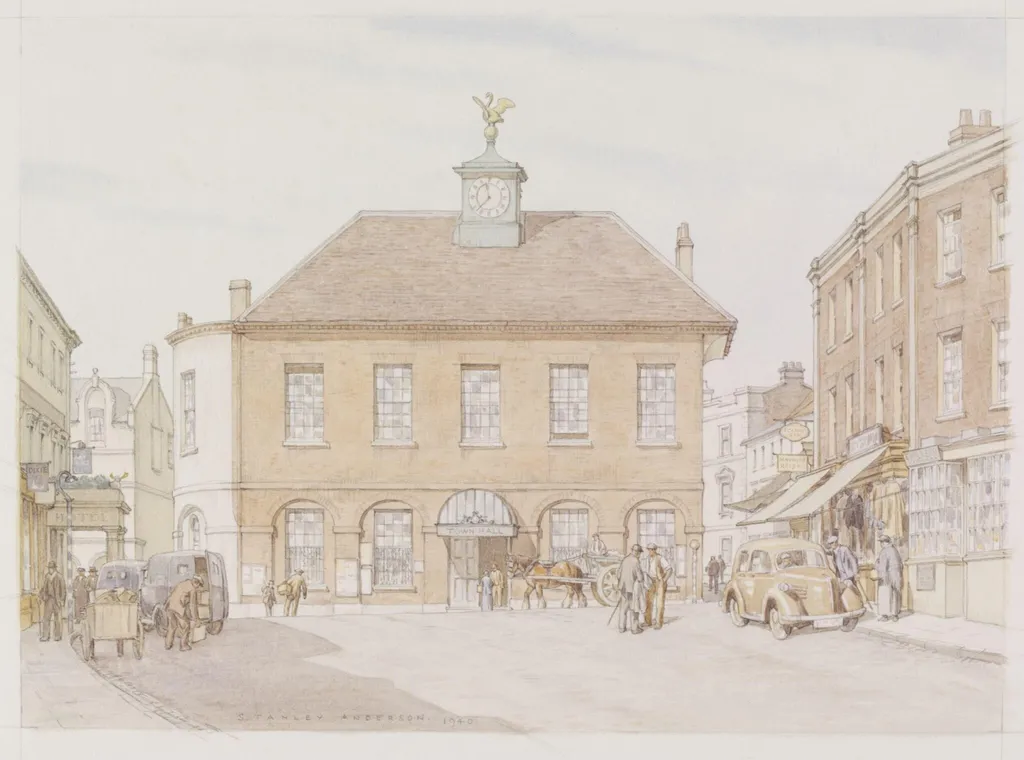
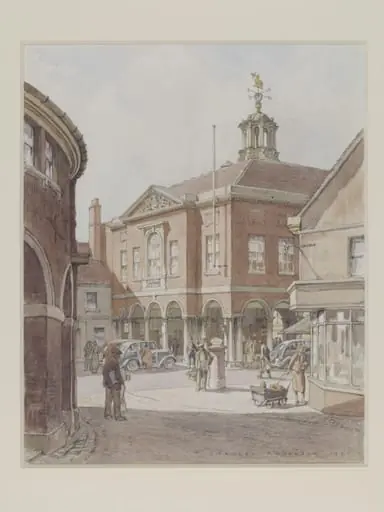
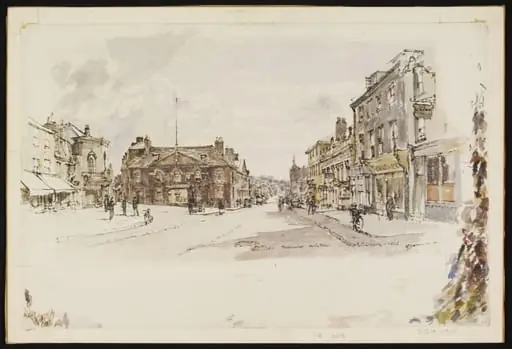
Town Hall, Buckingham is a watercolor work on paper by the Social Realist artist Anderson. It dates from 1940 and is held in the collection of the Victoria and Albert Museum.
About this work
Overview
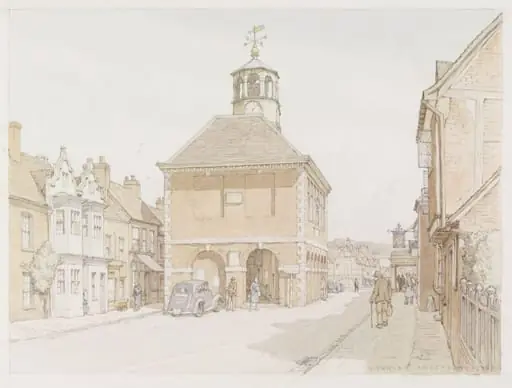
Painted in 1940, this watercolour by John Anderson captures the Town Hall of Buckingham, a modest brick structure from the 1700s.
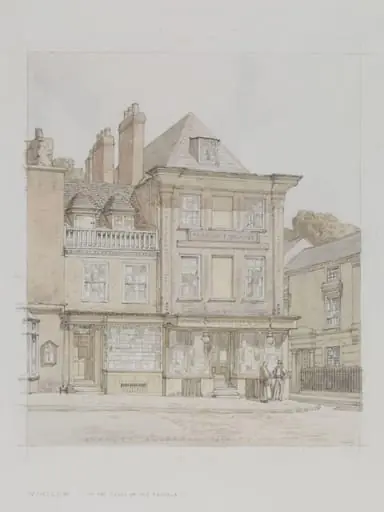
Painted in 1940, this watercolour by John Anderson captures the Town Hall of Buckingham, a modest brick structure from the 1700s. Rendered with precision and quiet observation, the scene includes a horse-drawn cart, pedestrians, and early automobiles, suggesting a transitional moment in rural English life. The work was created under the 'Recording Britain' initiative, a government-backed effort to visually archive the nation’s architectural heritage during wartime uncertainty.
Subject & Meaning
The Town Hall stands as the focal point, its arcaded ground floor and clock tower emblematic of civic identity. Surrounding figures and vehicles reflect the coexistence of traditional and modern modes of transport, hinting at the slow encroachment of industrialization into small towns. The painting does not idealize but records, offering a neutral testament to everyday life in a place likely to be altered by conflict or development.
Technique & Style
Anderson employed watercolour with restrained washes and fine linear detail to convey texture and atmosphere. The light brown brickwork is rendered with subtle gradations, while figures and vehicles are suggested with minimal strokes, avoiding overt drama. The composition balances architectural solidity with the fleeting movement of the street, using soft edges and muted tones to evoke a sense of quiet endurance.
History & Provenance
Created as part of the 'Recording Britain' project, initiated by Sir Kenneth Clark in 1939, the painting was commissioned to safeguard visual records of vulnerable landscapes. The project collected over 1,500 works before concluding in 1943. Anderson’s watercolour entered the Victoria and Albert Museum’s collection alongside others, where it remains as part of a broader archive of wartime cultural preservation.
Context
During the Second World War, fears of aerial bombardment and postwar redevelopment prompted efforts to document Britain’s architectural character. Rural towns like Buckingham, with their historic civic buildings, were seen as emblematic of a disappearing way of life. 'Recording Britain' responded to this anxiety by engaging artists to capture scenes before they vanished, turning art into a form of cultural inventory.
Legacy
Anderson’s watercolour endures as a quiet record of a specific moment in time, neither monumental nor sentimental. It contributes to a larger visual archive that continues to inform historical and architectural studies. The work exemplifies how documentary art, when executed with restraint, can preserve the ordinary with lasting significance.
Artist & collection
Artist
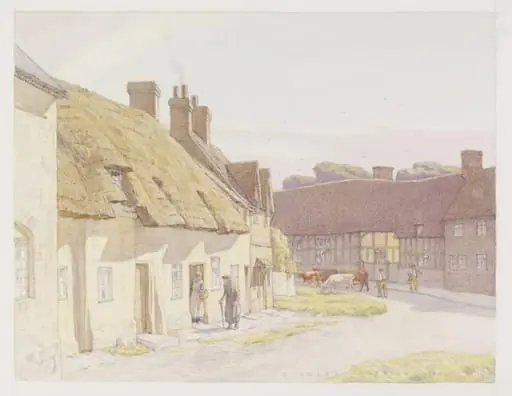
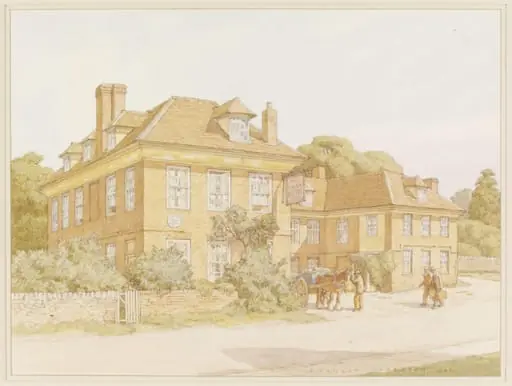
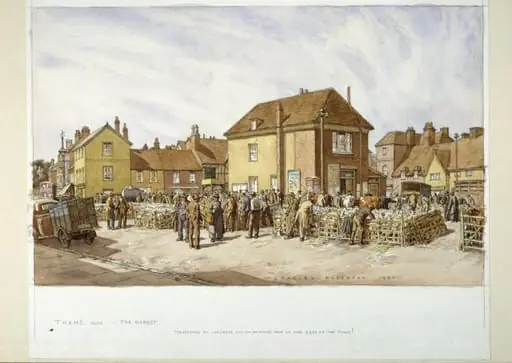
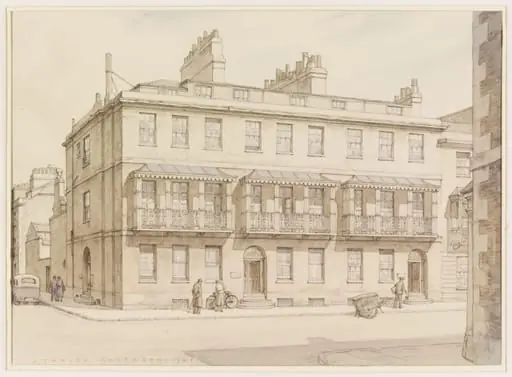
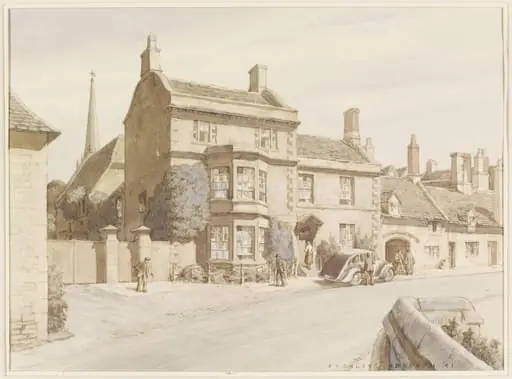
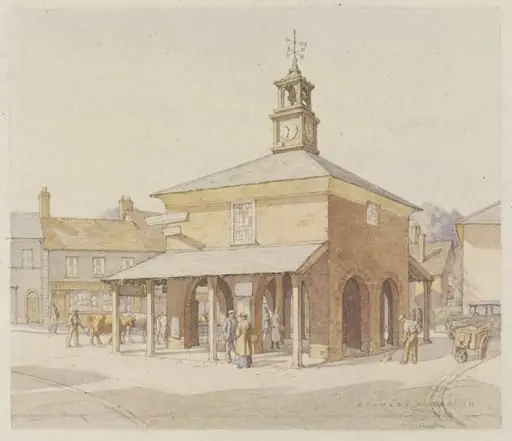
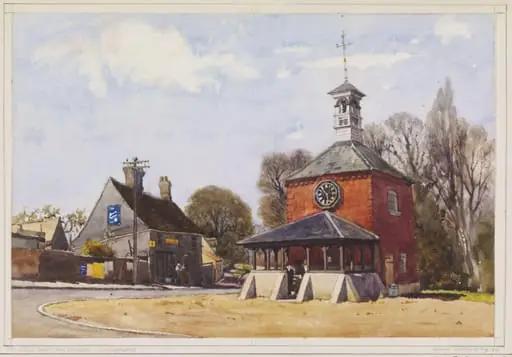
These watercolours capture quiet English villages in the 1940s, their sloping roofs and stone walls standing firm against time.