Artwork
Guildhall, High Wycombe
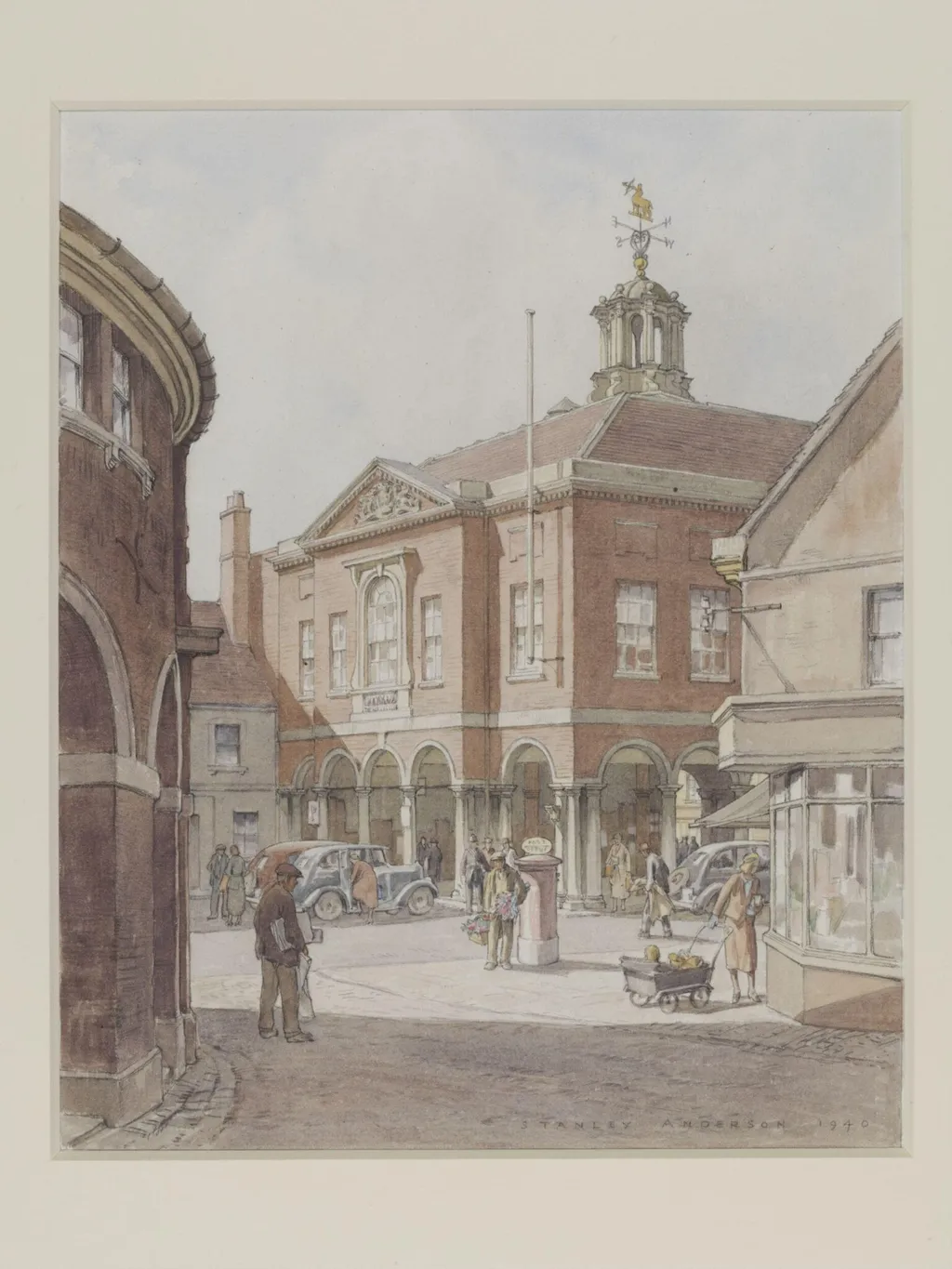
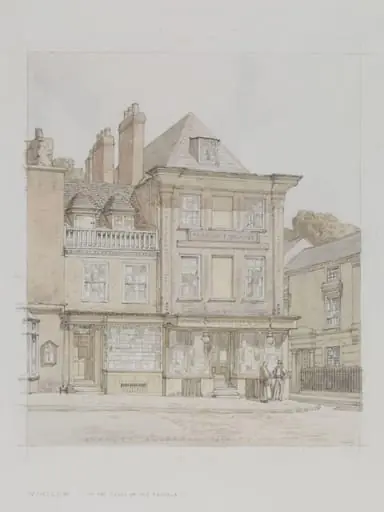
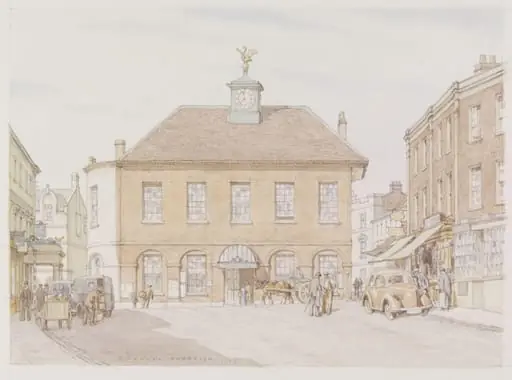
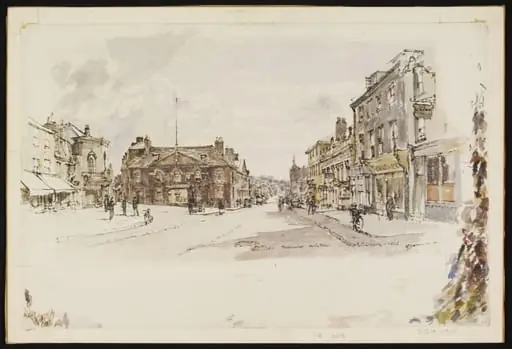
Guildhall, High Wycombe is a watercolor work on paper by the Social Realist artist Anderson. It dates from 1940 and is held in the collection of the Victoria and Albert Museum.
About this work
Overview
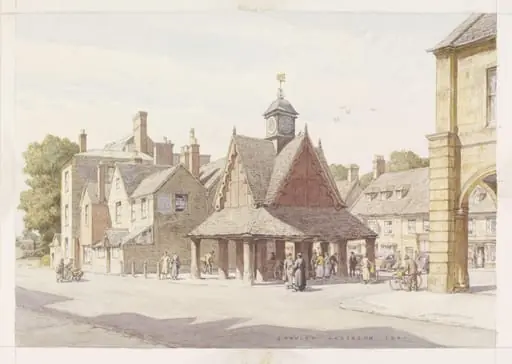
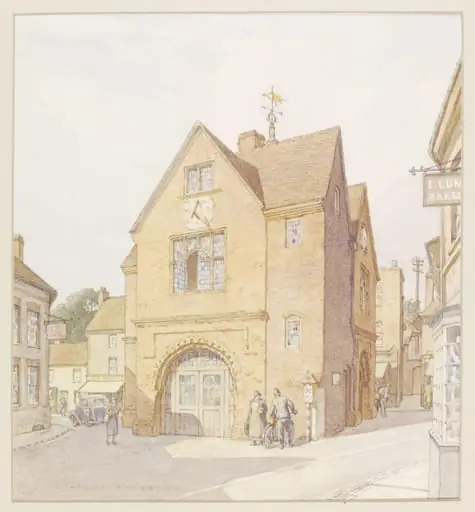
Anderson’s 1940 watercolour captures the Guildhall of High Wycombe, positioned in a bustling town square. The composition centers on the brick municipal building, its clock tower and weather‑vane rising above a crowd of figures moving through the foreground. The scene is rendered in subdued browns and greys, conveying a sense of ordinary daily life amid modest activity.
Subject & Meaning
The work records a typical moment in the town’s public space, with a man standing on the left and a woman pushing a cart on the right, surrounded by other townspeople. By focusing on ordinary tasks rather than grand gestures, the painting reflects the continuity of community routines during a period of national uncertainty.
Technique & Style
Executed in watercolour, the piece employs a restrained palette of earth tones, allowing the forms of the building and figures to emerge through washes of brown and gray. Anderson’s handling of light and shadow emphasizes atmospheric depth, while the loose brushwork suggests movement without sacrificing architectural detail.
History & Provenance
Created for the Recording Britain project, a wartime scheme launched by Sir Kenneth Clark and supported by the Pilgrim Trust, the watercolour is one of more than 1,500 works produced between 1940 and 1943. The series enlisted 97 artists to document British landscapes and architecture threatened by bombing and social change.
Context
The painting belongs to a broader effort to preserve visual records of the United Kingdom’s built environment during World War II. By documenting the Guildhall, Anderson contributed to a collective archive intended to safeguard cultural memory against the potential loss of historic structures.
Artist & collection
Artist
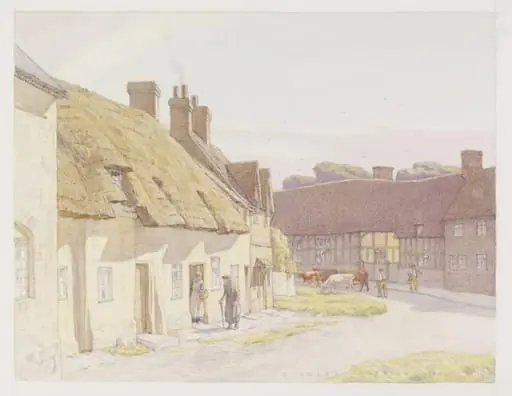
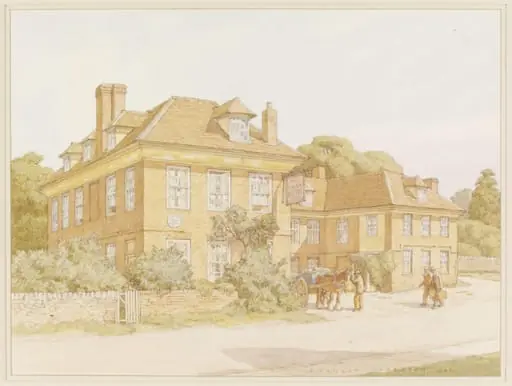
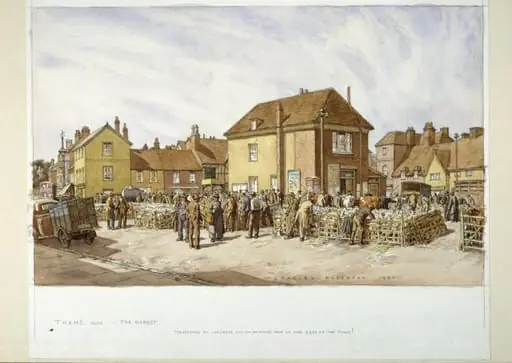
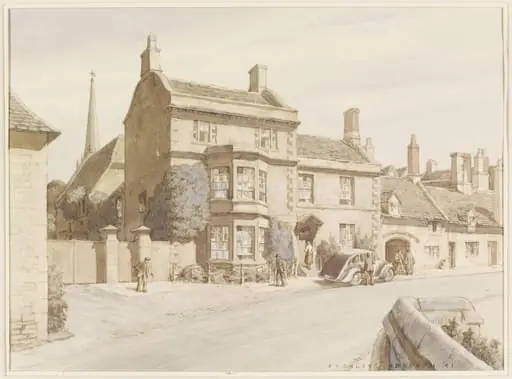
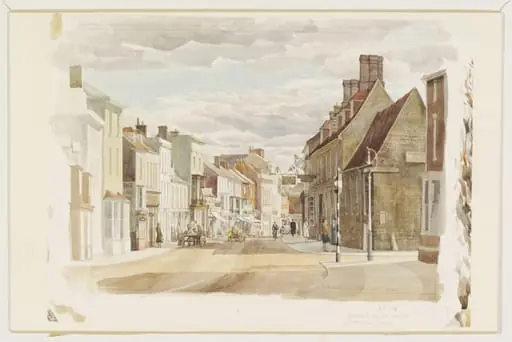
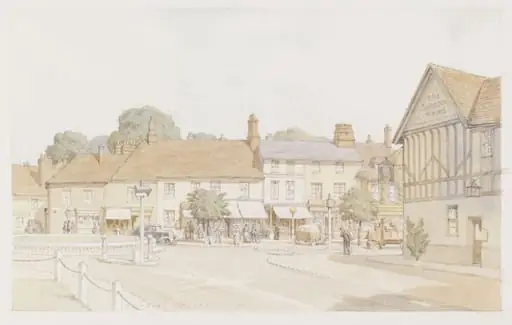
These watercolours capture quiet English villages in the 1940s, their sloping roofs and stone walls standing firm against time.