Artwork
A view of Rome
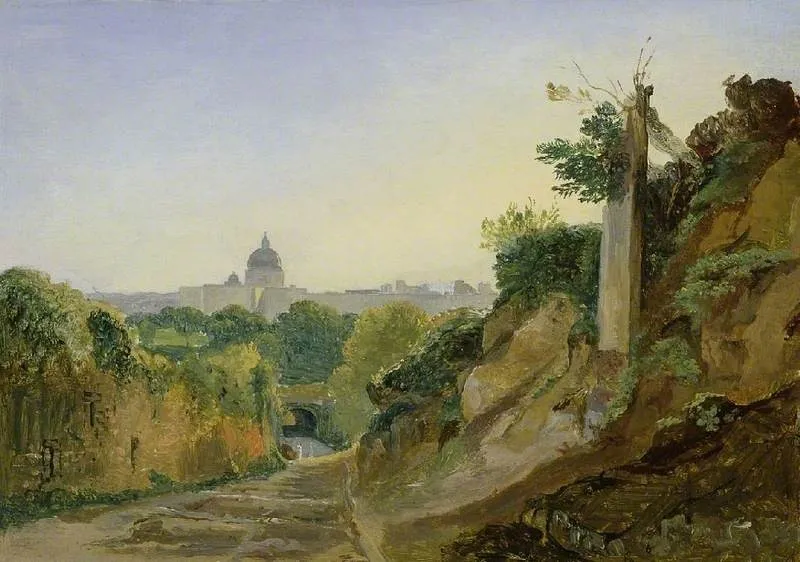
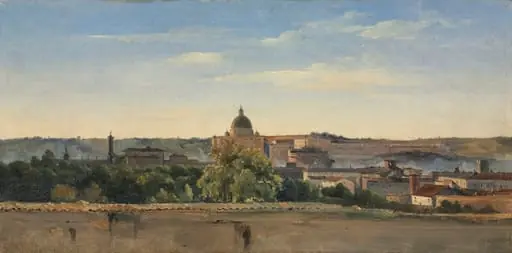
A view of Rome is an unspecified painting by André Giroux. It dates from 1831 and is held in the collection of the Fitzwilliam Museum.
About this work
Overview
The composition draws the eye toward a distant skyline dominated by a large dome, suggesting the presence of a major religious or civic structure.
Painted in 1831 by the French artist André Giroux, this landscape depicts a quiet approach to Rome, framed by a winding path bordered by vegetation and a low stone wall. The composition draws the eye toward a distant skyline dominated by a large dome, suggesting the presence of a major religious or civic structure. Giroux, primarily known for his topographical scenes, rendered this view with attention to atmospheric detail rather than topographic precision.
Subject & Meaning
The painting presents Rome not as a bustling urban center but as a tranquil, almost contemplative destination. The path invites the viewer into the scene as a traveler might, emphasizing journey over arrival. The inclusion of architectural elements, particularly the dome, signals cultural and historical weight, while the natural framing suggests harmony between built and natural environments. The mood is quiet, evoking reflection rather than spectacle.
Technique & Style
Giroux employed subtle gradations of light and shadow to model forms and suggest depth, a method echoing the principles of chiaroscuro. The play of sunlight across the path and foliage creates a sense of time and place, with soft transitions between tones enhancing the painting’s atmospheric quality. Brushwork is restrained, favoring smooth blends over expressive strokes, aligning with 19th-century landscape conventions that prioritized realism over dramatic effect.
History & Provenance
Created during Giroux’s active period as a painter, the work predates his later shift toward art dealing and the trade of antiquities. It remained in private hands until entering the Fitzwilliam Museum’s collection, where it is preserved as an example of French Romantic-era landscape painting. There is no record of public exhibition prior to its acquisition, suggesting it was likely a personal or commissioned work rather than a public commission.
Context
In the early 1830s, French artists frequently traveled to Italy to study classical ruins and Renaissance art, often producing landscapes that blended observation with idealization. Giroux’s view of Rome fits within this tradition, reflecting a broader European fascination with the city as a site of historical memory. Unlike grander historical paintings, this work focuses on the quiet experience of approaching a legendary city, aligning with Romantic sensibilities of solitude and contemplation.
Legacy
Though Giroux is less known today than his contemporaries, this painting endures as a quiet testament to his skill in capturing mood through landscape. It contributes to the understanding of 19th-century French artists who, while not part of major movements, helped shape the visual language of travel and place. Its presence in the Fitzwilliam Museum ensures continued access for study and reflection, preserving a modest but thoughtful view of Rome from a transitional moment in artistic practice.
Artist & collection

Artist
André Giroux (April 30, 1801 – November 18, 1879) was a French photographer and painter.

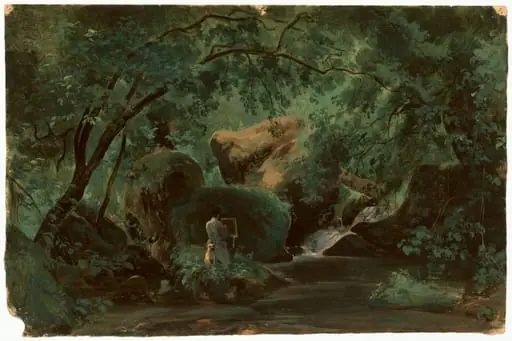
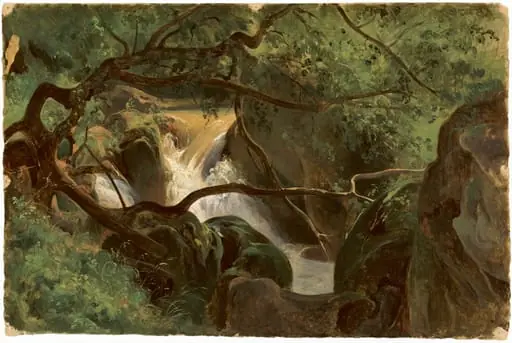
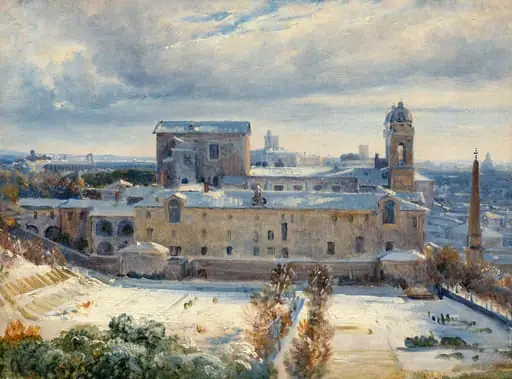
 A View of Tivoli
 View of Rome
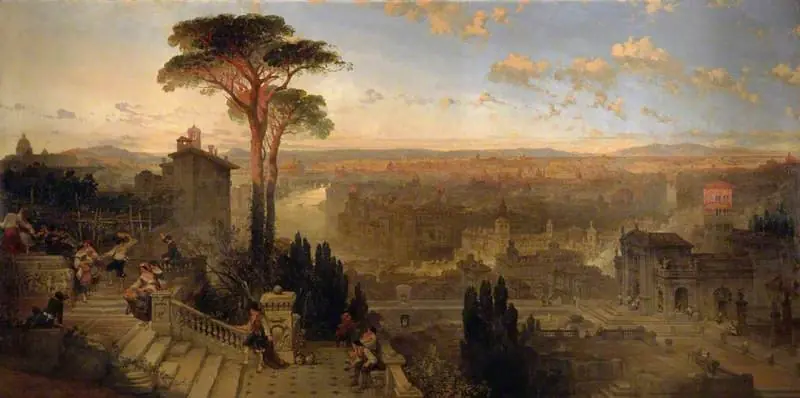 Rome: Sunset from the Convent of Sant' Onofrio on the Janiculum
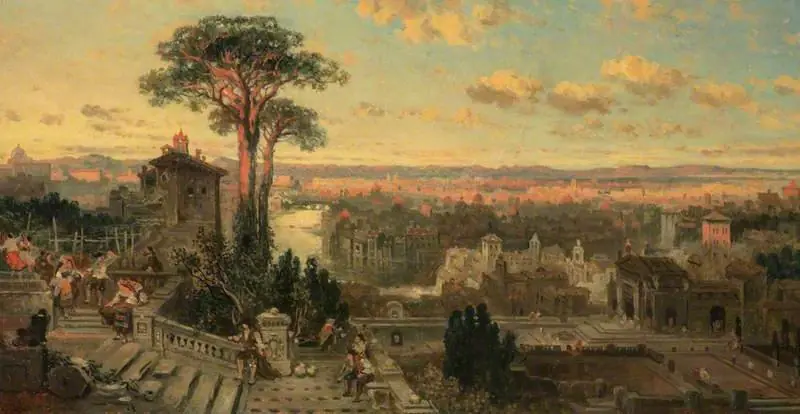 A Study for 'Rome: Sunset from the Convent of Sant' Onofrio on the Janiculum'
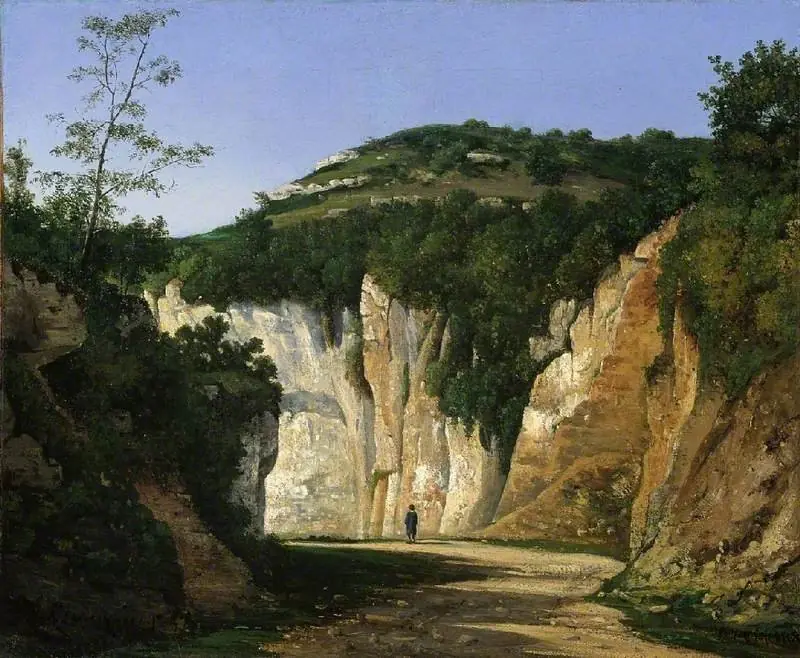 Near Crémieu
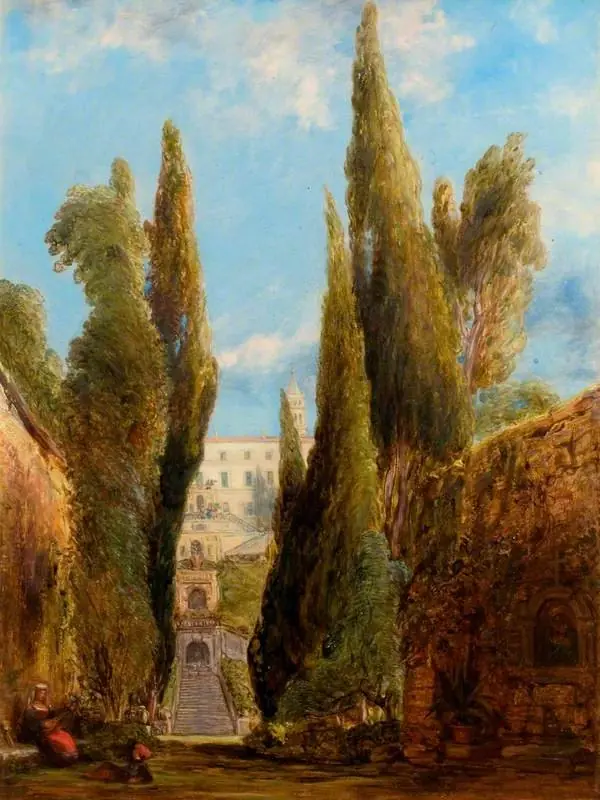 The Villa d'Este, Tivoli
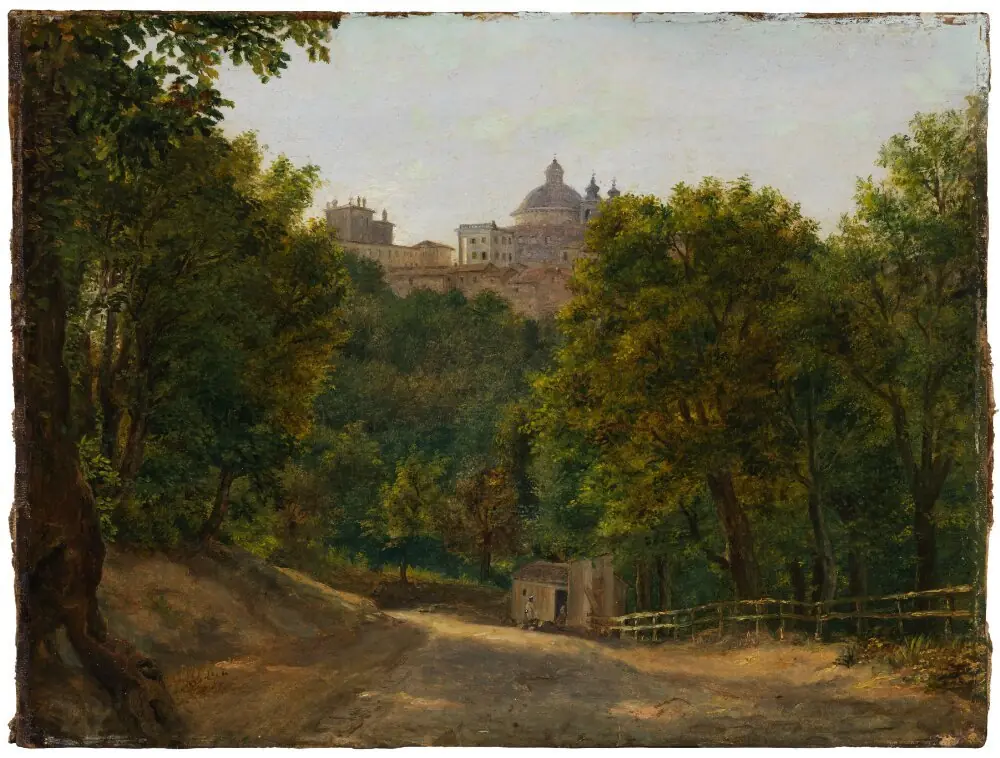 Landscape with Santa Maria Assunta in Ariccia
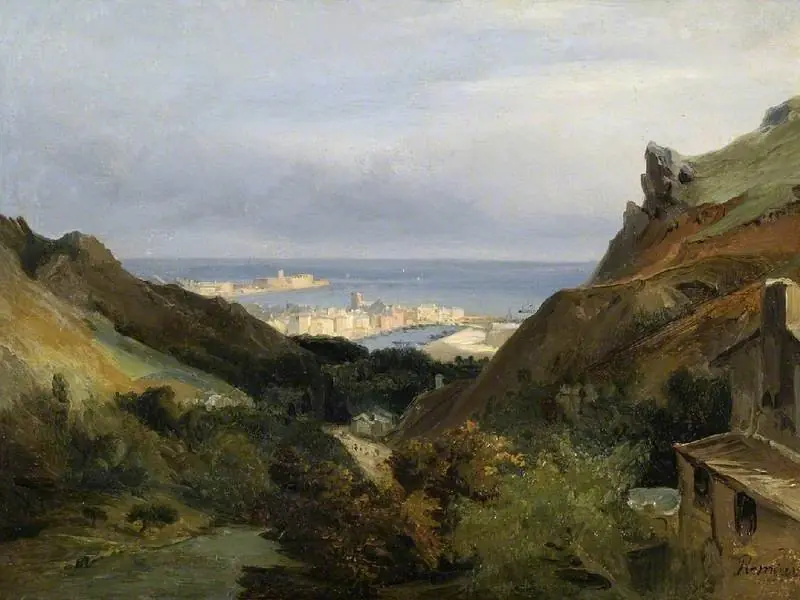 Italian landscape with a view of a harbour
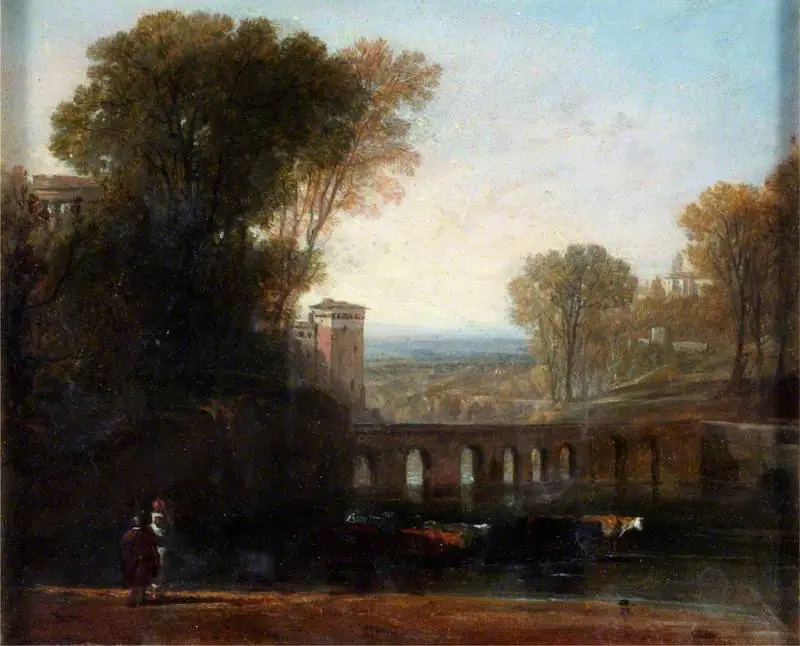 Italian Landscape with Cows Watering
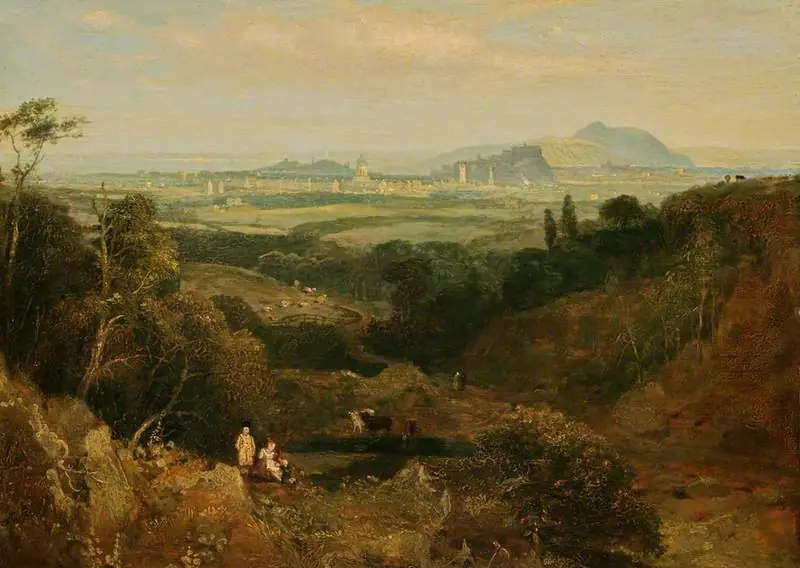 Edinburgh from Corstorphine Hill