Artwork
Landscape with Santa Maria Assunta in Ariccia
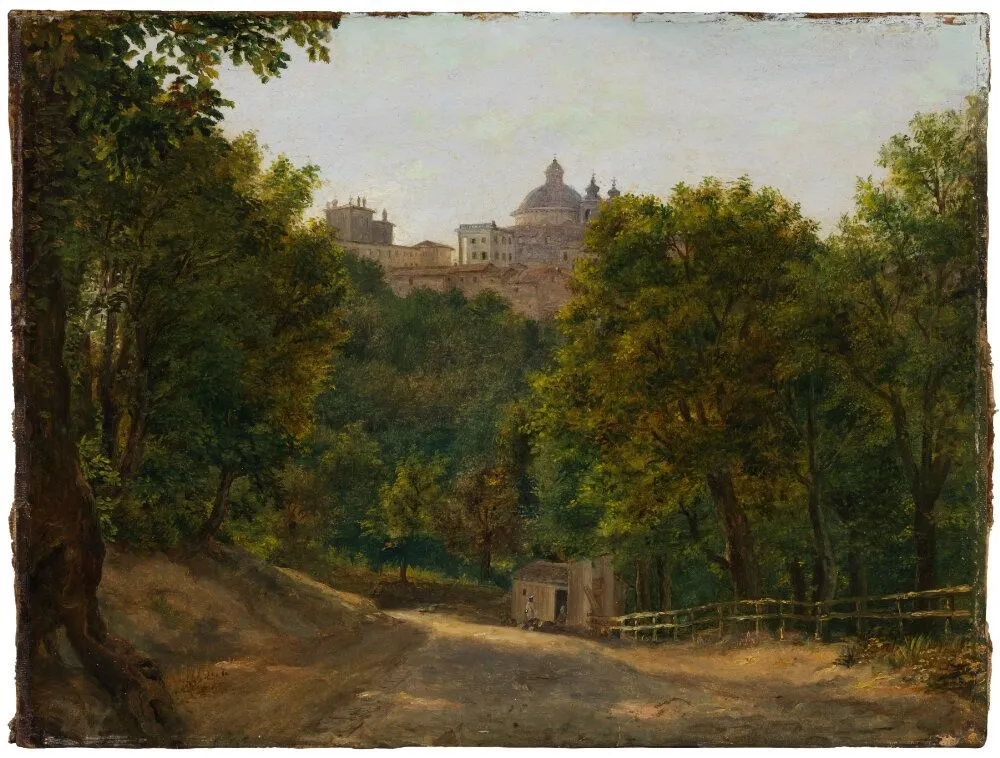
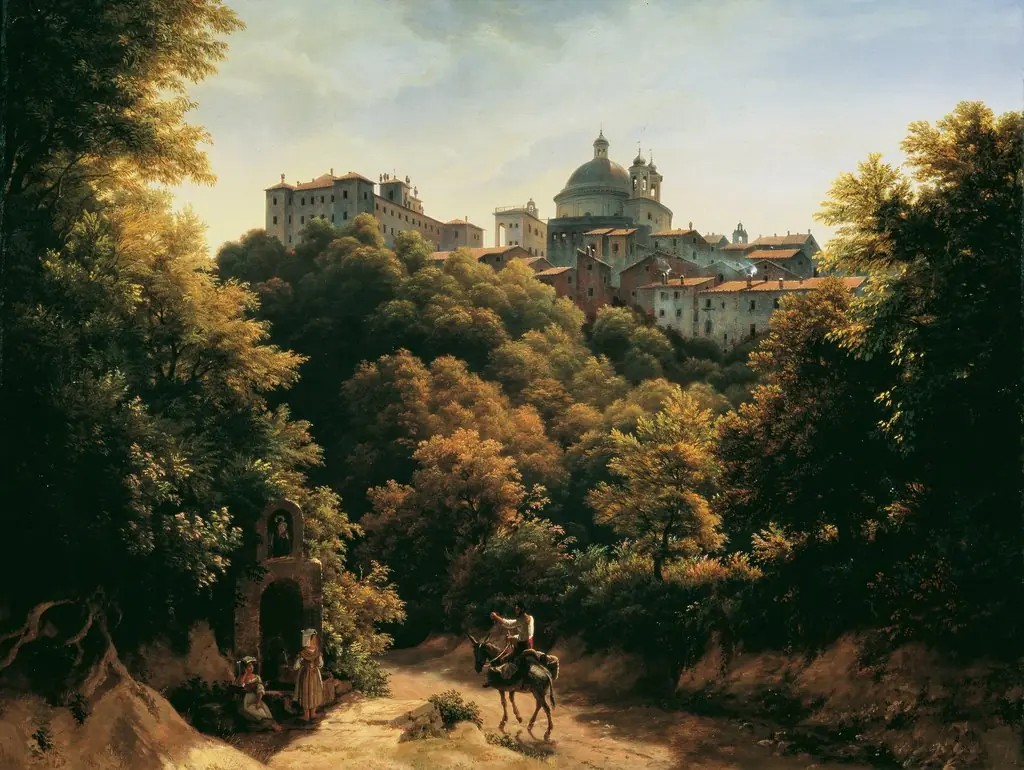
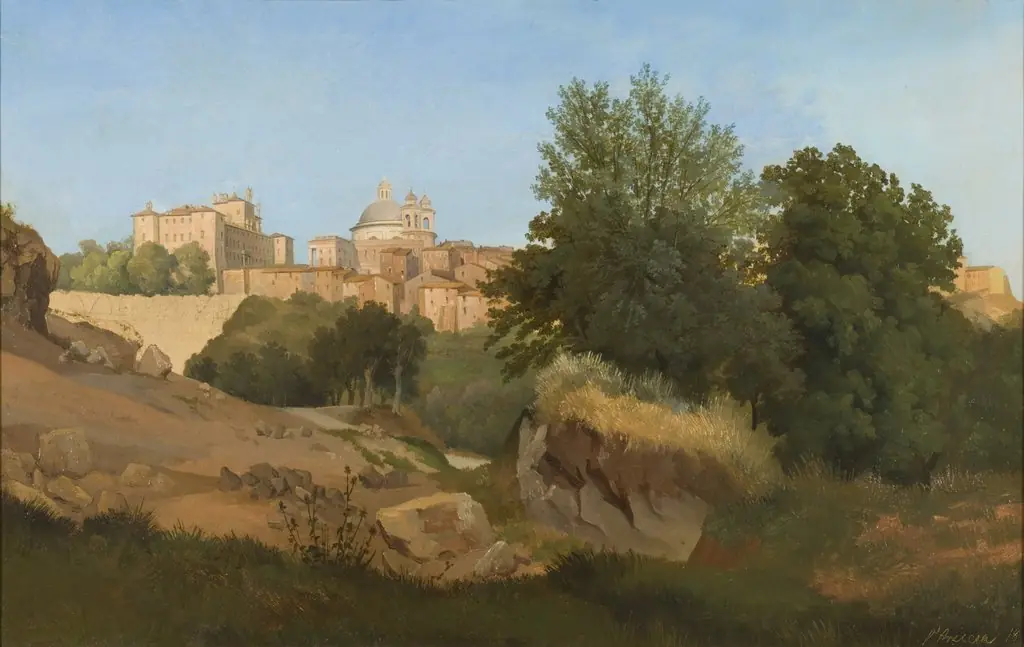
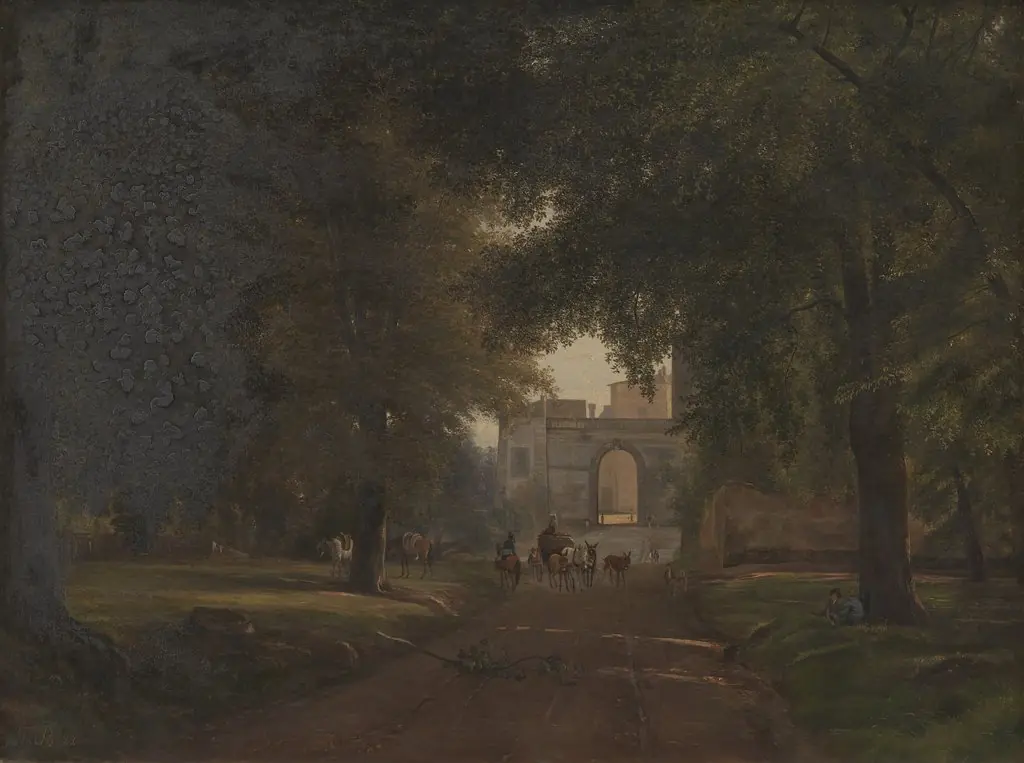
Landscape with Santa Maria Assunta in Ariccia is an unspecified painting by Christian Frederik Ferdinand Thøming. It dates from 1830 and is held in the collection of the Nationalmuseum.
About this work
Overview
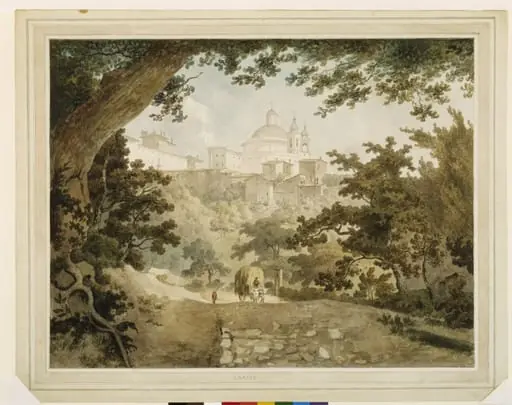
A winding dirt path and a low stone fence guide the viewer’s eye through the foreground, while a modest outbuilding suggests quiet human habitation.
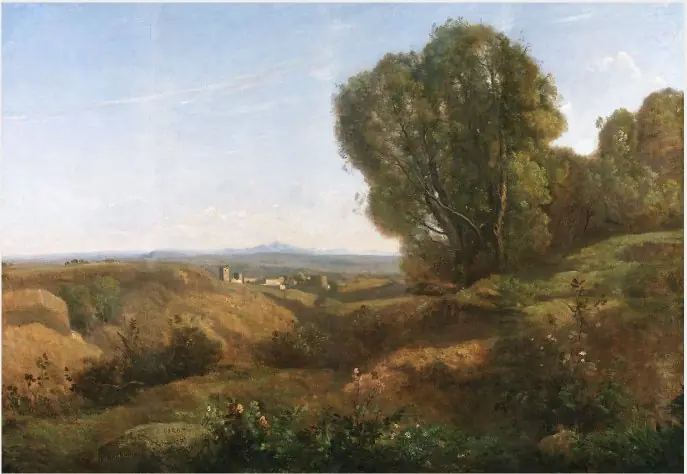
Painted in 1830 by Christian Frederik Ferdinand Thøming, this landscape captures a quiet rural scene near Ariccia, Italy. The composition centers on the distant silhouette of Santa Maria Assunta, its dome emerging above the tree line. A winding dirt path and a low stone fence guide the viewer’s eye through the foreground, while a modest outbuilding suggests quiet human habitation. The hazy, soft-toned sky enhances the tranquil atmosphere.
Subject & Meaning
The painting presents the church not as a dominant religious symbol, but as a subtle landmark within an everyday landscape. Its placement in the distance invites contemplation rather than devotion, aligning with 19th-century European tendencies to integrate sacred architecture into natural settings. The absence of figures or overt ritual underscores a mood of stillness, where the sacred is felt through presence rather than ceremony.
Technique & Style
Thøming employed a restrained palette of muted greens, ochres, and pale blues to evoke atmospheric depth. Brushwork is delicate, with soft transitions between land, sky, and architecture. The path and fence are rendered with precise but unobtrusive lines, framing the view without dominating it. The hazy sky, achieved through thin glazes, contributes to a sense of distance and quiet light, typical of Danish landscape traditions of the period.
History & Provenance
The painting entered the collection of the Nationalmuseum in Stockholm, where it remains today. Its acquisition likely reflects the museum’s broader interest in Nordic artists working abroad during the early 19th century. Thøming, a Danish painter, traveled extensively in Italy, and this work is one of several landscapes he produced during his time there, documenting the Italian countryside through a Northern European lens.
Context
Created during a period when Nordic artists increasingly traveled to Italy for study, this painting reflects the influence of classical Italian scenery on Northern European sensibilities. Unlike grand historical or religious scenes, Thøming’s focus on modest, everyday elements—paths, fences, distant churches—aligns with emerging Romantic ideals that valued quiet observation over dramatic narrative.
Legacy
Thøming’s work is not widely known outside Scandinavian art circles, but this painting exemplifies a quiet strand of 19th-century landscape painting that prioritized mood over spectacle. It contributes to a broader understanding of how Nordic artists interpreted Italian topography, blending local observation with a restrained aesthetic that valued harmony and subtlety over grandeur.
Artist & collection
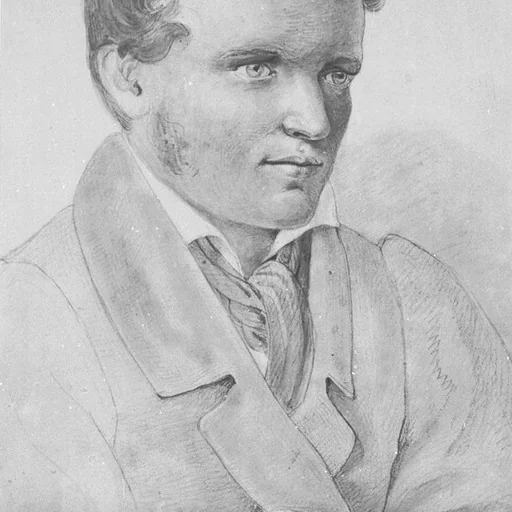
Artist
Christian Frederik Ferdinand Thøming
Christian Frederik Ferdinand Thøming (1802–1873) was an artist, born in Eckernförde.