Artwork
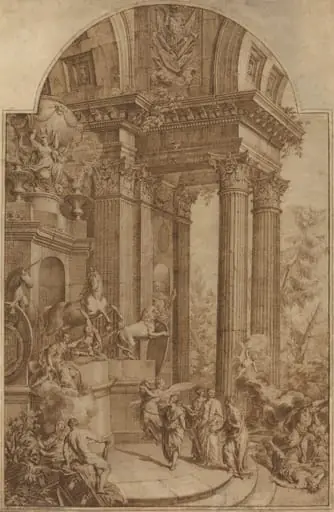
Triumphal Arch and Figures
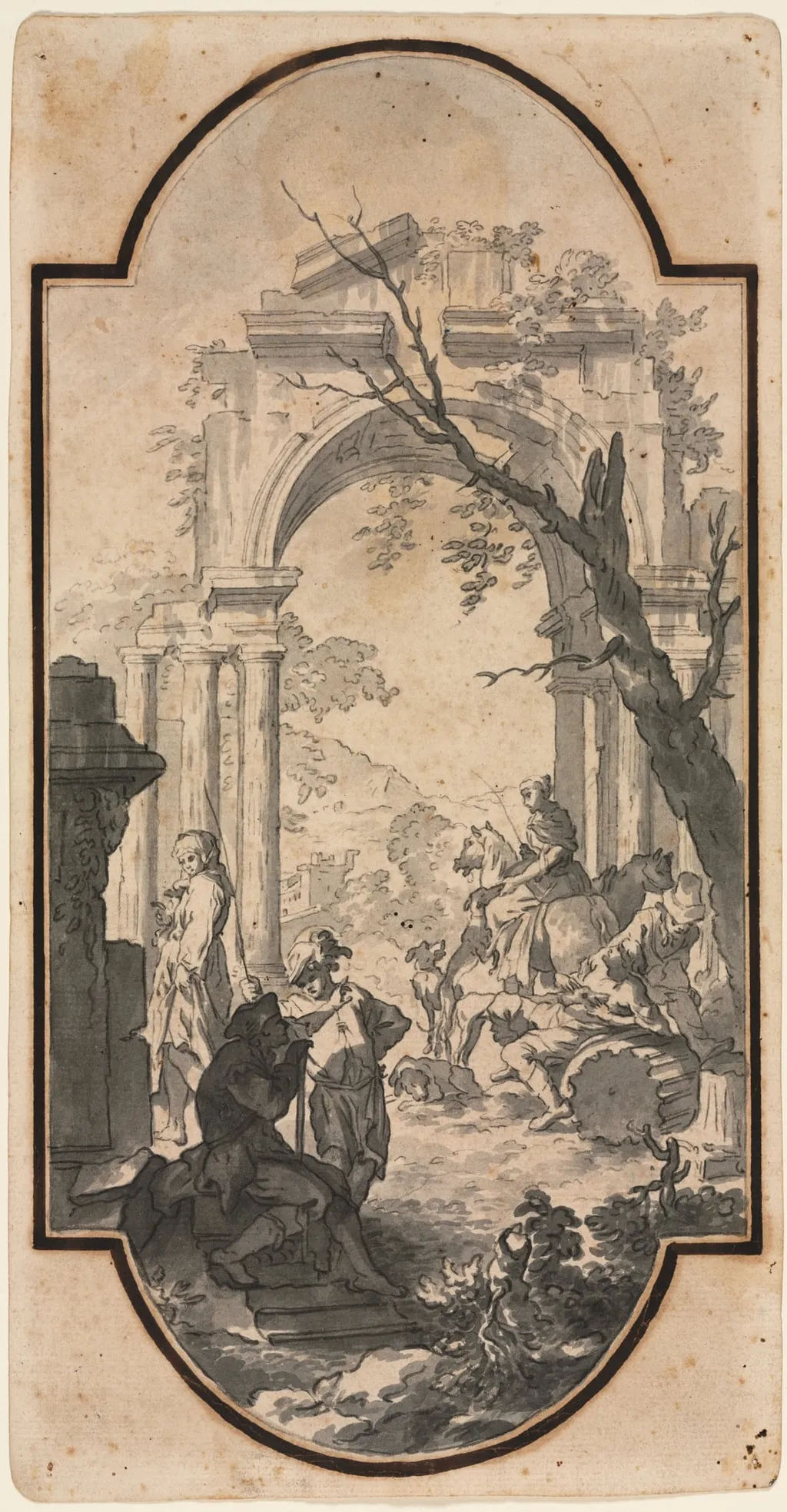
Triumphal Arch and Figures is a drawing by the Baroque artist Andrea Locatelli. It dates from 1704 and is held in the collection of the Cleveland Museum of Art.
About this work
Overview
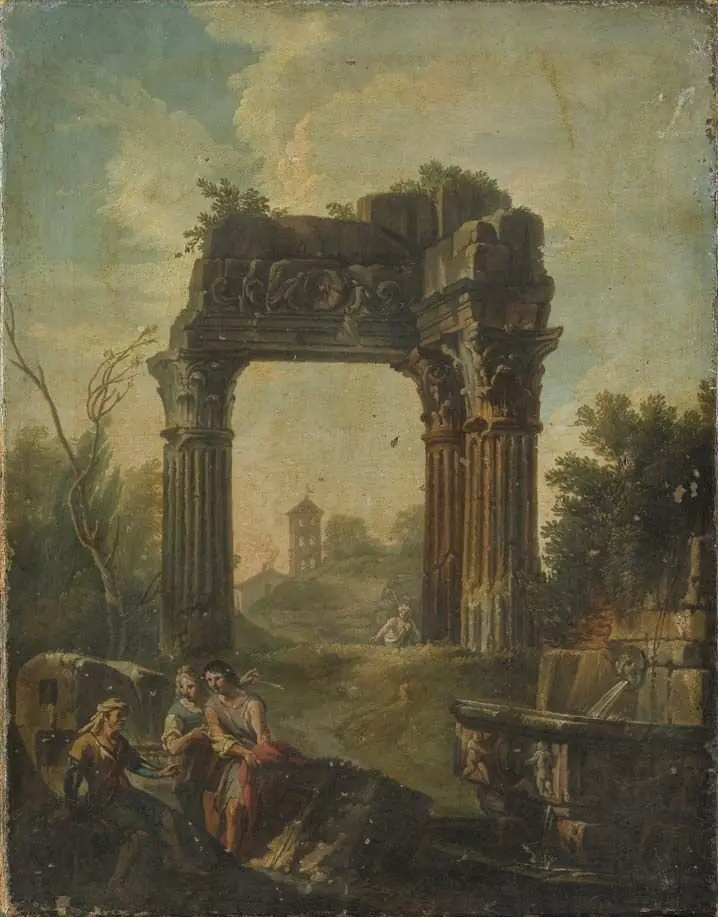
Created circa 1704, this drawing by Andrea Locatelli presents a classical triumphal arch surrounded by figures in early 18th-century dress.
Created circa 1704, this drawing by Andrea Locatelli presents a classical triumphal arch surrounded by figures in early 18th-century dress. Though executed in ink or wash, it reflects the artist’s broader interest in architectural landscapes and atmospheric composition. Locatelli, trained in Rome, synthesized topographical observation with imaginative staging, common among artists of his generation who sought to evoke historical grandeur through carefully arranged scenes.
Subject & Meaning
The drawing centers on a monumental arch adorned with vegetal motifs, flanked by pedestrians and equestrians in period attire. No specific historical event is depicted; instead, the scene evokes a generalized sense of antiquity and civic ceremony. The figures, neither engaged in action nor clearly interacting, serve as scale indicators and atmospheric elements, reinforcing the arch’s symbolic weight without narrating a particular moment.
Technique & Style
Executed with delicate linear precision and subtle tonal gradations, the drawing employs wash to suggest depth and texture without heavy modeling. The arch is rendered with architectural clarity, while the figures are loosely sketched, their forms softened to blend into the landscape. This balance between structured form and fluid human presence reflects Locatelli’s training in both topographical draftsmanship and theatrical composition.
History & Provenance
Andrea Locatelli, born in Rome in 1695, received early instruction from his father and later studied under marine painters Monsù Alto and Bernardino Fergioni. Though primarily known for landscapes and coastal views, this drawing reveals his engagement with Roman antiquities. The work’s early 18th-century origin aligns with a period when Roman ruins were frequently reimagined in drawings and paintings for collectors and travelers interested in classical heritage.
Context
In early 1700s Rome, artists frequently drew upon ancient monuments as subjects, responding to renewed scholarly interest in antiquity and the Grand Tour’s growing popularity. Locatelli’s work fits within this trend, blending observed architecture with invented figures to create evocative, non-narrative scenes. His approach diverged from strict topography, favoring mood and composition over documentary accuracy, a hallmark of the period’s evolving landscape tradition.
Legacy
Locatelli’s drawings, including this one, contributed to a broader shift in landscape art where ruins and architecture became vehicles for poetic reflection rather than mere records. His synthesis of observation and imagination influenced later vedutisti and helped sustain interest in Roman antiquities through visual culture. Though not widely exhibited today, his works remain representative of a transitional phase in Italian drawing practices.
Artist & collection
Artist
Andrea Locatelli (19 December 1695 – 19 February 1741) was an Italian painter of landscapes (vedute).

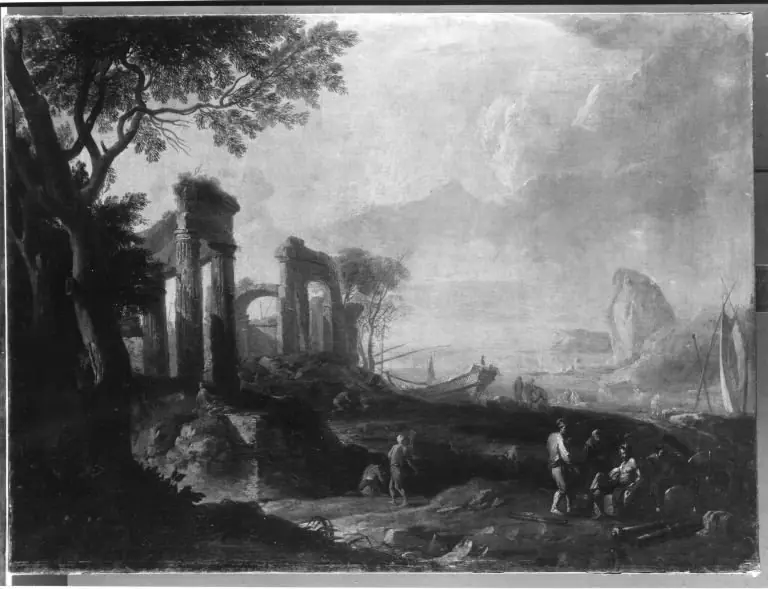
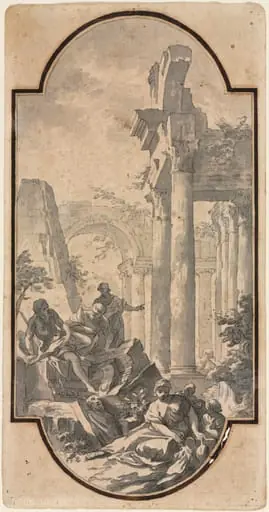 Figures Near the Ruins of a Corinthian Temple (recto)
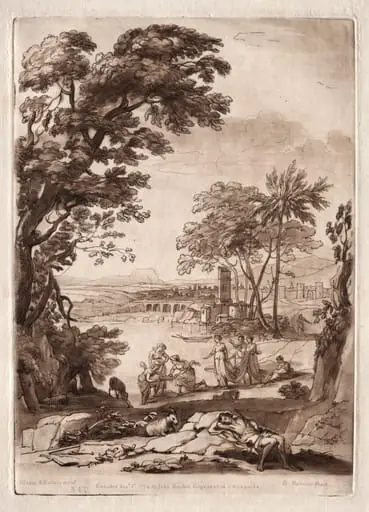 Liber Veritatis: No. 47, A River Scene with the Finding of Moses
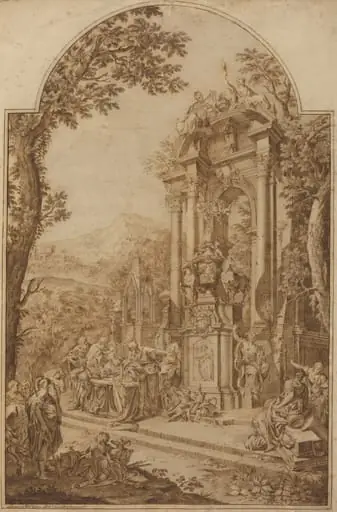 Monument to William Chancellor Cowper
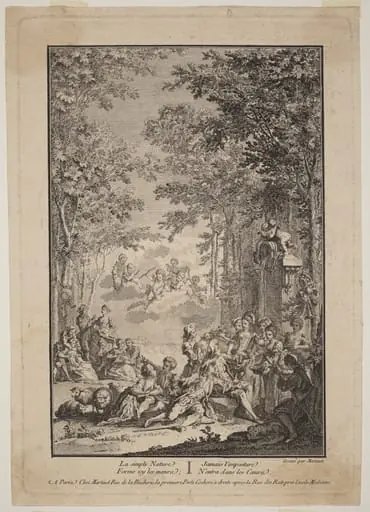 La simple Nature
 Monument to King George I
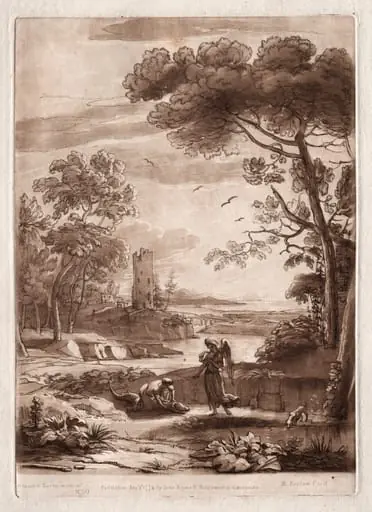 Liber Veritatis: No. 50, A River Scene with Tobias and the Angel
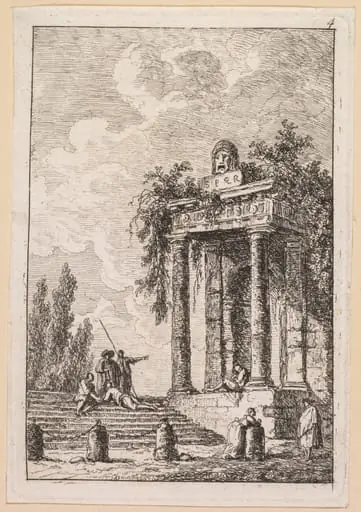 Les Soirées de Rome: L'Escalier aux quatre bornes
 Flock of Goats
 The Statue in Front of Ruins
 Steps to the Four Landmarks