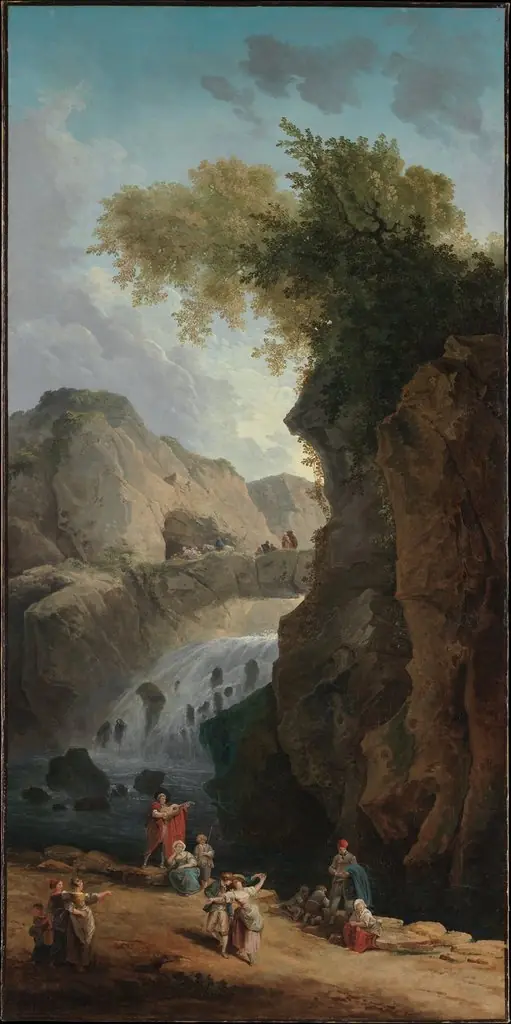
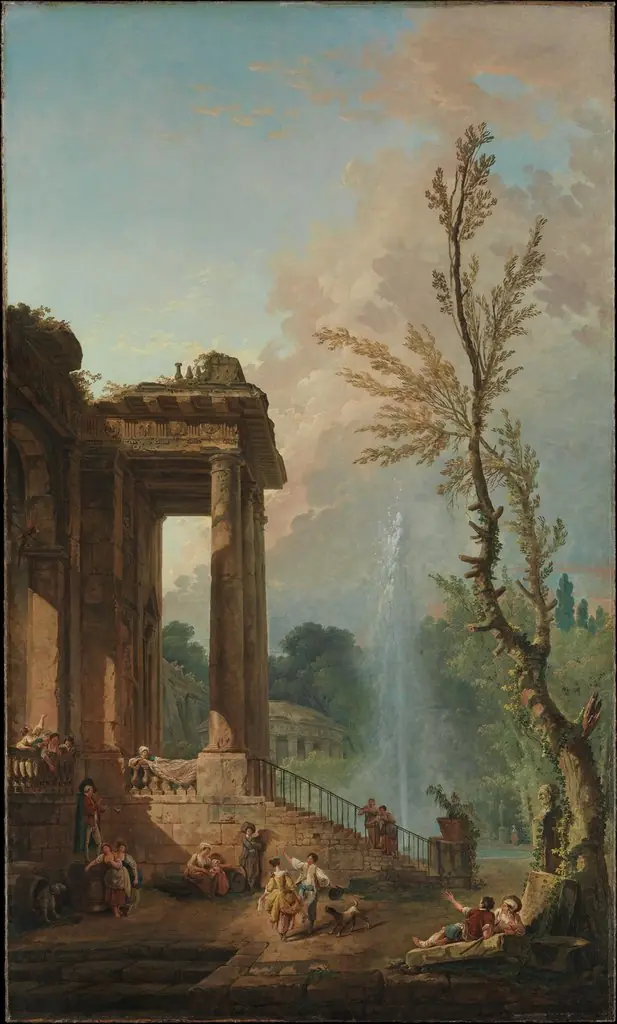
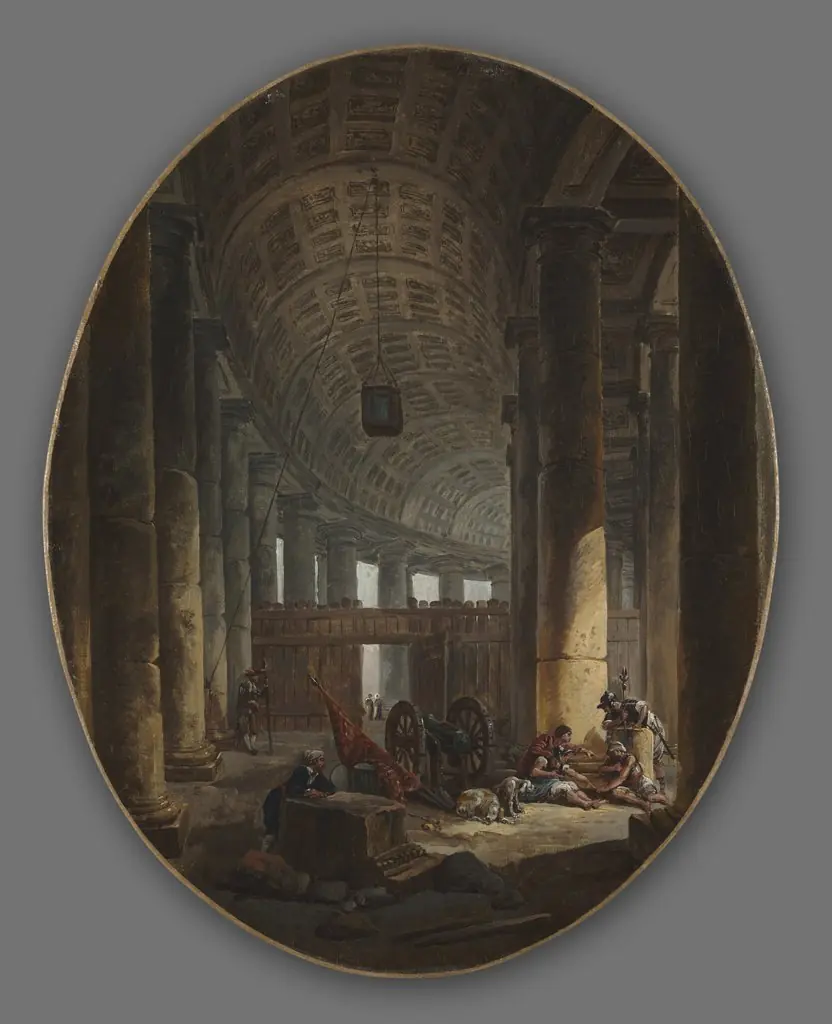
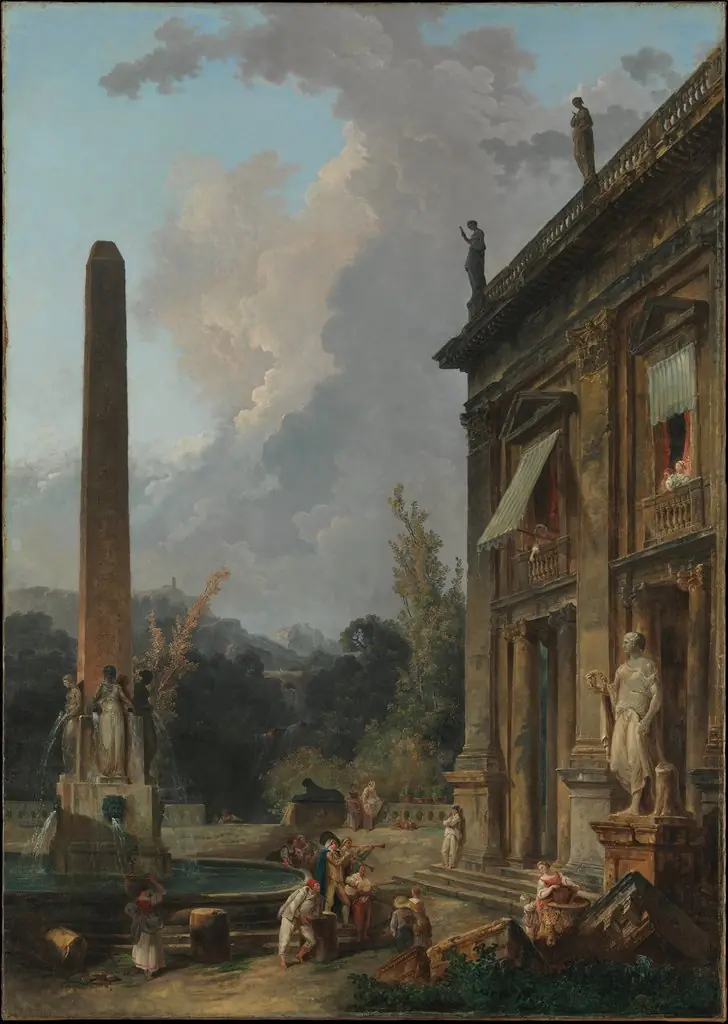
Artwork
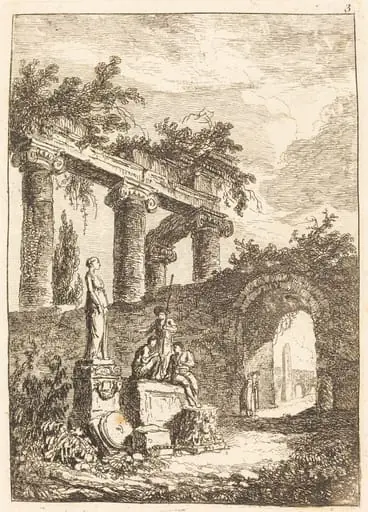
The Statue in Front of Ruins
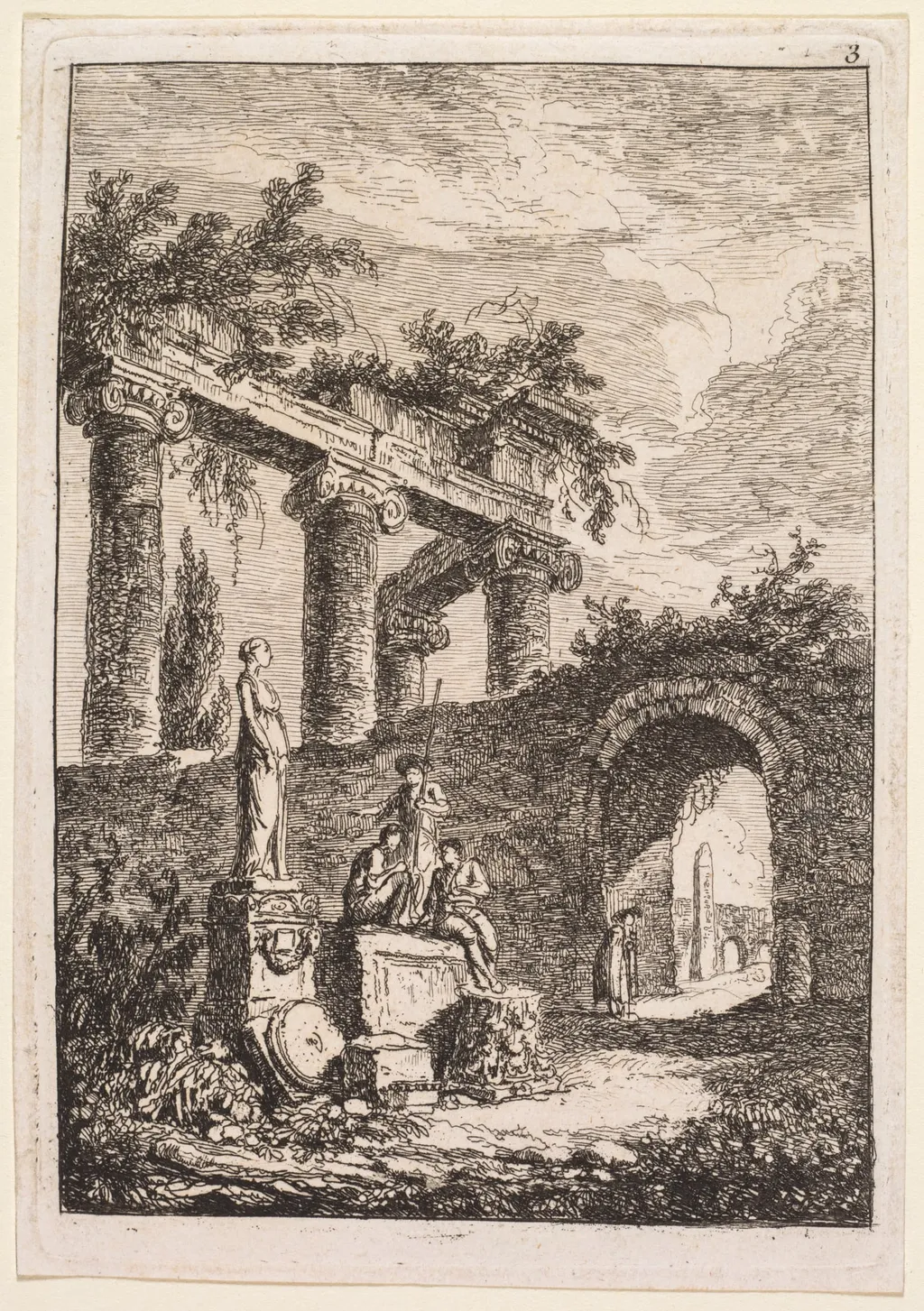
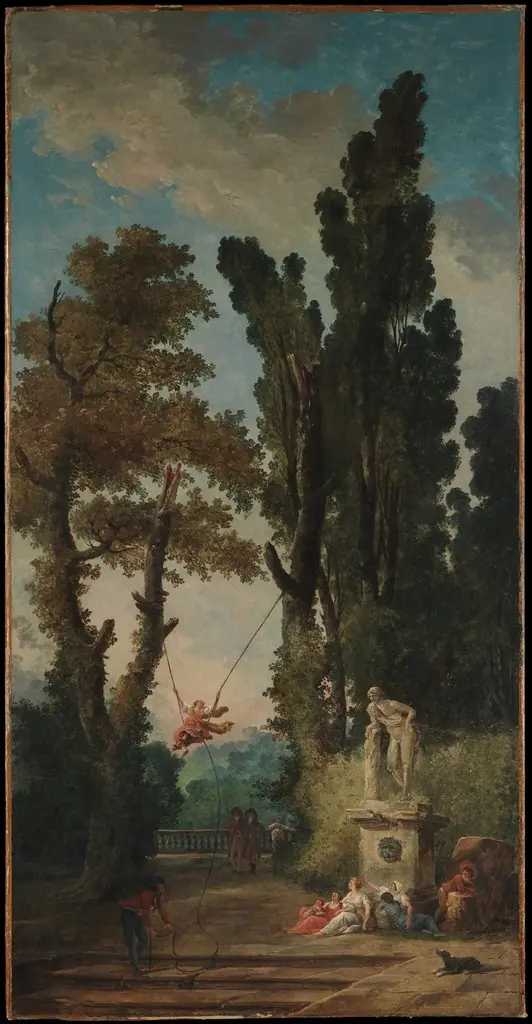
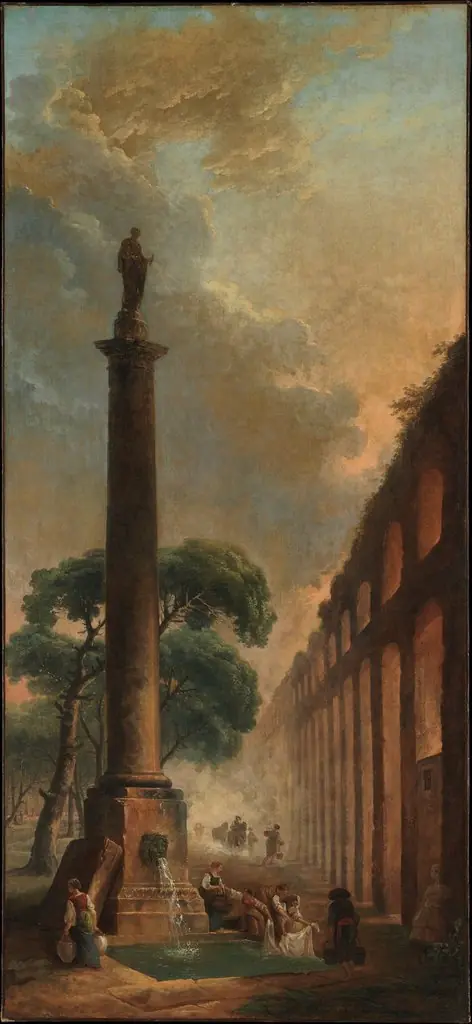
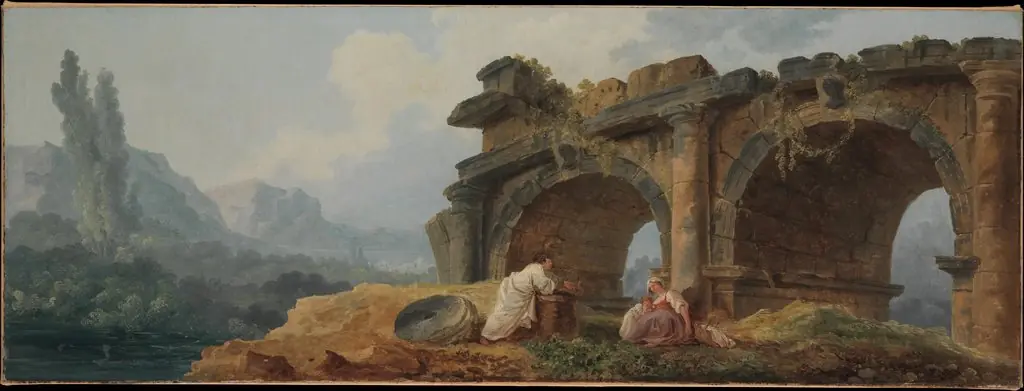
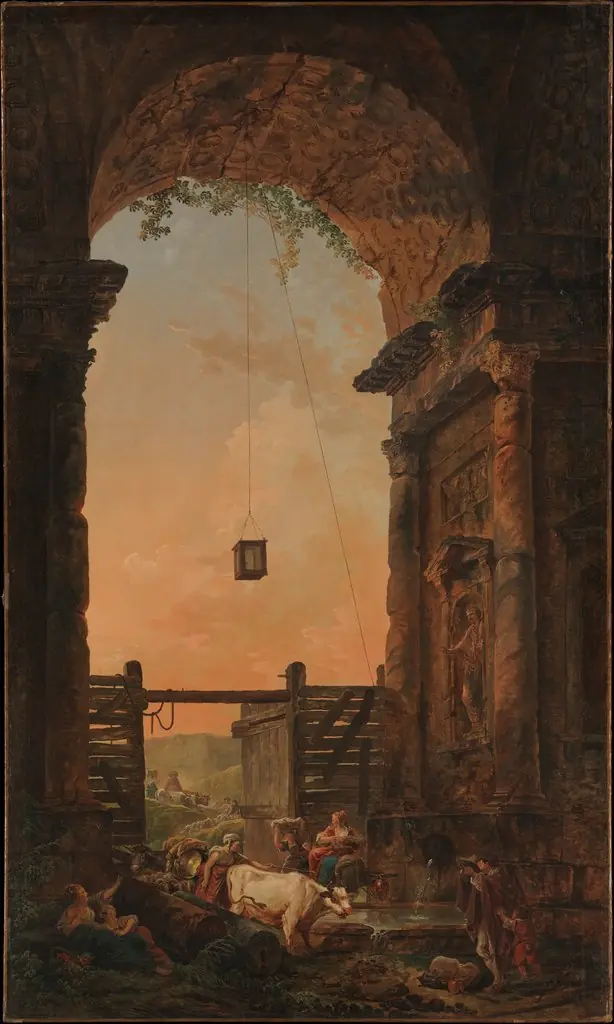
The Statue in Front of Ruins is a print by the Romanticist artist Hubert Robert. It dates from 1764 and is held in the collection of the Cleveland Museum of Art.
About this work
Overview
Though Robert never visited the actual sites depicted, he synthesized architectural elements from his time in Rome to create fictional landscapes.
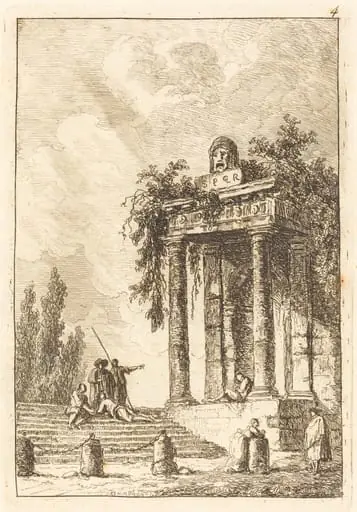
This series of sixteen etchings by Hubert Robert presents imagined Roman ruins, constructed from his sketches rather than direct observation. Though Robert never visited the actual sites depicted, he synthesized architectural elements from his time in Rome to create fictional landscapes. Each print was etched from his original pen-and-ink drawings, forming a cohesive visual narrative. The suite was produced as a personal gift for friends with shared interests in antiquity and printmaking.
Subject & Meaning
The scenes feature solitary statues amid decaying structures, evoking quiet contemplation of time and loss. The headless figure on the arch symbolizes the erosion of classical ideals, yet the compositions avoid melodrama. Rather than grand historical narratives, Robert focuses on subtle, poetic moments—empty spaces, fading light, and the quiet persistence of stone. These images reflect an 18th-century fascination with ruins as vessels of memory, not merely decay.
Technique & Style
Robert employed fine, controlled etching lines to render texture and atmosphere, using soft chiaroscuro to model crumbling stone and deep shadows in crevices. The light falls gently, emphasizing the fragility of the architecture. His style blends topographical precision with imaginative liberty, creating believable yet invented spaces. The prints show no signs of haste; each detail—cracked masonry, overgrown vegetation—is rendered with deliberate calm.
History & Provenance
The series was dedicated to Marguerite Le Compte, an amateur etcher who traveled to Rome in 1764 with art patron Claude Henri Watelet. Both were part of a circle of connoisseurs and artists connected to Italian academies. Robert’s dedication likely aimed to cultivate their support. Le Compte may be depicted in one scene as a woman holding a hand muff, suggesting her presence within the imagined world of the prints.
Context
In mid-18th-century Europe, ruins were popular subjects among travelers and artists, symbolizing both the grandeur and impermanence of antiquity. Robert’s work aligned with this trend but diverged by inventing sites rather than documenting them. His prints appealed to collectors who valued romanticized visions of Rome, offering an idealized escape for those who had never traveled there.
Legacy
Robert’s invented ruins became a signature motif, repeated across his oeuvre and influencing later artists who blended fact and fantasy in landscape printmaking. His approach demonstrated that emotional resonance in art need not rely on authenticity of place. The series remains a quiet testament to the power of imagination in interpreting cultural heritage.
Artist & collection
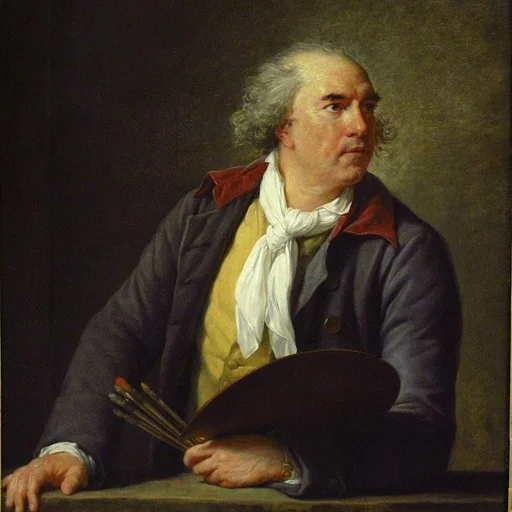
Artist
Hubert Robert (French pronunciation: ; 22 May 1733 – 15 April 1808) was a French painter in the school of Romanticism, noted especially for his landscape paintings and capricci, or semi-fictitious picturesque depictions of ruins in Italy…