Artwork
Steps to the Four Landmarks
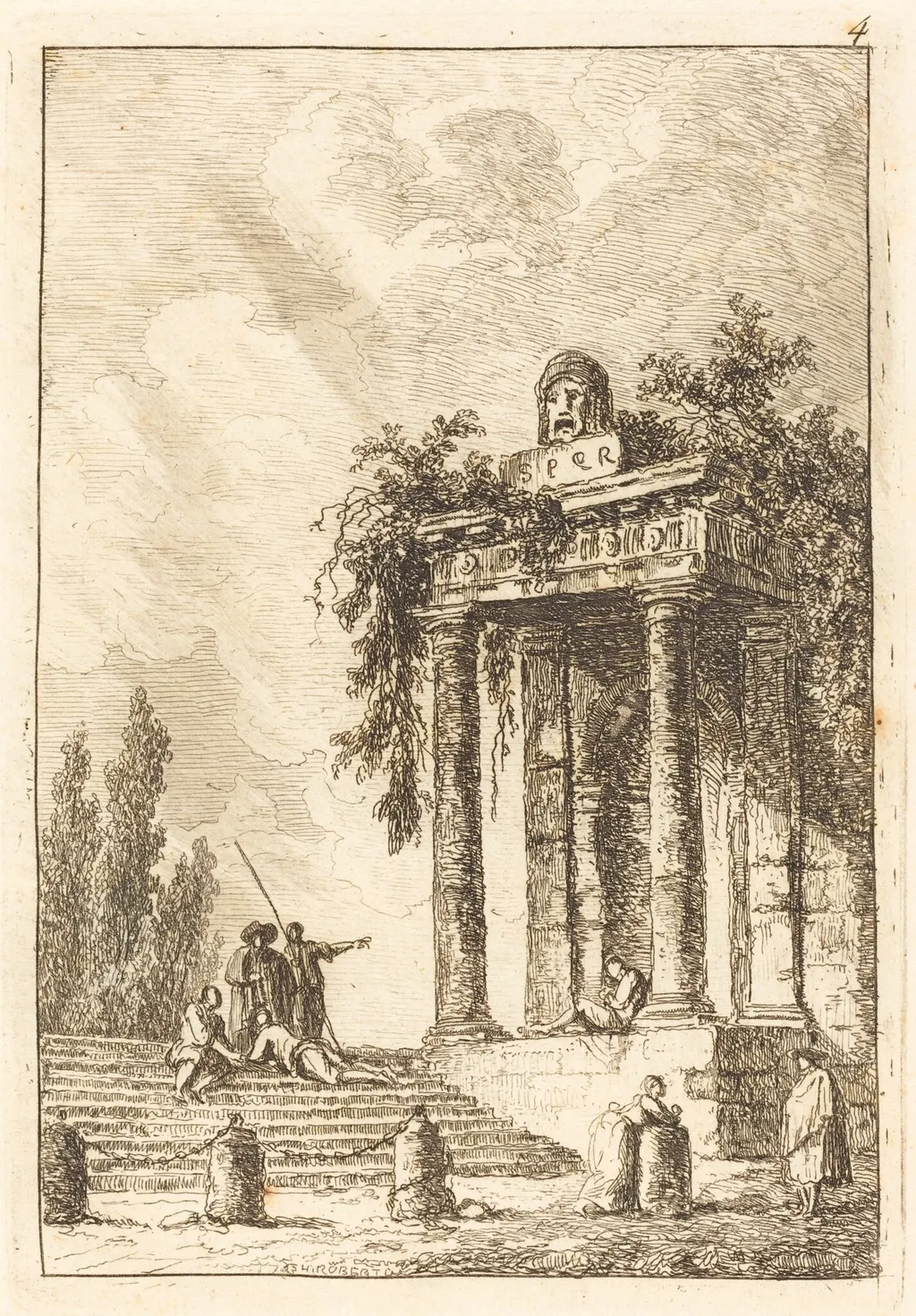
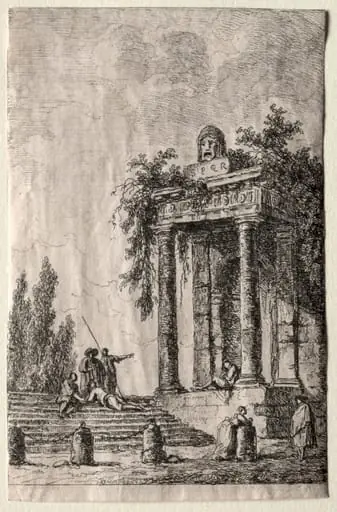
Steps to the Four Landmarks is an ink print by the Baroque artist Hubert Robert. It dates from 1770 and is held in the collection of the National Gallery of Art.
About this work
Overview
Created in 1770, *Steps to the Four Landmarks* is an etching by French artist Hubert Robert. Known for his Romantic sensibility, Robert rendered a tranquil composition that combines architectural ruin with a cultivated landscape, inviting the viewer into a staged yet believable environment.
Subject & Meaning
The central motif is a massive stone edifice accessed by a broad flight of steps, its surfaces softened by climbing vegetation. Figures populate the foreground, engaged in everyday tasks, which animate the scene and suggest a harmonious coexistence between humanity and the remnants of antiquity.
Technique & Style
Executed with fine lines and varied hatching, the etching demonstrates Robert’s skill in rendering texture—from the weathered stone to the delicate foliage. Contrasting light and shadow model the forms, producing a sense of depth that aligns with his capriccio approach, where imagined ruins are presented with convincing realism.
History & Provenance
The work originates from the early phase of Robert’s career, preceding his later fame as a painter of grand ruins. It reflects his interest in the picturesque and was likely circulated among collectors of the period who favored romanticized visions of the past.
Context
Robert’s etchings belong to a broader 18th‑century fascination with antiquity and the sublime. By integrating classical architecture with a bucolic setting, the piece echoes contemporary tastes for imagined ruins that evoke both nostalgia and the power of nature.
Artist & collection
Artist
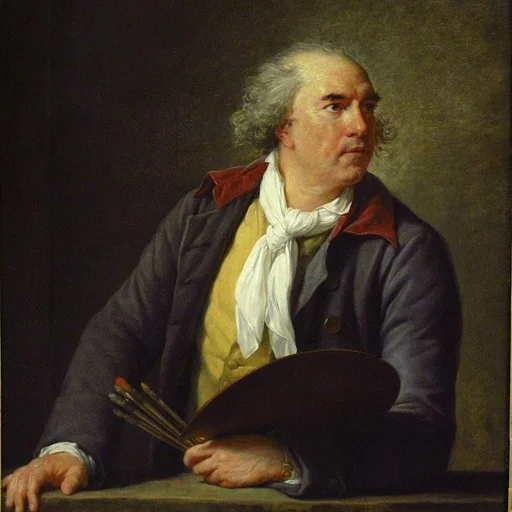
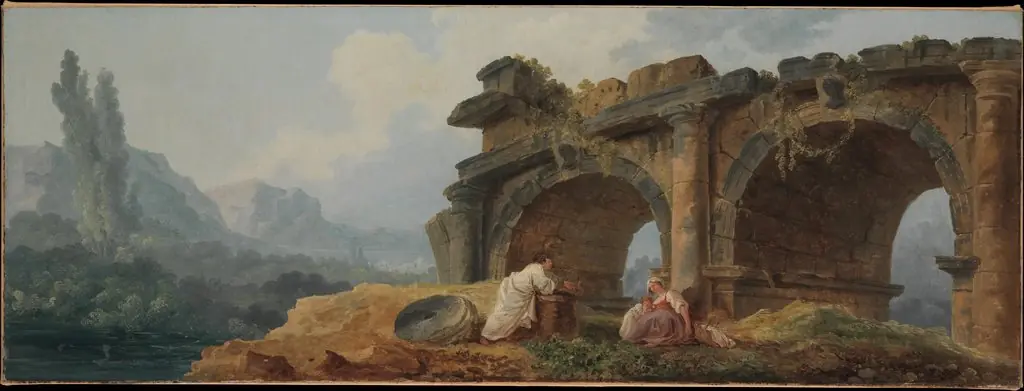
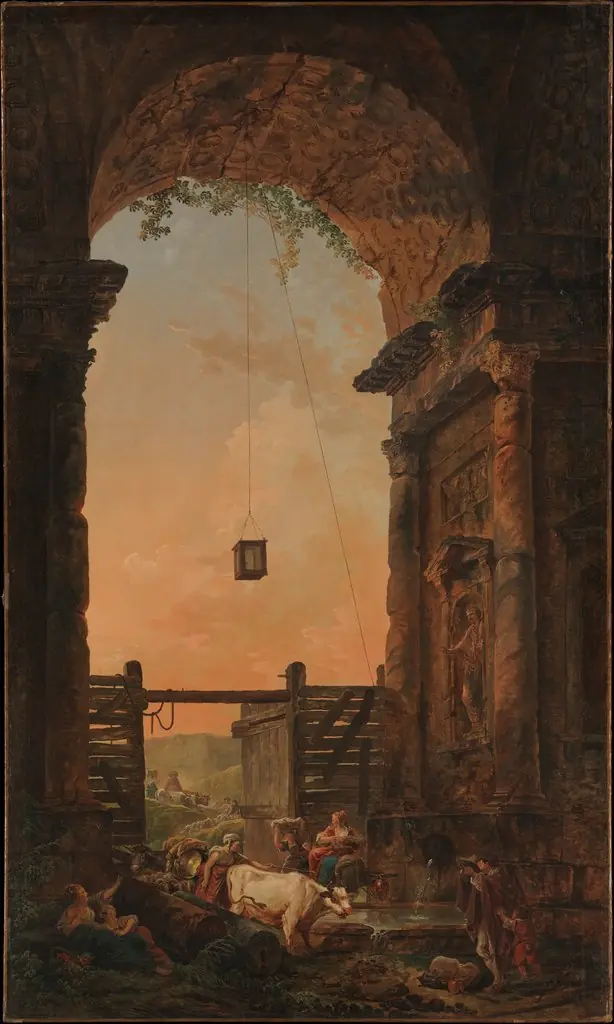
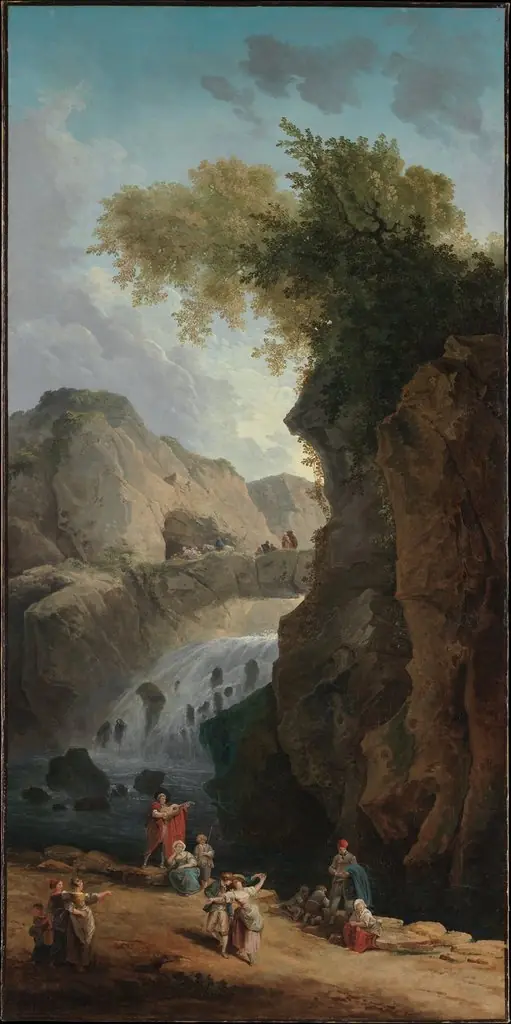
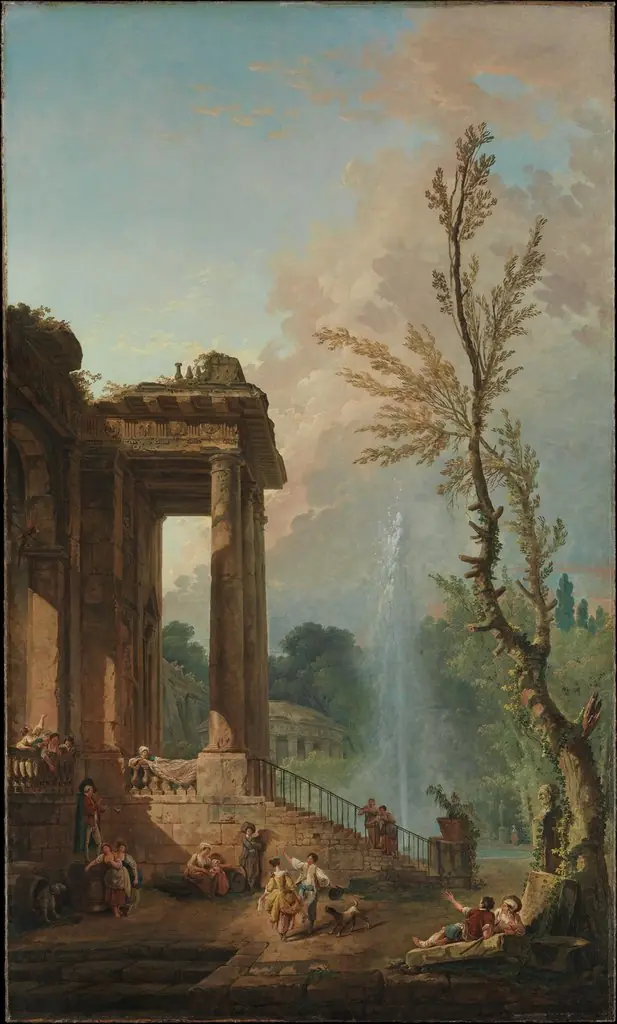
Hubert Robert (French pronunciation: ; 22 May 1733 – 15 April 1808) was a French painter in the school of Romanticism, noted especially for his landscape paintings and capricci, or semi-fictitious picturesque depictions of ruins in Italy…

 Les Soirées de Rome: The Stairs
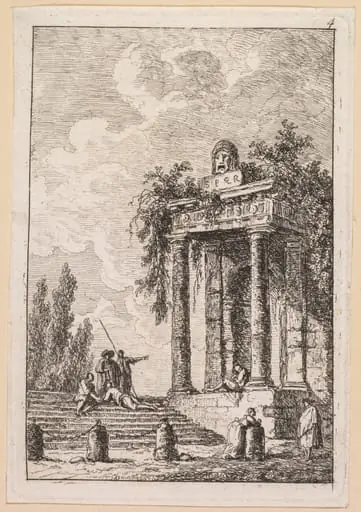 Les Soirées de Rome: L'Escalier aux quatre bornes
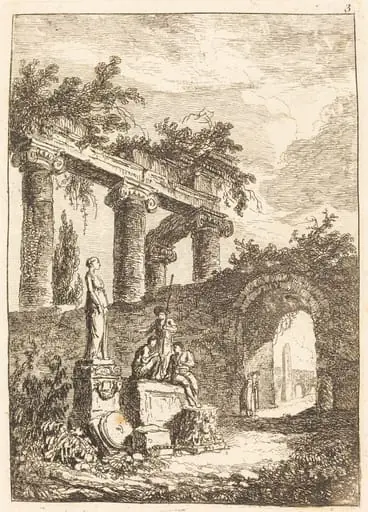 The Statue before the Ruins
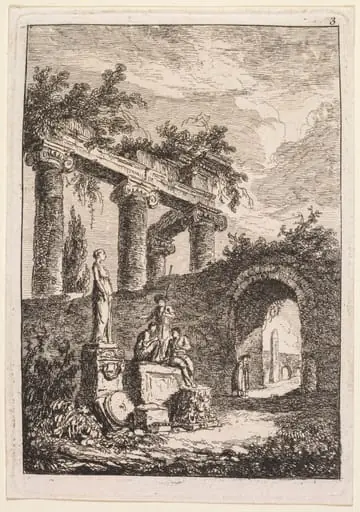 The Statue in Front of Ruins
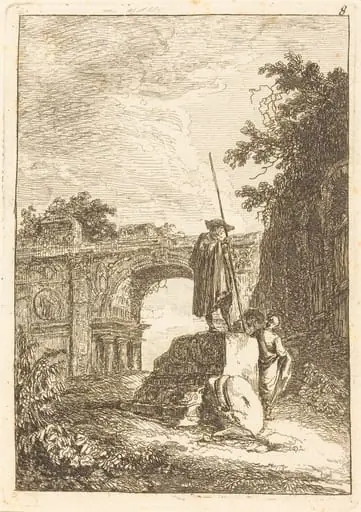 The Triumphal Arch
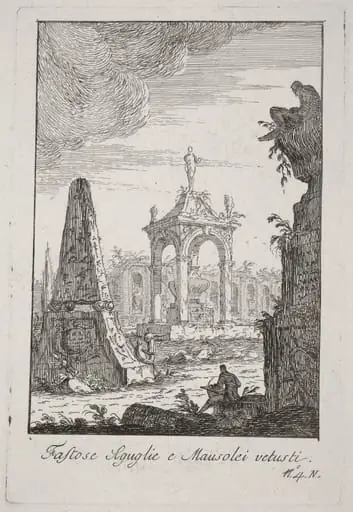 Fastose Aguglie e Mausolei vetusti
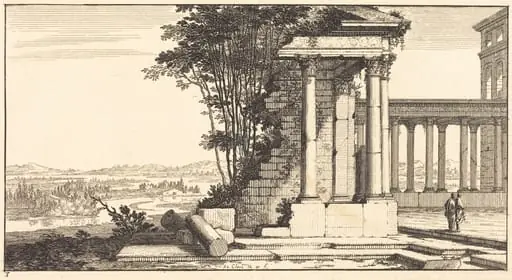 Landscape with Classical Ruins
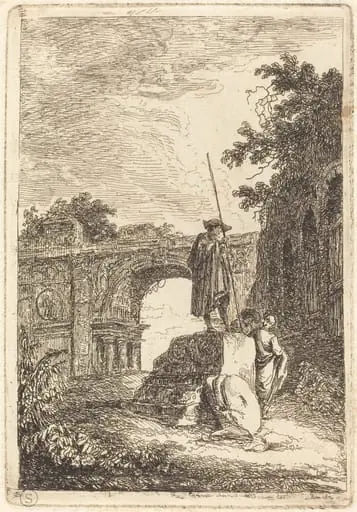 The Triumphal Arch
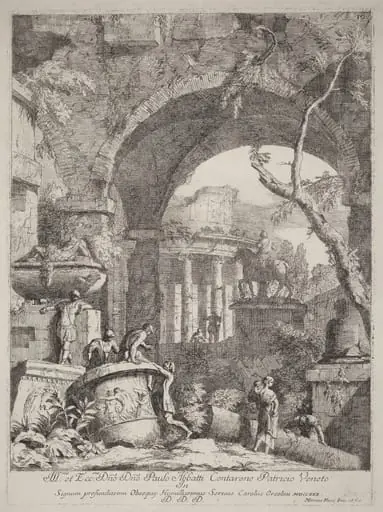 Capriccio: Ruins
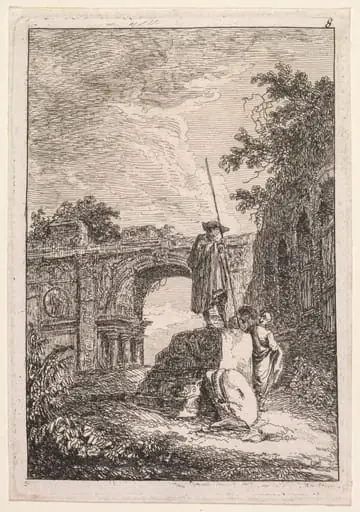 Les Soirées de Rome: L'Arc de triomphe
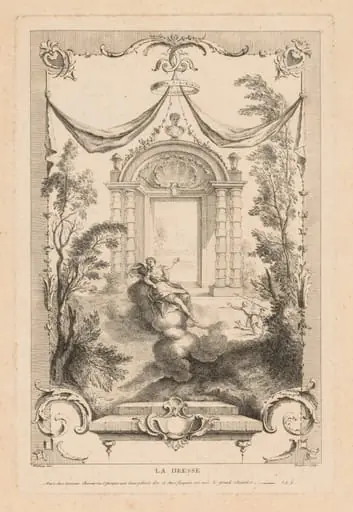 The Goddess, Diana on the Clouds
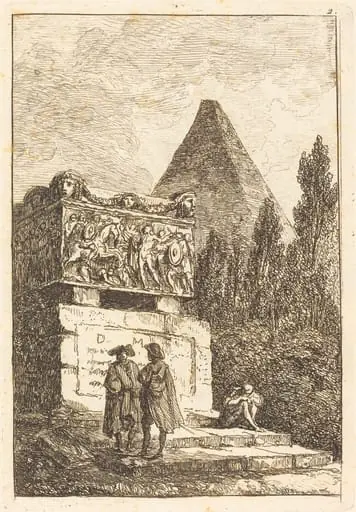 The Sarcophagus