Artwork
Bacchanal with a Wine Vat
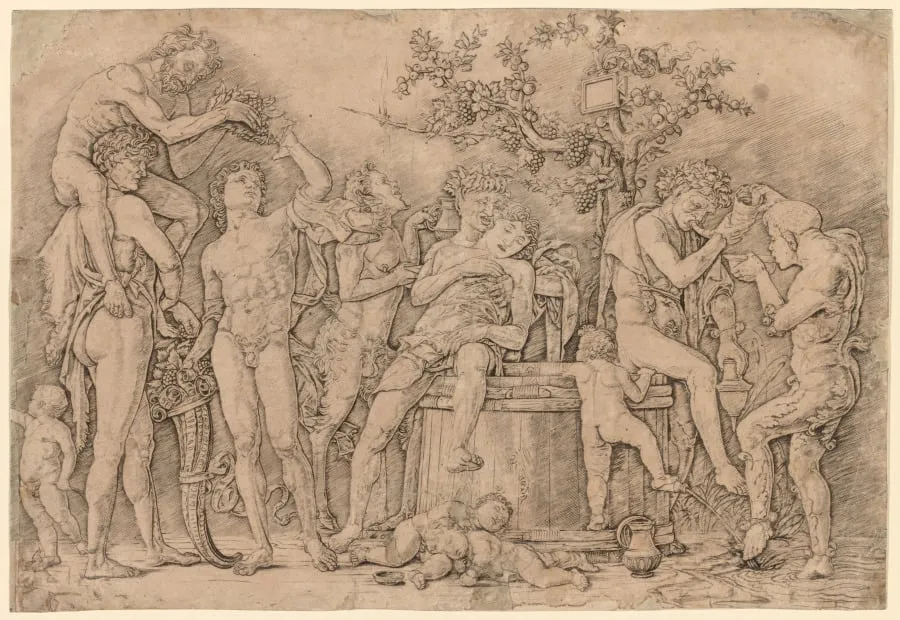
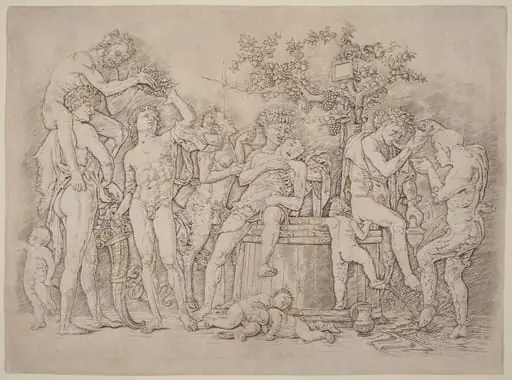
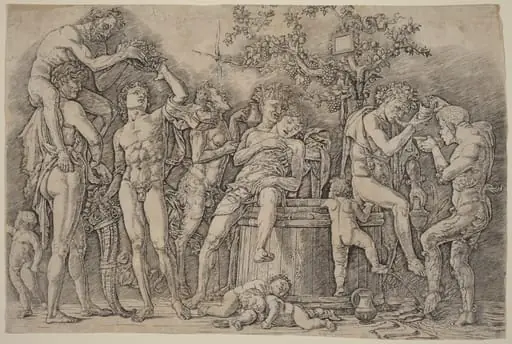
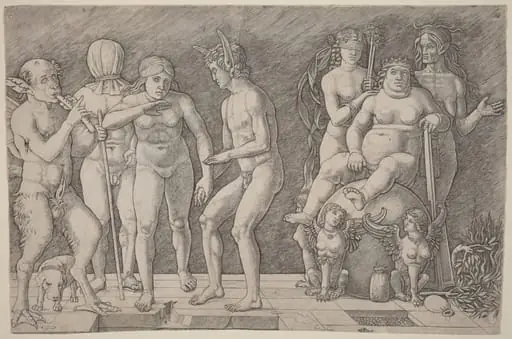
Bacchanal with a Wine Vat is a print by the Renaissance artist Andrea Mantegna. It dates from 1475 and is held in the collection of the Cleveland Museum of Art.
About this work
He was one of the first Italian artists to make engravings, and this scene feels like it could be printed, not just painted.
You see a wild party: satyrs, nymphs, and drunk mortals crowd around a giant wine vat. Bacchus, the god of wine, stands tall with his horn of plenty, looking sober while everyone else stumbles.
Mantegna painted this like a Roman stone carving—flat, crowded, and full of tiny details. He was one of the first Italian artists to make engravings, and this scene feels like it could be printed, not just painted.
To see more of this stiff, carved-up style, look up Andrea Mantegna (Italian, 1431–1506).
Overview
Andrea Mantegna was among the earliest Italian artists to explore engraving as a medium in the 1470s. This print depicts a bacchanal—a pagan festival honoring Bacchus—rendered with the compositional rigidity of Roman sarcophagus reliefs. Unlike later engravings with deep grooves, Mantegna’s plate was shallow, leading to inconsistent ink transfer and visible printing flaws that reflect the experimental nature of his technique.
Subject & Meaning
The scene centers on Bacchus, upright and composed, holding a cornucopia as the center of a chaotic celebration. Surrounding him, mortals and mythological figures—satyrs, nymphs, and revelers—stagger under the weight of intoxication. The contrast between the god’s calm authority and the disorder of his followers suggests a moral observation on excess, rooted in classical themes of divine control versus human frailty.
Technique & Style
Mantegna applied the linear precision of drawing to engraving, treating the plate like a carved stone surface. His figures are tightly packed, with minimal spatial depth, echoing the flattened perspective of ancient Roman reliefs. The fine, cross-hatched lines define form and texture, but uneven ink application and shallow etching result in a print that appears brittle and fragmented, revealing the technical limitations of early experimentation.
History & Provenance
Created in the 1470s, this engraving belongs to Mantegna’s early series of prints, made during his time in Mantua. Few impressions survive, and those that do often show wear from repeated pressings. The work was likely circulated among humanist collectors who valued classical revival imagery, though its exact early ownership remains undocumented due to the modest status of prints at the time.
Context
In late 15th-century Italy, interest in antiquity was intensifying, especially among northern courts. Mantegna’s engagement with Roman sarcophagi and mythological themes aligned with humanist scholarship. His engravings, though technically imperfect, helped establish printmaking as a vehicle for disseminating classical subjects beyond painting, influencing later artists who sought to bridge antiquity and contemporary visual culture.
Legacy
Mantegna’s bacchanal print contributed to the development of Italian engraving as a distinct artistic practice. While his technical shortcomings were later refined by others, his compositional approach—dense, relief-like, and steeped in antiquarian reference—set a precedent for how classical narratives could be translated into print. His work inspired a generation to treat engraving not merely as reproduction, but as a medium for intellectual expression.
Artist & collection
Artist
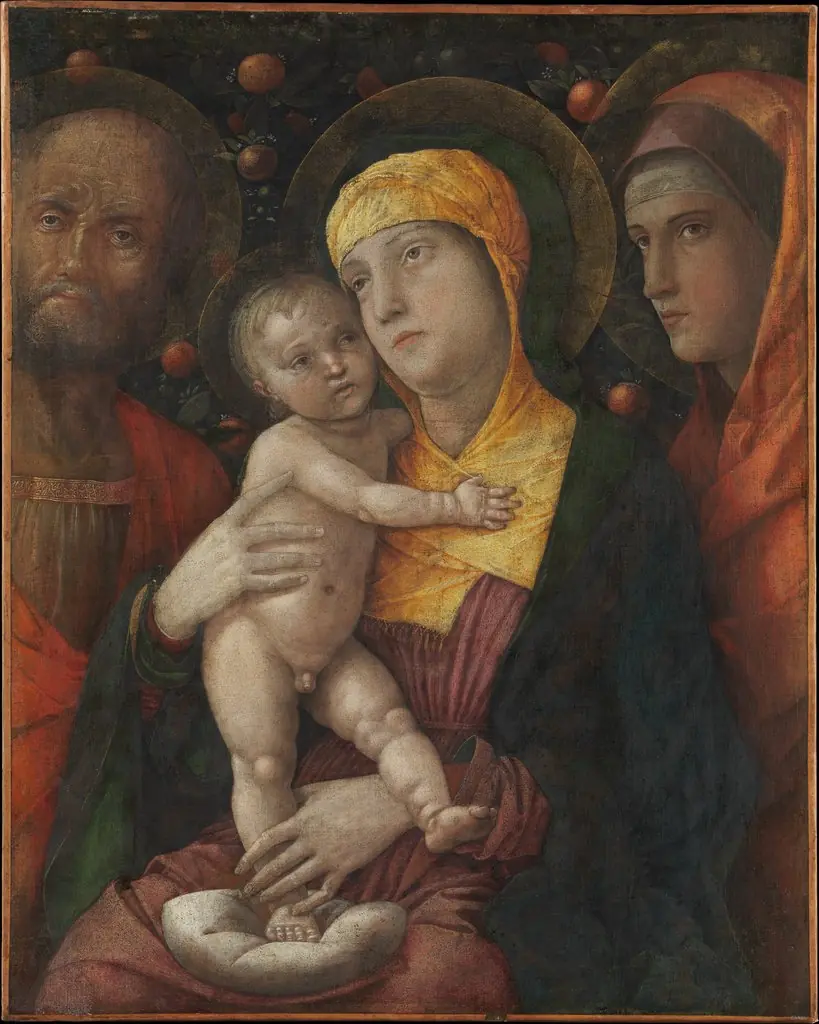
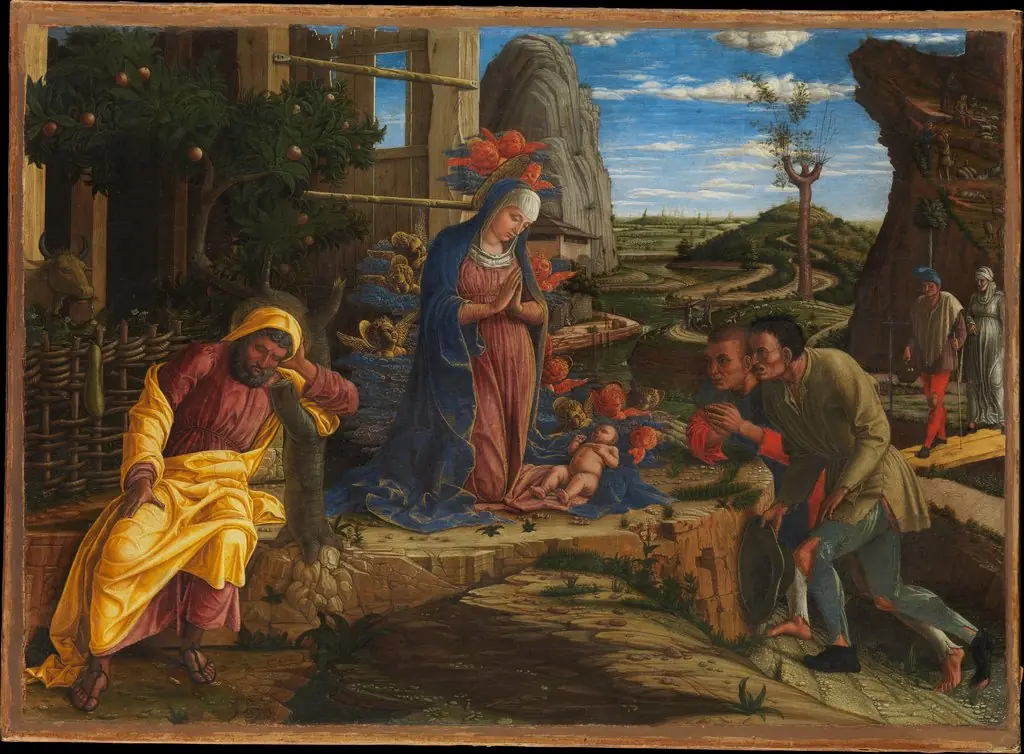
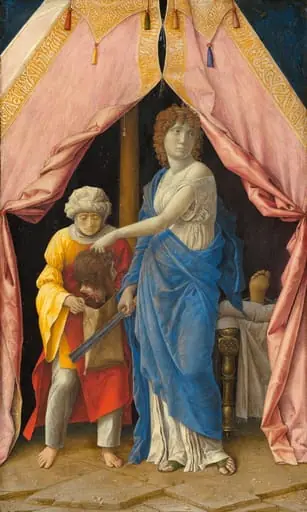
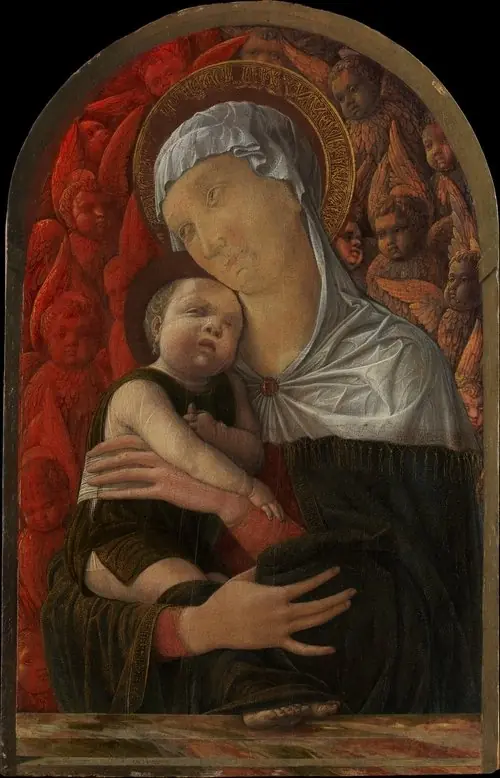
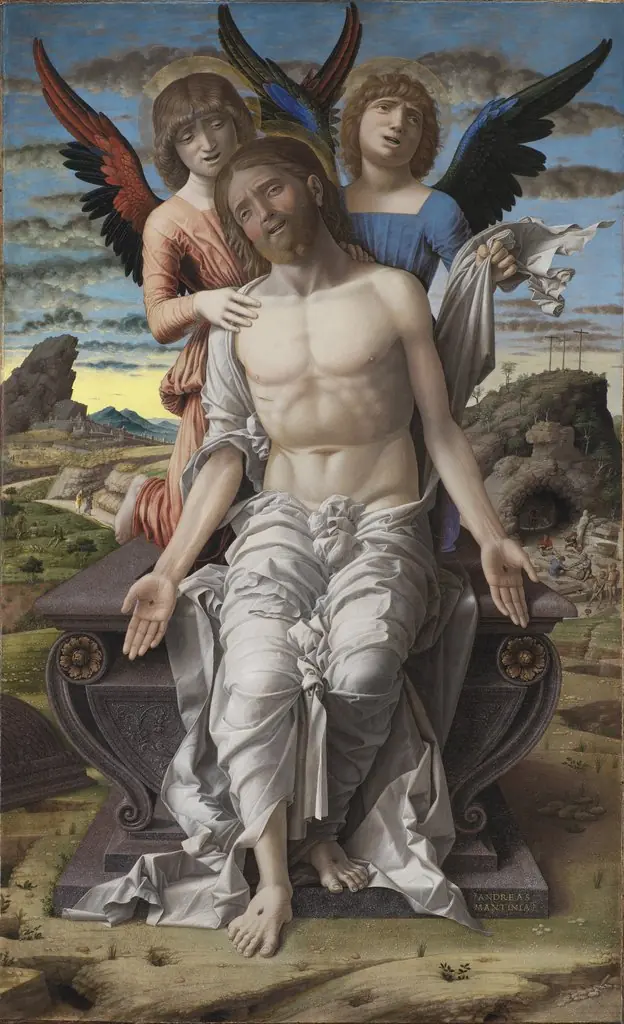
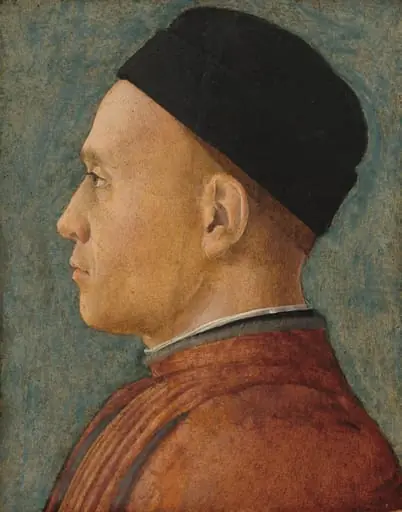
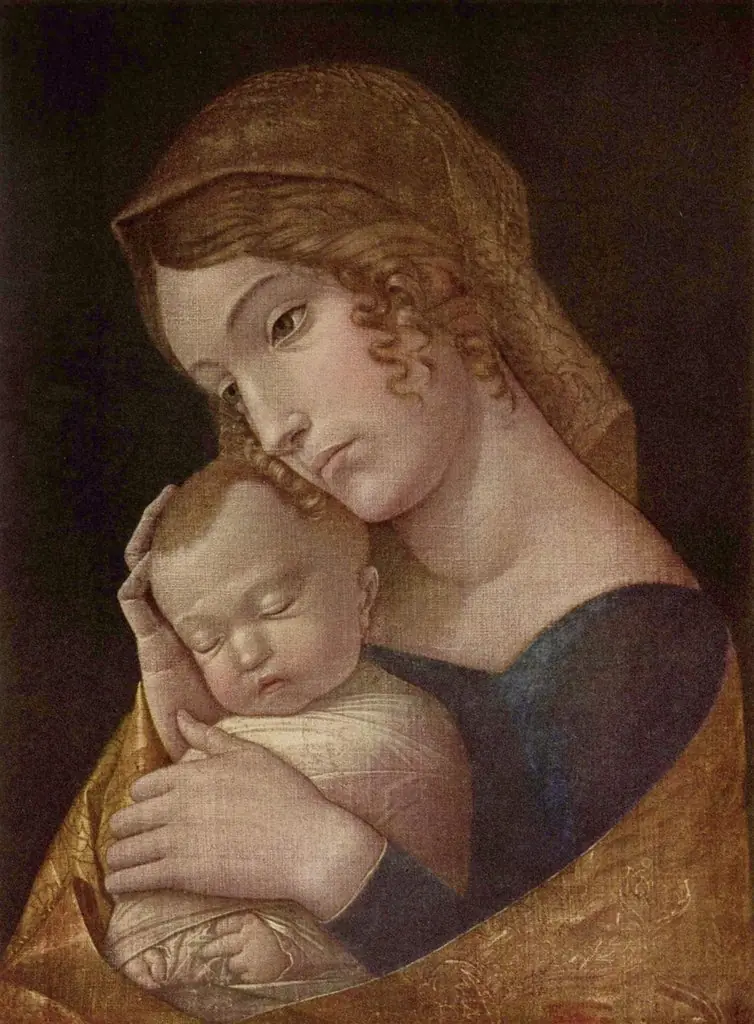
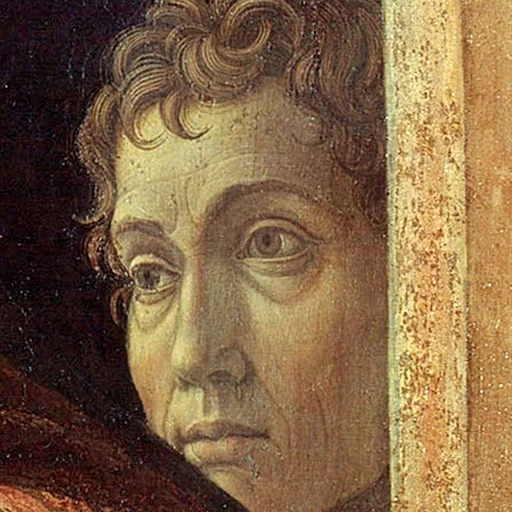
Andrea Mantegna (UK: , US: ; Italian: ; c. 1431 – September 13, 1506) was an Italian Renaissance painter, a student of Roman archaeology, and the son-in-law of Jacopo Bellini. Like other artists of the time, Mantegna…