Artwork
Virtus Combusta: An Allegory of Virtue
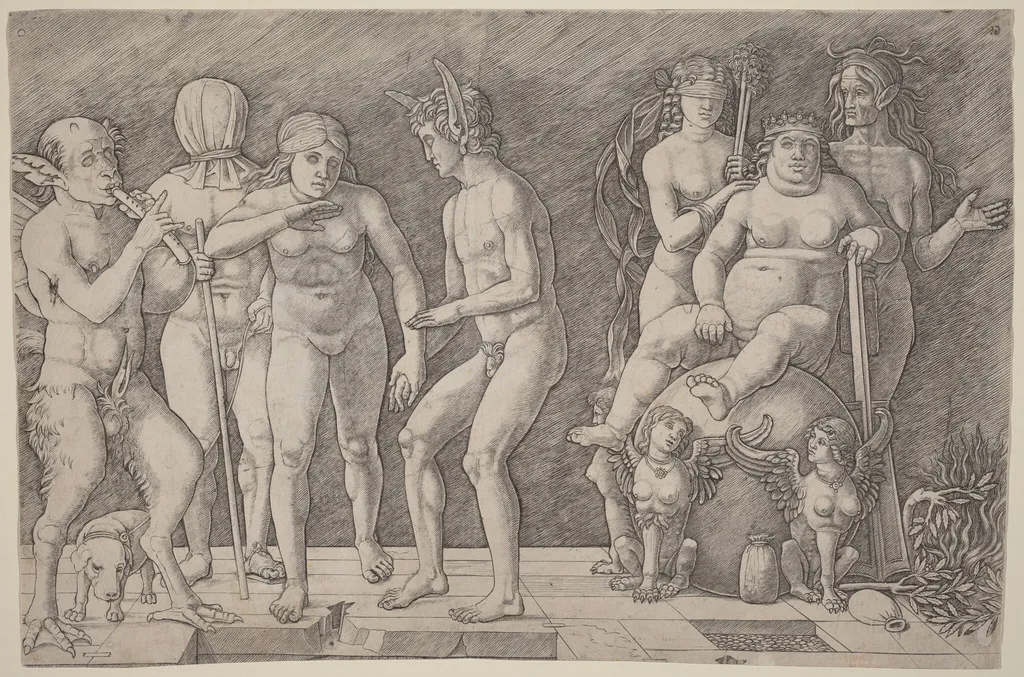
Virtus Combusta: An Allegory of Virtue is an ink print by the Renaissance artist Andrea Mantegna. It dates from 1502 and is held in the collection of the National Gallery of Art.
About this work
Overview
Virtus Combusta: An Allegory of Virtue is an engraving on laid paper created by Giovanni Antonio da Brescia, dated to 1502. It is a product of the Italian Renaissance, characterized by its allegorical scene and detailed execution.
Subject & Meaning
The engraving depicts a somber allegorical scene with multiple figures, including nude and clothed individuals. A central male figure wears a horned headpiece, accompanied by a blindfolded, crowned woman and another nude woman holding a staff, set against a dark background with scattered objects.
Technique & Style
The print showcases a range of textures and details, achieved through techniques such as cross-hatching, which creates a sense of depth and dimensionality. The engraving's structured composition reflects a sculptural approach to form, characteristic of its time.
Artist & collection
Artist
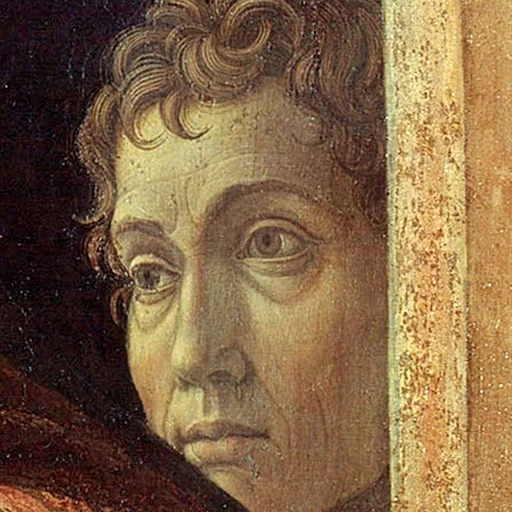
Andrea Mantegna (UK: , US: ; Italian: ; c. 1431 – September 13, 1506) was an Italian Renaissance painter, a student of Roman archaeology, and the son-in-law of Jacopo Bellini. Like other artists of the time, Mantegna…

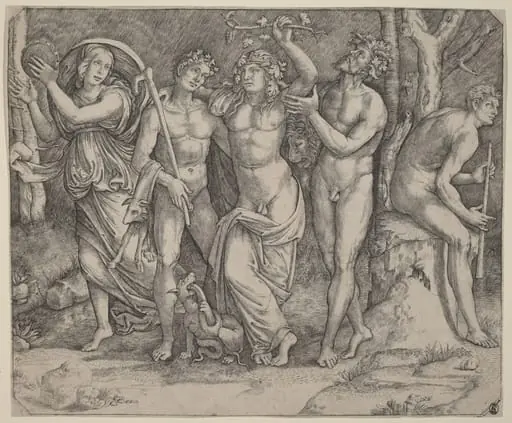 Bacchus and His Attendants
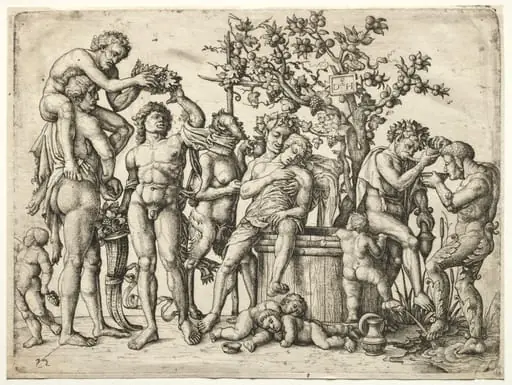 The Bacchanal
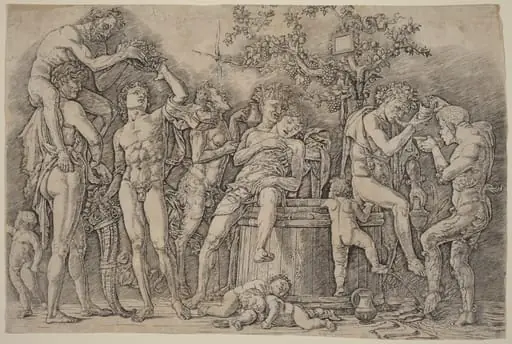 Bacchanal with a Wine Vat
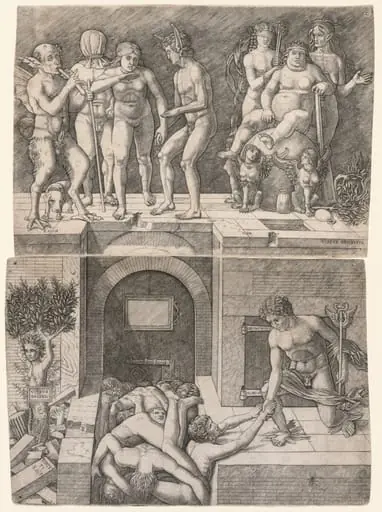 Allegory of the Fall of Ignorant Humanity
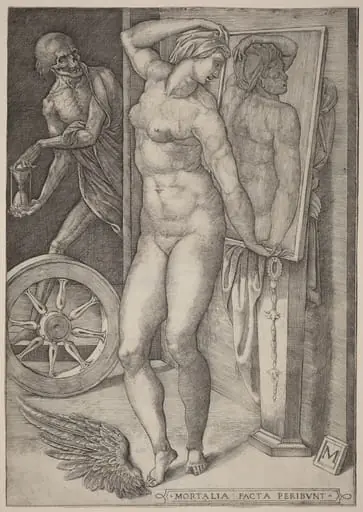 Allegory of Vanity (Death Surprising a Woman)
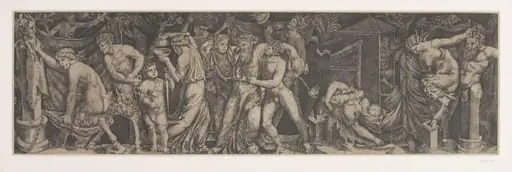 Untitled
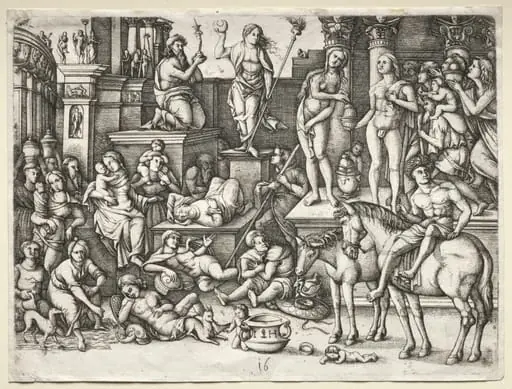 The Power of Love, or, Worship of Luna
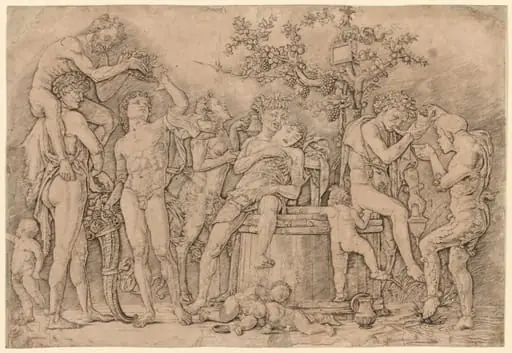 Bacchanal with a Wine Vat
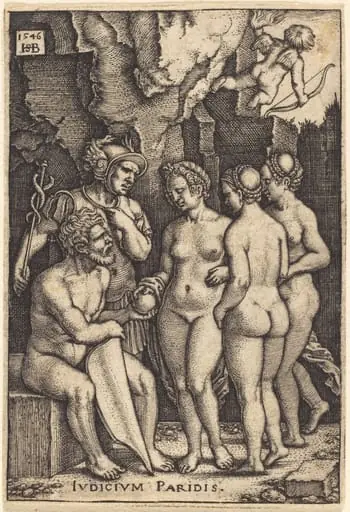 The Judgment of Paris
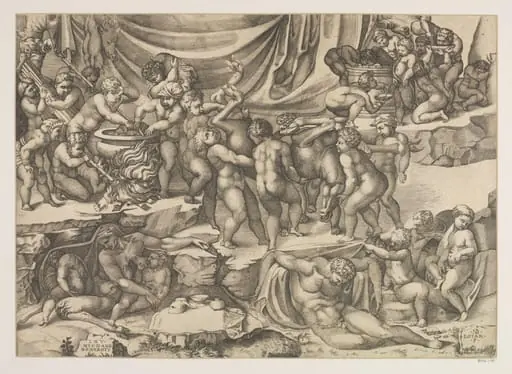 Untitled
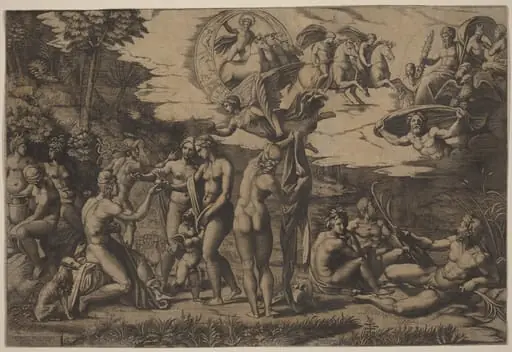 The Judgment of Paris
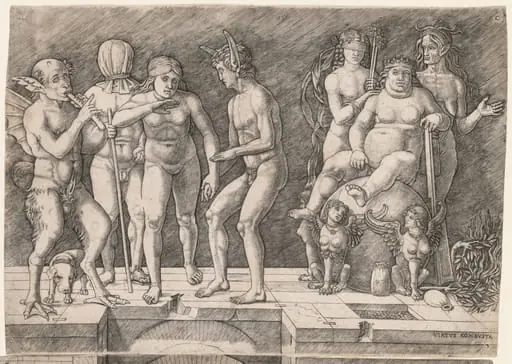 Allegory of the Fall of Ignorant Humanity: Virtus Combusta