Artwork
Madonna of the Caves
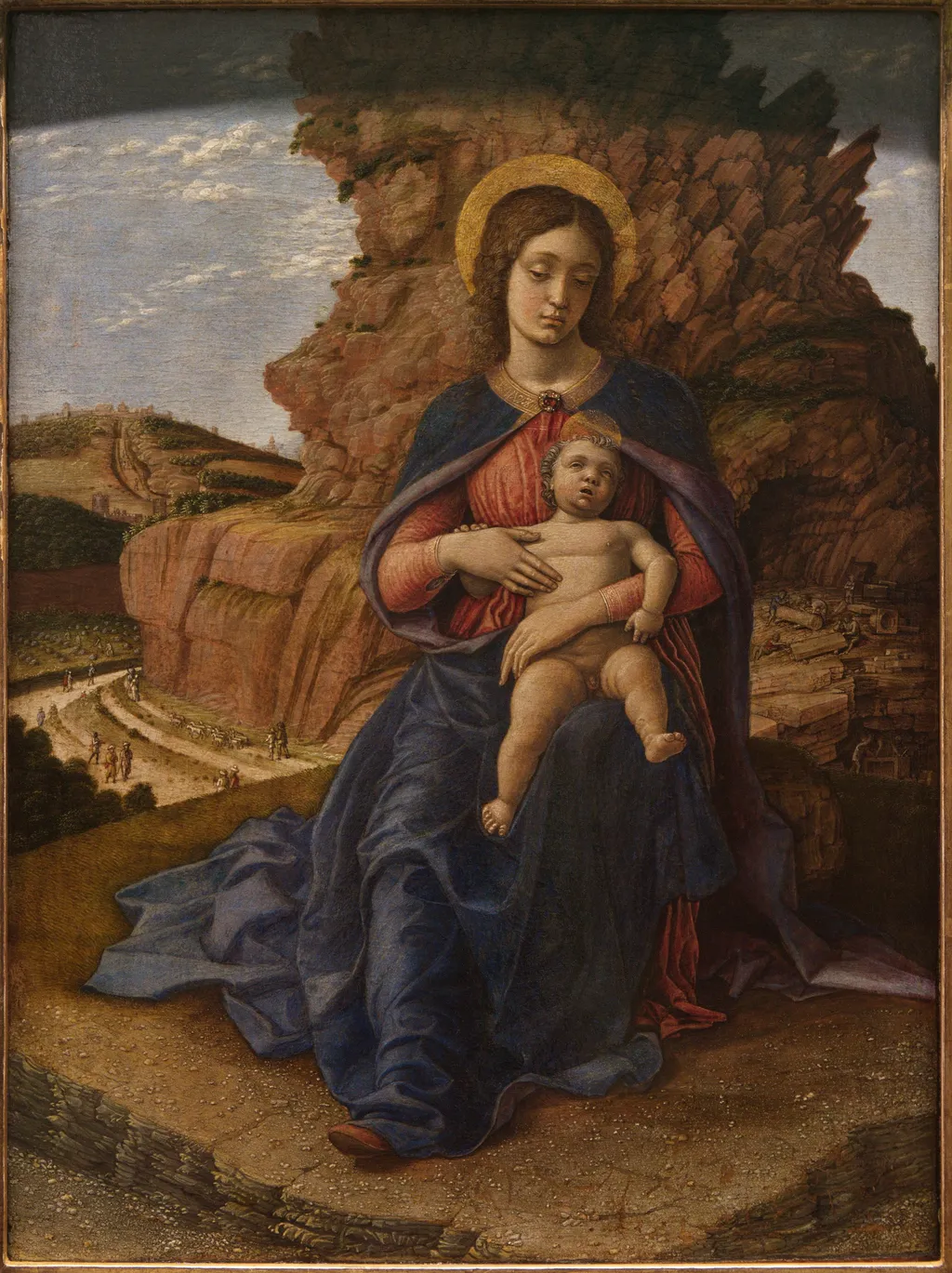
Madonna of the Caves is a tempera painting by the Early Renaissance artist Andrea Mantegna. It dates from 1495 and is held in the collection of the Uffizi Gallery.
About this work
Overview
The Madonna of the Caves is a small tempera on panel painting (32 cm x 29.6 cm) created by Italian artist Andrea Mantegna between 1488 and 1490. It is currently housed in the Uffizi Gallery in Florence.
Subject & Meaning
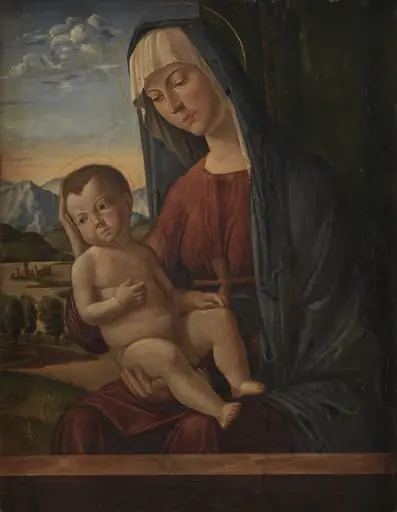
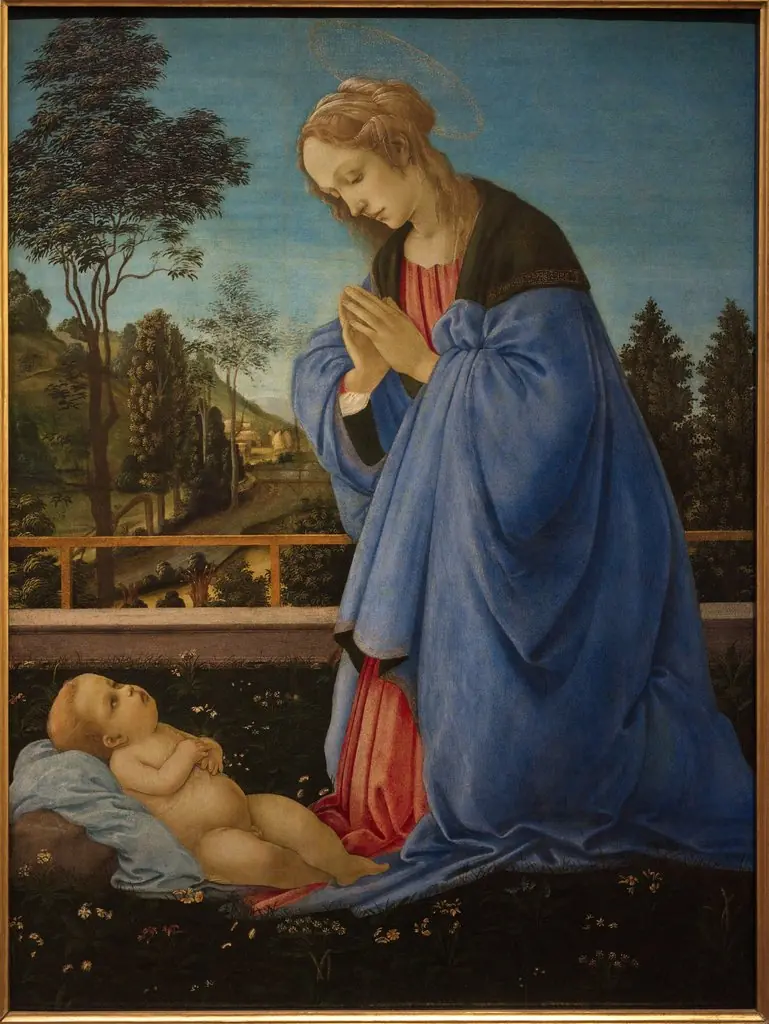
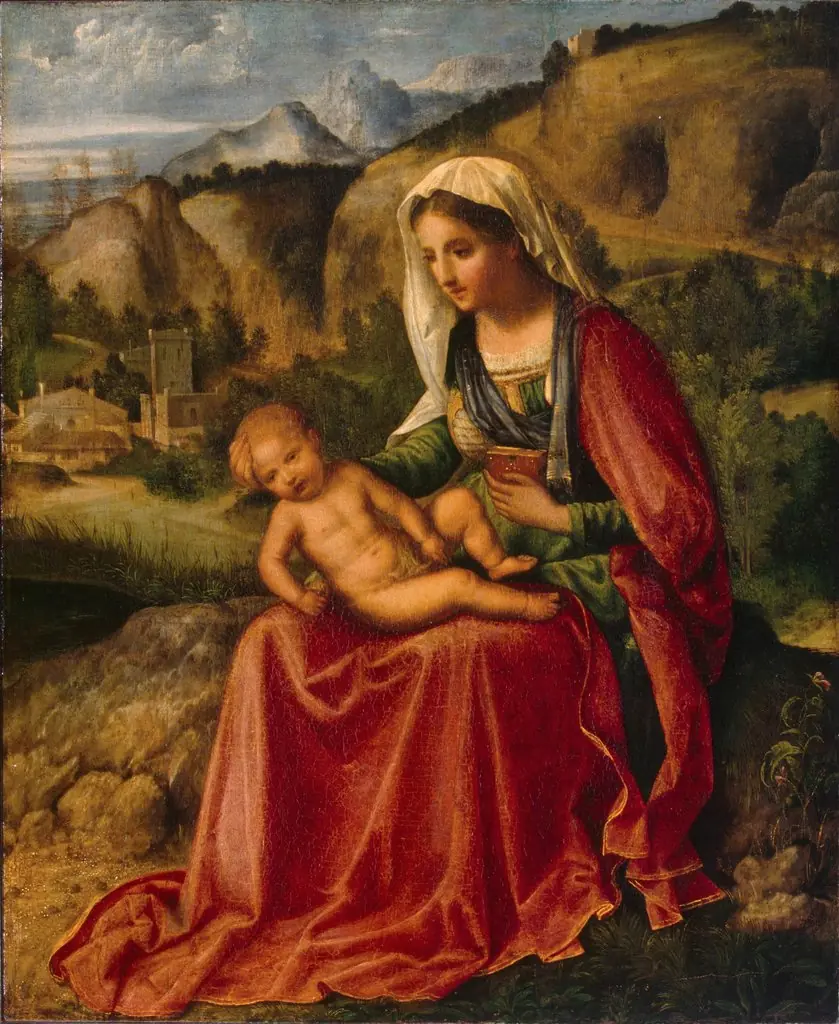
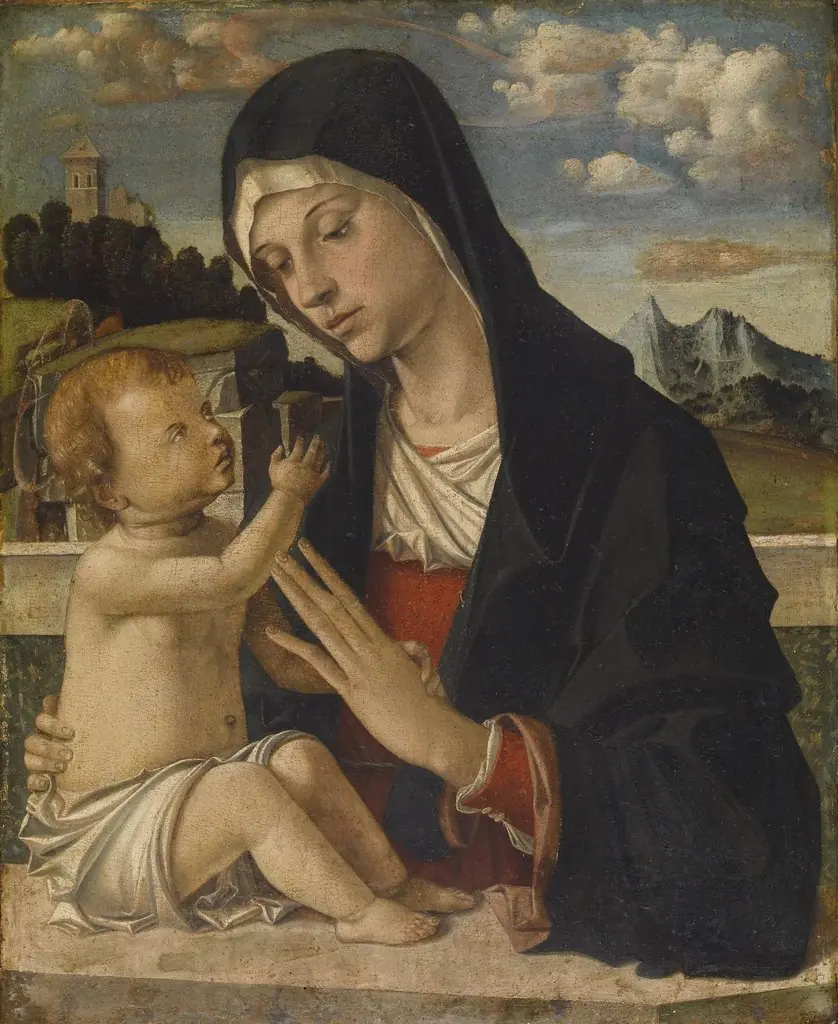
The painting depicts the Virgin Mary, dressed in blue with a red undergarment and gold halo, serenely holding the Christ child on a rocky outcropping. The background juxtaposes a quarry (possibly alluding to Christ's future flagellation and burial) with idyllic rural scenes, suggesting a symbolic transition from darkness to redemption through Christ and the Church, with Mary as a central figure.
Technique & Style
Executed in tempera, a traditional method involving pigment bound by egg, the work features warm, earthy tones and a blend of natural and human elements. Mantegna's composition balances tranquility, as seen in the subjects' calm expressions, with the dynamic interplay of light and shadow across the layered landscape.
History & Provenance
Painted between 1488 and 1490, the artwork's background landscape has been interpreted by scholars as possibly representing either Carrara or Monte Bolca. It is now part of the Uffizi Gallery's collection in Florence.
Context
The painting reflects late 15th-century Italian artistic themes, blending religious symbolism with detailed, observant depictions of everyday life and landscape, characteristic of the Renaissance. The use of tempera, a prevalent medium before the widespread adoption of oil paints, highlights the artist's skill within traditional techniques.
Artist & collection
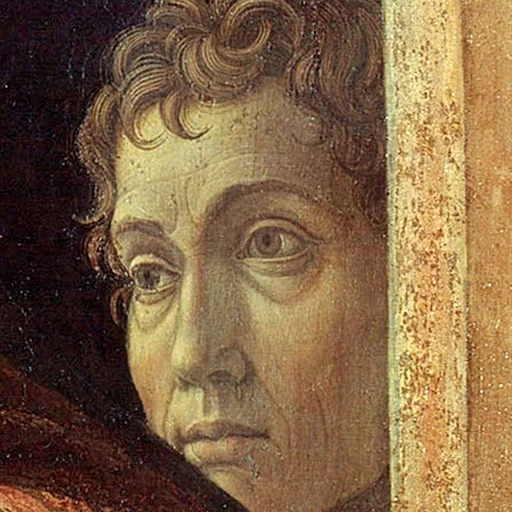
Artist
Andrea Mantegna (UK: , US: ; Italian: ; c. 1431 – September 13, 1506) was an Italian Renaissance painter, a student of Roman archaeology, and the son-in-law of Jacopo Bellini. Like other artists of the time, Mantegna…