Artwork
Madonna and Child with a Cat
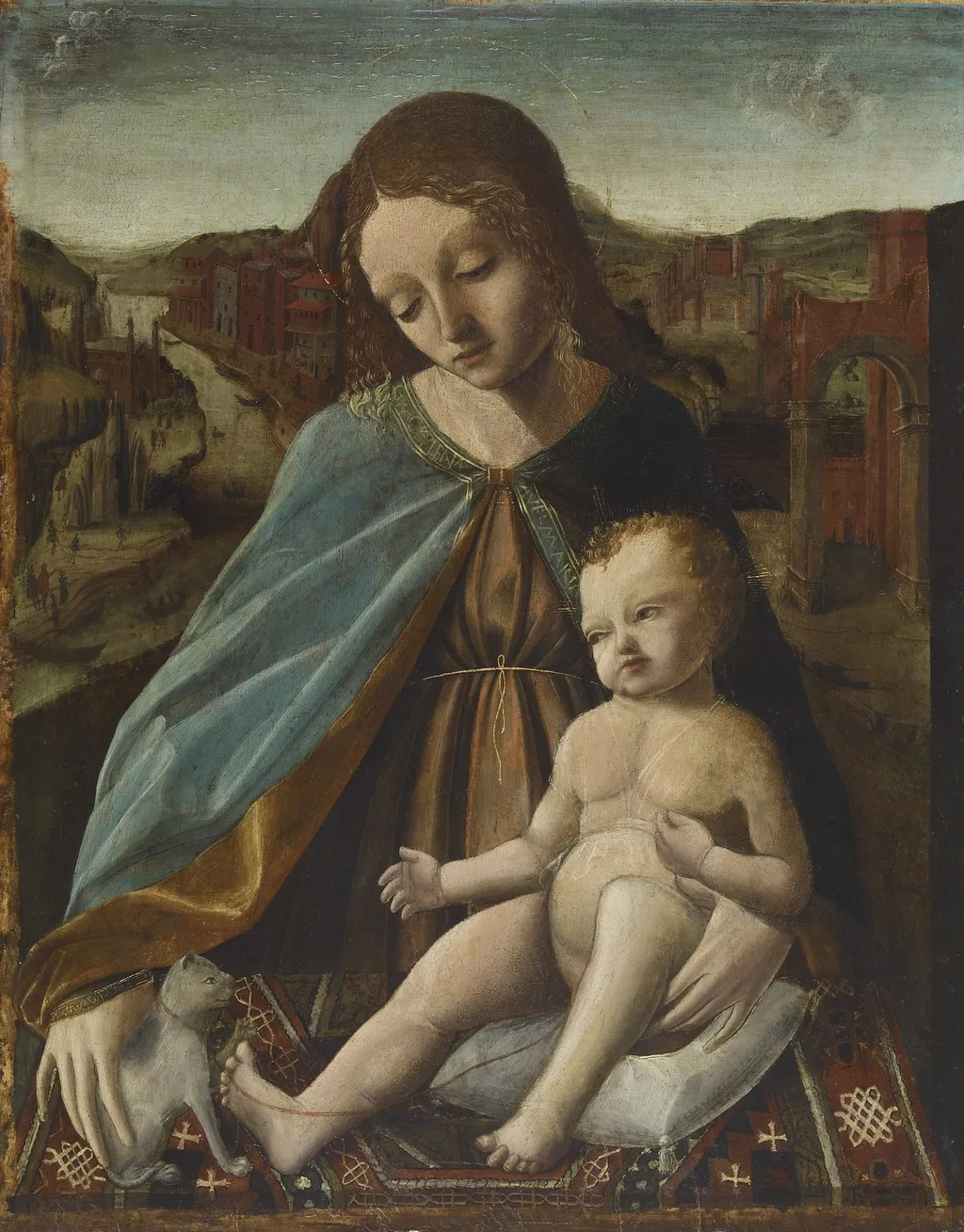
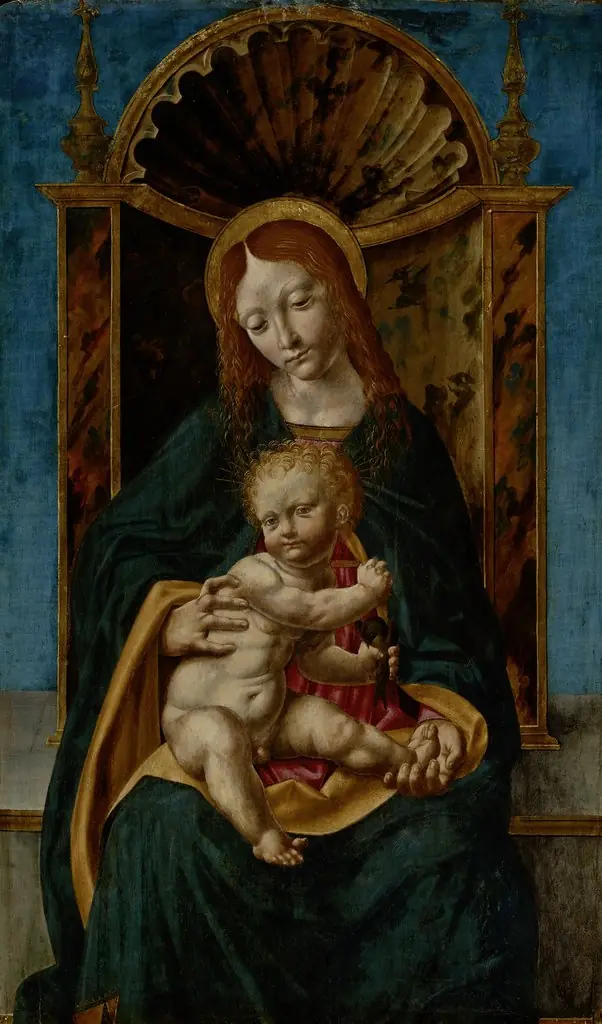
Madonna and Child with a Cat is an oil painting by the Early Renaissance artist Master of the Pala Sforzesca. It dates from 1492 and is held in the collection of the Walters Art Museum.
About this work
Overview
This oil painting, dated to 1492, is attributed to the artist known as the Master of the Pala Sforzesca. It portrays the Virgin Mary and the Christ Child in an intimate domestic setting, accompanied by a small white cat. The work is part of the collection at the Walters Art Museum in Baltimore, where it remains a quiet example of late 15th-century Italian devotional art.
Subject & Meaning
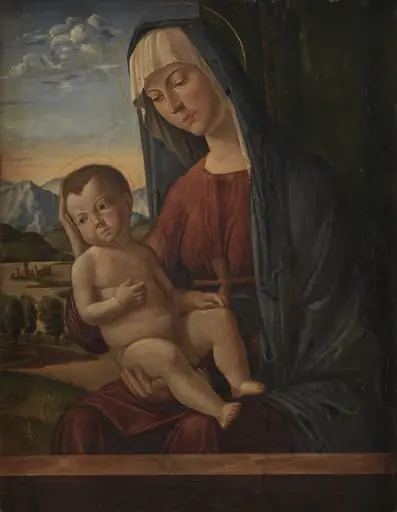
The Virgin Mary and the infant Jesus are depicted in a tender, grounded moment, their gaze directed toward a cat at their feet. The inclusion of the animal, uncommon in formal religious imagery of the time, suggests a domestic warmth and perhaps symbolizes the gentle nature of Christ or the presence of everyday life within sacred space.
Technique & Style
Rendered in oil paint, the figures are rendered with soft modeling and delicate attention to fabric texture, particularly in Mary’s blue and gold robe. The background features a subdued landscape of rolling hills and distant architecture, framing the central figures without distracting from their quiet interaction. The composition emphasizes closeness and stillness.
History & Provenance
The painting’s origins trace to northern Italy, likely Milan, during the late Quattrocento. It was once part of a larger altarpiece, now lost, and was later acquired by Henry Walters in the early 20th century. Its attribution to the Master of the Pala Sforzesca—named after another known panel—reflects scholarly reconstruction rather than documented authorship.
Context
Created during a period when devotional imagery increasingly incorporated domestic elements, this work reflects a broader trend toward humanizing sacred figures. The cat’s presence aligns with emerging Northern Italian tastes for naturalistic detail, even in religious contexts, signaling a shift from rigid iconography toward more relatable scenes.
Legacy
Though not widely known outside academic circles, the painting contributes to understanding the evolution of Marian iconography in Renaissance Italy. Its modest scale and intimate tone distinguish it from grander altarpieces, offering insight into private devotion and the subtle blending of sacred and secular life in late medieval art.
Own this work as a print
Artist & collection