Artwork
Ecce Homo
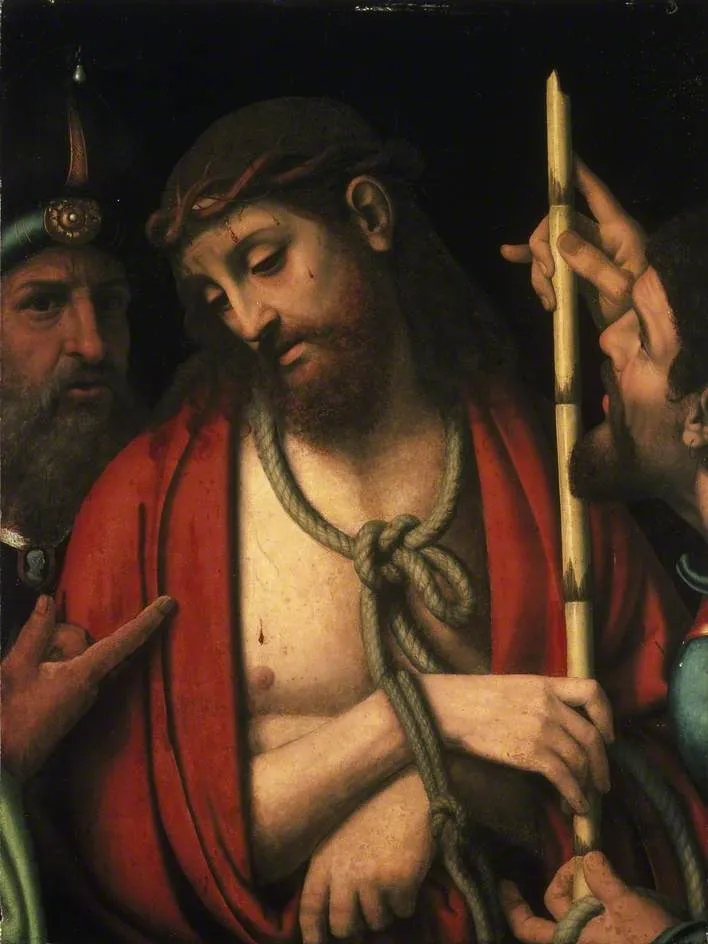
Ecce Homo is an unspecified painting by the High Renaissance artist Andrea Solari. It dates from 1506 and is held in the collection of the Ashmolean Museum.
About this work
Overview
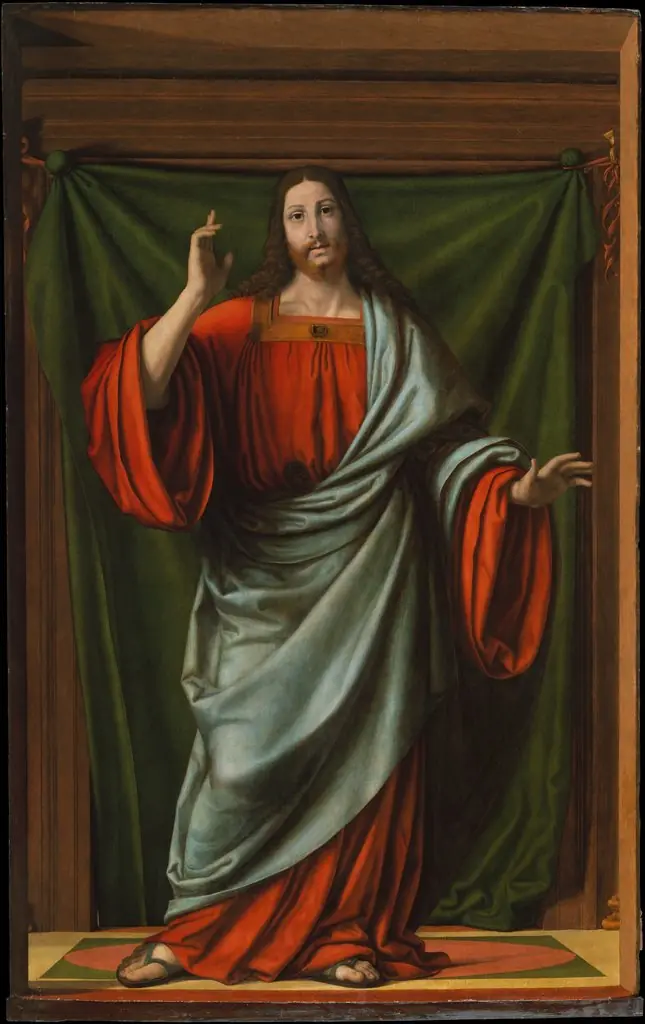
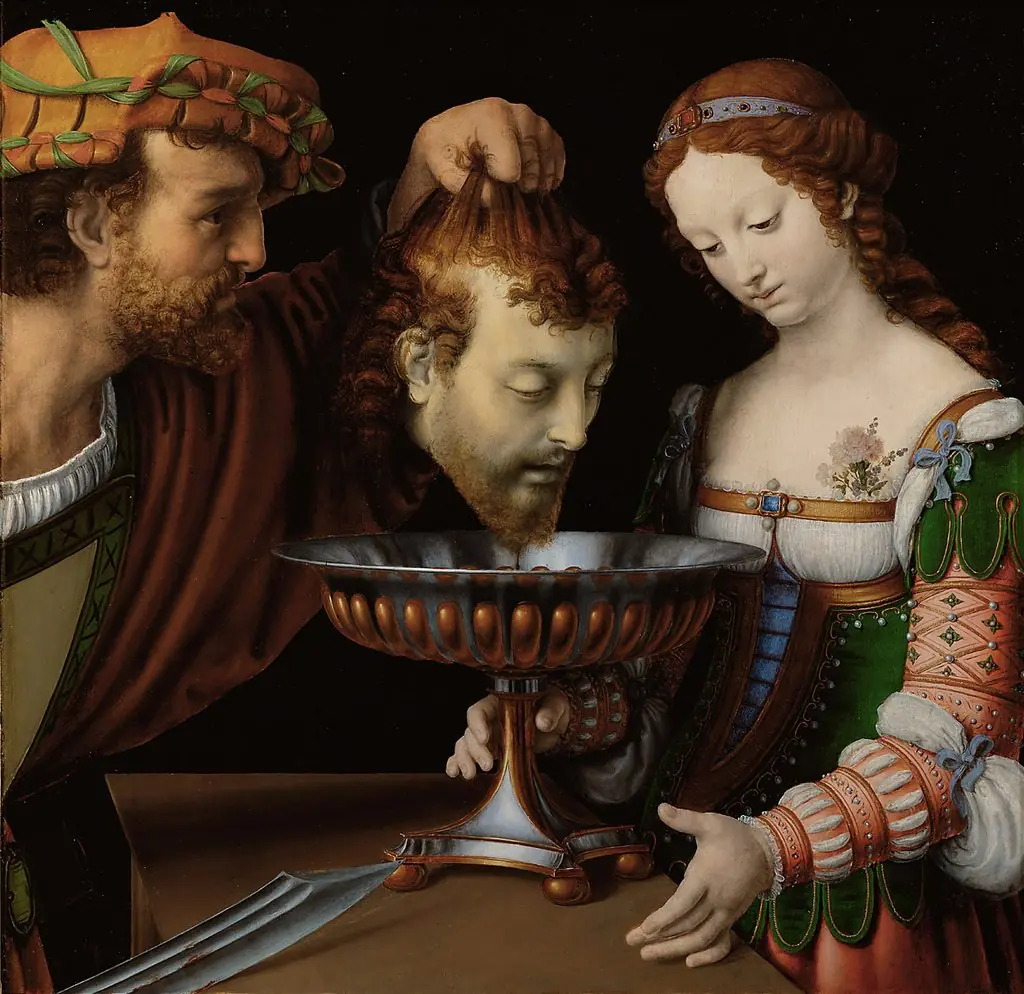
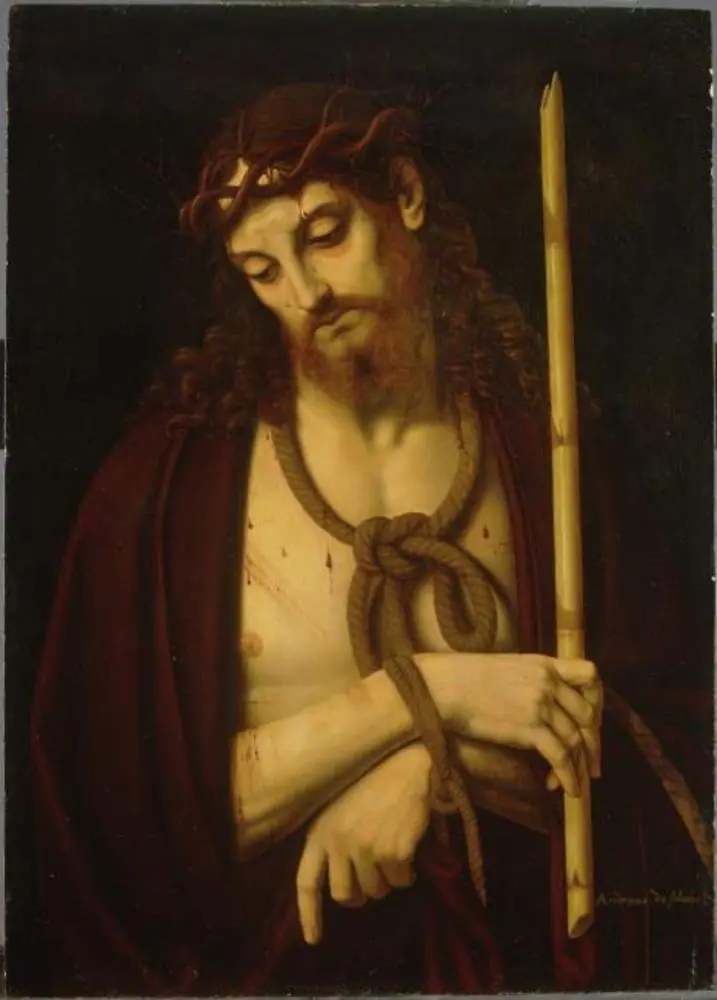
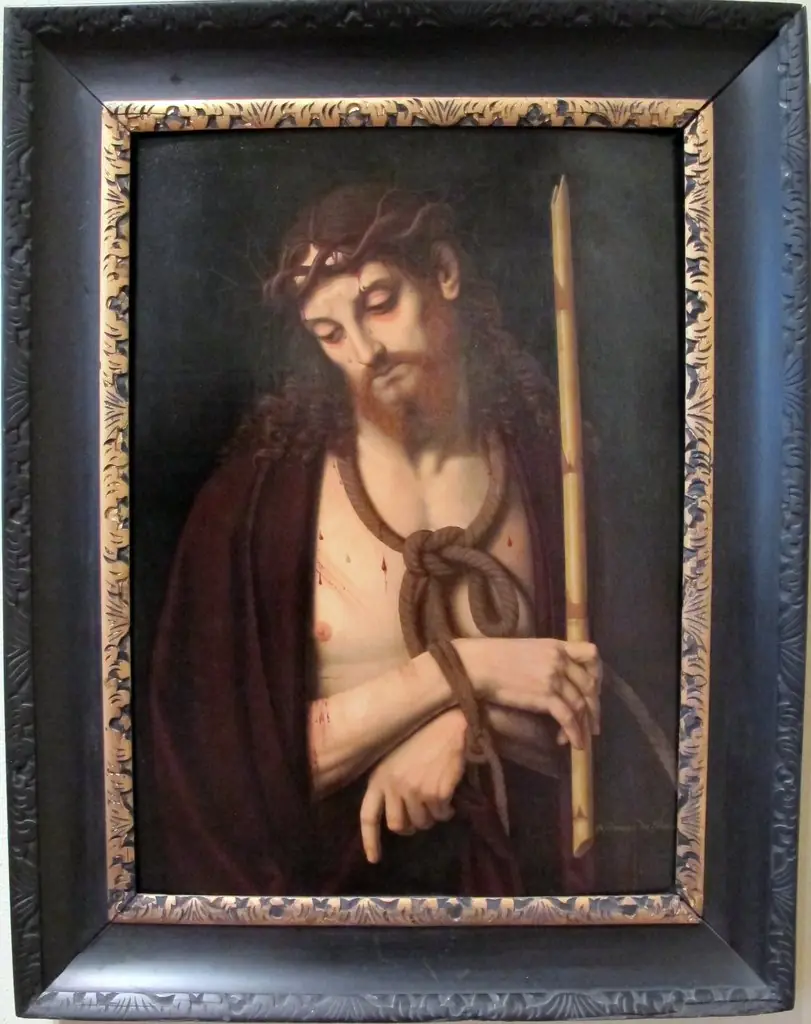
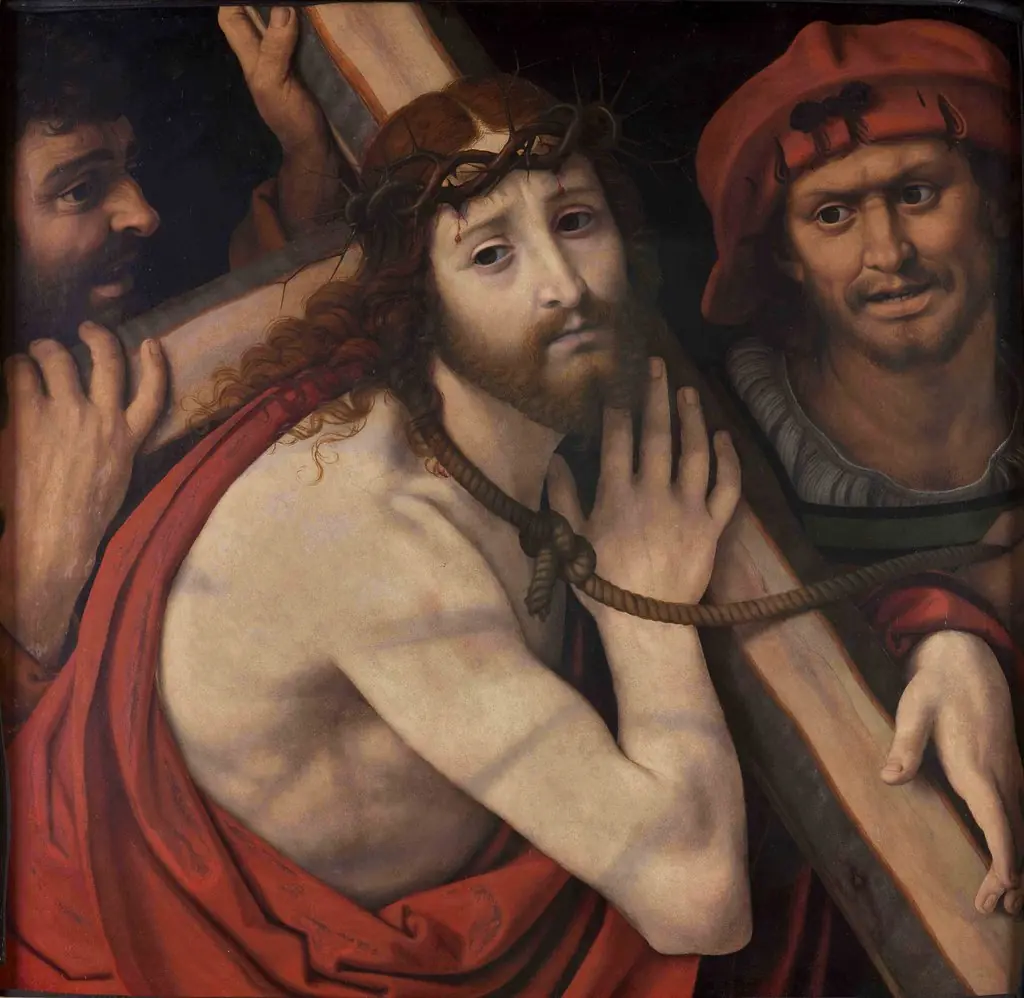
Created in 1506 by Andrea Solari, a Milanese painter of the Italian Renaissance, this oil work portrays the biblical moment known as Ecce Homo. The composition centers on a wounded Christ crowned with thorns, flanked by two onlookers, and is executed in the High Renaissance idiom. The painting is part of the Ashmolean Museum’s collection.
Subject & Meaning
The central figure represents Jesus after his scourging, bound by a rope and clothed in a vivid red mantle. He holds a reed, a symbol of the mockery he endured, while his downcast gaze conveys suffering and resignation. The two surrounding men, rendered with visible faces, observe the scene, emphasizing the public nature of the humiliation.
Technique & Style
Solari employs chiaroscuro to model the forms, contrasting illuminated flesh against a darkened background. The muted tonal scheme is punctuated by the bright red of the robe, drawing attention to the focal point. The arrangement follows a triangular structure, a compositional device common in High Renaissance art to guide the viewer’s eye toward the central figure.
History & Provenance
The painting has moved among several European collections, including holdings in Italy and France, before arriving at the Ashmolean Museum. Its presence in major institutions such as the Louvre reflects Solari’s broader reputation within the Milanese school, though the work itself remains a relatively modest example of his religious output.
Artist & collection
Artist
Andrea Solari (also Solario) (1460–1524) was an Italian Renaissance painter of the Milanese school.