Artwork
The Virgin and Child
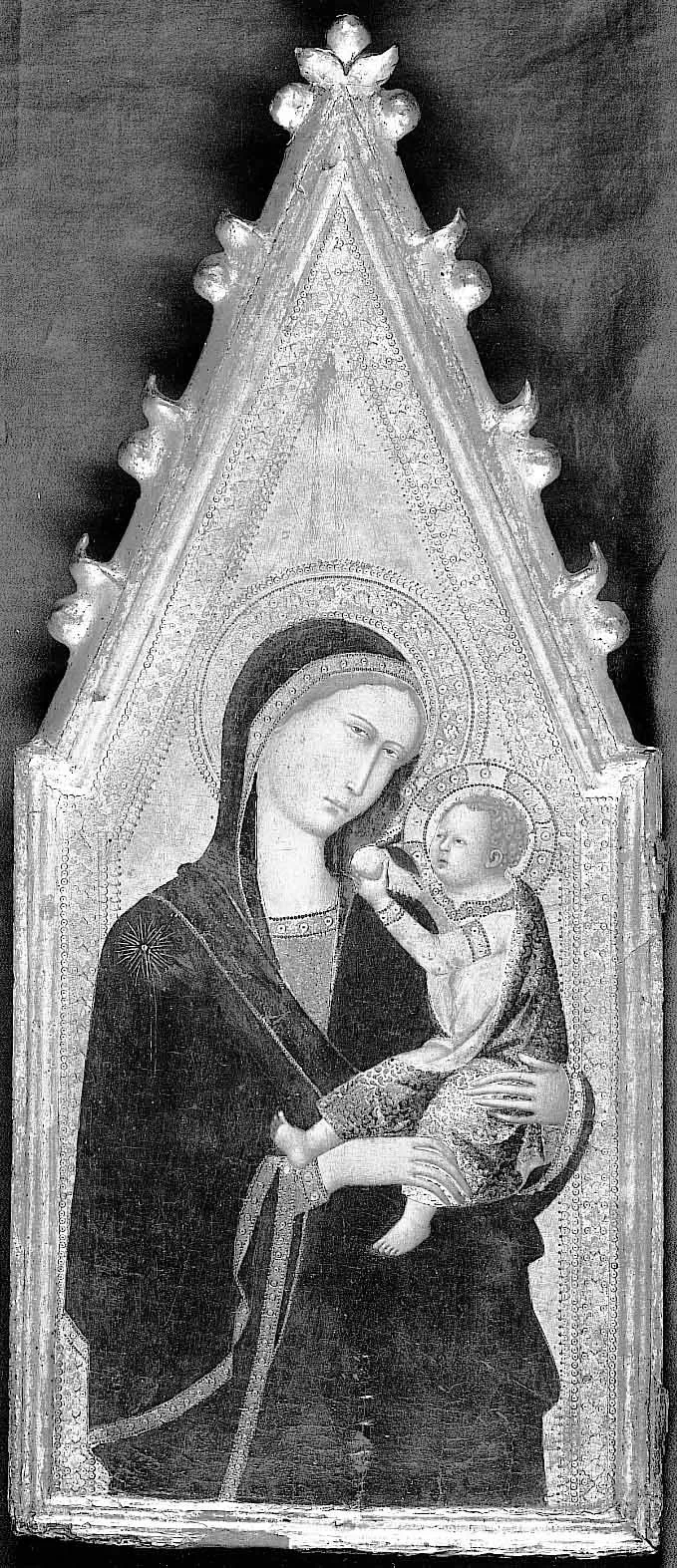
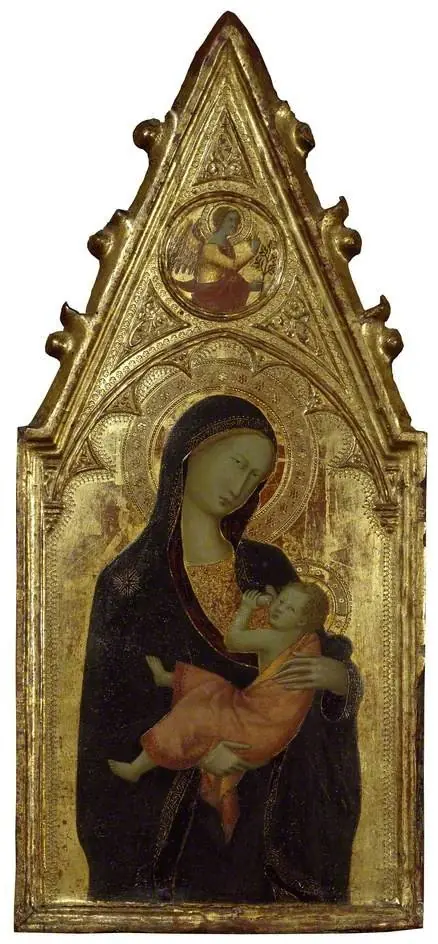
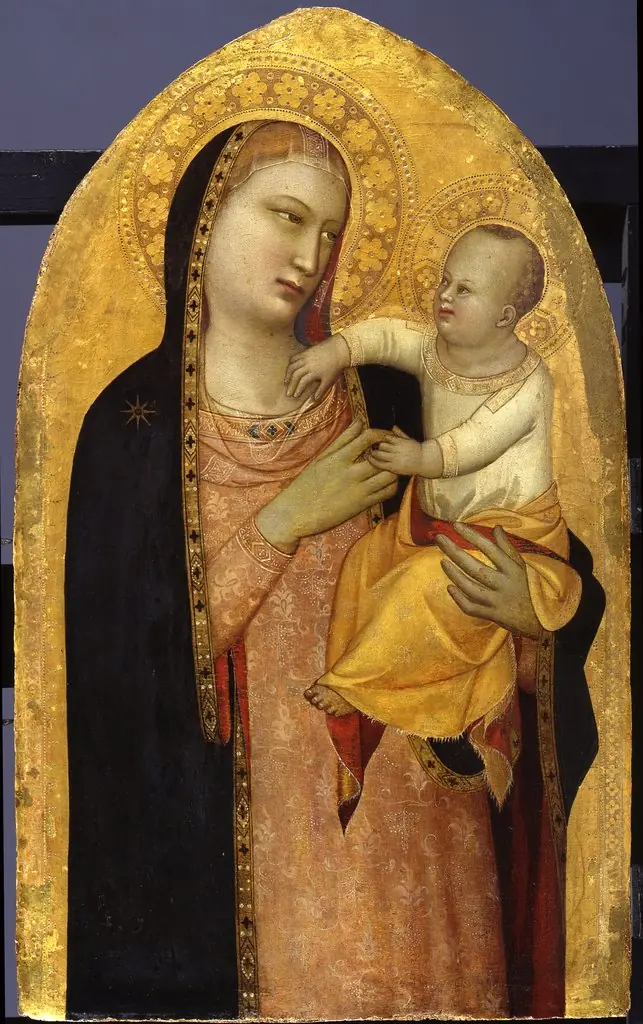
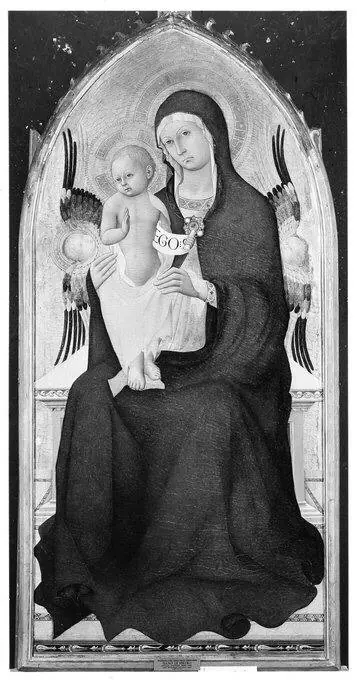
The Virgin and Child is a paint painting by the Byzantine icon painting artist Andrea Vanni. It dates from 1375 and is held in the collection of the Gemäldegalerie Berlin.
About this work
Overview
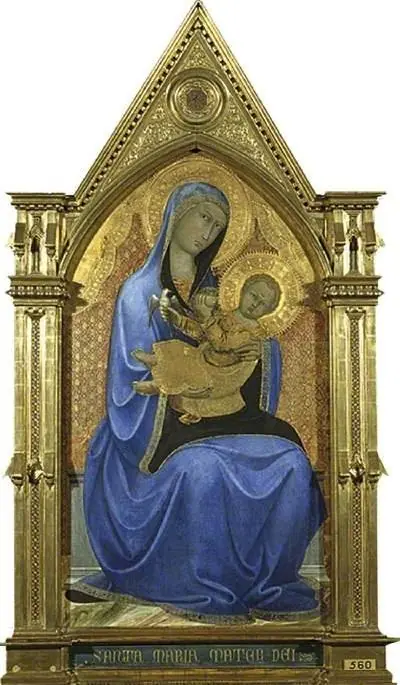
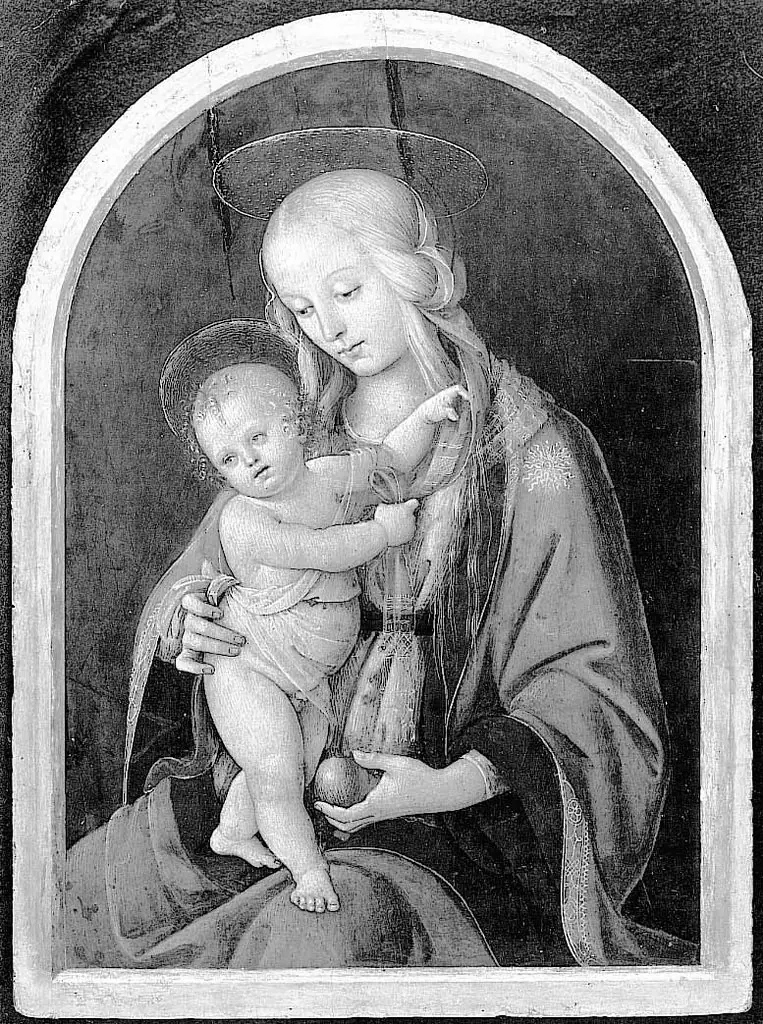
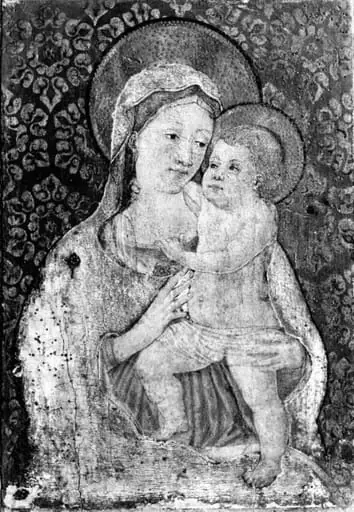
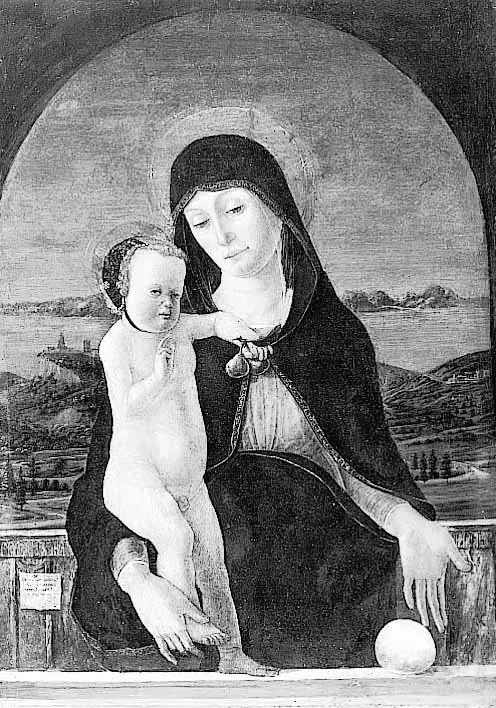
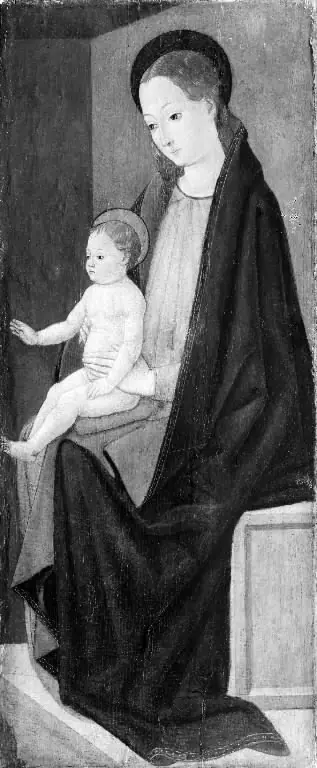
Andrea Vanni’s panel, dated to 1375, presents a devotional image of the Virgin Mary cradling the infant Jesus. Executed in tempera on wood, the work measures a modest size and now belongs to the collection of the Gemäldegalerie in Berlin. The composition centers on the intimate exchange between mother and child, set against a muted backdrop that draws the eye to the figures.
Subject & Meaning
The painting portrays Mary in a somber mantle, her gaze directed tenderly toward the Christ child, who returns her look with an upward glance. This reciprocal interaction underscores the theological emphasis on maternal devotion and the incarnation, inviting contemplation of the human and divine natures united in the infant.
Technique & Style
Vanni employs a subtle chiaroscuro, using the contrast between the darkened background and the illuminated garments to model volume and create spatial depth. Intricate linear patterns adorn Mary’s robe, while the child’s attire features a decorative trim, both rendered with fine brushwork typical of late‑Gothic Italian panel painting.
History & Provenance
Created in the late fourteenth century, the panel likely served a private devotional context before entering the public sphere. It was acquired by the Gemäldegalerie Berlin in the twentieth century, where it has been displayed as part of the museum’s collection of early Italian religious art.
Artist & collection