Artwork
Windmill beside a frozen river
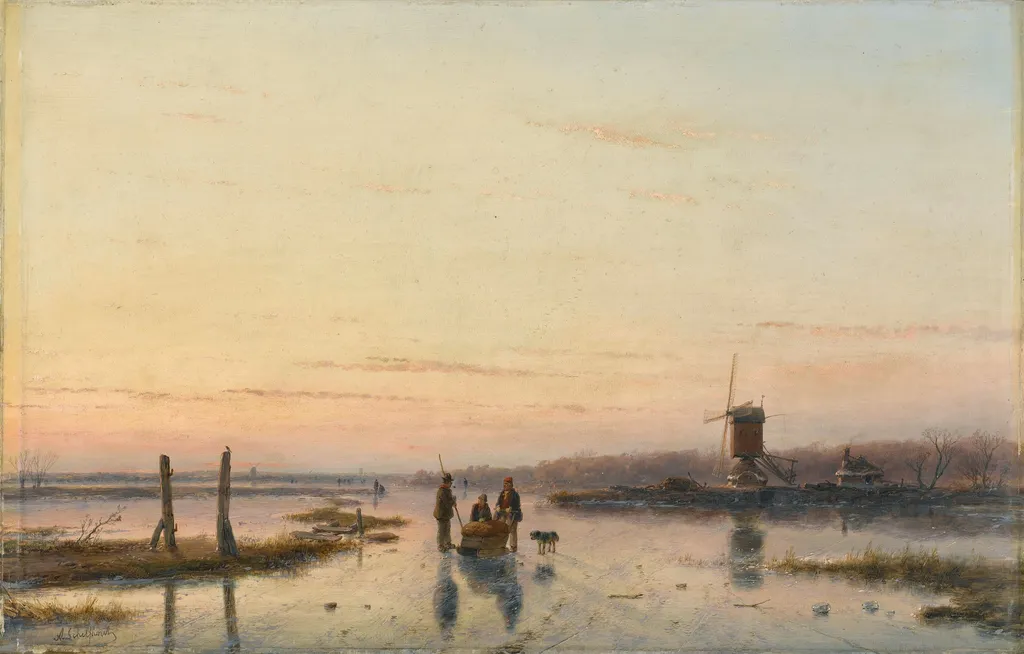
Windmill beside a frozen river is an oil painting by Andreas Schelfhout. It dates from 1860 and is held in the collection of the Rijksmuseum.
About this work
Overview
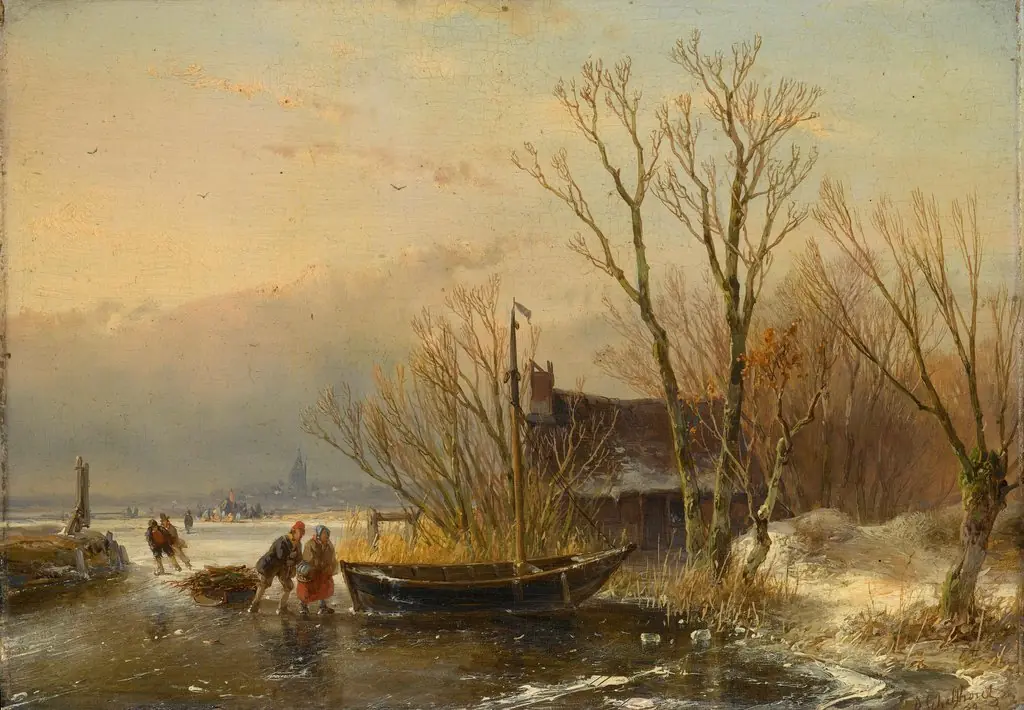
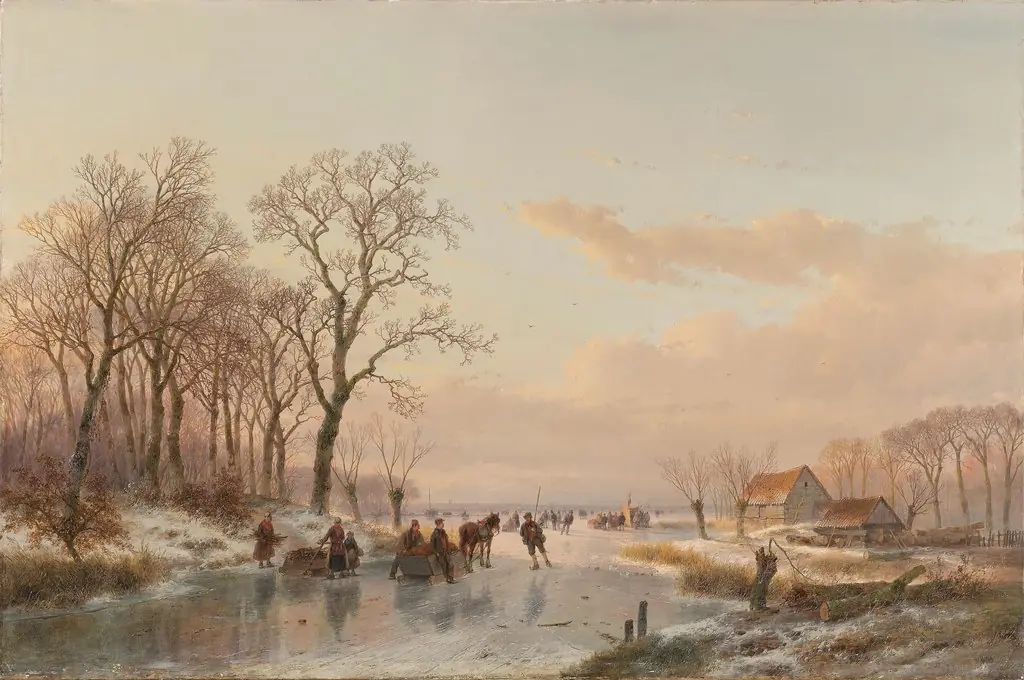
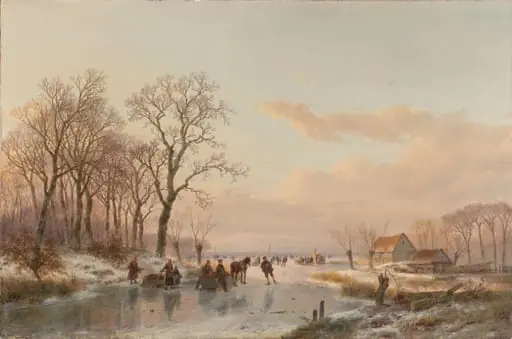
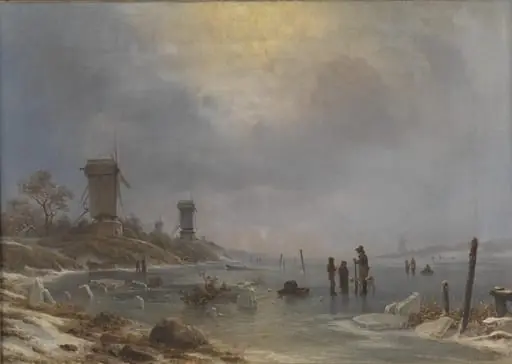
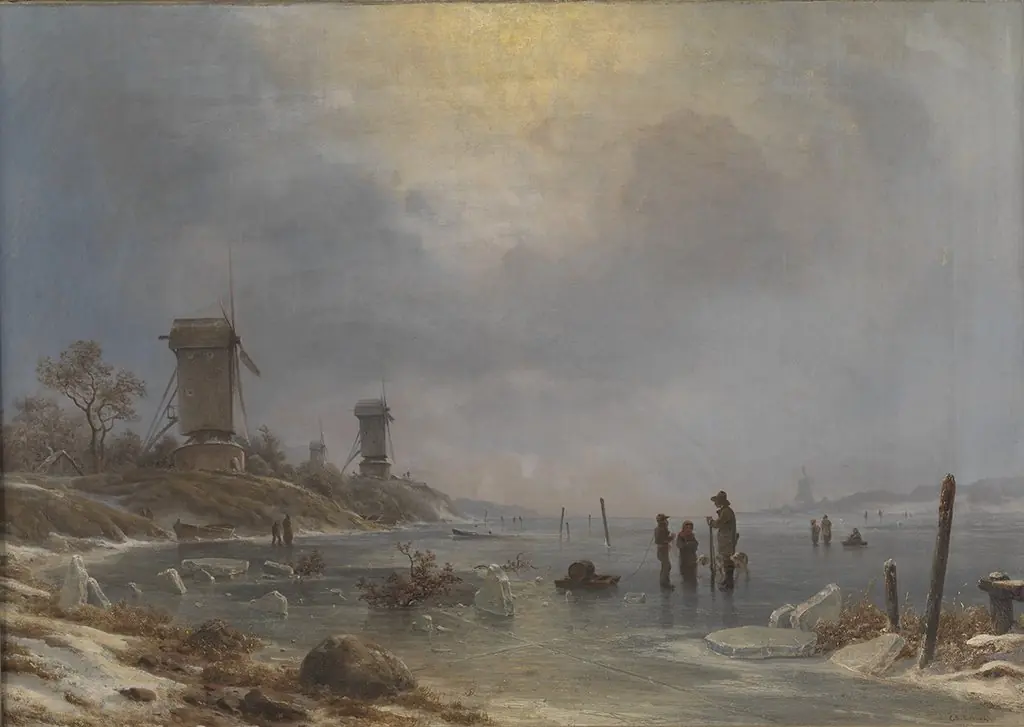
Painted in 1860 by Dutch artist Andreas Schelfhout, this oil on canvas depicts a tranquil winter landscape along a frozen river.
Painted in 1860 by Dutch artist Andreas Schelfhout, this oil on canvas depicts a tranquil winter landscape along a frozen river. Schelfhout, known for his meticulous rendering of seasonal Dutch scenery, captures a quiet moment in rural life. The work is held in the Rijksmuseum’s collection, reflecting its significance within 19th-century Dutch art. Its subdued palette and stillness align with the artist’s broader focus on atmospheric winter scenes.
Subject & Meaning
The scene portrays a solitary figure standing on the ice with a pole, possibly checking the thickness or preparing to move the boat. Two individuals rest in a small vessel nearby, while a dog waits patiently on the bank. The distant windmill, a symbol of Dutch industry and resilience, anchors the composition. Together, these elements suggest a pause in daily labor, emphasizing solitude and the quiet rhythm of winter life rather than narrative drama.
Technique & Style
Schelfhout employed glazing techniques to achieve a luminous, even glow across the ice and sky. Thin layers of translucent oil paint build subtle shifts in tone, enhancing the sense of cold light. The brushwork is restrained, avoiding sharp edges to preserve the hazy, diffused quality of winter air. Muted grays, pale blues, and soft reds unify the composition, reinforcing the scene’s stillness and atmospheric cohesion.
History & Provenance
Created late in Schelfhout’s career, the painting reflects his established reputation for winter landscapes, which had been widely collected since the 1820s. It entered the Rijksmuseum’s holdings in the 19th century, likely through acquisition or donation, securing its place in the national collection. No record suggests it was exhibited publicly after its completion, but its inclusion in the museum underscores its recognized value within Dutch artistic tradition.
Context
In mid-19th century the Netherlands, winter scenes resonated with national identity and nostalgia for rural life amid industrialization. Schelfhout’s works catered to a growing middle-class audience seeking idealized depictions of the past. His attention to meteorological detail and seasonal change aligned with broader European Romantic interests in nature’s quiet power, though his approach remained grounded in observation rather than sentimentality.
Legacy
Schelfhout’s winter landscapes influenced later Dutch painters who continued to explore seasonal atmospheres with precision. While not revolutionary in form, his consistent focus on light, stillness, and everyday rural life helped define a recognizable strand of 19th-century Dutch realism. Today, his works remain valued for their quiet authenticity and technical restraint, offering a measured counterpoint to more dramatic Romantic narratives.
Artist & collection
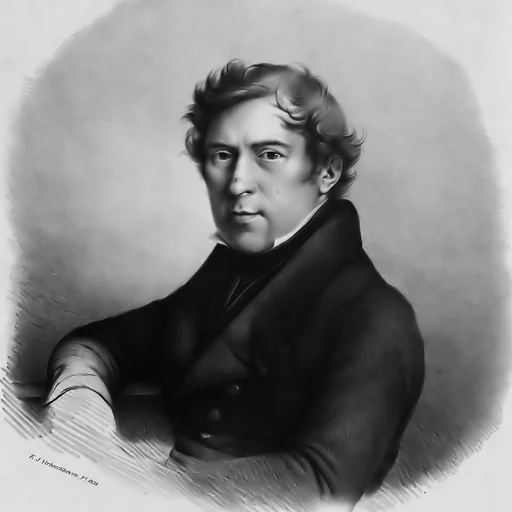
Artist
Andreas Schelfhout (1787–1870) was a Dutch painter, etcher and lithographer, known for his landscape paintings.