Artwork
Landscape with a herd at the forest edge
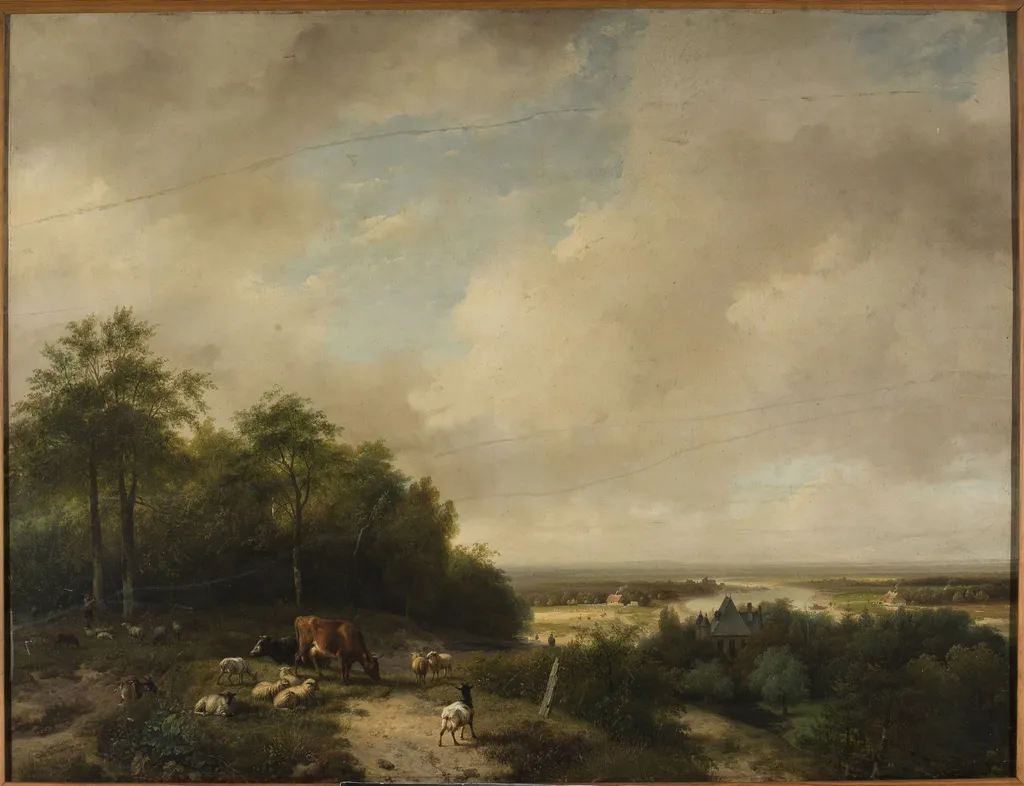
Landscape with a herd at the forest edge is an oil painting by the Dutch Golden Age artist Andreas Schelfhout. It dates from 1837 and is held in the collection of the National Museum in Warsaw.
About this work
Overview
This piece exemplifies his interest in atmospheric realism and the subtle interplay of light across open fields and wooded boundaries.
Painted around 1837, *Landscape with a herd at the forest edge* is an oil on canvas work by the Dutch artist Andreas Schelfhout. Known for his precise rendering of natural environments, Schelfhout focused on rural Dutch scenery, often capturing quiet moments between land, sky, and livestock. This piece exemplifies his interest in atmospheric realism and the subtle interplay of light across open fields and wooded boundaries.
Subject & Meaning
The painting depicts a group of grazing animals resting at the margin of a dense forest, a common motif in 19th-century Dutch landscape art. The scene conveys stillness and harmony between domesticated life and the wild. No human figures are present, emphasizing nature’s quiet autonomy. The composition invites contemplation rather than narrative, reflecting a Romantic sensibility that valued solitude and the unaltered countryside.
Technique & Style
Schelfhout employed oil paint with careful layering to achieve subtle gradations of tone and texture. The foliage is rendered with soft, blended brushwork, while the grass and ground show finer, more defined strokes. The sky, lightly washed with pale hues, balances the heavier earth tones below. His attention to seasonal light and atmospheric perspective reveals a deep familiarity with Dutch terrain and its changing conditions.
History & Provenance
The painting entered the collection of the National Museum in Warsaw at an unknown date, likely during the 19th or early 20th century. Its presence in Poland suggests possible acquisition through European art markets or diplomatic exchanges. Schelfhout’s works were widely collected in the Netherlands and neighboring regions, and this piece reflects the international circulation of Dutch landscape art beyond its origin.
Context
While often associated with the Dutch Golden Age, Schelfhout worked in the Romantic era, a time when artists turned to nature as a refuge from industrialization. His landscapes responded to a growing cultural appreciation for rural tranquility. Though not part of the 17th-century Golden Age, his work carried forward its tradition of detailed, observational painting, adapting it to early 19th-century sensibilities.
Legacy
Schelfhout influenced later Dutch landscape painters through his disciplined approach to light and topography. His works, including this one, remain valued for their quiet authenticity rather than dramatic flair. Though less celebrated abroad than his contemporaries, his oeuvre continues to inform studies of 19th-century Dutch realism and the evolving relationship between art and the natural world.
Artist & collection
Artist
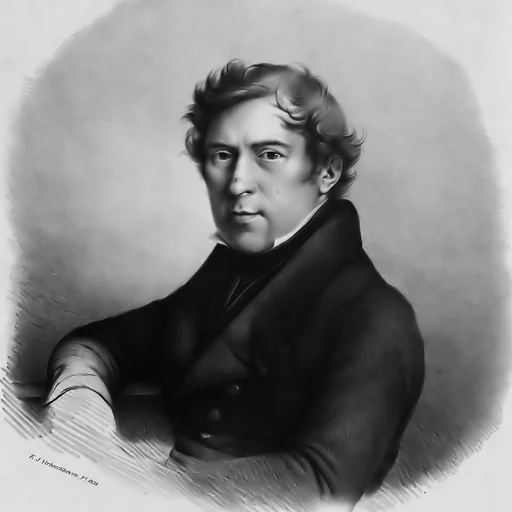
Andreas Schelfhout (1787–1870) was a Dutch painter, etcher and lithographer, known for his landscape paintings.

 Near Penshurst, Kent
 Swedish landscape
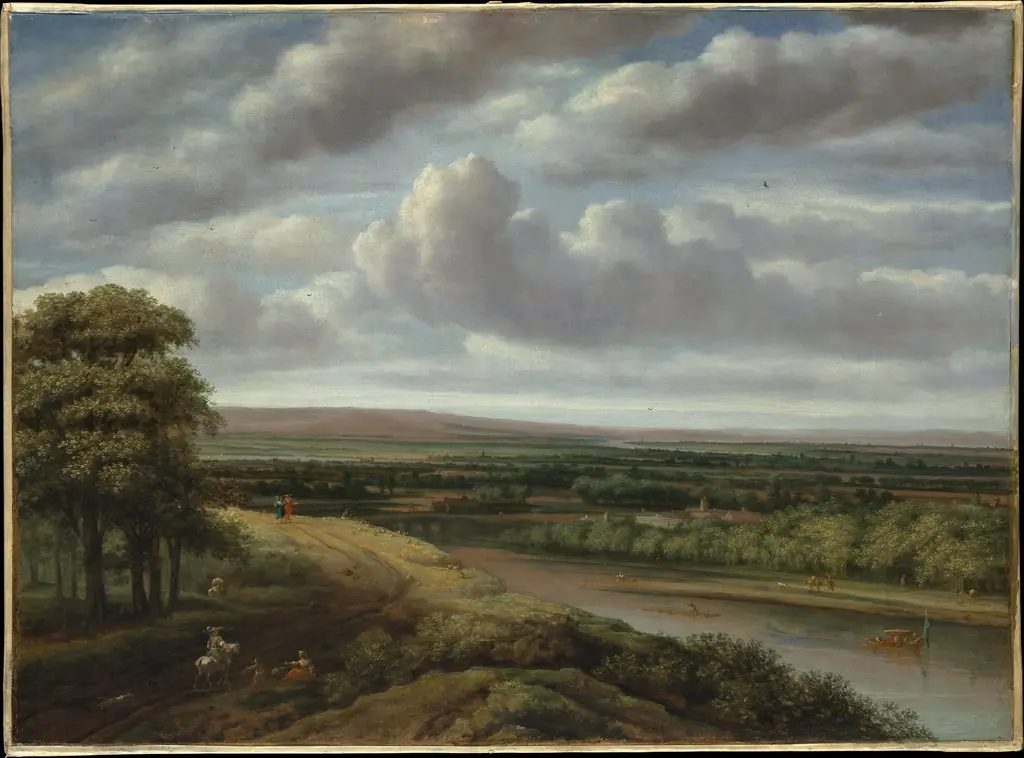 An Extensive Wooded Landscape
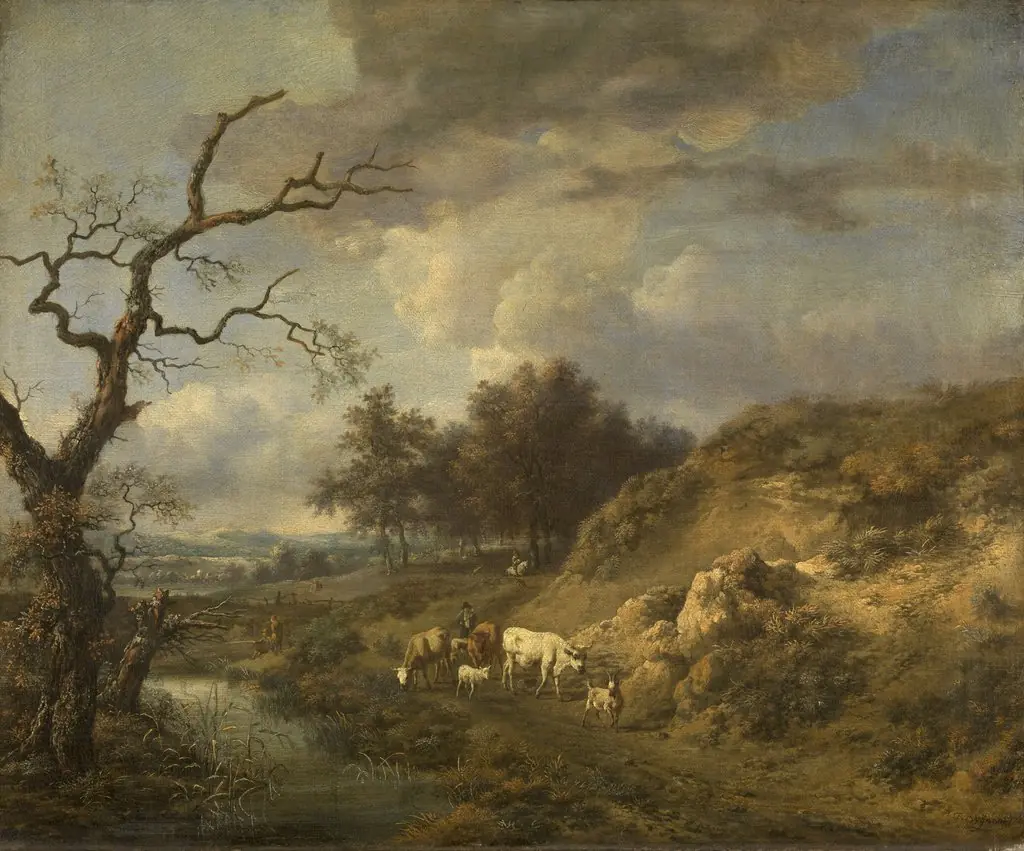 Landschap met vee
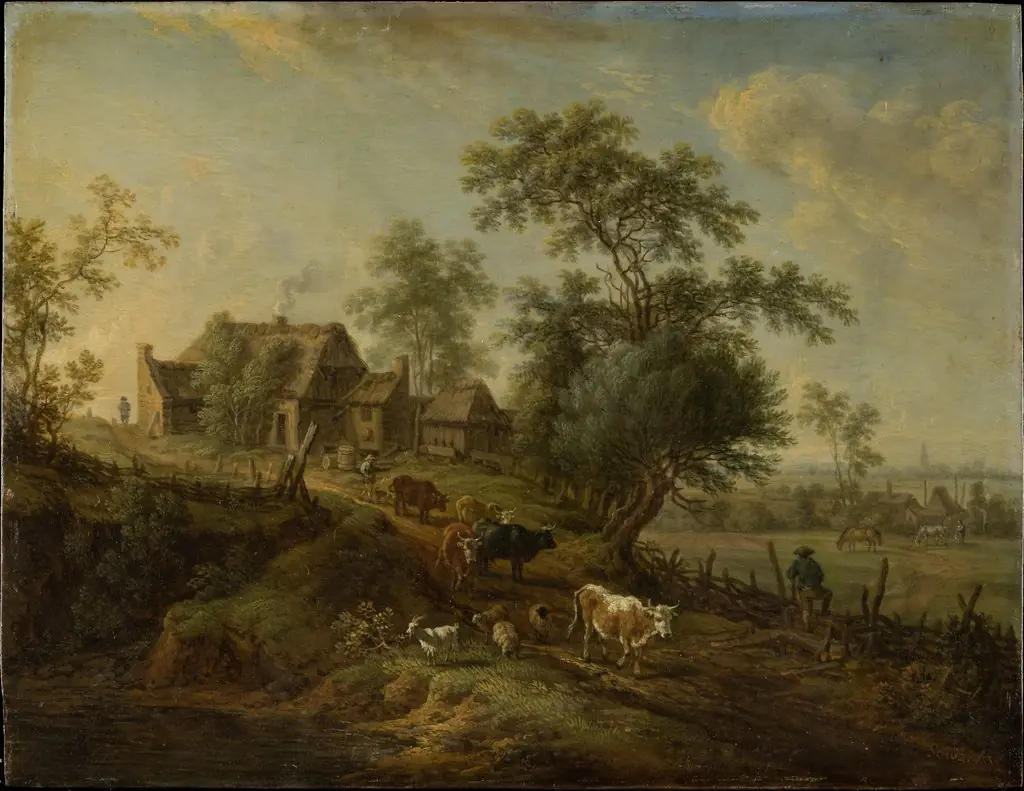 Landscape with Farm Animals on a Road
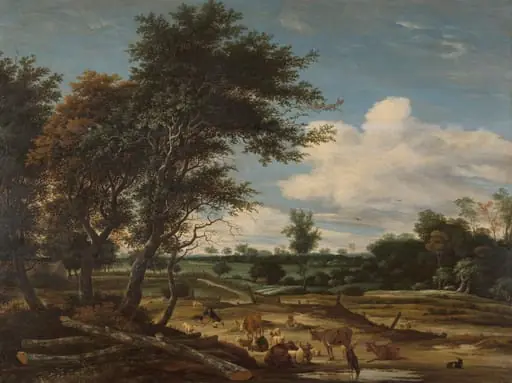 Landscape with herdsmen and cattle
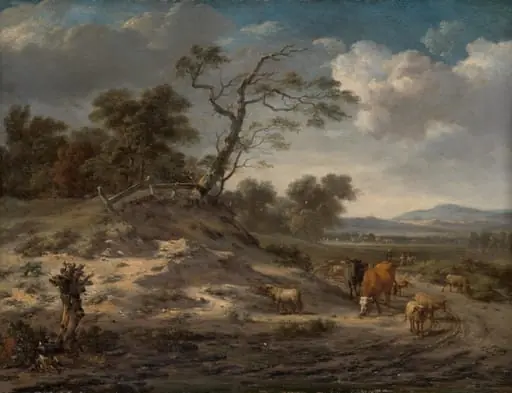 Landscape with Cattle on a Country Road
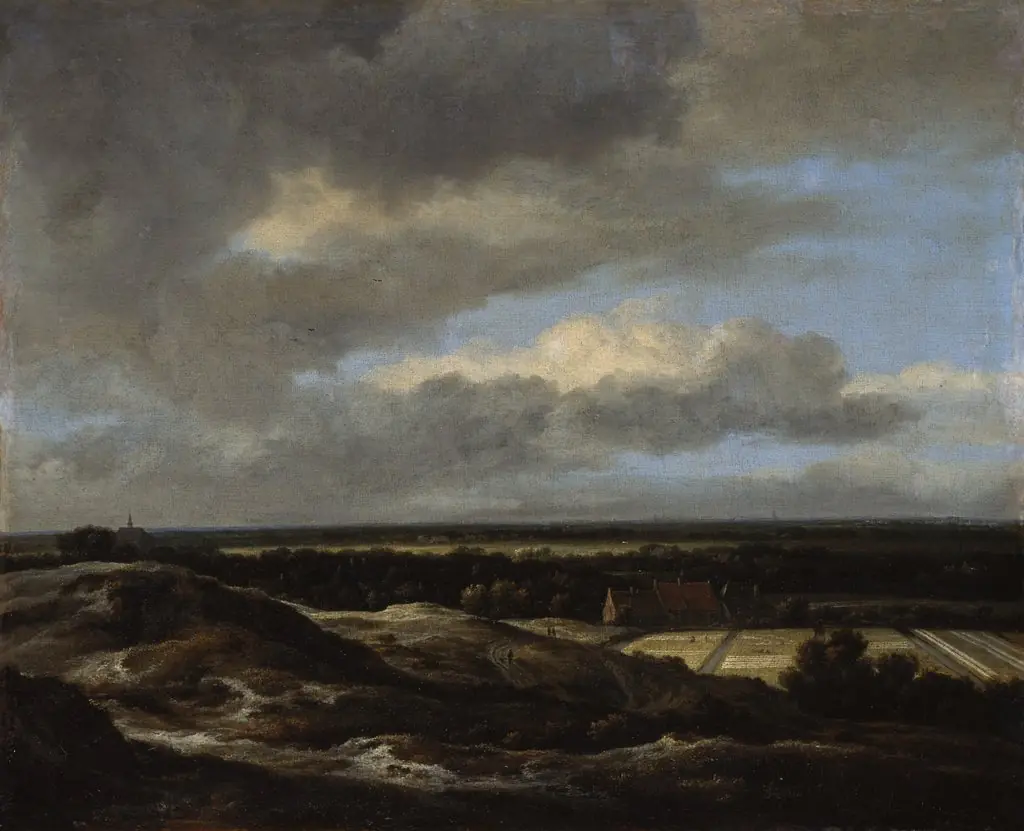 Dunes and bleaching fields
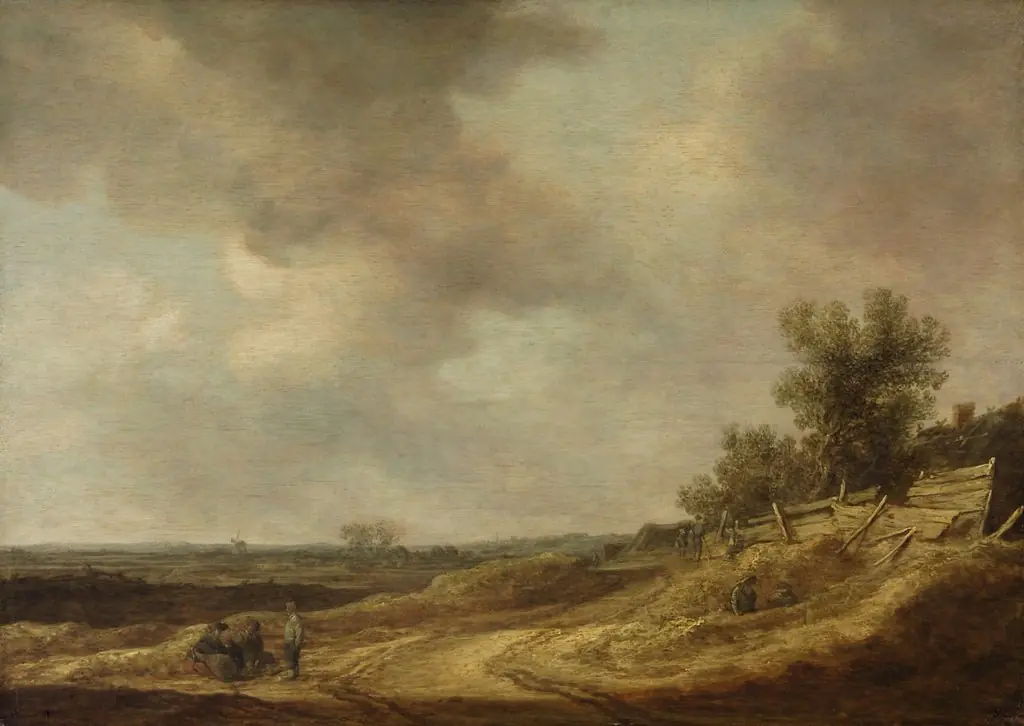 Flat Landscape
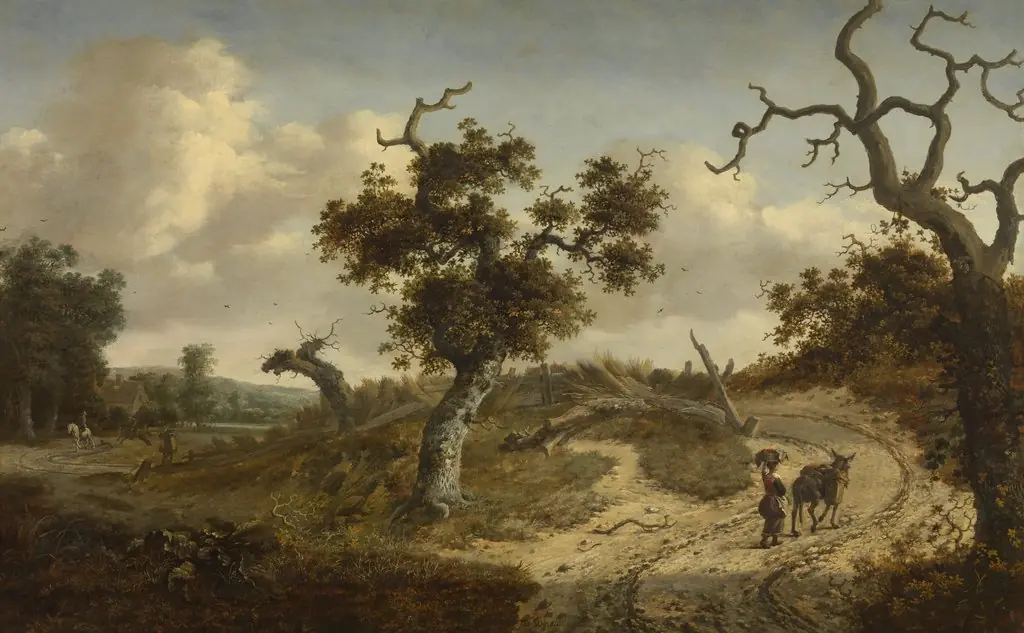 Landscape
 View of the Environs of Brussels
 Distant View of the Meadows at ’s-Graveland