Artwork
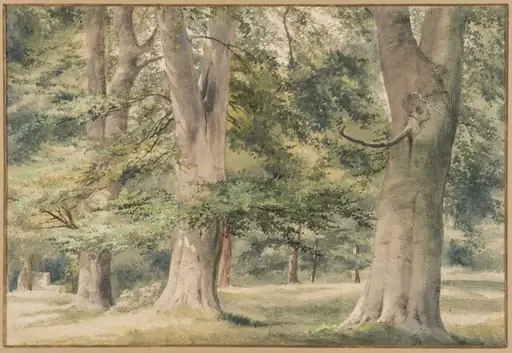
Study of beeches at Epping
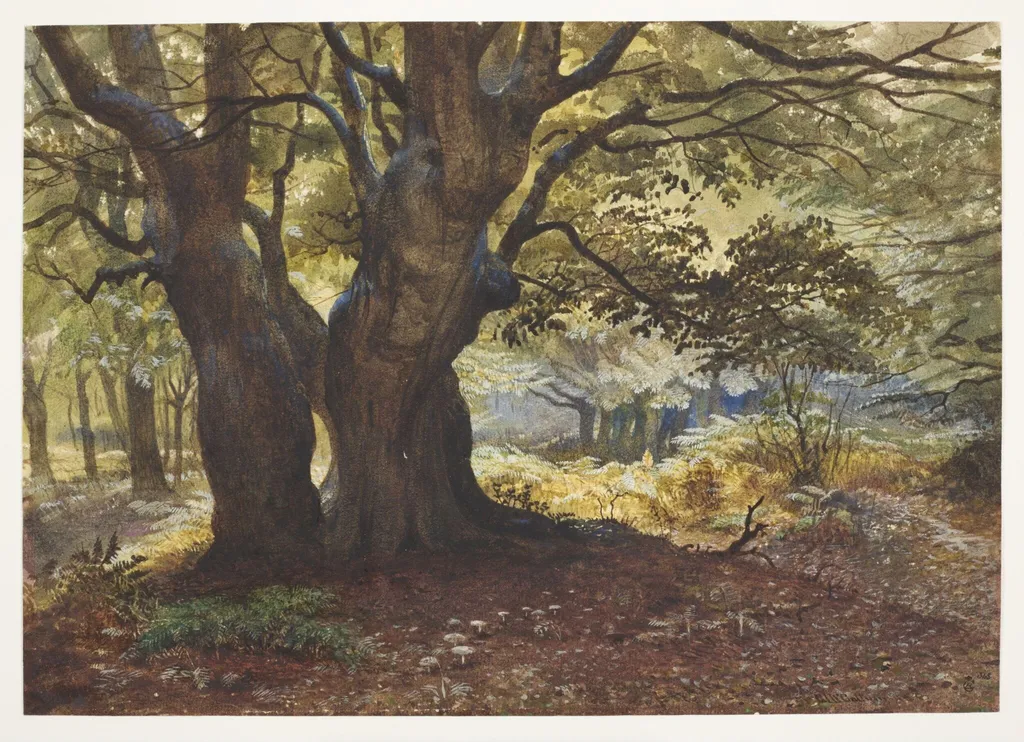
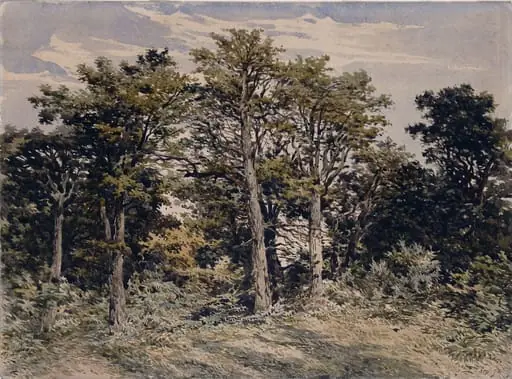
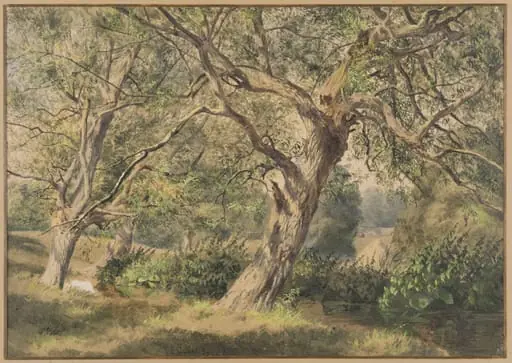
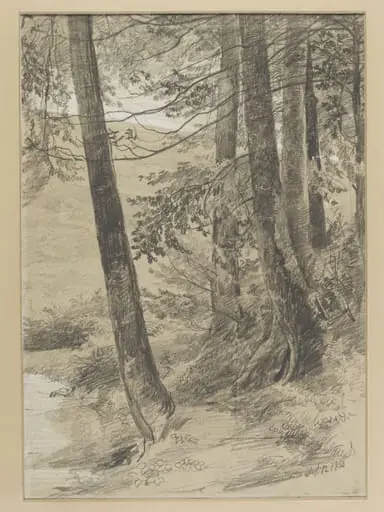
Study of beeches at Epping is a watercolor work on paper by the British Romanticist artist Andrew MacCullum. It dates from 1858 and is held in the collection of the Victoria and Albert Museum.
About this work
Sunlight filters through the branches, lighting up patches of moss and casting shadows on the ground.
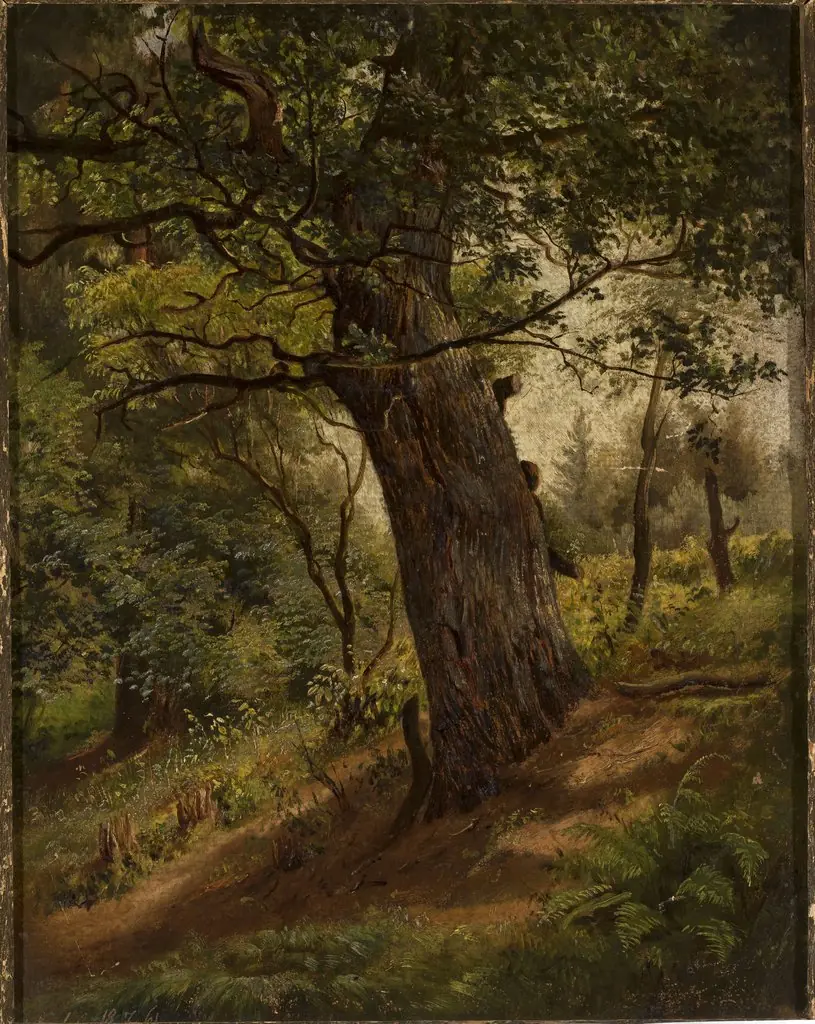
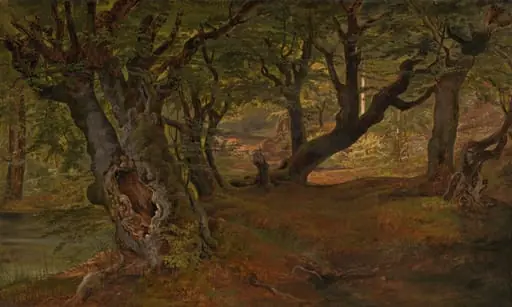
This painting shows a damp forest floor with fallen leaves, mushrooms, and ferns. A huge tree trunk dominates the left side, its rough bark and tangled roots filling the space. Sunlight filters through the branches, lighting up patches of moss and casting shadows on the ground.
The artist paid close attention to the play of light and dark in the leaves and shadows. This was made in 1858 using watercolor, which lets the colors blend softly.
Look up the Victoria and Albert Museum to see more works like this.
Overview
Andrew MacCullum’s 1858 watercolour, titled *Study of Beeches at Epping*, records a quiet woodland scene. The work is signed and dated by the artist, confirming its authorship and the year of execution. It presents a naturalistic observation of beech trees within a damp forest setting, rendered in the delicate medium of watercolour.
Subject & Meaning
The composition centers on a mature beech tree whose massive trunk occupies the left margin, its bark rendered with textured detail. Around it, fallen leaves, mushrooms and ferns carpet the forest floor, suggesting a season of decay and renewal. Sunlight penetrates the canopy, illuminating patches of moss and creating a subtle contrast between light and shadow that emphasizes the forest’s quiet vitality.
Technique & Style
MacCullum employs the fluid qualities of watercolour to achieve soft transitions between tones, allowing pigments to blend gently across leaf surfaces and ground cover. The artist’s handling of light—delicate washes that capture dappled illumination—highlights the interplay of brightness and darkness, while fine brushwork conveys the roughness of bark and the intricate forms of foliage.
History & Provenance
Created in 1858, the study bears the artist’s signature and date, indicating it was likely produced as a field sketch or preparatory work for a larger composition. Its provenance traces back to the artist’s studio before entering public collections, where it serves as an example of mid‑nineteenth‑century British landscape observation.
Own this work as a print
Artist & collection
Artist
Andrew MacCullum painted quiet English landscapes in watercolor. His brush caught the bark of an Old Oak at Windsor and the dappled light through beeches at Epping in 1858. These sheets feel like diary pages—close-ups…