Artwork
Beech Trees
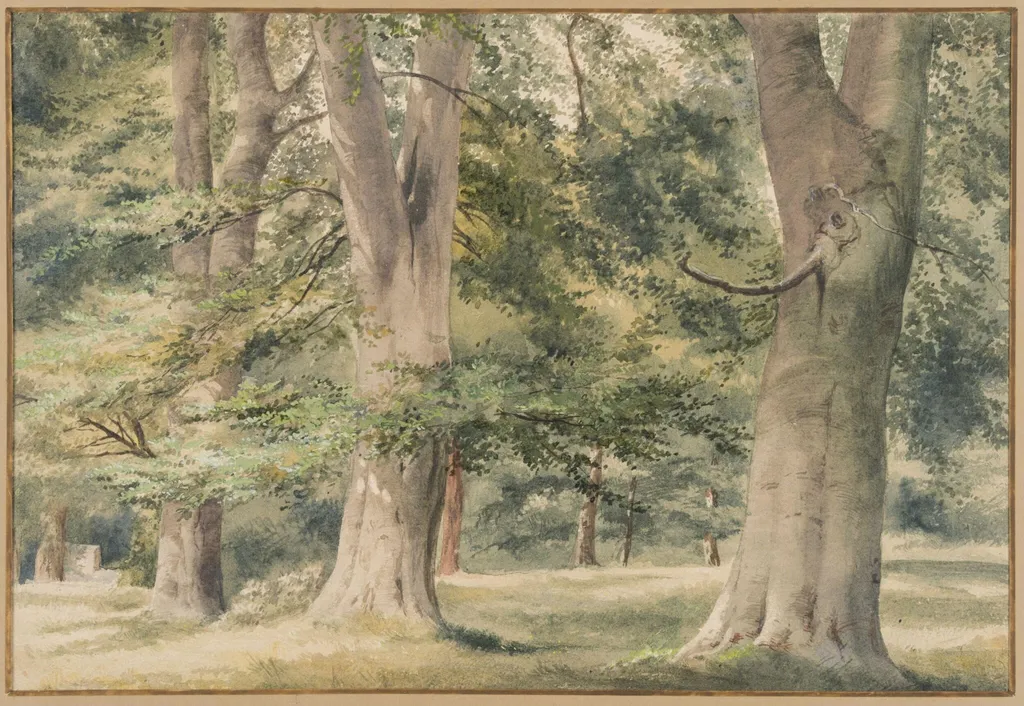
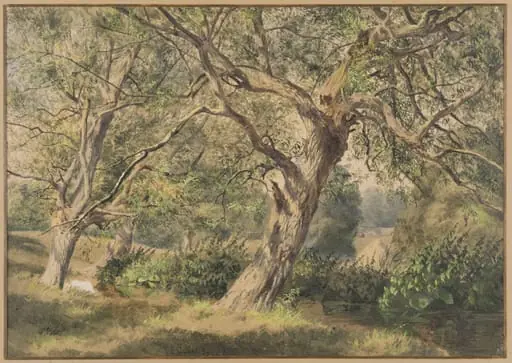
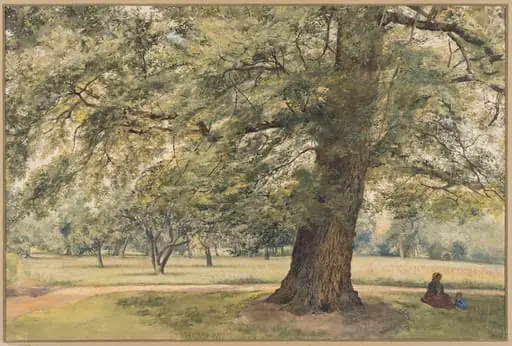
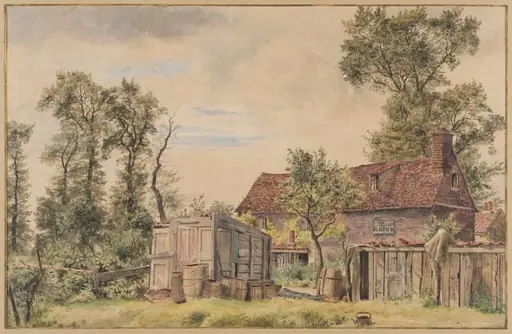
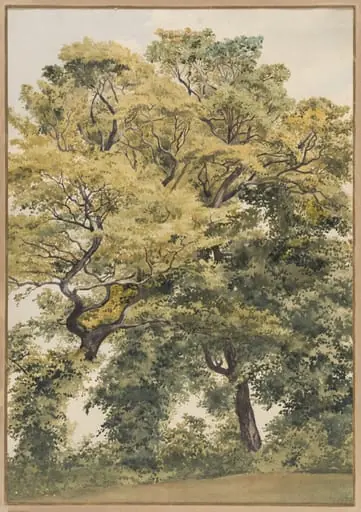
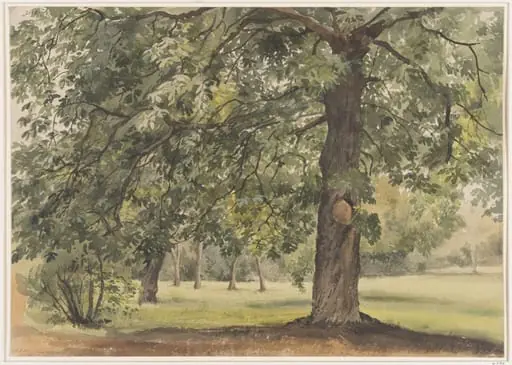
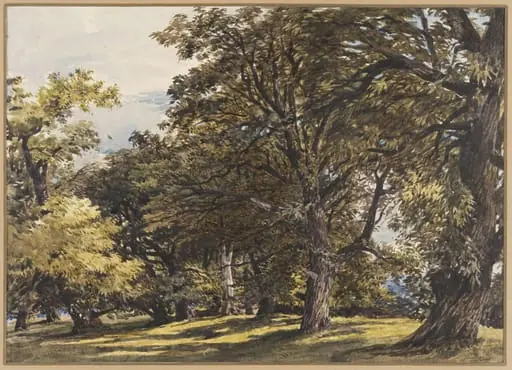
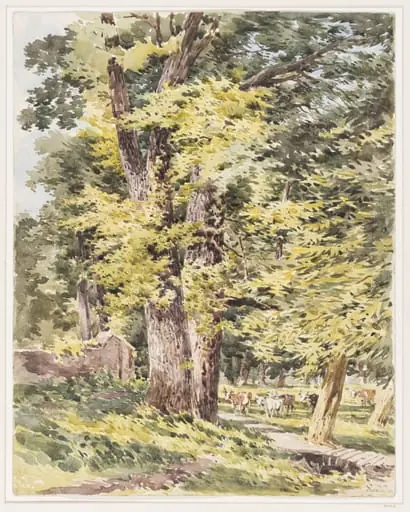
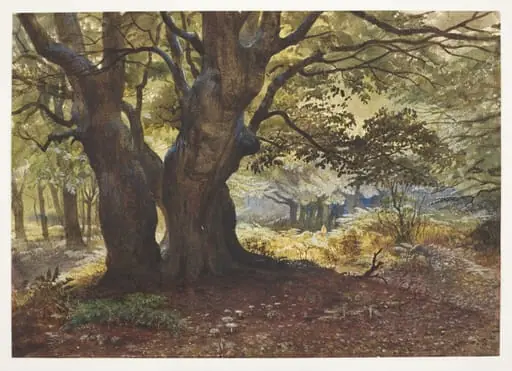
Beech Trees is a watercolor work on paper by the British Romanticist artist Thomas Frederick Collier. It dates from 1864 and is held in the collection of the Victoria and Albert Museum.
About this work
Overview
Executed in transparent washes, the piece emphasizes atmosphere over detail, aligning with mid-Victorian tendencies to observe nature with quiet precision.
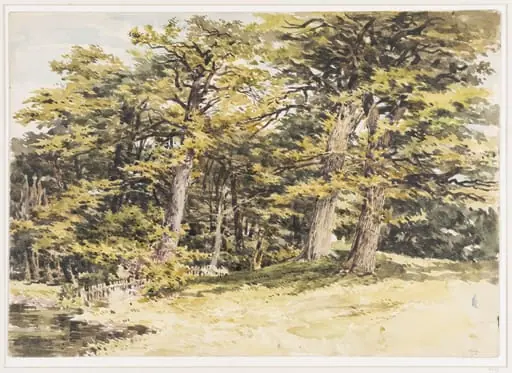
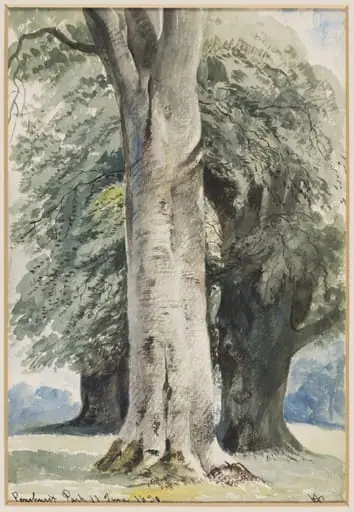
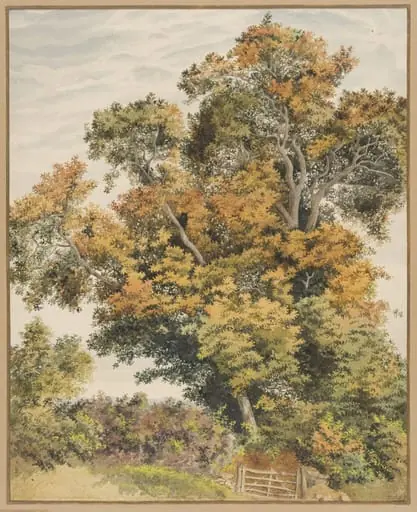
Thomas Frederick Collier created this watercolour around 1864, capturing a tranquil woodland scene dominated by beech trees. The work is part of the Victoria and Albert Museum’s collection, reflecting the artist’s interest in natural landscapes. Executed in transparent washes, the piece emphasizes atmosphere over detail, aligning with mid-Victorian tendencies to observe nature with quiet precision.
Subject & Meaning
The painting depicts a secluded forest path winding between tall beech trees, inviting the viewer into a serene, unpopulated space. There is no human presence, suggesting a contemplative engagement with nature rather than a narrative. The subtle interplay of light and shadow conveys a sense of stillness and time passing, characteristic of 19th-century landscape sensibilities that valued quietude over drama.
Technique & Style
Collier employed loose, fluid brushwork to suggest foliage and dappled sunlight, avoiding rigid outlines. Watercolour washes were layered lightly to achieve soft transitions between greens and browns, mimicking the natural gradations of light in a forest. The muted palette and delicate handling reflect a preference for observational accuracy over embellishment, typical of watercolourists working in the tradition of Turner and the Pre-Raphaelite circle.
History & Provenance
The painting entered the Victoria and Albert Museum’s collection in the 19th century, likely through acquisition or donation during a period when British watercolours were being systematically preserved. Its presence in the museum underscores its status as a representative example of amateur and professional landscape watercolour practice in mid-Victorian England, though Collier’s broader oeuvre remains relatively understudied.
Context
In the 1860s, watercolour was widely practiced by both amateur artists and professionals as a medium for recording natural scenery. Collier’s work aligns with a broader cultural interest in woodland aesthetics and the romanticization of rural England. His approach reflects the influence of earlier watercolourists and the growing popularity of plein air observation, even if executed indoors from sketches.
Legacy
Though not widely known today, Collier’s watercolours contribute to the understanding of 19th-century British landscape art beyond major figures. This piece exemplifies the quiet, detailed observation that characterized many lesser-known artists of the period. Its preservation in a major museum ensures its role as a reference for studying the technical and aesthetic values of Victorian watercolour practice.
Own this work as a print
Artist & collection
Artist
Thomas Frederick Collier painted quiet, detailed watercolours of English trees and landscapes in the 1850s.