Artwork
Study of an Elm Tree
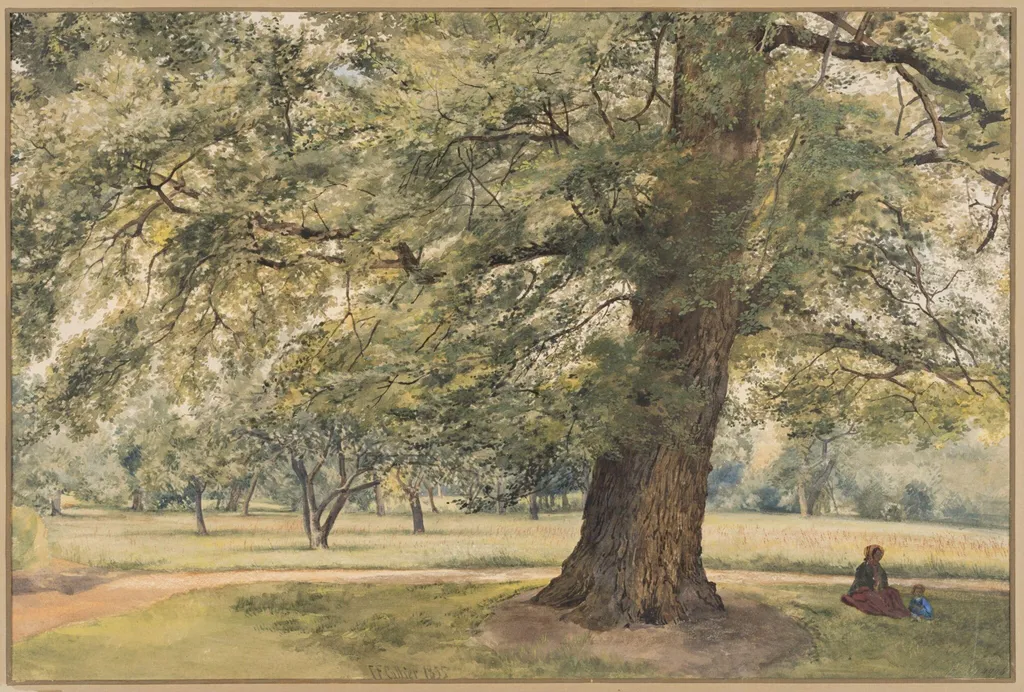
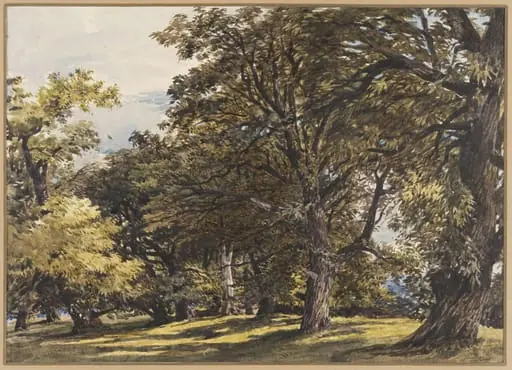
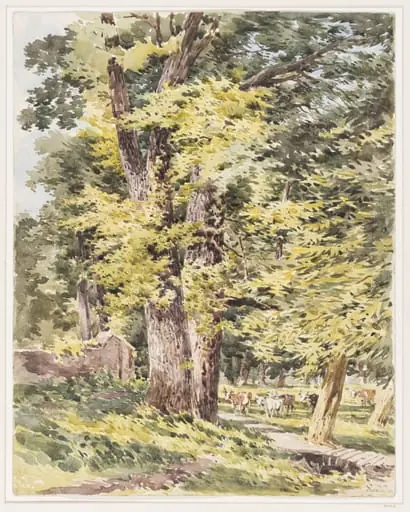
Study of an Elm Tree is a watercolor work on paper by the British Romanticist artist Thomas Frederick Collier. It dates from 1864 and is held in the collection of the Victoria and Albert Museum.
About this work
Overview
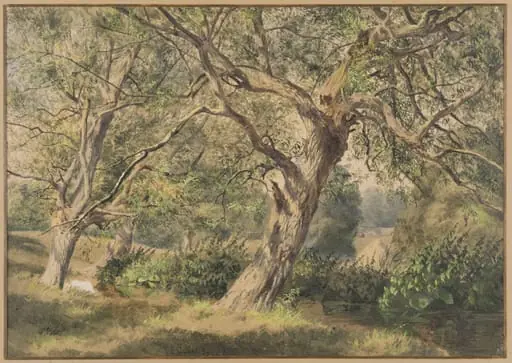
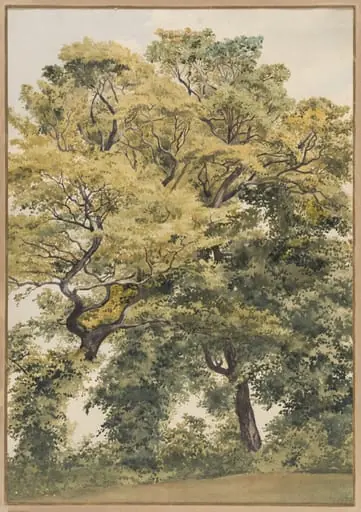
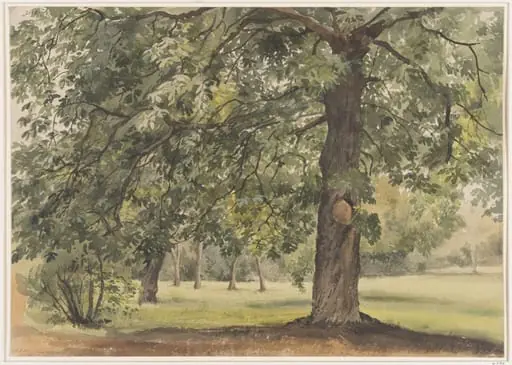
Created in 1864, this watercolour by Thomas Frederick Collier captures a solitary elm tree in a pastoral setting. Executed with delicate washes and restrained tonality, the work reflects a quiet observation of nature rather than a dramatic composition. The medium’s transparency allows subtle gradations of light and atmosphere to emerge, characteristic of 19th-century British landscape studies.
Subject & Meaning
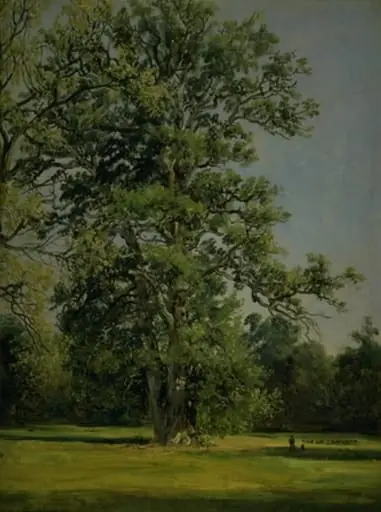
The elm dominates the composition with its broad, spreading form, rooted in a grassy field that recedes toward a distant path lined with other trees. A small figure seated beneath one of those distant trees suggests a moment of stillness, reinforcing the painting’s contemplative tone. The scene conveys no narrative, only the presence of nature and human quietude within it.
Technique & Style
Collier employed soft, layered watercolour washes to model the tree’s bark and canopy, allowing the paper’s white to suggest areas of sunlight. Brushwork is loose yet deliberate, capturing the texture of leaves and the diffused quality of afternoon light. Shadows are rendered with muted greys and blues, avoiding sharp outlines to maintain a sense of atmospheric harmony.
History & Provenance
The work is dated 1864 and attributed to Thomas Frederick Collier, a British artist known for landscape studies. While specific ownership history is not documented, its intimate scale and medium suggest it was likely a private sketch or preparatory work, not intended for public exhibition. It remains a representative example of his observational practice.
Context
In mid-19th-century Britain, watercolour was widely used for topographical and natural studies, often by artists trained in the traditions of the Royal Watercolour Society. Collier’s work aligns with this trend, reflecting a broader cultural interest in documenting the English countryside with scientific precision and poetic restraint.
Legacy
Though not widely exhibited, Collier’s watercolours, including this study, contribute to a quiet legacy of British landscape drawing that valued close observation over grandeur. His approach influenced later generations of artists who sought to capture the subtleties of natural light and form without romantic embellishment.
Own this work as a print
Artist & collection
Artist
Thomas Frederick Collier painted quiet, detailed watercolours of English trees and landscapes in the 1850s.